
Col. Jacques Baud: What a US Ground Invasion of Iran Would REALLY Look Like
YouTube · -e4HBuhGbrE
Quick Read
Summary
Takeaways
- ❖A full-scale US ground invasion of Iran is not feasible with current troop deployments (50,000-100,000 personnel) due to Iran's vast size, mountainous terrain, and missile/drone capabilities.
- ❖Seizing small islands like Kharg Island is tactically possible but strategically unsustainable, as Iran would likely destroy key infrastructure rather than allow US control.
- ❖US and Israeli leadership are 'trapped' by their initial expectation of a quick victory, which has failed to materialize, leading to Iran's consolidation and growing regional influence.
- ❖Nations hosting US military bases for aggressive operations against Iran are legally considered aggressors under UN Resolution 3314, making them legitimate targets for Iranian retaliation.
- ❖Israel's unchecked nuclear arsenal and aggressive posture are creating conditions for Iran to withdraw from the NPT and pursue its own nuclear weapons, potentially leading to a 'rational' balance of deterrence in the region.
- ❖The US strategy of waging tactical wars without clear strategic objectives, often using allies as a front line, leads to significant economic and security costs for those allies (e.g., terrorism, immigration, energy prices).
- ❖Sanctions against countries like Iran and Russia are counterproductive, failing to achieve objectives, destroying international trade, and inadvertently benefiting adversaries by driving up energy prices.
Insights
1Infeasibility of a US Ground Invasion of Iran with Current Forces
Colonel Baud argues that the current US military presence of 50,000-100,000 personnel in the Middle East is insufficient for a full-scale ground invasion of Iran. Iran's vast size, mountainous terrain along the Persian Gulf, and established missile and drone capabilities would make any sustained occupation or significant strategic gain impossible. While small islands could be taken, they would be vulnerable to Iranian counter-attacks, and Iran would likely destroy critical infrastructure like oil terminals rather than allow US control.
The host mentions 50,000 US personnel in the Middle East (). Colonel Baud states, 'I'm not sure exactly what a force for 50,000 even 100,000 people could even achieve there because... it's a huge country' (). He cites the mountainous Persian Gulf shore making guerrilla warfare easy () and Iran's superiority in missiles and drones (, ). He also references the 1980 Operation Eagle Claw failure due to distances and complexity (-).
2The 'Trap' of US/Israeli Arrogance and Failed Expectations
Both the US and Israeli leadership are caught in a 'trap' of their own making, having expected a swift and decisive victory against Iran. This overestimation of their own capabilities and underestimation of Iran's resilience has led to a prolonged conflict where Iran is consolidating its position, uniting its population, advancing its military-industrial complex, and gaining international support from countries like Russia and China. The longer the conflict continues, the more influence Iran gains, and the less leverage the US and Israel have.
Colonel Baud states, 'Both are trapped into their decision and they are trapped into their arrogance and their hubris because they expected a very quick success... and this is not coming' (). He notes Iran is 'consolidating itself... the population gets more united... they're also producing additional missiles' (-).
3Host Nations of US Bases Become Aggressors Under International Law
According to UN Resolution 3314 (Article 3F), any country that allows its territory, airspace, or military bases to be used by another state to launch an act of aggression against a third country can itself be considered an aggressor. This legal principle means that Middle Eastern nations hosting US bases, or European nations allowing their airspace to be used for attacks on Iran, are exposing themselves to legitimate retaliation from Iran. This understanding is leading to a re-evaluation of alliances and military presence by host nations like Spain and Germany.
Colonel Baud cites 'UN resolution 3314 of December 1974... article 3F that says that when you have when you you allow your territory to be used as a base to attack others, then you can be considered an aggressor' (-). He mentions Qatar, Kuwait, UAE, and Saudi Arabia 'suffering from that' (-) and Spain prohibiting US use of airbases ().
4Israel's Nuclear Monopoly and Aggressive Posture Drives Regional Proliferation
Israel's possession of nuclear weapons outside IAEA safeguards, combined with its consistently aggressive behavior towards its neighbors, creates a dangerous regional imbalance. This situation incentivizes countries like Iran and Saudi Arabia to seek their own nuclear deterrents, potentially through external partners like North Korea or Pakistan. The speaker suggests that the international community, particularly the US, failed to pressure Israel into the NPT regime, leading to the current precarious situation where Iran may withdraw from the NPT to achieve a 'real balance of force' and deter Israeli aggression.
Baud states, 'allowing Israel to have nuclear weapons without being subject to the... safeguard of the IAA... is a big mistake' (-). He mentions Pakistan offering nuclear weapons to Saudi Arabia () and rumors of North Korea providing them to Iran (). He highlights Israel's 'extremely aggressive behavior' and 'regional ambition' (-). He notes the paradox of killing Ali Khamenei, who had a fatwa against nuclear weapons, potentially leading his hardliner son to revoke it (-).
Bottom Line
The US and Israel's tactical focus in conflicts, rather than strategic, consistently leads to long-term failures and empowers adversaries who think strategically.
This implies a fundamental flaw in Western military doctrine, where short-term gains are prioritized over sustainable geopolitical outcomes, resulting in endless conflicts and unintended consequences.
For non-Western powers, understanding this strategic disparity offers an advantage in protracted conflicts, allowing them to consolidate power and influence while their adversaries expend resources on tactical skirmishes.
The US practice of using allies as a 'front line' in its conflicts, then withdrawing, exposes those allies to the direct consequences of war (terrorism, immigration, economic strain) while the US remains relatively insulated.
This cynical strategy is eroding trust and prompting allies, particularly in Europe, to re-evaluate their alignment with US foreign policy, potentially leading to a more multipolar world order.
Nations seeking greater autonomy can leverage this disillusionment by refusing to participate in US-led aggressions, thereby protecting their own interests and potentially fostering new, more balanced alliances.
The current global system, where some nuclear powers (like Israel) operate outside international safeguards and exhibit aggressive behavior, is inherently unstable and actively drives nuclear proliferation as other nations seek deterrence.
The failure to enforce a universal, rules-based order for nuclear weapons makes proliferation an inevitable outcome, increasing the risk of regional nuclear conflicts.
A new, comprehensive global treaty for nuclear weapons, involving all current and aspiring nuclear states, is necessary to establish a truly balanced and stable international security framework.
Key Concepts
Security by Confrontation vs. Security by Cooperation
This model contrasts two approaches to national security: one based on asserting dominance and using force against perceived threats (confrontation), and another based on building positive relationships and mutual interests with neighbors (cooperation). The speaker argues Israel's 'security by confrontation' strategy is failing and should be replaced by 'security by cooperation'.
Tactical vs. Strategic Warfare
This model differentiates between achieving short-term military objectives (tactical success) and achieving long-term political or geopolitical goals (strategic success). The speaker asserts that Western powers often achieve tactical victories (e.g., bombing targets, killing leaders) but fail to achieve strategic impact, while adversaries like Iran and Russia focus on strategic outcomes.
UN Resolution 3314 (Definition of Aggression)
This international legal framework defines acts of aggression. Specifically, Article 3(f) states that allowing one's territory to be used by another state for perpetrating an act of aggression against a third state can classify the host nation as an aggressor. This model explains why countries hosting US bases for attacks on Iran could face retaliation.
Lessons
- Re-evaluate the strategic value and risks of hosting foreign military bases, especially if those bases are used for offensive operations that could draw your nation into conflict.
- Advocate for diplomatic solutions and genuine dialogue in international conflicts, recognizing that imposing terms on confident adversaries is increasingly ineffective and counterproductive.
- Analyze geopolitical conflicts through a strategic lens, understanding that tactical victories often do not translate into long-term success and can inadvertently strengthen adversaries.
- Consider the long-term economic and security costs of sanctions and military interventions, which often destabilize regions, disrupt global trade, and raise energy prices without achieving stated objectives.
Notable Moments
Discussion of Operation Eagle Claw's failure in 1980, highlighting the challenges of military operations in Iran due to vast distances and complex terrain.
This historical example serves as evidence for the inherent difficulties of military intervention in Iran, reinforcing the argument that even highly skilled special operations can fail due to logistical and geographical challenges.
The host and guest discuss the growing sentiment in Europe (e.g., Germany, Spain) that hosting US bases for aggressive actions is a liability, not a security guarantee.
This indicates a significant shift in the perception of US military presence among key allies, suggesting a potential realignment of international relations and a weakening of US influence in Europe and the Middle East.
Quotes
"I'm not sure exactly what a force for 50,000 even 100,000 people could even achieve there because um first of all the occupation it's not just a a matter of the force ratio. It's a it's a matter of how you sustain your presence on the uh on on such a country because uh obviously and especially in Iran by the way because it's a huge country."
"Both are trapped into their decision and they are trapped into their arrogance and their hubris because they they expected a very quick success. They expected a very uh fast victory and this is not coming."
"When you you you allow your territory to be used as a base to attack others, then you can be considered an aggressor. And that's something that nobody really realized so far."
"This is a country that is very much unpredictable as to use of of forces uh nuclear forces or nuclear capabilities and that suddenly uh I mean the international community and especially the US should have uh um put more influence on Israel to convince the different regs to enter the IEA safeguard uh uh regime."
"Israel has just destroyed the only person who was the guarantor of not having nuclear weapon in Iran. So this is the paradox of this situation."
"What is the benefit of having Iran sanctioned? None. Absolutely none. Zero. We didn't even improve our security since the Americans felt that they had to attack Iran because they felt threatened by a country that has been sanctions for 40 years. So you see that all we do is nonsense."
Q&A
Recent Questions
Related Episodes

Patrick Henningsen: Hezbollah JUST Fired Back at Israel - Iran Vows to “Crush” All Attacks
"Patrick Henningsen argues that the US and Israel initiated an illegal war against Iran, driven by Trump's incompetence and Israeli influence, leading to an inevitable escalation with severe global economic repercussions."
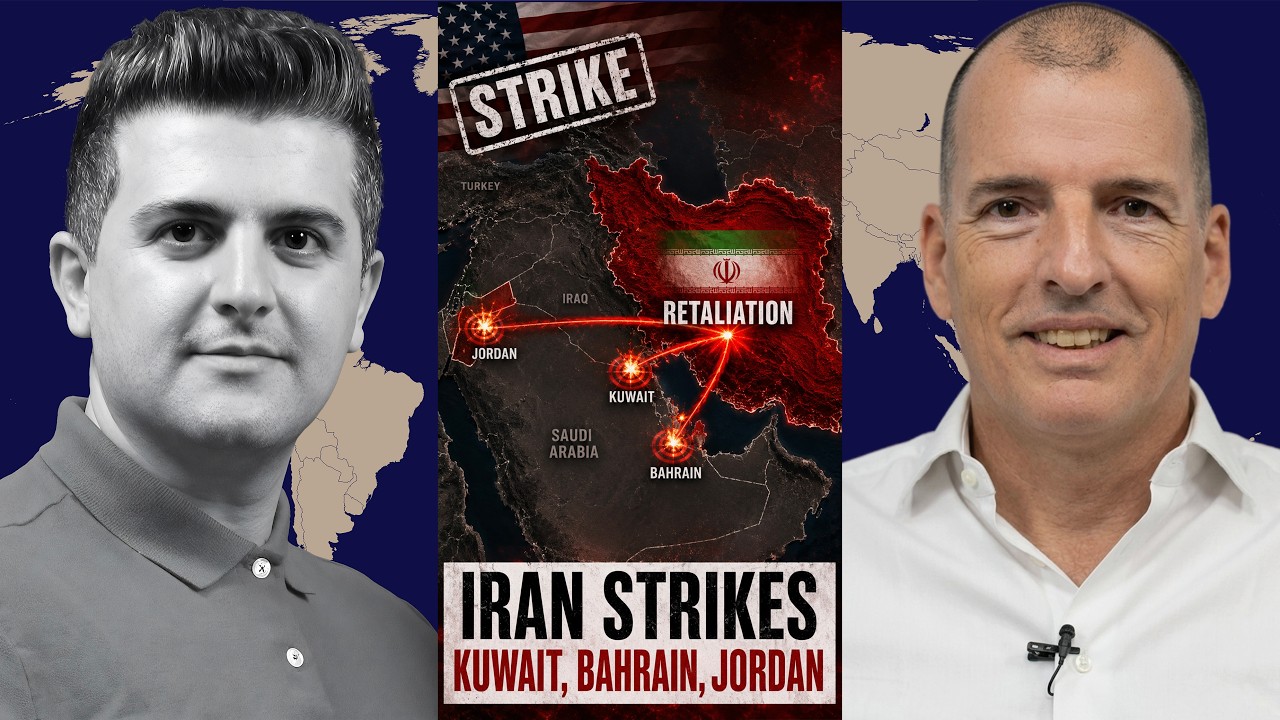
Alex Krainer: US STRIKES Iran – Iran RETALIATES Against Kuwait, Bahrain & Jordan!
"Amidst escalating US-Iran conflict and Iranian retaliation against regional US allies, this episode argues that US foreign policy is deeply controlled by an 'Anglo-Zionist conspiracy' led by the Rothschild banking dynasty, prioritizing Israeli interests over American ones."
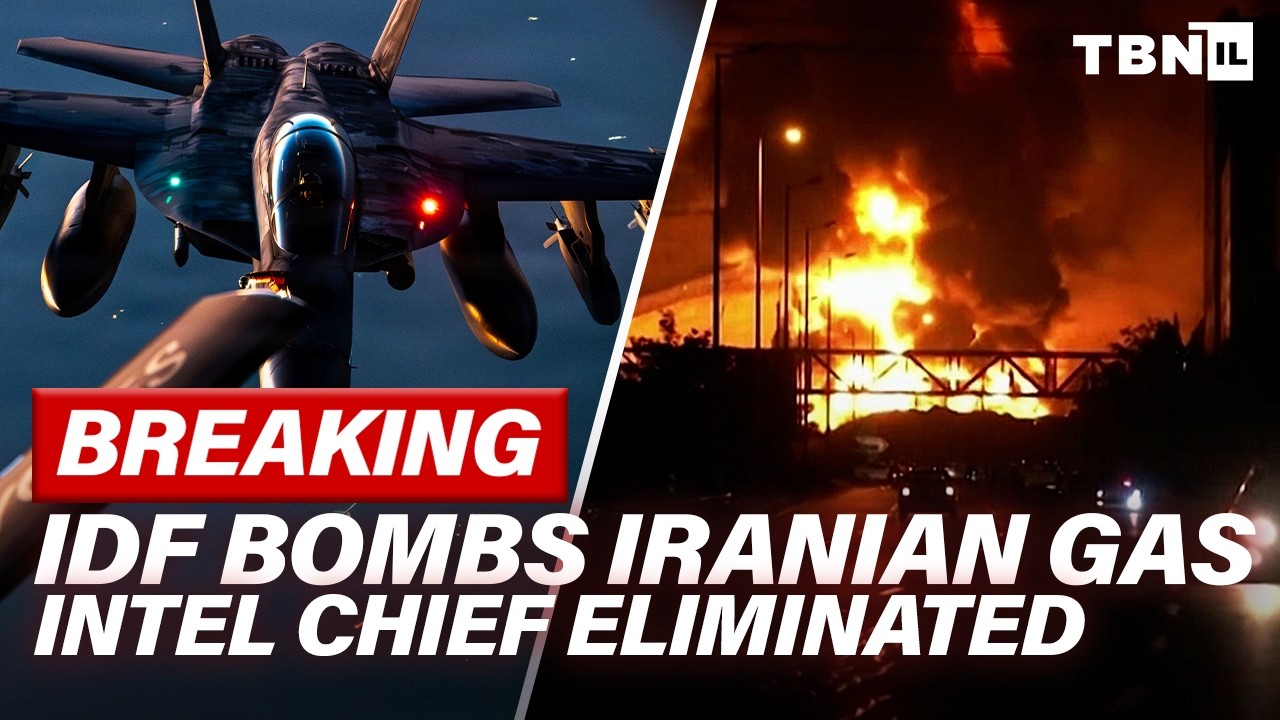
BREAKING: Israel BOMBS Major Iran Gas Site; Top Mullah ELIMINATED; Iran Vows VENGEACE | TBN Israel
"Israel and the United States have escalated their 'Roaring Lion War' against Iran, striking its largest gas facilities, eliminating key intelligence and military figures, and disrupting missile production, while Iran threatens a broader energy war in the Gulf."

LIVE: Trump HIDES FROM PUBLIC as US SOLDIER KILLED!!! 6/2/2026
"The host exposes alleged government cover-ups regarding military casualties, Trump's unexplained public absence, and questionable political appointments, arguing these reflect a 'regime of loser babies' and a failing foreign policy."