The Immortal Jim Crow. 'Goon Squad' Defamation Suit. Google Race Discrimination Case. #TheBreakdown
YouTube · -w9Z4v029GM
Quick Read
Summary
Takeaways
- ❖Two Black Mississippi men, Michael Jenkins and Eddie Parker, are suing Ranken County Supervisor Steve Gaines for defamation after he publicly called them 'rapists and drug addicts' following a $2.5 million police brutality settlement.
- ❖Google settled a class-action lawsuit for $50 million with Black employees who alleged systemic racial disparities in hiring, pay, and advancement, though the company denies liability.
- ❖The Indiana Black Expo (IBE) is transitioning its Circle City Classic from an HBCU football game to a high school football showcase and a future HBCU basketball invitational due to declining attendance, escalating costs (up to $1M for two teams/bands), and recent DEI funding cuts.
- ❖Author Richard Lyles argues in 'The Immortal Jim Crow' that Jim Crow laws did not end in 1965 but evolved, continuing to shape housing patterns, incarceration rates, and economic disparities for Black Americans.
- ❖A Black man in Tampa, Florida, was racially profiled by police after Chase Bank employees called, suspecting him of planning a robbery while he waited for the bank to open, despite another person also waiting nearby.
Insights
1Mississippi Officials Sued for Defamation After Police Brutality Settlement
Michael Jenkins and Eddie Parker, two Black men who received a $2.5 million settlement from the Ranken County Sheriff's Department for police brutality, are now suing County Supervisor Steve Gaines for defamation. Gaines was recorded publicly referring to them as 'rapists and drug addicts,' despite their lack of charges or convictions for such crimes. This lawsuit highlights the ongoing struggle for accountability and dignity even after initial legal victories against state violence.
Leaked audio revealed Gaines saying the sheriff's attorney 'beat the pants off those guys, the dopers, the people that rape and dope your daughters.' Jenkins and Parker were subjected to torture and beatings by deputies in 2023, leading to prison sentences for six officers in 2024.
2Google Settles Racial Discrimination Lawsuit for $50 Million
Google reached a $50 million settlement in a class-action lawsuit alleging systemic racial discrimination against Black employees. The lawsuit, initiated by former employee April Curley, claimed Google directed Black workers into lower-level, lower-paid positions and fostered a hostile work environment for those who spoke out. The settlement includes measures for pay transparency, though Google maintains it does not admit liability.
The lawsuit, filed in 2022 and later gaining class-action status, stated Google 'follows a pattern and practice of unfair treatment towards its black workers.'
3Indiana Black Expo Reimagines Circle City Classic Due to Financial Pressures
The Indiana Black Expo (IBE) is transforming its long-standing Circle City Classic, moving away from the traditional HBCU football game to a high school football showcase, with plans for an HBCU basketball invitational in 2027. This strategic pivot is driven by declining attendance, the explosion of other HBCU classics, and a drastic increase in costs (from under $300,000 to nearly $1 million for two teams and bands). Crucially, the IBE lost significant funding in 2025 due to DEI (Diversity, Equity, and Inclusion) cuts, forcing a reevaluation of how to sustain its mission of showcasing HBCUs and supporting community programming.
Attendance began to decline in 2018 as the number of classics grew from 10 to 27. Costs for two teams with bands rose to nearly $1 million nationally, with IBE paying around $600,000 in 2023-2024. The 'ceiling fell' in 2025 due to DEI cuts, eliminating funding for the HBCU classic.
4Jim Crow's Enduring Legacy: An 'Immortal' System
Author Richard Lyles argues that Jim Crow laws did not truly end in 1965 but rather evolved, continuing to exert influence through modern policies and societal structures. He contends that America's educational system propagates a false narrative of Jim Crow's demise, akin to the 'post-racial America' myth after Obama's election. Lyles highlights how policies established during the Jim Crow era, such as housing patterns and disproportionate incarceration rates, persist today, effectively maintaining segregation and limiting Black economic freedom.
Lyles cites the Supreme Court's voting rights restrictions eliminating Black districts, the 'war on drugs' increasing female incarceration by 800%, and persistent housing segregation (e.g., Black people living west of railroad tracks in Palm Beach County since the 1800s). He notes that schools are as segregated today as in 1968.
Bottom Line
The integration movement, while achieving civil rights, inadvertently led to the decimation of Black economic strength and community cohesion by allowing white institutions to 'cherry-pick' the best of Black talent and businesses, leading to a 'self-loathing' that caused Black people to turn their backs on each other.
This perspective suggests that the pursuit of integration without securing economic levers of power resulted in a net loss for Black communities, challenging the conventional narrative of civil rights progress.
Re-evaluating integration's economic impact could inform strategies for building robust, self-sustaining Black communities and businesses, prioritizing internal investment and collective economic empowerment over external validation.
The Indiana Black Expo's pivot from HBCU football to high school showcases and basketball invitationals, partly due to DEI funding cuts, reveals the vulnerability of Black cultural institutions to shifting political and economic landscapes.
This demonstrates that even established events celebrating Black culture and education are not immune to external financial pressures, underscoring the need for diverse and resilient funding models.
Organizations can proactively diversify revenue streams, cultivate broader community support beyond traditional event models, and advocate for stable, long-term funding for DEI initiatives to safeguard vital cultural and educational programming.
Lessons
- Support Black cultural and educational institutions like the Indiana Black Expo by attending events, donating, and staying engaged to ensure their sustainability amidst financial challenges.
- Educate yourself and others on the enduring impact of Jim Crow-era policies and systemic racism in areas like housing, education, and the justice system to challenge the narrative of a post-racial society.
- Engage in local political processes, including school board and city council elections, to ensure policies support equitable outcomes and prevent the erosion of Black history and diversity initiatives.
Notable Moments
The host, Britney Noble, shares her personal story of how attending a 'Gateway Classic' HBCU game as a child exposed her to HBCUs and led her to become the first person in her family to graduate college, underscoring the profound impact of such events.
This personal anecdote powerfully illustrates the direct, life-changing educational and aspirational value that HBCU events and related programming provide to young Black individuals, reinforcing the importance of the Indiana Black Expo's mission.
Richard Lyles recounts his childhood experience of nearly being placed in special education in first grade due to an assumption about his background, despite reading at a third-grade level, highlighting the insidious nature of racial bias in education.
This personal story provides concrete evidence of how systemic biases, rooted in Jim Crow-era assumptions, can derail a child's educational trajectory, even in 'integrated' settings, and emphasizes the critical role of parental advocacy.
A video clip shows a Black man being questioned by police for 'acting squirrely' while waiting for a Chase Bank to open, despite another person also waiting, and the man explicitly stating he was a customer with a large withdrawal to make.
This incident serves as a stark, real-time example of racial profiling and the persistence of baseless suspicion towards Black individuals in everyday situations, illustrating how Jim Crow's 'immortal' legacy manifests in contemporary interactions with institutions.
Quotes
"When we first started, we were one of five and and the original in the Midwest and our attendance levels were, you know, kind of crazy. We were in the Hooser Dome and the Hooser Dome capacity was 60,000. And so as we, you know, kind of transformed over and moved over to Lucas Oil Stadium, we were still commanding fairly decent numbers, but the the trend was starting to go down because quite frankly, as as we were doing our classic, classics across the country were exploding. So you went from probably a total of 10 classics to 27 classics by 2018."
"It used to be back in the day you could easily get two games for under $300,000. uh two teams with bands had trended upwards to close to a million dollars."
"Well, in 2025, the ceiling fell on top of us as a result of DEI cuts. We lost what we were paying for H.B.CU uh classic for the Circle City Classic."
"Well, black people knew that wasn't true then. And I want black people to know that Jim Crow never died and continues to exist now."
"You don't study history for the purpose of just studying history. You study history to understand the past and to predict the future."
"Martin Luther King said that I fear that I've integrated my people into a burning house. Well, by virtue of our educational system not teaching our children the importance andor how we got where we are through our bite for equality in this country. Uh, I fear that we are kind of behind the ball and and we have to take a more affirmative step and a more intentional step of making sure that our children uh can understand that they are under siege uh and that everything isn't good in America."
"They gave us the right to be able to eat in restaurants and to marry people uh of a different race, but they never ever gave us the levers of power to gain economic freedom."
"I mean, I've sat I I've sat outside of stores waiting for them to open up like like what that's like guy's like what you going to do easy wait for they asses to open."
Q&A
Recent Questions
Related Episodes
George Floyd 6 Years Later. Redistricting War in The South. Talarico Senate Campaign
"This episode exposes the ongoing legislative battles and strategic resistance against efforts to diminish Black political power, from federal policing reform to state-level gerrymandering and calls for economic boycotts by Black athletes."

"Mini" Super Tuesday Primaries. Bodycam Clears Black Teen. Haitian Heritage Month. #TheBreakdown
"This episode breaks down critical political developments, highlights the power of bodycam footage in exonerating a Black teen, celebrates Haitian heritage, showcases innovative arts education, and champions breast cancer awareness for Black women."
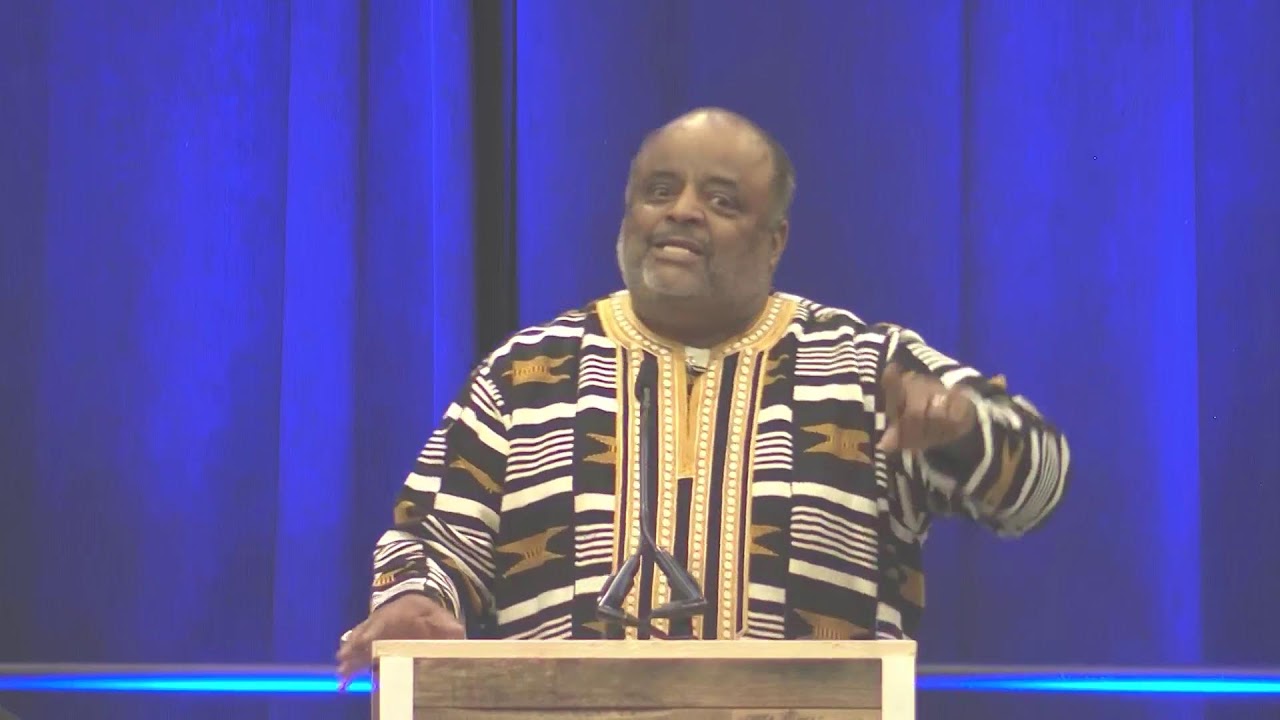
Roland speaks at Columbus Educ. Assoc. MLK Dinner
"Roland Martin challenges the audience at an MLK dinner to move beyond passive celebration and engage in active, sustained political and economic struggle, emphasizing that 'rest time is over' for those seeking real societal change."

All Roads Lead To the South: Nat’l Day Of Action For Voting Rights | Mass Rally | Montgomery, AL
"A mass rally in Montgomery, Alabama, ignites 'Freedom Summer 2026' to combat the Supreme Court's decimation of Black political power and demand unprecedented voter mobilization across the South."