Trump Indictment FALLS APART INSTANTLY?!?!
YouTube · 01gcISbai1k
Quick Read
Summary
Takeaways
- ❖The indictment against the Southern Poverty Law Center (SPLC) is viewed as disingenuous and politically motivated.
- ❖The SPLC's payments to informants within extremist groups were intended to dismantle those groups, not support them, often shared with law enforcement.
- ❖FBI Director Cash Patel's defamation lawsuit against The Atlantic is likely an attempt to control a damaging narrative about his conduct.
- ❖The investigation into former CIA Director John Brennan is seen as a weak, politically driven effort to re-litigate past events.
- ❖A career prosecutor was removed from the Brennan case for not finding sufficient evidence, replaced by a Trump campaign lawyer.
- ❖The DOJ and FBI are perceived as depleted and misdirecting resources towards politically charged cases rather than core functions.
Insights
1Southern Poverty Law Center Indictment: A Politically Motivated Attack with Weak Legal Basis
The DOJ's indictment of the SPLC for fraud and money laundering, based on their practice of paying informants within extremist groups, is considered legally specious. The SPLC used these informants to gather intelligence and expose criminal activities, often sharing information with the FBI, aligning with their stated goal to 'dismantle' such organizations. The indictment misrepresents this practice, failing to prove intent to defraud donors, especially given the lack of individual indictments.
Hosts Asha Rangapa and Renato Mariotti, both former federal prosecutors, dissect the indictment, comparing it to the Steve Bannon 'Build the Wall' fraud case. They argue that unlike Bannon's clear diversion of funds for personal gain, the SPLC's actions were consistent with its mission. The indictment's omission of context regarding informants' role in law enforcement and the SPLC's collaboration with the FBI is critical. The 1014 counts (false statements to a federally insured bank) related to concealing informant identities are technically stronger but still face jury skepticism given the necessity of such concealment.
2FBI Director Cash Patel's Defamation Lawsuit: A PR Stunt Likely to Fail
FBI Director Cash Patel has sued The Atlantic for defamation over an article alleging excessive drinking and impaired job performance. The hosts believe this lawsuit is a public relations move to combat negative press and secure his position, especially given Trump's known aversion to alcohol. They predict the case will be dismissed, potentially forcing Patel to pay The Atlantic's legal fees and risking further damaging revelations during discovery.
The Atlantic article, based on 'at least a dozen current and former employees,' detailed incidents like Patel being too drunk to respond to emergencies and needing his door breached. Patel's previous defamation suit against Frank Figuzzi was dismissed. To win, Patel must prove 'actual malice,' a high bar for public figures. The hosts note that the lawsuit itself references a 'technical issue' with his email, which the article framed as him panicking about being fired, highlighting inconsistencies in his narrative.
3John Brennan Investigation: A 'Jinned Up' Attempt to Re-Litigate Old Controversies
The DOJ is investigating former CIA Director John Brennan for alleged false statements to Congress regarding the inclusion of the Steel Dossier in a 2016 intelligence assessment. This is seen as a politically motivated effort to re-litigate the origins of the Russia investigation, using a technicality to target a perceived enemy. The case has faced internal resistance, with a career prosecutor removed for deeming evidence insufficient.
Brennan testified that the CIA opposed including the Steel Dossier as raw intelligence but compromised by allowing it as an appendix. The investigation alleges a discrepancy between his testimony and declassified documents suggesting his personal willingness to compromise. The hosts compare this to the 'Comey indictment' theory, a weak false statement claim. The removal of prosecutor Maria Meditas Long and the appointment of a Trump campaign lawyer, Joe Deanova, to lead the investigation further underscore its political nature. FBI agents' attempts to conduct voluntary interviews were abruptly replaced by subpoenas, then withdrawn, indicating confusion and lack of professional process.
Lessons
- Scrutinize claims of fraud or misconduct by government officials and organizations, especially when legal theories appear weak or politically convenient.
- Be aware of how federal law enforcement resources may be diverted to politically motivated investigations, potentially at the expense of national security or civil rights.
- Understand the high legal bar for defamation claims by public figures, as such lawsuits can be used more for narrative control than genuine legal redress.
Notable Moments
The hosts highlight the irony of the DOJ targeting the SPLC for paying informants when law enforcement agencies routinely use paid informants, including within criminal organizations, to gather intelligence and build cases.
This comparison underscores the perceived hypocrisy and political motivation behind the SPLC indictment, suggesting a double standard applied to a civil rights organization compared to government agencies.
A career prosecutor, Maria Meditas Long, was removed from the John Brennan investigation after concluding there was insufficient evidence for a criminal case, and a Trump campaign lawyer was brought in.
This incident strongly suggests political interference in the investigative process, prioritizing political objectives over prosecutorial integrity and evidence-based decision-making.
Quotes
"The actual legal theory that's put in this indictment is a little, in my opinion, disingenuous, specious."
"There's a difference about whether one can have a reasonable disagreement about the wisdom of the practice and to call it a federal crime."
"Who does this help when there's so much scrutiny on the informants that the SPLC has in right-wing extremist organizations? Because that effectively neutralizes those informants..."
"I don't think an honest looking person, an honest person looking at these facts would draw that conclusion."
"This is just in my mind an abuse of the process to try to dissuade criticism against against government official."
"The criminal justice system and the nature of investigations... which take time, the criminal justice system which actually requires like real evidence... is getting in the way of what Trump wants."
Q&A
Recent Questions
Related Episodes
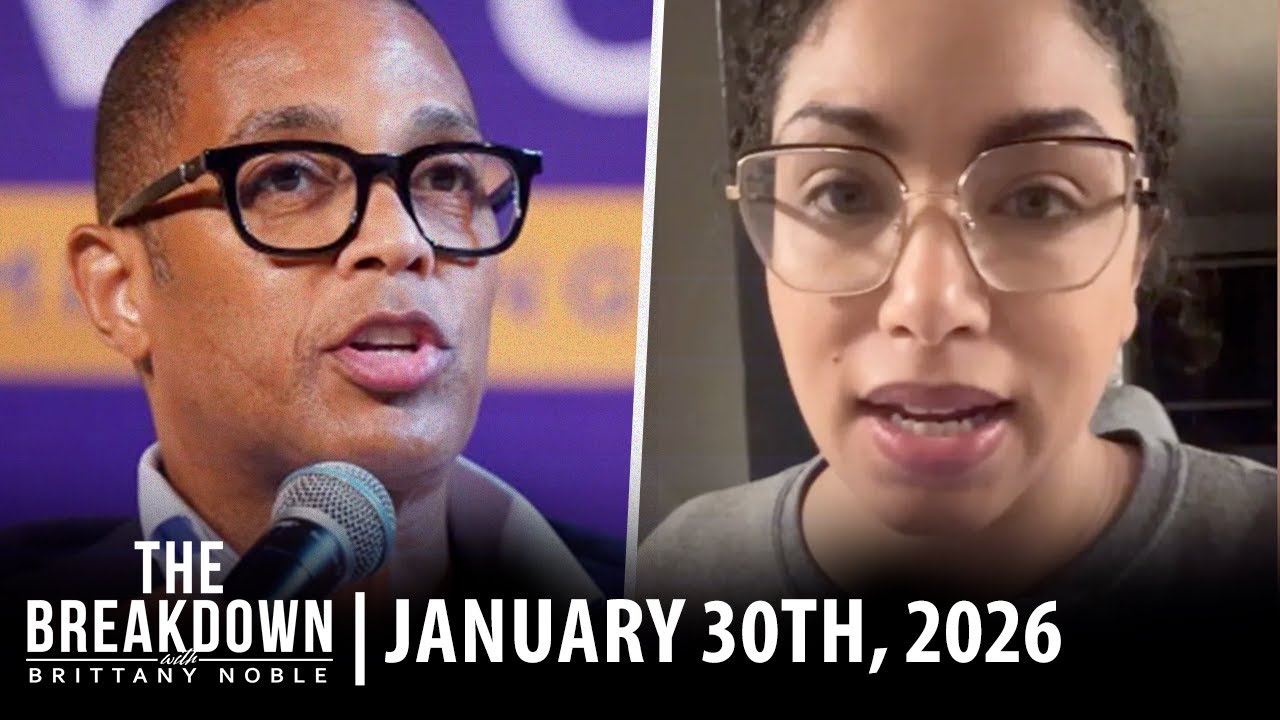
rump’s DOJ arrests journalists Don Lemon, Georgia Fort
"Federal agents arrested prominent journalists Don Lemon and Georgia Fort for covering a church protest, sparking widespread condemnation and raising critical questions about First Amendment rights and the weaponization of the Justice Department."
George Floyd 6 Years Later. Redistricting War in The South. Talarico Senate Campaign
"This episode exposes the ongoing legislative battles and strategic resistance against efforts to diminish Black political power, from federal policing reform to state-level gerrymandering and calls for economic boycotts by Black athletes."
DeSantis Map Sued in Florida. Tennessee Targets Black District. FBI Raids Louise Lucas
"This episode exposes aggressive Republican gerrymandering efforts in Florida and Tennessee, a politically charged FBI raid on a Virginia Democratic leader, and disproportionate death penalty sentences against Black individuals in Tarrant County, Texas, framing them as a systemic assault on Black political power and civil rights."

LIVE: Ex-TOP Prosecutor BREAKS SILENCE On Trump Election Scheme | The Weekend Show
"Former Assistant Attorney General for Civil Rights, Kristen Clark, details how a recent Supreme Court ruling delivered a 'death nail' to the Voting Rights Act, exposing a coordinated agenda to dismantle civil rights and consolidate white political power."