'NOT America First!' Tucker Carlson On Iran, Trump, Ben Shapiro, Cruz & More!
YouTube · 05Ht361gLok
Quick Read
Summary
Takeaways
- ❖The US-Iran war is not beneficial for the United States and no one is making a logical case for it.
- ❖The war was likely initiated by Israel, with US involvement driven by external pressure on President Trump.
- ❖US engagement in the Middle East has weakened American influence, potentially ceding regional dominance to China.
- ❖Accusations of 'anti-Semitism' are a deliberate strategy to silence critics of Israel and prevent scrutiny of its actions.
- ❖The 'America First' principle demands prioritizing US interests above all others, which Carlson believes this war fails to do.
- ❖The Republican party's current stance on foreign policy alienates its core voter base, leading to a fractured coalition.
- ❖Unconditional surrender in warfare historically leads to mass killing, rape, and looting, making it an extreme and dangerous demand.
- ❖True justice and human rights require universal application, meaning bias against any group (e.g., anti-white bias) is as immoral as anti-Semitism.
Insights
1US-Iran War: A Betrayal of America First Principles
Carlson contends that the US involvement in the Iran war is not in America's national interest. He argues that the war was instigated by Israel, with Prime Minister Netanyahu having attempted similar strategies with previous US presidents. The war has led to Iran strengthening its control over the Strait of Hormuz, increasing oil prices, and damaging US alliances in the Gulf, ultimately paving the way for China to become the dominant power in the region. This outcome directly contradicts the 'America First' agenda.
Carlson states, 'It's perfectly reasonable to believe that Israel led the US into this war in Iran.' He points out that Iran is now exporting more oil and controlling the Strait of Hormuz, while the US has moved anti-missile defenses from Gulf allies to Israel, leaving them vulnerable. He concludes, 'The net effect is to hand the Middle East to the Chinese.'
2Weaponization of Anti-Semitism to Silence Dissent
Carlson asserts that accusations of 'anti-Semitism' are a calculated tactic used by proponents of the war, like Ben Shapiro and Ted Cruz, to silence critics of Israel and US foreign policy. He views this as an attempt to create unquestioning loyalty to Israel, imperil those labeled 'Nazis,' and censor dissenting voices. He emphasizes that criticizing the Israeli government is not equivalent to hating Jewish people or being anti-Semitic.
Carlson states, 'They say, 'Well, you hate Jews.' To which I always say, 'Not only do I not hate Jews. I think anti-semitism is immoral. It's against my religion. Shut up. You hate Jews.' And that is designed to do a bunch of different things. Create more loyalty to Israel... imperil the person you're calling a Nazi... and the third is to make people who disagree with you... censor them, take them off the air, shut them up, silence them.'
3Erosion of US Sovereignty and Presidential Power
Carlson believes that the US president operates under severe constraints, lacking true sovereignty, especially concerning foreign policy. He suggests that external 'forces,' particularly advocates for Israel, exert enormous pressure, effectively dictating US actions. This dynamic, he argues, undermines the democratic process and the ability of a president to act solely in the interest of the American people.
Carlson states, 'It's very obvious now that the US president under our current system... doesn't have the latitude that people thought he had... If we're following a country of 9 million people into a war that could displace us as the dominant superpower, we don't have sovereignty. I mean, by definition.' He cites Anthony Blinken's admission that Netanyahu threatened to act first, forcing the US to join.
4The Meaning and Consequences of Unconditional Surrender
Carlson clarifies his controversial statement about 'unconditional surrender,' explaining that historically, it implies a complete lack of defense, leading to mass killing, rape, and looting. He was not accusing US troops of such acts, but rather highlighting that demanding unconditional surrender is an extreme and unrealistic diplomatic stance that eliminates negotiation and escalates conflict, ultimately harming American interests.
Carlson explains, 'Unconditional surrender is a lot to ask of anybody because it throws open any possibility... Unconditional surrenders historically have always been followed by mass killing, rape, and looting because there's no defense.' He adds, 'It's not about attacking American troops. It's about assessing whether that kind of threat is going to get you what you want.'
Bottom Line
The current US foreign policy, particularly regarding the Middle East, is inadvertently accelerating China's rise as a dominant global power by creating power vacuums and alienating traditional US allies in the region.
This suggests that US actions, intended to secure specific interests or support allies, are having unintended, counterproductive geopolitical consequences, shifting the global balance of power away from the US.
Policymakers could re-evaluate long-term strategic impacts of regional conflicts, focusing on how interventions might inadvertently benefit geopolitical rivals and exploring alternative diplomatic or economic strategies to maintain influence without military overextension.
The 'America First' political coalition that elected Donald Trump is fundamentally fractured by his administration's foreign policy decisions, particularly the Iran war, which is seen as a betrayal of core promises.
This fracture indicates a significant ideological realignment within the conservative movement, potentially leading to the collapse of the current Republican party structure and the emergence of new political alignments or parties.
Political strategists and aspiring leaders could capitalize on this disillusionment by articulating a genuinely 'America First' platform that prioritizes domestic issues and non-interventionist foreign policy, appealing to the disaffected voters who originally supported Trump.
Key Concepts
America First
The principle that US foreign and domestic policy decisions should prioritize the interests and well-being of American citizens above those of any other nation or group. Carlson argues the current Iran war explicitly violates this by serving Israeli interests first.
Weaponization of Accusations
The tactic of using serious accusations, such as 'anti-Semitism,' not to address genuine prejudice, but to silence political dissent, discredit opponents, and prevent critical examination of specific policies or governments (in this case, Israel's actions).
Universal Principles of Justice
The idea that fundamental rights and ethical standards (like freedom from bias or the right to individual treatment) must apply equally to all human beings, regardless of their background or group affiliation, for them to be valid and meaningful.
Lessons
- Critically evaluate foreign policy narratives, especially those advocating for military intervention, by questioning who benefits and whether the proposed actions align with explicit national interests.
- Scrutinize accusations of 'anti-Semitism' or other forms of bigotry when used to silence criticism of governments or policies, ensuring genuine prejudice is addressed without stifling free speech.
- Recognize that political leaders, even powerful ones, may be operating under significant external pressures, and investigate the sources and nature of these influences.
Notable Moments
Carlson reveals he met with President Trump three times in a month to try and dissuade him from going to war with Iran, but was unsuccessful.
This highlights the intense internal and external pressures on a US President regarding foreign policy decisions, even from close allies or influential figures like Carlson, and suggests a limit to a President's independent decision-making power.
Carlson recounts Franklin Graham sending a letter to Trump calling Carlson an 'anti-Semite' and telling Trump not to talk to him, and Graham refusing Carlson's call to discuss it.
This illustrates the aggressive tactics used by some evangelical leaders to enforce a specific pro-Israel stance, even against fellow conservatives, and Carlson's view that such behavior is 'unchristian' and divisive.
Quotes
"If killing an 86-year-old religious leader didn't cause a spontaneous creation of a pro-western government, which was apparently Ted Cruz's plan. If that didn't work, what would happen? Well, China would take over."
"It's perfectly reasonable to believe that Israel led the US into this war in Iran, not least because Marco Rubio said it and Anthony Blinken said Netanyahu trade tried the same strategy with the two previous presidents."
"I have no allegiance to any foreign country, only my own, the one in which I was born, unlike Ted Cruz, who's Canada."
"Our relationship with Israel is hurting us gravely. It's getting Americans killed. So, they're mad, but it's more than mad. It's I can't believe he did this to us."
"Unconditional surrender means foreign troops get to rape your wife and daughter if they want. And everyone knows that. And that has been, if there's one consistent lesson of history, it means unconditional surrender means foreign troops get to rape your wife and daughter."
"It is better to let people get away with crimes than it is to punish a single innocent man. That's always been a bedrock assumption of American justice and of justice itself. You can't punish the innocent."
Q&A
Recent Questions
Related Episodes
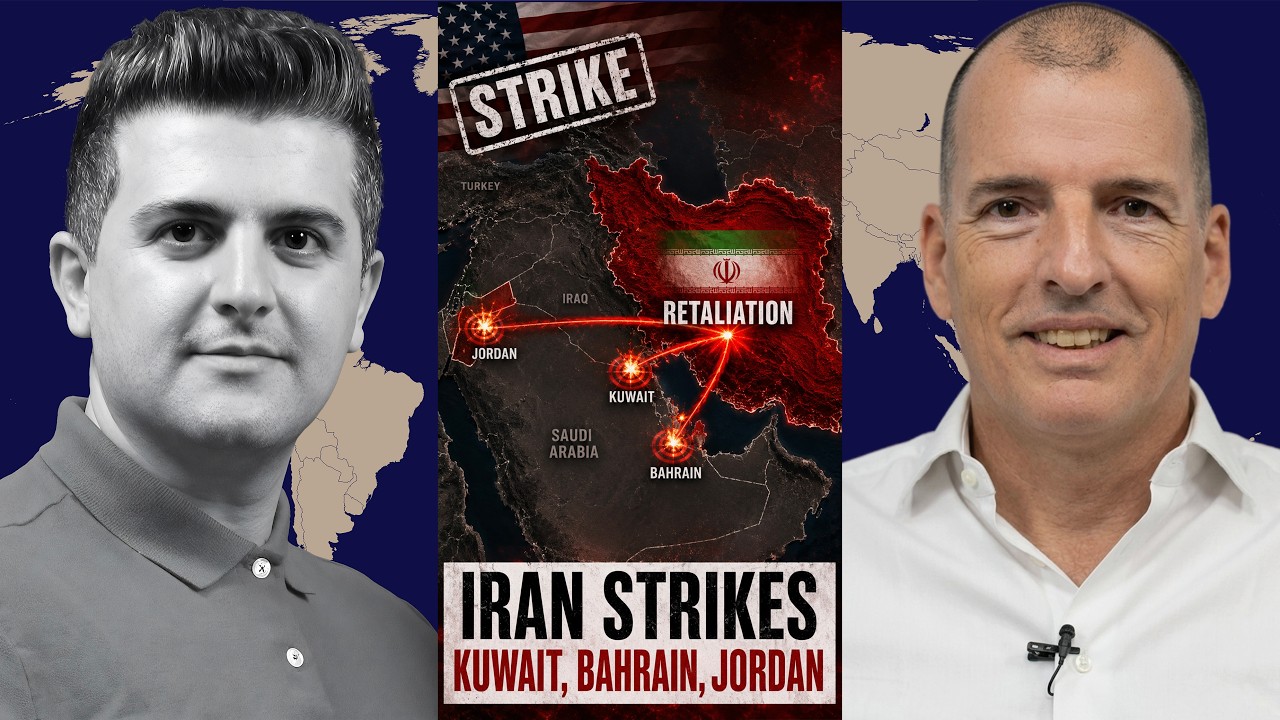
Alex Krainer: US STRIKES Iran – Iran RETALIATES Against Kuwait, Bahrain & Jordan!
"Amidst escalating US-Iran conflict and Iranian retaliation against regional US allies, this episode argues that US foreign policy is deeply controlled by an 'Anglo-Zionist conspiracy' led by the Rothschild banking dynasty, prioritizing Israeli interests over American ones."

Trump Just ENDED JD Vance’s White House Dreams
"A New York Times article and internal White House dynamics reveal Donald Trump's deep dissatisfaction with J.D. Vance, potentially ending Vance's 2028 presidential ambitions and highlighting a broader struggle for control within the Republican Party."

Iran Update: Israel’s Newest Bombing Campaign, the Oncoming War With China and How to Avoid It
"Colonel Wilerson reveals how the US and Israel are actively bombing China's strategic infrastructure in Iran, escalating a covert economic war that Beijing intends to win without direct military conflict by dismantling the dollar's global dominance."

Patrick Henningsen: Hezbollah JUST Fired Back at Israel - Iran Vows to “Crush” All Attacks
"Patrick Henningsen argues that the US and Israel initiated an illegal war against Iran, driven by Trump's incompetence and Israeli influence, leading to an inevitable escalation with severe global economic repercussions."