
3 True Scary Stories from Private Investigators
YouTube · 0APEB4tnDvI
Quick Read
Summary
Takeaways
- ❖A PI's first solo assignment, initially an infidelity case, exposed a husband's participation in organized violent raids against homeless camps.
- ❖A former police officer turned PI suffered a mental breakdown after his investigation into infidelity led a client to shoot and paralyze his wife, with devastating family consequences.
- ❖The PI's friend realized that providing information to clients, regardless of their intent, can lead to severe harm, highlighting the 'nature of the beast' in private work.
- ❖An investigation into a missing man's sudden personality change and obsession with classical Arabic texts revealed a critical misinterpretation of numbers: '777' was actually '666' in Arabic script.
- ❖The PI's discovery of '666' graffiti on elementary schools, combined with the missing man's violent tendencies, led to a confrontation where the PI was shot but ultimately prevented a potential school attack.
Insights
1Infidelity Investigations Can Uncover Far More Sinister Crimes
A routine surveillance job for a cheating husband unexpectedly revealed his involvement in a series of violent attacks on the local homeless population. The PI's initial goal was to confirm infidelity, but his persistence led to the arrest of the husband and three other men for organized assaults.
The PI followed 'Mark' to a patch of woods, where he met another man, and they donned ski masks and took out hammers/hatchets before heading towards a campfire. Screams soon followed, linking 'Mark' to a spate of attacks on the town's homeless community.
2The Ethical Peril of Private Investigation: Information Misuse
A former police officer turned PI provided evidence of infidelity to a client, who then used that information to track down and shoot his wife, leaving her paralyzed. This incident, coupled with the subsequent tragic death of their daughter, caused the PI immense guilt and led him to quit the profession, realizing that PIs work for anyone with money, without control over how the information is used.
The PI's friend, after providing proof of infidelity, saw the client's face in the newspaper a week later for shooting his wife six times. The wife survived but was paralyzed, and their high school-aged daughter died in a drunk driving accident, leading to the PI's mental breakdown and career change.
3Linguistic Nuance Can Be a Critical Clue in Complex Cases
While investigating a missing man obsessed with classical Arabic texts, a PI discovered that the number '777' written in the man's notebook and on a bar napkin was actually '666' when interpreted using Arabic numerals. This crucial linguistic insight transformed the case from a simple missing person search into a potential religious mania or satanic fixation, directly linking the man to threatening graffiti on elementary schools.
The PI's research into pre-Islamic calligraphy revealed that Arabic 'sixes' look like Western 'sevens' with a curved top line, matching Joe's handwriting. This led the PI to realize Joe was writing '666', not '777', which was also found as graffiti on local elementary schools.
4PI's Intuition and Persistence Can Prevent Mass Tragedies
Despite police skepticism regarding his '666' theory and concerns about potential school attacks, the PI's persistent investigation and strong intuition led him to confront the missing man, Joe. This confrontation, though resulting in the PI being shot, ultimately led to Joe's arrest and the discovery of a large arsenal, preventing what the PI believed was a planned attack on elementary schools.
The PI's dream of burning schools and children on fire, combined with his 'bad feeling,' prompted him to continue investigating. He encountered Joe, recognized him, and after a brief exchange, Joe pulled a gun and fired. The PI returned fire, hitting Joe, who was later arrested with multiple firearms and ammunition.
Bottom Line
The 'nature of the beast' in private investigation means accepting clients who may use information for malicious intent, creating a constant ethical tightrope.
PIs must develop a robust internal ethical framework and be prepared to refuse cases or take personal risks when client intentions appear dangerous, as the legal system may not always connect the dots.
Develop specialized PI services that include a 'threat assessment' or 'intent verification' phase, potentially offering legal or psychological counseling resources to clients to mitigate misuse of information, or focus exclusively on cases with clear, ethical objectives.
Lessons
- When investigating, always consider the potential for information to be misused and the broader implications of your findings, especially in sensitive cases like infidelity.
- Cultivate a 'leave no stone unturned' mindset, as seemingly insignificant details (like a partially burned notebook or a miswritten number) can unlock critical breakthroughs in complex investigations.
- Develop a strong understanding of cultural and linguistic nuances relevant to your cases, as misinterpretations can lead to missed clues or misjudgments of intent.
Notable Moments
The PI's first solo assignment, intended to uncover infidelity, instead reveals the husband's involvement in violent assaults on homeless individuals.
This moment dramatically shifts the narrative from a domestic issue to a serious criminal investigation, highlighting the unpredictable nature of PI work.
A former cop turned PI experiences a mental breakdown after his infidelity findings lead a client to shoot and paralyze his wife, with tragic consequences for their family.
This illustrates the severe psychological toll and ethical burden PIs can face when their work is exploited for violence, leading to a profound reevaluation of their profession.
The PI discovers that the number '777' written by the missing man is actually '666' in Arabic numerals, completely recontextualizing the investigation into a potential religious or satanic fixation.
This linguistic breakthrough is the pivotal moment that connects the missing man's strange behavior to a specific, ominous threat, demonstrating the power of interdisciplinary knowledge in investigations.
The PI confronts the missing man, Joe, and is shot, but his actions lead to Joe's arrest and the prevention of a potential attack on elementary schools.
This climactic confrontation showcases the extreme personal risk PIs sometimes take and the critical impact their individual courage can have on public safety.
Quotes
"In our business, there wasn't much room for happy endings."
"When you work privately, you work for anybody who's got the money, and then there's no telling what they're going to do with the info you provide them."
"If there's one thing being an investigator of any kind teaches you, it's to leave no stone unturned."
"I just know that if I had to take those two bullets so that all those kids didn't, it seems like a fair enough trade to me."
Q&A
Recent Questions
Related Episodes
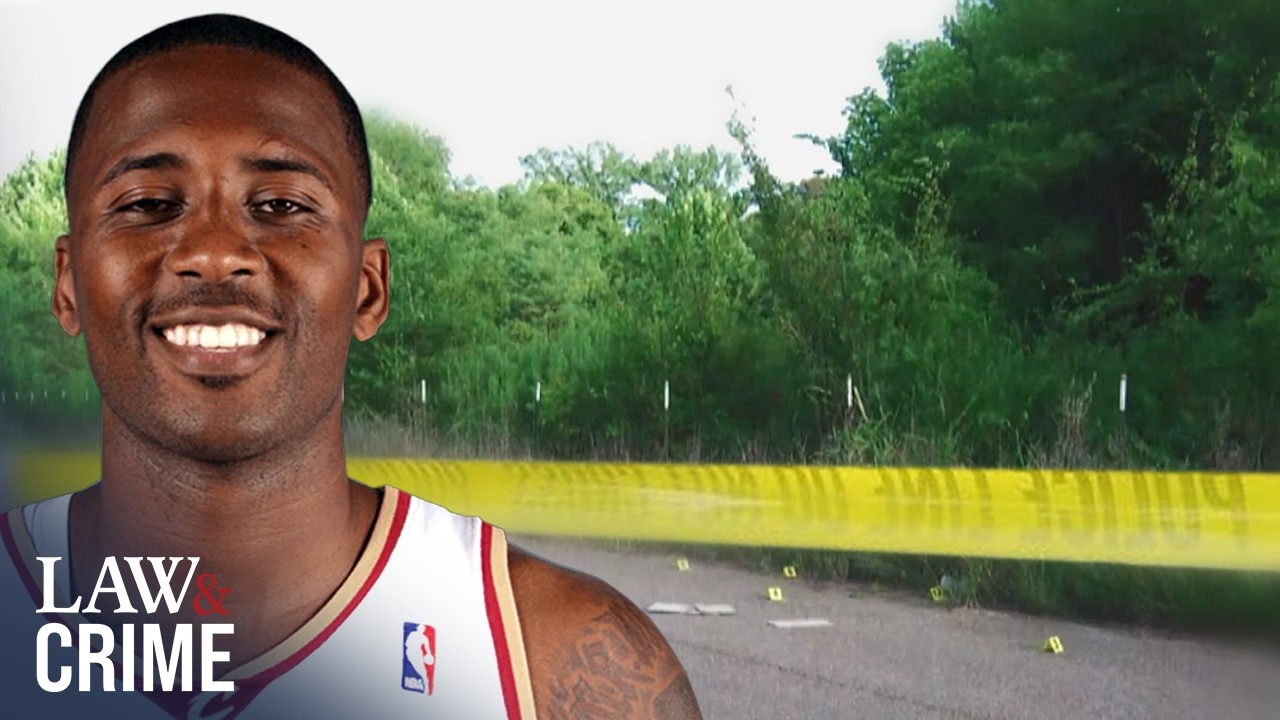
Killer Cases: NBA Star Lured to Execution In Rural Tennessee
"The decade-long cold case of NBA star Lorenzen Wright's murder was cracked through a persistent mother, a jailed informant, and a covert police operation that recovered the murder weapon from a lake and exposed a conspiracy driven by greed."

Sadhguru - Stop Letting Your Mind DESTROY You | SRS #315
"Sadhguru challenges conventional wisdom on 'being in the moment' and stress, arguing that mastering the mind requires understanding its sophisticated design and consciously directing one's internal chemistry for profound well-being."

Every Time You Think This Story Can't Get Weirder—IT DOES | The Trio
"A bizarre tale unfolds in MAGA D.C. as a Students for Trump founder and his associate are arrested, revealing a two-week-long Secret Service impersonation scheme involving fake badges, club entry, and claims of ordering airstrikes."

TEEN'S DNA REVEALED IN ANNA KEPNER'S R*** KIT
"The investigation into Anna Keaptainner's death on a cruise ship reveals shocking DNA evidence, a previously unknown male minor, and critical questions about evidence handling and family dynamics."