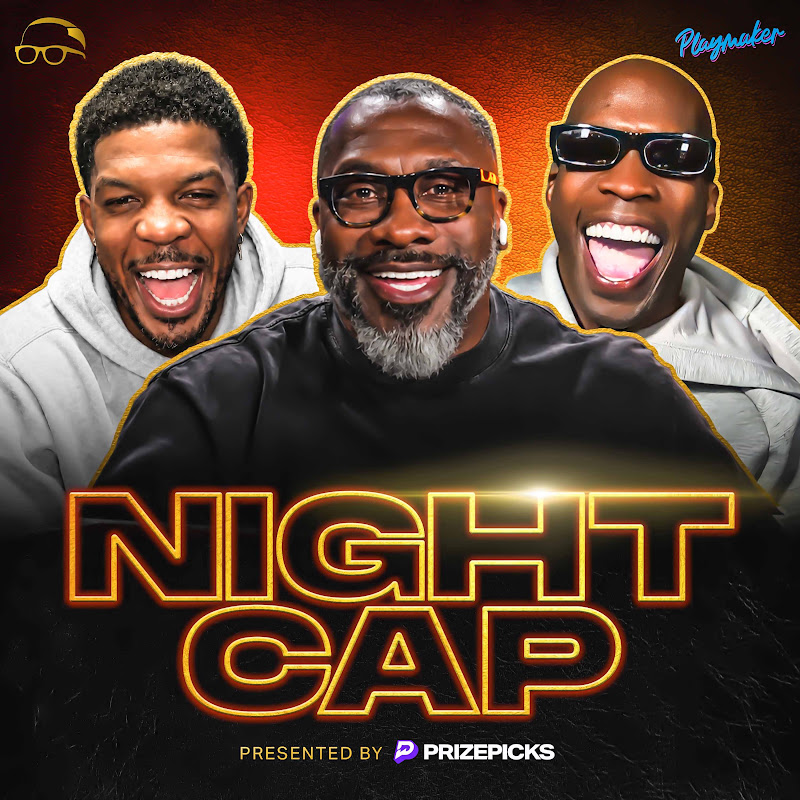
Unc & Ocho LIVE from WWE WrestleMania Radio Row: Jey Uso, CM Punk, LA Knight & MORE join | Nightcap
YouTube · 0Rc94pvUy8s
Quick Read
Summary
Takeaways
- ❖Women's wrestling has achieved unprecedented athleticism and visibility, with a diverse roster of top-tier athletes.
- ❖The Samoan wrestling dynasty, initiated by Peter Maivia, provided a pathway out of difficult circumstances for many family members, including Jacob Fatu.
- ❖Charlotte Flair's career is deeply motivated by her late brother's dream, driving her relentless pursuit of being the 'best' in wrestling, transcending gender comparisons.
- ❖CM Punk views his return to WWE as validation, fueled by an obsession with wrestling and a commitment to leading by example for younger talent.
- ❖LA Knight acknowledges the growing crossover appeal of celebrities like Logan Paul and IShowSpeed in WWE, while emphasizing the unique physical demands and skills of professional wrestling.
- ❖Bull rider John Kramer started riding bulls at age six, highlighting a culture where early exposure to high-risk sports is common, and success comes from mastering fundamentals and studying animal behavior.
- ❖Carmelo Hayes stresses the importance of patience and adaptability in WWE, noting that true confidence stems from mastering challenges in the 'trenches' before reaching the main stage.
- ❖Being a wrestling couple like Alistair Black and Zelina Vega offers unique advantages in shared understanding and travel, but also challenges in balancing creative differences and personal aspirations.
- ❖The 'monotony of greatness' involves loving the repetitive process of training and self-improvement, a key differentiator for sustained success in demanding careers.
Insights
1Evolution of Women's Wrestling and Persistent Disparities
Nia Jax and Lash Legend highlight the dramatic transformation of women's wrestling, emphasizing the current roster's athleticism, beauty, and confidence. They note that women are now on par with men in terms of opportunities and visibility. However, Nia Jax points out that despite this progress, historical pay disparities persist, with many women needing to work longer careers to achieve financial stability compared to their male counterparts.
Lash Legend states, 'We are the best it's ever been. This is the most athletic roster that WWE's ever seen.' () Nia Jax adds, 'for the women in WWE it's taken us a long time to get to a certain level of pay respectable.' ()
2Family Legacy and Redemption in Samoan Wrestling
Jacob Fatu details how the Samoan wrestling dynasty, starting with Peter Maivia, provided a crucial path for his family to escape difficult circumstances. He emphasizes that wrestling was not just a career but a means of redemption and financial stability, keeping family members out of trouble. His personal journey, marked by past mistakes and incarceration, underscores the transformative power of the sport and the grounding influence of his wife and seven children.
Jacob Fatu explains, 'It came from The Rock's grandfather, Peter Mia. First one to work for the company... it kept them out of that kept them out of the out of jail, kept them out of out the way. It kept them to be free to take care of our families.' () He later states, 'this was the way for me to change my life and to give my kids a better future.' ()
3Charlotte Flair's Drive: A Legacy of Grief and Unrivaled Ambition
Charlotte Flair reveals that her wrestling career was initially inspired by her late brother, Reed, who tragically passed away from drug addiction. She pursued wrestling to fulfill his dream, which later evolved into her own. Her motivation remains 'to be the best,' viewing WrestleMania as her Olympics or Super Bowl. She aims to have her name recognized alongside male legends, refusing to be categorized separately by gender, and constantly adapts her character to maintain relevance.
Charlotte Flair states, 'My little brother had a really bad drug addiction... when he passed away, I didn't know how to move forward except like this is what he wanted to be and I'm going to be this.' () She later asserts, 'My name will be with those guys. Don't separated. No separating.' ()
4CM Punk's Obsession and Post-Hiatus Growth
CM Punk describes his career as an 'obsession' since childhood, which has carried him through various challenges. He views his return to WWE as 'validation' and is 'overflowing with gratitude' for his numerous opportunities. His time away from wrestling allowed for significant personal growth, including getting married and shedding past grudges, which he attributes to improved communication and a focus on self-improvement. He continues to be motivated by setting new age-related performance bars and leading by example for younger talent.
CM Punk states, 'This is far less about the talent. It's about the obsession. I've been obsessed with this since I was a little kid.' () He also shares, 'I shed some baggage that helped me be able to come back. Just let stuff go.' ()
5The Nuance of Crossover Talent in WWE
LA Knight discusses the strategic integration of celebrities like Logan Paul and IShowSpeed into WWE matches. While acknowledging the massive audience and athletic capabilities they bring, he emphasizes the distinct difference between raw athleticism and the specialized skills required for professional wrestling. He highlights the physical toll of the sport, from hitting ropes to taking falls, which newcomers often underestimate, suggesting that 'speed' and 'agility' alone are insufficient without the learned art of selling and enduring the physical demands.
LA Knight notes, 'Logan Paul... he could he could really do this full time if he really wanted to. For sure. And and in all honesty, he's been putting his heart and soul into it.' () He contrasts this with IShowSpeed, stating, 'He is athletic now. He is and that's going to get you only so far cuz when it gets down to the business... can you grab this dude in the hold? Can you slam him? Can you punch him? Can you kick him? That's the part where we're going to see what he's got.' ()
6Bull Riding: Early Immersion and Strategic Breeding
Professional bull rider John Kramer, ranked number one in the world, recounts starting bull riding at age six (after sheep riding at three). He emphasizes that success comes from mastering fundamentals and studying bulls' bucking styles rather than their predictable turns, as animals are unpredictable. He also delves into the advanced artificial insemination and embryo transfer techniques used in bull breeding to create 'rank' bulls specifically designed to buck, noting that the greatest bulls don't always produce the greatest offspring, making it a 'gamble' to invest in young bulls.
John Kramer states, 'My dad rode bulls and I growing up watching him... I want to be better than him. So, I want to go ride bulls.' () He explains, 'I don't technically see which way they turn. I technically see what the way they bug. If they're fast, if they have a lot of up and down.' () He adds, 'they're bred to do that. They're bred to buck.' ()
Key Concepts
Monotony of Greatness
Achieving and maintaining greatness in any field, especially high-performance ones like professional wrestling, requires a deep love for the monotonous, repetitive process of training and refinement. It's about consistently doing the same fundamental things over and over, striving for incremental improvements, rather than seeking constant novelty. This routine builds mastery and resilience, separating those who achieve sustained success from those who plateau.
Adaptability over Fixed Skill
In rapidly evolving industries like WWE, success isn't solely about raw athletic talent or a fixed skill set, but the ability to constantly adapt. This includes evolving one's character, updating presentation, and embracing new roles (like transitioning from a singles competitor to a tag team specialist). Those who remain rigid or rely solely on past achievements risk becoming irrelevant, while adaptable individuals can leverage new opportunities and extend their careers.
Lessons
- Cultivate patience and adaptability in your career, as success often involves waiting for opportunities and being ready to pivot when they arise, rather than expecting instant gratification.
- Embrace the 'monotony of greatness' by consistently refining your core skills through repetitive practice; this dedication, not just raw talent, builds lasting mastery.
- Leverage your personal story and background to build authentic connections with your audience or team, as vulnerability and shared experiences can foster deeper engagement and loyalty.
Notable Moments
Lash Legend's WNBA Draft Experience and WWE Transition
Lash Legend shares her unique journey from being drafted by the Seattle Storm in the WNBA to finding her calling in WWE. This highlights the diverse athletic backgrounds of modern WWE talent and the significant career shift required to adapt to professional wrestling's unique demands, including a substantial pay difference early in her WNBA career.
Jacob Fatu's Emotional Reflection on Family and Redemption
Jacob Fatu's candid discussion about his past struggles, including incarceration, and how the Samoan wrestling legacy offered him a path to a better life, resonates deeply. His gratitude for his family and the financial stability wrestling provides offers a powerful narrative of redemption and the profound impact of opportunity on personal trajectory.
Charlotte Flair's Catalyst for Wrestling: Her Late Brother's Dream
Charlotte Flair's revelation that her initial drive to wrestle came from her desire to fulfill her late brother Reed's dream adds a poignant layer to her 'Queen' persona. It underscores how deeply personal motivation can be, transforming a family tragedy into a powerful force for individual achievement and legacy-building.
CM Punk's 'Not the Friend Business' Philosophy
CM Punk's blunt assertion that professional wrestling 'ain't the friend business' (01:28:53) provides a stark contrast to typical team sports narratives. It highlights the intense, competitive, and often solitary nature of individual wrestling careers, where personal relationships can be secondary to professional ambition and performance.
John Kramer's Six-Year-Old Bull Riding Debut
John Kramer's story of starting bull riding at age six, after sheep riding at three, illustrates the extreme early immersion common in certain high-risk sports. This anecdote provides insight into the unique cultural upbringing and parental trust involved in developing world-class talent in fields far removed from mainstream athletics.
Zelina Vega's 9/11 Family Connection and Championship
Zelina Vega shares a deeply personal story about her father's passing in the World Trade Center on 9/11. Her achievement of bringing the United States Championship to the memorial highlights how personal tragedies can fuel a profound sense of purpose and connection to one's heritage and community through professional success.
Quotes
"You're no bigger than anybody here backstage or in the ring because you need everybody from lighting to props to all the guys who come and set up the ring to make sure that you go out there and perform at your best. So like, never think that you're better than anybody and always stay humble."
"This ain't no buildup. This ain't no work. This ain't no, oh, this Wrestlemania is going to be done. No, it's none of that. What what it came back down to... it just it went south and it went the other way when he spoke about my kids."
"My name will be with those guys. Don't separated. No separating."
"This ain't the friend business. This is the wrestling business. I don't I don't pardon my language. I don't give a [__] who likes me."
"Practice how you play. So pray be uh play becomes practice."
"If you can handle the bottom and you can succeed at the bottom... The top is easy."
"I don't want to I don't want to like trace somebody else's footsteps. I want to make my own."
Q&A
Recent Questions
Related Episodes

JEY USO JOINS THE SHOW & THINGS GO SOUTH, WRESTLEMANIA WEEKEND & DAVID BENAVIDEZ CALLS CANELO OUT!!
"WWE superstar Jey Uso discusses his solo career and unique crowd connection amidst a tense interview, followed by boxer David Benavidez's candid call-out of Canelo Alvarez and his 'kill or be killed' mentality."
If you have career regrets in 2026, watch this.
"Discover why 7 out of 10 people regret their career choices and how embracing curiosity, continuous learning, and strategic peer groups can future-proof your path against AI and burnout."
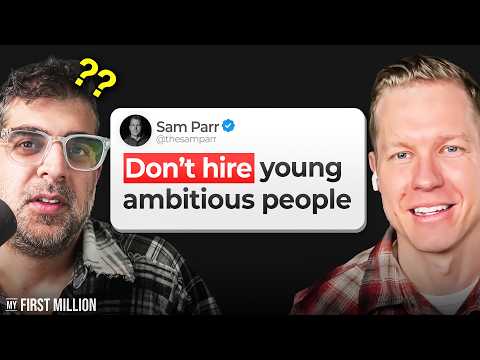
Two Millionaires on the Worst Mistakes They Made Early
"Two millionaires share their biggest business mistakes, from hiring strategies to project selection, and offer actionable advice for wealth creation and career pivots."

HaHa Davis on Druski, Katt Williams, Kevin Hart, Jay-Z, Relationships, Fame & Social Media Comedy
"Comedian Haha Davis offers a candid look into the unpredictable world of social media fame, the complexities of modern relationships, and the personal journey of finding success while staying true to his Detroit roots."