
ARE YOU ALLOWED TO BE A TOUGH COACH & MA$E EXPLAINS THE DIFFERENCE BETWEEN A RAP LEGEND & ICON!
YouTube · 0UG3BRfzsHE
Quick Read
Summary
Takeaways
- ❖Austin Reaves' potential $241 million contract poses a dilemma for the Lakers given their defensive liabilities and the scarcity of impact free agents.
- ❖Dan Hurley's aggressive coaching style is seen by some as essential for developing resilient athletes, despite public backlash and a perceived societal 'softening'.
- ❖The definition of a 'rap icon' transcends 'legend' by influencing culture, style, and persona, rather than just achieving success.
- ❖Doc Rivers' Naismith Hall of Fame induction is widely questioned due to his coaching record, particularly his history of blown playoff leads and reliance on star-studded teams.
- ❖Jaden Ivey's off-court comments and family estrangement highlight potential mental health issues impacting an athlete's career and public perception.
Insights
1Lakers' Austin Reaves Contract Dilemma
Trista argues against the Lakers paying Austin Reaves a potential five-year, $241 million contract. She highlights the scarcity of impact free agents but emphasizes that championship teams rarely succeed with bottom-half defenses, a weakness Reaves contributes to. Mace, conversely, suggests paying Reaves to create an 'all-white superstar backcourt' for its marketing appeal, citing historical examples of such pairings selling out arenas. Cam proposes a middle-ground salary between $14 million and $50 million, acknowledging Reaves' value but questioning the top-tier offer.
Trista cites historical data of championship teams and defensive rankings. Mace refers to John Stockton/Jeff Hornacek and Craig Ehlo/Mark Price. Cam notes Reaves' current worth is above $14M but below $50M.
2Dan Hurley's 'Tough Coaching' Debate
Dan Hurley's aggressive and demanding coaching style is defended by Trista and Mace as necessary for preparing athletes for a 'tough and cruel' real world. They argue that players remember coaches who push them to their limits and that the current societal climate, with concepts like 'mental health days' and 'safe spaces,' has lowered tolerance for demanding coaches. Cam, while agreeing on the effectiveness for some, points out that this style might break players without the mental fortitude, potentially leading to long-term psychological issues for those who don't succeed. He also notes that winning often validates such coaching, obscuring potential negative impacts on non-star players.
Dan Hurley's quote about society getting 'soft' (). Trista mentions players running through walls for Hurley and his self-selecting recruitment process (, ). Mace recalls coaches who pushed him (). Cam discusses 'mental days off' and parents creating highlight reels (, ).
3Jaden Ivey's Controversial Off-Court Behavior
Jaden Ivey's public comments, including asking reporters about pre-marital fornication and discussing his wife ignoring his messages, are likened by Trista to Antonio Brown's 'manic episode' behavior, suggesting he may be struggling and refusing help. Mace attributes Ivey's actions to a lack of maturity and potential manipulation by others. He emphasizes the importance of individual growth pace and understanding diverse religious views, suggesting Ivey's family might be distancing themselves due to his disruptive actions, not just his beliefs.
Trista compares Ivey's behavior to Antonio Brown (). Mace discusses different paces of personal growth and religious interpretations ().
4Naismith Hall of Fame Criteria Questioned
The induction of Doc Rivers into the Naismith Basketball Hall of Fame as part of the class of 2026 is met with strong skepticism. Trista argues that Rivers' coaching record, marked by numerous blown playoff leads and a championship won with a stacked roster (where Tom Thibodeau was a key defensive architect), does not meet Hall of Fame caliber. Cam and Mace echo this sentiment, suggesting the induction is premature and questions the criteria, implying that personal connections might play a role. Candace Parker's induction is universally supported, while Amari Stoudemire's is also questioned.
Trista cites Doc Rivers' 10 game-seven losses and 10 first-round exits (, ). Mace compares Rivers' potential induction to JJ Redick after one year (). Cam references Deion Sanders' past comments on Hall of Fame dilution ().
5Distinguishing Rap Legend from Icon
Mace clarifies the difference between a 'rap legend' and a 'rap icon.' A legend is defined by their accomplishments and success in the music industry. An icon, however, transcends mere achievement by profoundly influencing culture, fashion, and the persona of others, inspiring emulation and shaping trends. He asserts that an icon has a 'hold on the culture' that goes beyond their musical output.
Mace states, 'When [expletive] wanted to be you, when [expletive] wanted to dress like you, when they got their persona from you, they took swag from you, that's not legendary. That's iconic.' (). He uses Mary J. Blige and Rihanna as examples of icons, and SZA as a legend ().
Lessons
- Re-evaluate player contracts not just on individual performance but on their fit within a championship-caliber defensive scheme and overall team strategy.
- Coaching philosophies must adapt to evolving societal norms around mental health and 'safe spaces' while still fostering resilience and accountability.
- Consider the long-term psychological impact of coaching styles, especially for athletes who do not achieve professional success, and ensure a supportive environment beyond wins and losses.
- Scrutinize Hall of Fame induction criteria to maintain the integrity and prestige of such honors, ensuring they reflect truly exceptional and impactful careers.
- Recognize the difference between achieving success ('legend') and profoundly influencing culture and identity ('icon') in creative fields, valuing both forms of impact.
Quotes
"I think society has gotten soft in a lot of ways. The real world is tough and cruel. You got to be equipped."
"You remember the coaches that push you to the limit. You remember the coaches that made you better. You don't remember the coaches that let you get away with everything."
"You can't take correction like that from people that you don't know love you."
"If you're raising a kid to be great at a sport, but you're ruining them mentally, then their life is not going to be good."
"If this nigga's a legend, you got to put me on the icon side, man. Can't be no legend."
Q&A
Recent Questions
Related Episodes
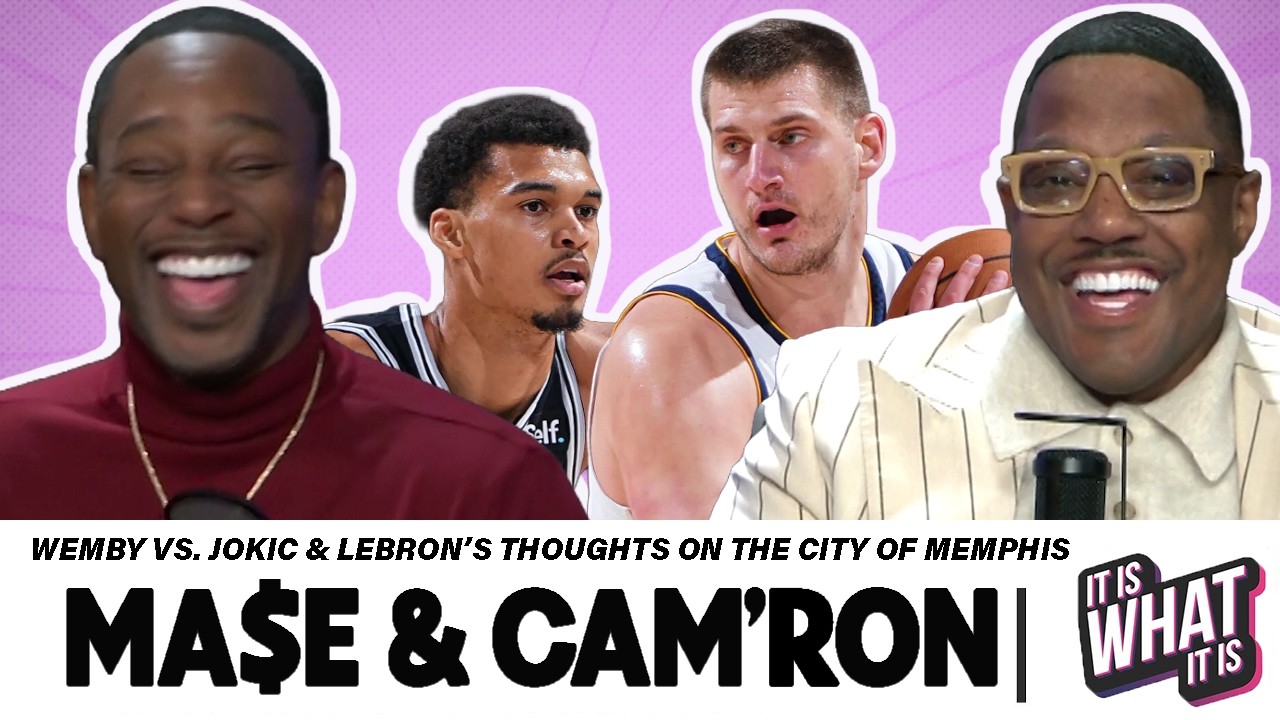
LAKERS ARE IN TROUBLE, JOKIC VS. WEMBY & WE REACT TO LEBRON JAMES' COMMENTS ABOUT MEMPHIS! | S8 EP61
"This episode dives into the Lakers' injury woes, the Jokic vs. Wemby debate, LeBron's controversial comments on Memphis, and the fiery Don Staley-Gino Auriemma rivalry."
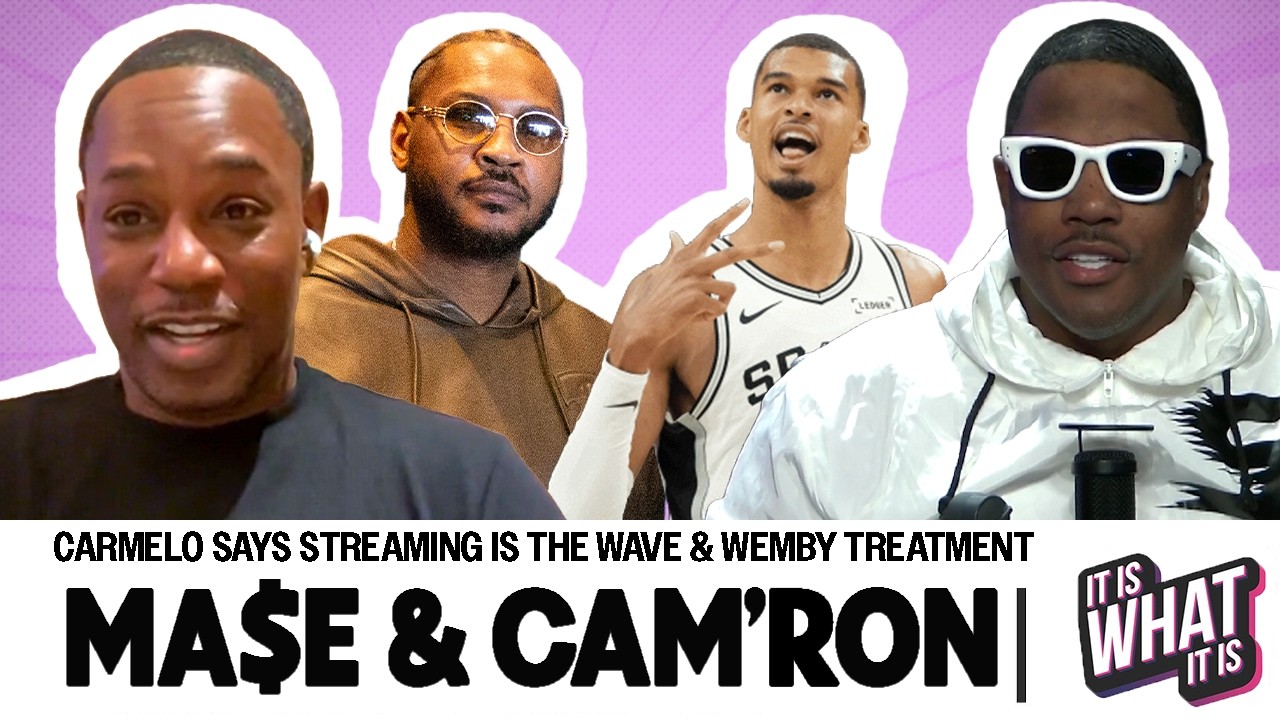
IS WEMBY GETTING SPECIAL TREATMENT FROM THE NBA, CARMELO SAYS PLAYERS SHOULD STREAM & IS UTAH LIT?!
"Carmelo Anthony's radical proposal for NBA players to stream post-game instead of traditional press conferences sparks a debate on player autonomy, league regulations, and brand management, while the NBA's handling of Wemby's ejection raises questions of favoritism."
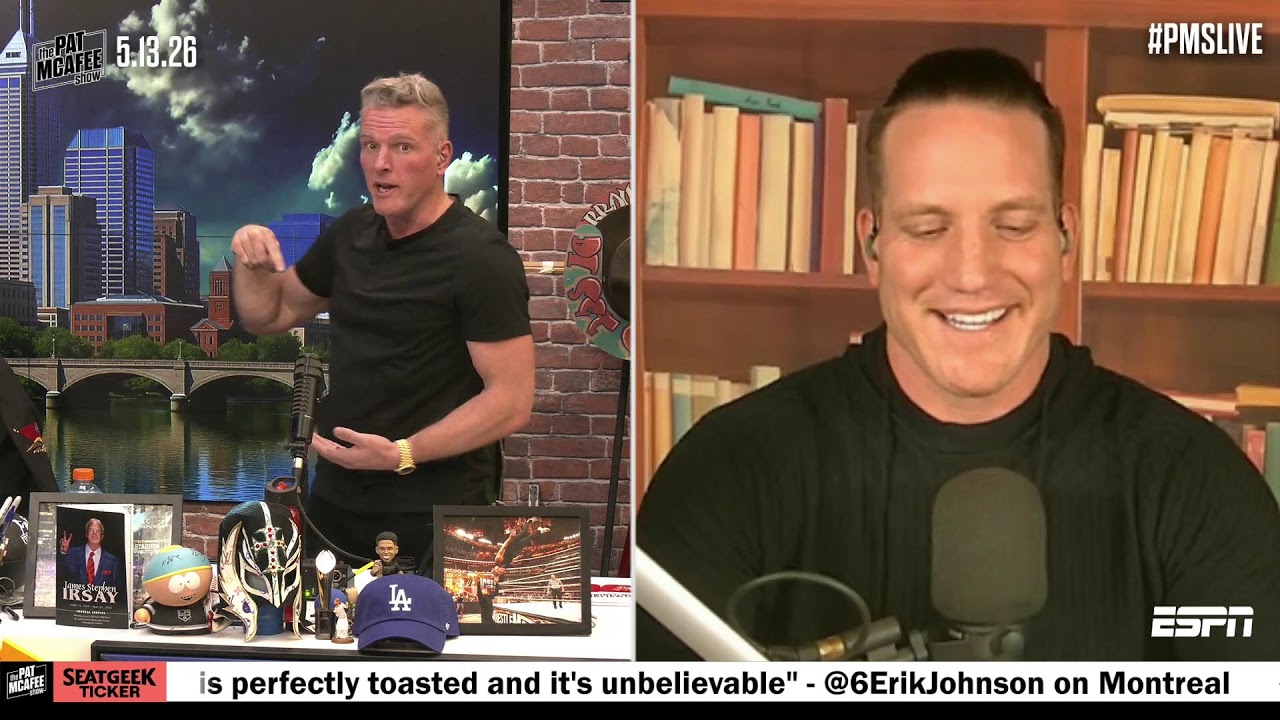
The Pat McAfee Show Live | Wednesday May 13th 2026
"Pat McAfee and guests dive into the latest in sports, from NBA playoff drama and NFL international expansion debates to Ronda Rousey's MMA return and college football buzz, all while sharing wild behind-the-scenes stories from the Disney upfronts."

Unc, Ocho & Iso react to Cavs beat Hawks, Cade returns, JJ Redick drama brewing w/ Lakers | Nightcap
"The hosts dissect critical NBA playoff races, the financial implications of player contracts, and the brewing internal drama within the Lakers, offering strong opinions on player power and team management."