
Amanda Knox and John Ramsey - Megyn Kelly's "Double Feature" of Fascinating Interviews
YouTube · 0YUInbhqqtw
Quick Read
Summary
Takeaways
- ❖Amanda Knox endured 60 hours of coercive interrogation, including physical abuse and lies, leading to a false confession.
- ❖The Italian prosecutor, Giuliano Mignini, had a history of unethical behavior and actively misled the media with fabricated evidence against Knox.
- ❖Knox's definitive acquittal by Italy's highest court cited 'sensational failures' and 'contaminated evidence' by investigators.
- ❖John Ramsey's family was immediately targeted by Boulder police, who lacked homicide experience and refused outside help, compromising the crime scene.
- ❖The JonBenét ransom note, with its bizarre language and specific details like John's bonus amount, strongly suggests an intruder with personal knowledge or access.
- ❖Modern DNA technology, including forensic genealogy, offers a high probability of solving the JonBenét Ramsey case, but Boulder PD has resisted its full application.
Insights
1Prosecutorial Misconduct and Media Manipulation in the Amanda Knox Case
Amanda Knox's wrongful conviction was largely driven by prosecutor Giuliano Mignini's unethical conduct, including a history of disciplinary action and a desire for public accolades. He oversaw coercive interrogations, fabricated evidence (e.g., a 'bloody sink' photo that was chemically treated to appear more gruesome), and actively misled the media to create a narrative of Knox as a 'foxy knoxy' sex fiend. This manipulation of facts and public perception was critical in securing convictions, despite a lack of credible evidence.
Mignini was on trial for abuse of office during Knox's case. Police lied to Knox during 60 hours of interrogation, denying her a lawyer and interpreter, and falsely claiming her boyfriend implicated her. The 'bloody sink' photo released to the media was treated with a chemical that made it appear covered in blood, unlike the actual scene. The Italian Supreme Court cited 'sensational failures' and 'contaminated evidence' in overturning her conviction.
2Systemic Incompetence and Tunnel Vision in the JonBenét Ramsey Investigation
The Boulder Police Department's investigation into JonBenét Ramsey's murder was severely compromised from the outset by a lack of experience in homicide cases and an immediate, unwavering focus on the Ramsey family. The first detective on the scene, Linda Arndt, failed to secure the crime scene, allowed friends to contaminate evidence, and even moved JonBenét's body after it was discovered. The department actively resisted offers of help from more experienced agencies like the Denver police and the FBI, driven by ego and a misguided strategy to pressure the family into confessing.
Lead detective Tom Trillo was an auto-theft investigator. The chief of police stated they didn't treat the scene as a crime scene because it was a 'kidnapping.' Linda Arndt sent John Ramsey to search the house, leading him to discover his daughter's body, and then moved the body herself. The DA, Mary Lacy, later confirmed the police's strategy was to put 'intense pressure on the family' believing 'it's one of the two' parents.
3The Ransom Note as Key Evidence and Profiling Insights
The three-page ransom note found in the Ramsey home is a critical, yet often misinterpreted, piece of evidence. Its bizarre language, specific demand for $118,000 (John Ramsey's annual bonus), and reference to 'southern common sense' strongly suggest the perpetrator had personal knowledge of the Ramsey family or their finances. FBI profiler John Douglas concluded the crime was directed at John Ramsey, motivated by anger or jealousy, rather than being a random act by a pedophile. The note's misspellings and grammar also offered clues about the writer's background.
The note demanded $118,000, which matched John Ramsey's annual bonus. It contained misspellings and unusual phrases like 'small foreign faction' and 'atache.' John Douglas's profile indicated a young person, possibly in their 20s or early 30s, fascinated by movies, who wanted to hurt John Ramsey. Handwriting analysis ruled out both John and Patsy Ramsey as the authors.
4The Power of Advanced DNA and Forensic Genealogy in Cold Cases
Despite decades of investigation, the JonBenét Ramsey case remains unsolved, partly due to the Boulder PD's reluctance to fully embrace modern DNA testing and forensic genealogy. While unidentified male DNA was found at the crime scene, it has not yielded a match in federal databases. Experts like CC Moore demonstrate that forensic genealogy, which uses public DNA databases to find relatives of a suspect and build family trees, has a high success rate in solving cold cases, even when the perpetrator is not directly in a criminal database. The Boulder PD's refusal to collaborate with the FBI on this approach highlights a persistent barrier to justice.
Mary Lacy's 2008 exoneration of the Ramseys was based on unidentified male DNA. The FBI informed John Ramsey that government labs lack the latest DNA technology and recommended specialized outside labs for genealogy tracing. Boulder PD 'blew off' the FBI's offer to help with this advanced technique six months prior to the interview.
Bottom Line
The Italian justice system's structure, where prosecutors lead investigations and build cases from the outset, creates a heightened risk of confirmation bias and tunnel vision compared to systems that separate investigative and prosecutorial roles.
This structural difference can lead to deeply entrenched biases, making it extremely difficult for prosecutors to admit errors, even in the face of contradictory evidence, as their professional ego becomes tied to the initial theory.
Legal systems globally should review the separation of powers between investigation and prosecution to minimize conflicts of interest and enhance impartiality, potentially preventing wrongful convictions.
The media's willingness to amplify sensationalized, unverified claims from authorities, especially in high-profile cases, can create an irreversible 'cultural purgatory' for falsely accused individuals, even after legal exoneration.
This phenomenon means that even if the justice system eventually corrects its errors, the public perception, fueled by early media narratives, can permanently damage a person's reputation and quality of life.
Journalism organizations should implement stricter ethical guidelines and internal checks to prevent the premature dissemination of unverified or misleading information from law enforcement, especially when it involves character assassination. Media consumers must also cultivate greater media literacy.
The refusal of local law enforcement to accept external, more experienced assistance in complex cases, driven by ego or jurisdictional pride, is a significant barrier to solving cold cases and can perpetuate injustice.
This insular approach means that critical evidence may remain untested or improperly analyzed, and innovative investigative techniques (like forensic genealogy) are not utilized, leaving perpetrators at large and victims' families without closure.
Governments and legislative bodies should establish mechanisms to compel local agencies to collaborate with or transfer cold cases to more capable state or federal entities, particularly when a case remains unsolved for an extended period and advanced techniques are available.
Key Concepts
Confirmation Bias
The tendency to interpret new evidence as confirmation of one's existing beliefs or theories. Both cases demonstrate how investigators and prosecutors, once they settled on a suspect (Knox or the Ramseys), ignored or twisted contradictory evidence to fit their narrative.
Tunnel Vision
A narrow focus on a particular suspect or theory, often to the exclusion of other possibilities. This was a critical flaw in both investigations, leading to the neglect of other leads and the wrongful targeting of innocent individuals.
Media Literacy
The ability to access, analyze, evaluate, and create media in a variety of forms. Both Knox and Ramsey emphasize the public's susceptibility to sensationalized and often false media narratives, highlighting the need for critical consumption of information.
Post-Traumatic Growth
Positive psychological change experienced as a result of a struggle with highly challenging life circumstances. Amanda Knox discusses how her traumatic experience, while devastating, also led to profound personal growth and a new sense of purpose in advocacy.
Lessons
- Cultivate strong media literacy by critically evaluating news sources, questioning sensational headlines, and seeking diverse perspectives to avoid being manipulated by biased narratives.
- Advocate for justice system reforms that enhance due process safeguards, such as requiring legal counsel during interrogations and separating investigative and prosecutorial functions to mitigate confirmation bias.
- Support efforts to re-examine cold cases using modern forensic techniques, particularly advanced DNA testing and forensic genealogy, and pressure authorities to allocate resources and collaborate with specialized labs.
Notable Moments
Amanda Knox's realization in the interrogation room that she was doubting her own sanity due to coercive tactics.
This highlights the extreme psychological vulnerability induced by coercive interrogation, demonstrating how innocent individuals can be manipulated into false confessions and the profound, lasting trauma it inflicts.
John Ramsey's instinctive decision to pick up and hold his daughter JonBenét's body after discovering her in the basement, despite later being criticized by police for disturbing the crime scene.
This moment underscores the profound human response of a grieving parent, contrasting it with the detached, procedural expectations of law enforcement, and revealing the insensitivity and lack of empathy that can characterize flawed investigations.
Quotes
"It's not that one of them is innocent and one of them is guilty. It's that one of them knows exactly what's going on and the other does not."
"If you are in that position of authority who has the power to take away the freedom of a of a citizen, you should constantly be doing self auditing in order to make sure that you are following the evidence instead of building a case and finding the evidence that you want and ignoring the evidence that you don't want."
"The media is not doing what it's intended to do. It is selling a story and it's going to sell the story that makes the most money not the story that is the most truthful."
"This was not about JonBenét, this was directed at you to hurt you, John. Somebody is either extremely angry with you or extremely jealous of you and this was done to hurt you."
"I don't give a flying flip how scientific it is. Go back to the damn drawing board. I didn't do it. John Ramsey didn't do it. And we didn't have a clue of anybody who did do it."
"Forgiveness is really a gift you give yourself. You release that anger and that desire for revenge. Doesn't mean you feel sorry for the in our case, the killer. I still want him held to the just to the account to held to accountability to the extreme level of our justice system, but I've released that anger..."
Q&A
Recent Questions
Related Episodes

True-crime cases with recent developments | 48 Hours Full Episodes
"This episode reconstructs four complex true-crime cases, detailing the harrowing searches for missing persons, the challenges of prosecuting murders without bodies, and the enduring quest for justice in cold cases spanning decades."
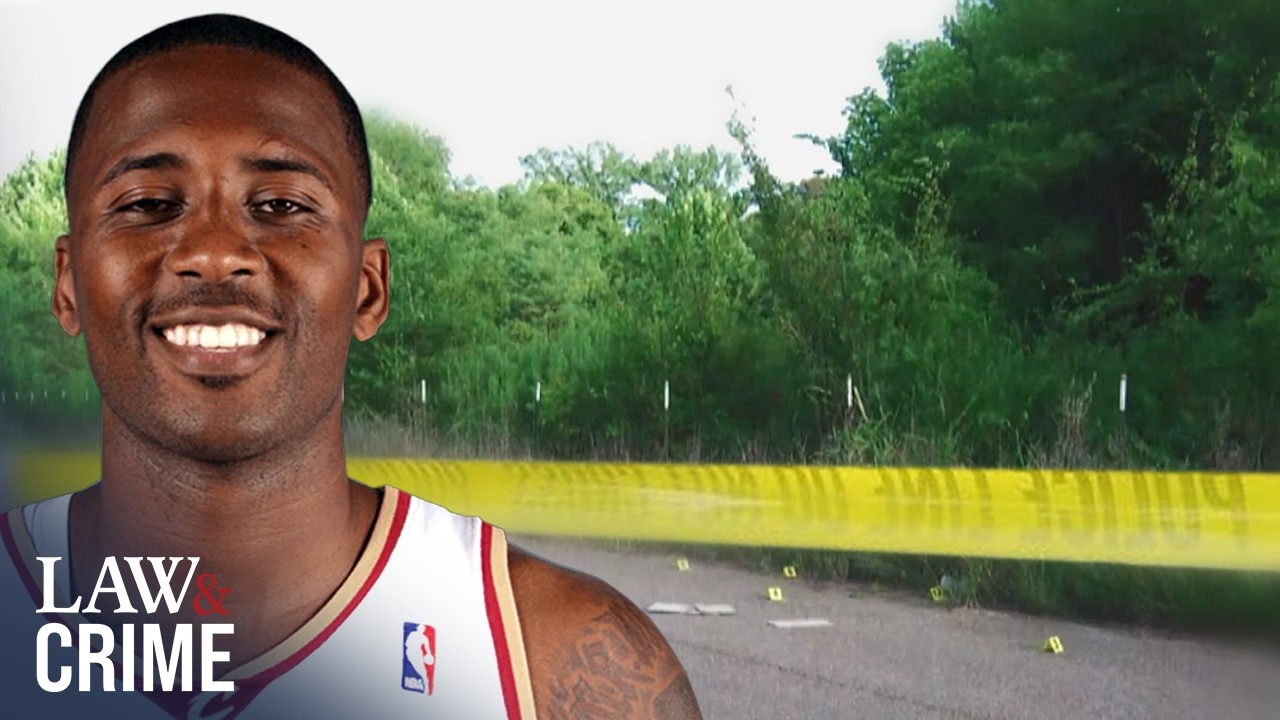
Killer Cases: NBA Star Lured to Execution In Rural Tennessee
"The decade-long cold case of NBA star Lorenzen Wright's murder was cracked through a persistent mother, a jailed informant, and a covert police operation that recovered the murder weapon from a lake and exposed a conspiracy driven by greed."

TEEN'S DNA REVEALED IN ANNA KEPNER'S R*** KIT
"The investigation into Anna Keaptainner's death on a cruise ship reveals shocking DNA evidence, a previously unknown male minor, and critical questions about evidence handling and family dynamics."

The Lindbergh Conspiracies | Post Mortem
"Explore the enduring mystery of the 1932 Lindbergh kidnapping, from the compromised investigation and Bruno Hauptmann's unfair trial to Charles Lindbergh's controversial character and the modern resurgence of conspiracy theories."