
PBS News Hour full episode, May 8, 2026
YouTube · 0iN9DlyLj-U
Quick Read
Summary
Takeaways
- ❖US fighter jets struck Iranian tankers in the Strait of Hormuz, escalating military actions despite ongoing cease-fire negotiations.
- ❖President Trump threatened Iran with a 'big glow' if no deal is reached, while Iranian officials stated US military actions undermine diplomacy.
- ❖The April jobs report showed stronger-than-expected hiring (115,000 jobs), with unemployment holding at 4.3%, driving Nasdaq and S&P 500 to all-time highs.
- ❖Mohamed El-Erian noted a paradox: consumers feel 'awful' (record low sentiment) but continue to spend, with growing unemployment disparities for Black and Hispanic populations.
- ❖Virginia's Supreme Court struck down a voter-approved referendum to redraw congressional districts, a significant setback for Democrats in the national redistricting battle.
- ❖The new US counterterrorism strategy controversially lists 'violent left-wing extremists' as a threat while omitting right-wing groups, drawing criticism for politicization.
- ❖FDA Commissioner Marty Makary is reportedly facing dismissal due to White House frustration over flavored vapes, pharmaceutical industry complaints, and anti-abortion group pressure.
Insights
1US-Iran Conflict Escalates Amidst Diplomatic Stalemate
The US launched strikes on Iranian tankers in the Strait of Hormuz as part of an ongoing blockade, following Iranian missile attacks on US warships. President Trump issued stark threats, stating Iran would see 'one big glow' if no cease-fire deal is made. Iranian Foreign Minister Abbas Araghchi countered that US military adventures undermine diplomatic solutions, which aim to open the Strait, cap Iran's nuclear program, and lift sanctions.
US fighter jets fired on Iranian vessels in the Strait of Hormuz, disabling two tankers. Last night, Iran fired missiles at U.S. warships. President Trump stated: 'If there's no cease-fire, you're not going to have to know. You're just going to have to look at one big glow coming out of Iran, and they'd better sign their agreement fast.' Iranian Foreign Minister Abbas Araghchi wrote: 'Every time a diplomatic solution is on the table, the U.S. opts for a reckless military adventure.'
2US Economy Shows Paradoxical Strength and Deepening Divergence
The US added 115,000 jobs in April, surpassing expectations, with unemployment at 4.3% and wages up 3.6% annually. This led to Nasdaq and S&P 500 reaching all-time highs. However, consumer sentiment hit a record low, driven by current conditions like high gas prices. Mohamed El-Erian described a paradox where consumers feel 'awful' but continue to spend, noting significant divergences: Wall Street vs. Main Street, high-income vs. low-income, and worsening unemployment for Black and Hispanic populations.
The Labor Department reported 115,000 jobs added, unemployment at 4.3 percent, and wages up 3.6 percent annually. The Nasdaq and S&P 500 touched all-time highs. The consumer sentiment report from the University of Michigan hit a record low. Mohamed El-Erian stated: 'The consumer is quite a paradox, because they say they're feeling awful, and yet they continue to spend.' He also noted: 'Black and Hispanic unemployment is getting worse, while Asians and white unemployment are staying as is or getting better. Black unemployment is now twice the level of white unemployment.'
3Virginia Ruling Intensifies National Redistricting War
Virginia's Supreme Court struck down a voter-approved referendum that would have redrawn congressional maps to favor Democrats, potentially gaining them four House seats. The court cited procedural violations, specifically that the amendment process occurred while early voting was underway, not 'before' the regularly scheduled election. This ruling is a major setback for Democrats, who aimed to counteract Republican gerrymandering in states like Texas and Florida, and further fuels a national 'litigation-palooza' over partisan map drawing.
Virginia's Supreme Court struck down a voter-approved referendum. David Wasserman stated this is 'a major setback for Democrats because they were counting on Virginia to counteract what Republicans have done in Texas and Florida and elsewhere.' The court found Democrats violated procedure by embarking on this while early voting was already under way. Republicans are poised to pick up 'somewhere around six or seven seats on net from redistricting.'
4US Counterterrorism Strategy Criticized for Partisan Bias and Omissions
The new 16-page US counterterrorism strategy identifies narco-terrorists, Islamist groups, and 'violent left-wing extremists' (anti-American, pro-transgender, anarchist) as primary threats, but notably omits right-wing extremist groups despite research indicating their responsibility for the majority of recent violent attacks. Colin Clarke of The Soufan Center called the document 'subpar' and 'riddled with partisan accusations,' arguing it misclassifies profit-motivated gangs as terrorists and overemphasizes kinetic solutions while neglecting soft power and emerging technological threats.
The strategy identifies 'narco-terrorists and transnational gangs, legacy Islamist terrorists, and violent left-wing extremists' as threats. It 'makes no mention of right-wing extremist groups.' Colin Clarke stated: 'The entire document is riddled with partisan accusations and snubs, after proclaiming to be an apolitical document, which it unfortunately is not.' He added that 'far right terrorism still poses a far more significant threat than the far left does.'
Lessons
- Monitor the Strait of Hormuz for continued US-Iran military actions and their impact on global energy prices and supply chains.
- Analyze economic data beyond headline numbers, focusing on consumer sentiment and employment disparities to understand the true health of the US economy.
- Engage with local and national efforts to reform redistricting processes, advocating for non-partisan commissions to safeguard democratic representation.
Quotes
"The consumer is quite a paradox, because they say they're feeling awful, and yet they continue to spend."
"If there's no cease-fire, you're not going to have to know. You're just going to have to look at one big glow coming out of Iran, and they'd better sign their agreement fast."
"Every time a diplomatic solution is on the table, the U.S. opts for a reckless military adventure. Iranians never bow to pressure, and diplomacy is always the victim."
"This is just how democracy ends. And what we need... We need some sort of constitutional amendment, so this is taken out of the democratic process."
"On balance and in aggregate, far right terrorism still poses a far more significant threat than the far left does. And so to focus on one over the other and not look across the ideological spectrum comes across as cherry-picking and politicizing counterterrorism."
Q&A
Recent Questions
Related Episodes

Trump's HEATED Call + AOC's Data Center Deep Dive | PBD #804
"This episode dissects the week's most impactful events, from Trump's contentious call with Netanyahu and Elon Musk's path to trillionaire status, to the societal implications of AI-driven job displacement and AOC's unexpected political alignment on data center concerns."

All Roads Lead To the South: Nat’l Day Of Action For Voting Rights | Mass Rally | Montgomery, AL
"A mass rally in Montgomery, Alabama, ignites 'Freedom Summer 2026' to combat the Supreme Court's decimation of Black political power and demand unprecedented voter mobilization across the South."

🚨 LEFTISTS ARE F*CKING SEETHING 😂😂😂
"The host aggressively celebrates perceived 'wins' for the right-wing, from global conflicts and domestic politics to cultural shifts, framing them as a 'humiliation' for the 'leftist world order' and a testament to Donald Trump's influence."
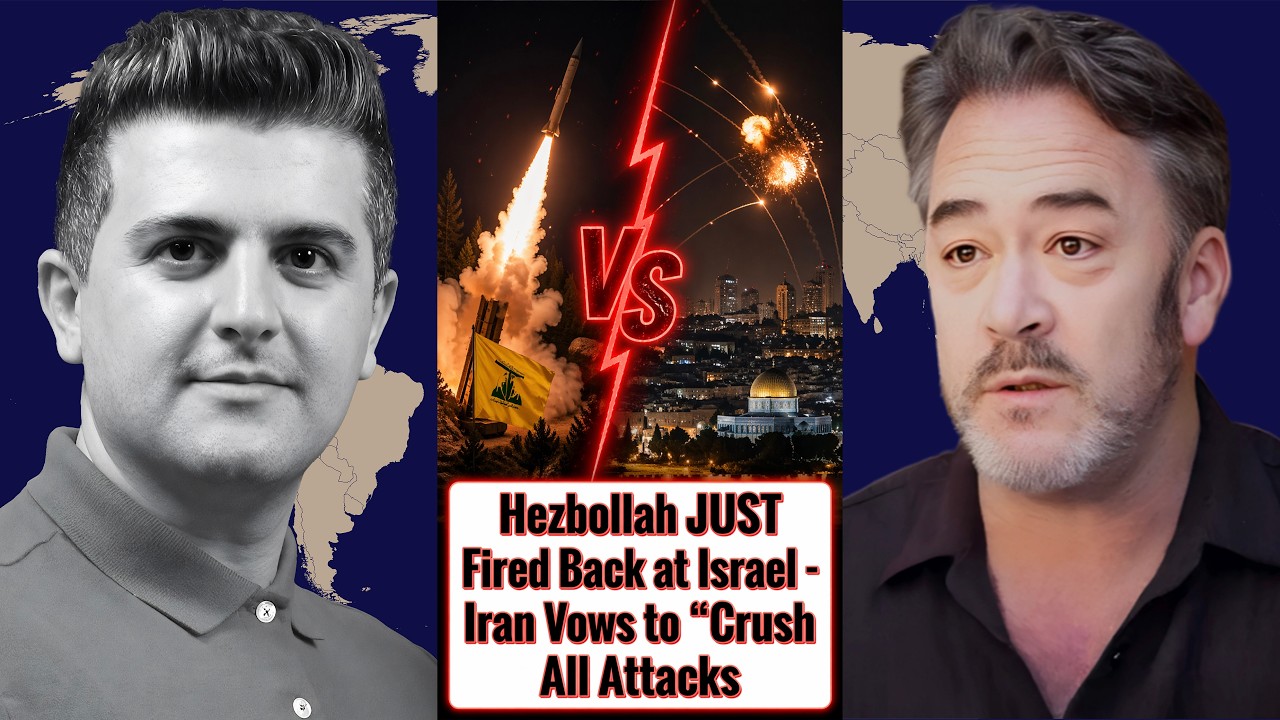
Patrick Henningsen: Hezbollah JUST Fired Back at Israel - Iran Vows to “Crush” All Attacks
"Patrick Henningsen argues that the US and Israel initiated an illegal war against Iran, driven by Trump's incompetence and Israeli influence, leading to an inevitable escalation with severe global economic repercussions."