Aided by U.S. Intelligence, Mexican Army Kills Top Cartel Leader After Threat of Trump Intervention
YouTube · 1AfXepwseyI
Quick Read
Summary
Takeaways
- ❖The Mexican military's raid, aided by US intelligence, killed Nemesio Oseguera Cervantes ('El Mencho'), leader of the Jalisco New Generation Cartel (CJNG).
- ❖The operation was Mexico's largest security action in over a decade and occurred amidst rising pressure from the Trump administration on Mexico to combat cartels.
- ❖Following the raid, at least 70 people were killed, and widespread retaliatory violence, including road blockages and attacks on businesses, erupted across more than a dozen Mexican states.
- ❖Mexican President Claudia Sheinbaum confirmed US intelligence sharing but asserted that all operational planning and execution were solely by Mexican federal forces.
- ❖The US established a new Pentagon-led 'Joint Interagency Task Force Counter Cartel' under Trump, which played a key role in intelligence gathering for the raid.
- ❖The US 'Foreign Terrorist Organization' (FTO) designation for Mexican cartels, including CJNG, unlocked more US government resources for intelligence and operations.
- ❖80-90% of weapons captured from Mexican cartels, including specialized ammunition like .50 caliber rounds, originate from the United States.
- ❖Experts believe the raid is a symbolic political victory for President Sheinbaum to appease US pressure but will likely intensify cartel violence through fracturing and territorial disputes.
- ❖Cartels are actively using AI-generated images and fake news in coordinated propaganda campaigns to create a narrative of government instability and project power online.
Insights
1US Intelligence Directly Aided Mexican Military in El Mencho Takedown
Reuters and The New York Times reported that the Mexican raid targeting Nemesio Oseguera Cervantes, 'El Mencho,' was supported by intelligence from the CIA and a new US military-led task force. Mexican President Claudia Sheinbaum confirmed the US played an 'information-sharing role,' providing intelligence statements, but maintained that the entire operation was planned and executed by Mexican federal forces.
Reuters and the New York Times report that the Mexican raid targeted Oagetta, who headed Mexico's largest cartel, was aided by intelligence from the CIA and a new US military-led task force. Speaking at a news conference on Monday, President Shane Bam said the United States only played an informationsharing role in the Mexican military attack. All operations are carried out by federal forces. There is no US participation in the operation. What there is, as we have said here several times, is a great deal of information sharing. The understanding with the United States is based primarily on the exchange of intelligence information. In this case, the US government provided information and even issued an intelligence statement.
2El Mencho's Death Triggers Widespread Cartel Retaliation and Potential for Escalated Violence
The killing of 'El Mencho,' a shadowy figure sought by multiple administrations, led to immediate and dramatic retaliatory violence across over a dozen Mexican states. Suspected gang members blocked highways, set vehicles and businesses on fire, and clashed with security forces. Experts warn that this event is likely to kick off a period of fracturing and infighting within the Jalisco New Generation Cartel, potentially creating a sustained wave of violence targeting both security forces and civilians, similar to the aftermath of the Sinaloa cartel's fracturing.
Sunday morning, at least 70 people were killed in the raid, targeting Nessio Oagera Cervantes, the head of the Kaliscoco New Generation Cartel, and an ensuing violence as armed groups retaliated in more than a dozen Mexican states. Suspected gang members blocked highways and set cars on fire, buses, and businesses while clashing with security forces. The real question remains to be seen whether this kicks off what often happens which is a fracturing and infighting in a large criminal organization that then creates a sustained wave of violence that uh targets of course security forces but also civilians all across uh sectors of society.
3US Pressure and FTO Designation Drive Mexico's Militarized Drug Policy Shift
President Sheinbaum's administration significantly stepped up the 'war against the cartels,' deploying forces to key regions like Sinaloa, largely due to intense pressure from the Trump administration. Trump's designation of Mexican cartels as Foreign Terrorist Organizations (FTOs) unlocked increased US government funding, tools, and resources for intelligence gathering and sharing, accelerating coordination between US law enforcement and intelligence agencies. This raid is seen as a signal from Sheinbaum to Washington, demonstrating Mexico's willingness to take military action to prevent direct US special forces intervention.
When Sham bomb came in which of course comes in the context of you know US President Donald Trump's election and then taking office immediately the Sham administration stepped up uh the war uh against the cartels... Since Trump came into office, all of the pressure continues... This raid is being considered is being seen as a signal that that President Shamb is sending to Washington. We not only can but will take these types of, you know, unprecedented military operations, but do not send special forces into the country. This is a red line in Mexico. In part, that's because of the FTO designation. The fact that President Trump when he came into office, he directed uh the administration to declare uh various Mexican cartels as terrorist organizations, including of course the new generation cartel. that unlocks authorities within the the US government to use more money, more tools, more resources um to comp to to get intelligence um and then to share intelligence internally.
4US-Sourced Weapons Fuel Cartel Firepower in Mexico
A significant majority (80-90%) of weapons captured from Mexican drug trafficking organizations originate from the United States. This includes high-caliber ammunition, such as .50 caliber rounds designed for military aircraft, which are sold to the US domestic market with little demand, then trafficked to Mexican cartels. This continuous flow of weaponry from north to south is a primary driver of the intense violence seen in Mexico, directly impacting everyday citizens.
Something like 80 to 90% of the weapons that are captured from different drug trafficking organizations come from the United States. Indeed, President Shane Bomb mentioned that I think yesterday during her morning press conference where she said something like 80% of the weapons that they've taken from the Halisco cartel come from the United States. There was really excellent reporting earlier this month about one particular US Army owned ammunition plant in Lake City, Missouri that makes the 50 caliber uh ammunition that is designed to take down u transport and even light aircraft... those bullets actually are being sold to Mexican drug trafficking organizations.
5Cartels Employ AI and Fake News for Propaganda and Narrative Control
Beyond physical violence, cartels are engaging in a sophisticated propaganda war using AI-generated images and fake news spread across the internet. This coordinated campaign aims to create an international image of Mexican government instability and a 'crisis of governability,' particularly in the context of events like the World Cup and widespread tourism. This represents an escalation of their online tactics, moving beyond tactical communication and fake recruiting to actively fighting for the narrative of who controls the country.
There is also at the same time a propaganda effort uh of both these roadblocks but in the digital space. That's what we were looking at late last night because at this point the new generation cartel wants to try to create a narrative that the Mexican government is not in control of the country... what we were looking at last night is the way in which AI generated images and fake news spread across the internet. According to researchers, that was not just unsuspecting people sharing sort of stories to get clicked, but it appears that that was actually part of some version of a coordinated propaganda campaign by organized crime to create this additional p um this additional space in which they are fighting for the narrative.
Bottom Line
Mexican cartels are leveraging AI-generated images and fake news in coordinated online propaganda campaigns to undermine government authority and control public perception.
This signifies a new, sophisticated front in the 'war on drugs,' where information warfare is as critical as physical conflict. It complicates efforts to manage crises and maintain public trust, as criminal organizations can rapidly disseminate disinformation to shape international narratives and local sentiment.
Governments and cybersecurity firms need to develop advanced AI detection and counter-disinformation strategies specifically tailored to combat state and non-state actors using these tactics. This also presents an opportunity for media literacy initiatives to educate the public on identifying AI-generated content and propaganda.
Lessons
- Analysts should assess the long-term impact of high-profile cartel takedowns, recognizing they often lead to increased internal violence and territorial disputes rather than a reduction in drug flow.
- Policymakers must address the unchecked flow of US-sourced weapons into Mexico, as it directly fuels cartel power and violence, requiring stricter arms control and enforcement.
- Governments and security agencies need to develop robust strategies to counter sophisticated online propaganda, including AI-generated fake news, used by criminal organizations to destabilize governance and manipulate public opinion.
Notable Moments
The immediate and widespread retaliatory violence across 15+ Mexican states, including 250+ road blockages and attacks, following El Mencho's death.
This demonstrates the immense territorial reach and operational capacity of the Jalisco New Generation Cartel, highlighting the severe disruption and terror they can inflict on local communities in response to government action.
The revelation that Mexican cartels are actively using AI-generated images and fake news in coordinated online propaganda campaigns.
This marks a new, advanced phase in criminal organizations' efforts to control narratives, challenge state authority, and manipulate public perception, adding a critical digital dimension to the 'war on drugs'.
Quotes
"The real question remains to be seen whether this kicks off what often happens which is a fracturing and infighting in a large criminal organization that then creates a sustained wave of violence that uh targets of course security forces but also civilians all across uh sectors of society."
"This raid is being considered is being seen as a signal that that President Shamb is sending to Washington. We not only can but will take these types of, you know, unprecedented military operations, but do not send special forces into the country. This is a red line in Mexico."
"Something like 80 to 90% of the weapons that are captured from different drug trafficking organizations come from the United States."
"Symbolically and politically it represents a victory for President Shane bomb. It allows her to assert that, you know, she's doing quote unquote doing something about uh the most powerful drug organiza, drug trafficking organization in Mexico and likely the Americas. It allows her to stave off some of the pressure from Trump, right, to to assert Mexican military power against these criminal organizations. But we know that this is not going to do much in terms of stopping the flow of illicit drugs from Mexico into United States."
"It appears that that was actually part of some version of a coordinated propaganda campaign by organized crime to create this additional p um this additional space in which they are fighting for the narrative."
Q&A
Recent Questions
Related Episodes

🚨 OMFG!! TRUMP DOESN'T GIVE A F*CK.. 😭😭😭
"The host aggressively argues for aggressive US military action against Mexican cartels, criticizes open border policies, and condemns Democratic leaders for perceived racism and weakness."

What They’re NOT TELLING YOU About Mexican Drug Kingpin Killing! w/ Kurt Hackbarth
"The killing of a major Mexican cartel leader, El Mencho, is framed not as a victory against crime, but as a US-orchestrated event to justify intervention, seize Mexican resources, and manipulate public opinion."
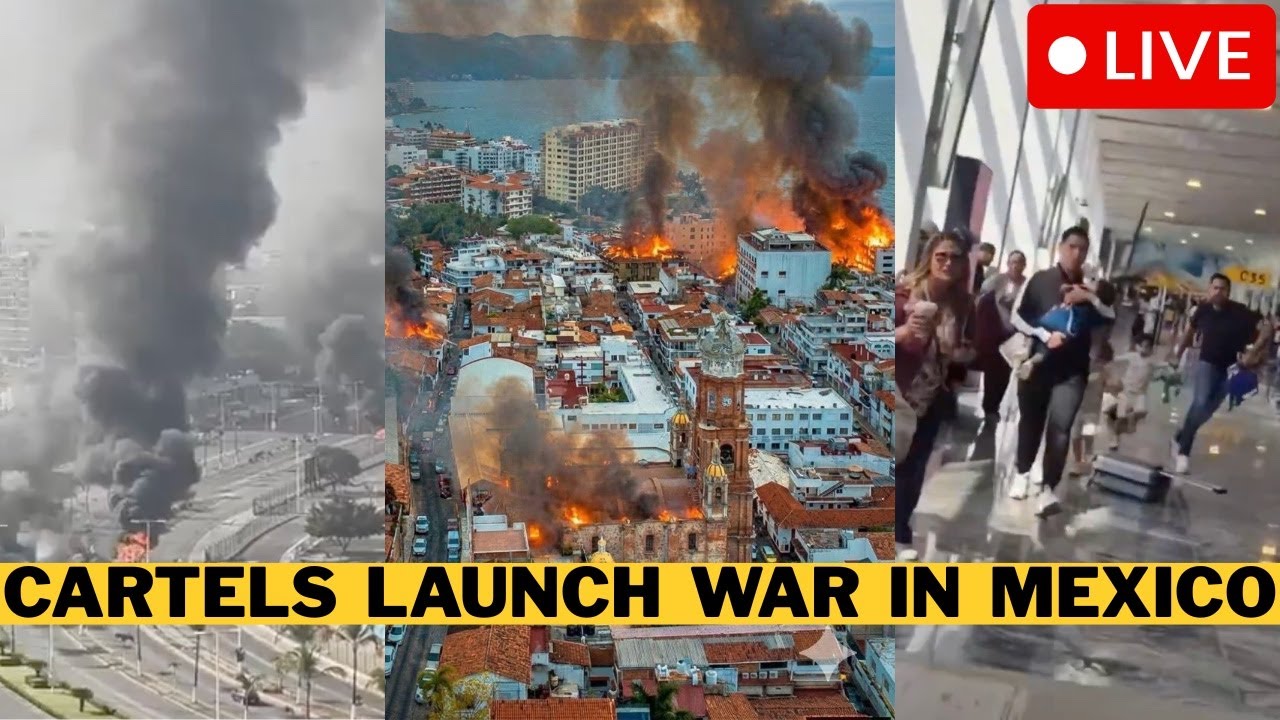
🚨 BREAKING: War In Mexico - Cartels Launch Massacre - Live Coverage
"Following the US-assisted assassination of CJNG cartel leader El Mencho, Mexico plunged into widespread chaos as the cartel launched coordinated, violent retaliatory attacks across multiple states, targeting civilians, infrastructure, and military personnel."

Mis primos me enseñaron a vender droga a los siete años | Fernando #México #Fútbol #Entrevista
"Fernando, incarcerated in Mexico, recounts his harrowing journey from selling drugs at age seven, influenced by family and poverty, to finding a path toward rehabilitation through sports and the love of his children."