A Case For Jesus Christ - Lee Strobel | PBD #770
YouTube · 1CkwAVzI6rY
Quick Read
Summary
Takeaways
- ❖Lee Strobel, a former atheist, spent two years using his journalism and legal training to disprove Jesus's resurrection, ultimately converting to Christianity due to overwhelming evidence.
- ❖The 'Four E's' (Execution, Early Accounts, Empty Tomb, Eyewitnesses) summarize the historical case for Christ's resurrection, which Strobel found compelling.
- ❖Strobel emphasizes that faith should be in Jesus, not in fallible human leaders, and highlights the radical, transformative power of God's grace, as seen in his own life and others like Evil Knievel.
Insights
1Atheist Journalist's Two-Year Investigation Leads to Faith
Lee Strobel, a former atheist and legal editor for the Chicago Tribune, embarked on a two-year investigation to disprove the resurrection of Jesus after his agnostic wife converted to Christianity. Applying his journalistic and legal training, he meticulously examined historical and medical evidence, ultimately concluding that the evidence for the resurrection was 'so overwhelming that it compels acceptance by proof which leaves absolutely no room for doubt,' leading to his own conversion in 1981.
Strobel's personal testimony and the summary of Sir Lionel Luckhoo's similar conclusion. (, , )
2The 'Four E's' of Resurrection Evidence
Strobel outlines four categories of evidence that convinced him of Jesus's resurrection: 1) **Execution**: Jesus was truly dead after crucifixion, corroborated by multiple ancient sources and even the Journal of the American Medical Association. 2) **Early Accounts**: Reports of the resurrection emerged within months of Jesus's death, too quickly for legend to form. 3) **Empty Tomb**: Even Jesus's enemies conceded the tomb was empty, attempting to explain it away by claiming disciples stole the body. 4) **Eyewitnesses**: Nine ancient sources, both biblical and extra-biblical, confirm the disciples' conviction that they encountered the risen Jesus, for which they were willing to die.
Detailed explanation of each 'E' with historical and scholarly references, including James D.G. Dunn and A.N. Sherwin-White. ()
3Impact of Father-Son Relationships on Atheism
Strobel discusses research from New York University indicating a correlation between prominent atheists and difficult relationships with their earthly fathers (death, divorce, or strained relationships). He shares his own experience of a 'very difficult' relationship with his father, who once told him, 'I don't have enough love for you to fill my little finger.' This personal history created a 'barrier' to the idea of a heavenly father, which he later overcame by understanding God as the 'perfect father,' distinct from human imperfections.
Strobel's personal story and reference to NYU research on famous atheists like Camus, Sartre, and Freud. ()
4Church Scandals Don't Invalidate Truth, Require Accountability
Strobel, who served on the management team of Willow Creek Community Church under Bill Hybels, expresses heartbreak over Hybels's later fall due to inappropriate relationships. He asserts that such scandals, while devastating to congregants' faith, do not invalidate the truth of Christianity, which rests on the evidence of Jesus's resurrection, not the perfection of human leaders. He advocates for robust accountability structures within churches, where elders are independent and pastors are transparent about their lives.
Strobel's personal experience at Willow Creek and his 'Case for Church' book's argument. (, )
5The Simplicity and Transformative Power of the Gospel
Strobel emphasizes that the core message of Christianity is a 'free gift' of forgiveness and eternal life through Jesus, as summarized in Romans 6:23: 'For the wages of sin is death, but the free gift of God is eternal life through Christ Jesus our Lord.' He argues against adding complex requirements, stressing that true conversion involves a heartfelt prayer of repentance and faith. This simple act leads to a radical transformation of values, character, and morality, as evidenced by his own life, his children's faith, and the conversion of figures like Evil Knievel.
Romans , Strobel's personal testimony of transformation, and the story of Evil Knievel's conversion. (, )
6Supernatural Dreams Fuel Christian Growth in Muslim Countries
Strobel highlights a global phenomenon where more Muslims have converted to Christianity in recent decades than in the 1400 years since Muhammad, with 25-35% reporting 'Jesus dreams' before conversion. These dreams often point individuals toward external resources or people who then explain the gospel, demonstrating a supernatural intervention in regions closed to traditional evangelism. This is seen as God 'rolling up his sleeves' to reach people where conventional methods are impossible or dangerous.
Statistics on Muslim conversions, the story of 'Noir' in Cairo, and the prevalence of 'man in white' advertisements in Middle Eastern newspapers. (, )
Bottom Line
The decline of nominal Christianity in Western countries may represent a 'pruning process,' leading to a more authentic and committed Christian population, despite overall numerical decreases.
This perspective challenges the conventional view of declining religious adherence as purely negative, suggesting it could foster a more resilient and deeply rooted faith among those who remain or convert.
Focus efforts on deep discipleship and apologetics that equip believers to articulate and defend their faith in increasingly secular or hostile environments, rather than solely on numerical growth.
The rise of censorship and 'cancel culture' against outspoken Christians, even in historically free nations, creates a climate of fear that suppresses public expression of faith and can lead to professional repercussions.
This trend indicates a shrinking space for traditional Christian viewpoints in mainstream discourse, potentially driving faith underground or into more insular communities, and necessitates strategies for defending free speech and religious liberty.
Develop and support platforms and legal defenses for individuals facing discrimination or threats for expressing their faith. Foster communities that encourage and protect open discussion of Christian beliefs, even when unpopular.
Key Concepts
Liar, Lunatic, or Lord (with a Fourth 'L')
This model, originally by C.S. Lewis, posits that Jesus, due to his claims of divinity, must logically be either a liar, a lunatic, or the Lord. Strobel adds a fourth 'L': 'Legend,' to address the skeptical argument that the resurrection story is a myth developed over time. His investigation into early accounts and eyewitnesses directly counters the 'legend' hypothesis.
Vertical vs. Horizontal Faith
This model distinguishes between placing faith in God (vertical) versus placing faith in human leaders or institutions (horizontal). Strobel argues that when church leaders fall, one's faith should remain unshaken if it is rooted in the historical evidence for Jesus, rather than in the imperfect actions of individuals.
Lessons
- Investigate the historical and medical evidence for Jesus's resurrection using critical thinking, as Lee Strobel did, rather than dismissing it outright.
- Cultivate a 'vertical' faith rooted in Jesus and historical evidence, recognizing that human leaders are fallible and their failures do not invalidate core Christian truths.
- Seek out accountability partners and structures in leadership roles, ensuring that those in authority are held responsible by independent parties to prevent moral failures and protect congregants.
Notable Moments
Lee Strobel's father tells him on his high school graduation eve, 'I don't have enough love for you to fill my little finger,' highlighting a deeply strained relationship that contributed to Strobel's atheism.
This personal anecdote illustrates how early life experiences, particularly with a father figure, can create significant barriers to accepting the concept of a loving heavenly Father, a common theme among historical atheists.
Strobel recounts breaking the Ford Pinto story as an investigative journalist, uncovering secret documents that showed Ford knew the car would explode in low-impact collisions but chose not to implement a $5 fix per car.
This demonstrates Strobel's rigorous investigative skills and commitment to truth-telling, establishing his credibility as a journalist before his spiritual investigation into Christianity.
The story of Sir Lionel Luckhoo, the world's most successful defense attorney (245 murder trials won consecutively), who investigated the resurrection evidence and concluded it 'compels acceptance by proof which leaves absolutely no room for doubt.'
This anecdote provides powerful external validation from a highly respected legal mind, reinforcing Strobel's own findings and lending significant weight to the historical case for the resurrection.
The conversion of motorcycle daredevil Evil Knievel, a 'narcissist' and 'gambler' who became a 'radical born-again person' after a supernatural encounter with God, leading to 700 people responding to an altar call at his baptism.
This illustrates the radical transformative power of the gospel, showing that even the most 'unlikely candidates' can experience profound spiritual change, directly addressing the skepticism about Christianity's 'too easy' path to salvation.
NBA player Jaden Ivey is reportedly fired by the Chicago Bulls for publicly expressing biblical views on LGBTQ+ issues, contrasting sharply with a four-game suspension given to another NBA player for assault.
This highlights the growing intolerance and 'cancel culture' against Christian viewpoints in public life, particularly in contrast to other offenses, underscoring the 'negative headwinds' faced by outspoken believers today.
Quotes
"I say unequivocally that the evidence for the resurrection of Jesus Christ is so overwhelming that it compels acceptance by proof which leaves absolutely no room for doubt."
"For the wages of sin is death, but the free gift of God is eternal life through Christ Jesus our Lord."
"I've saved you more times than you'll ever know. Now, you need to come to me through my son, Jesus."
Q&A
Recent Questions
Related Episodes
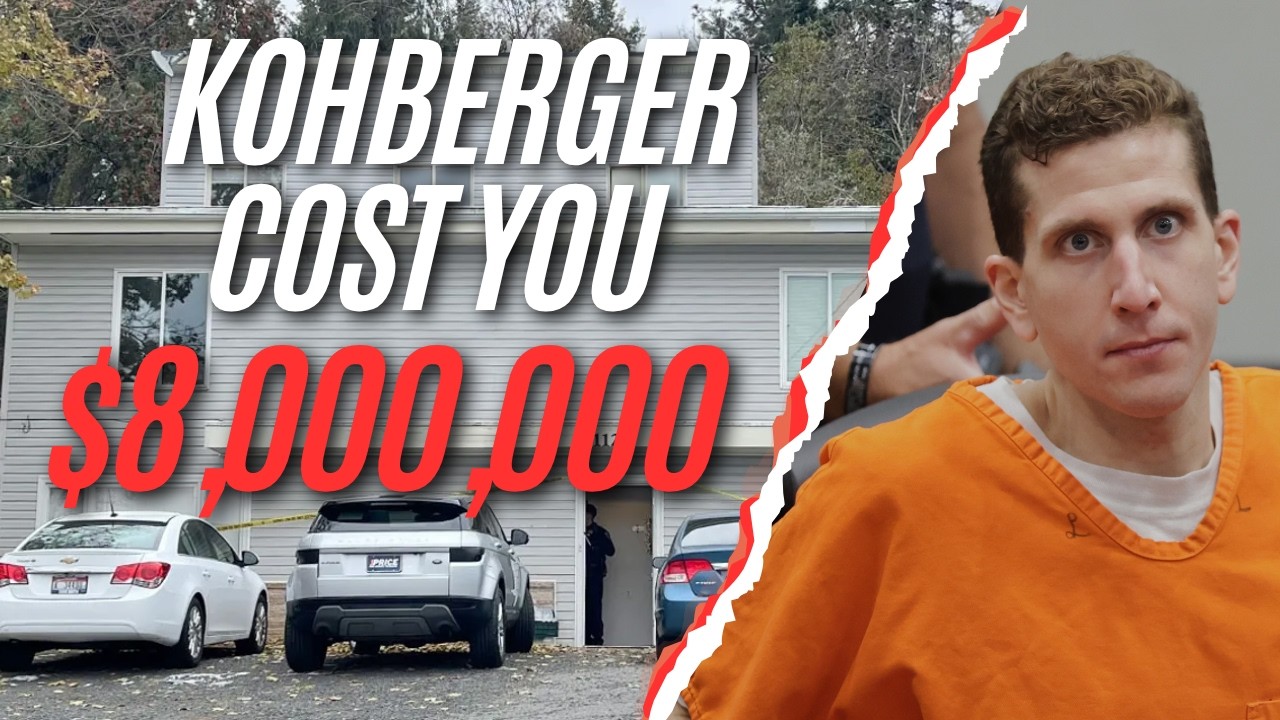
Bryan Kohberger cost taxpayers $8,000,000 as secret battle to hide documents continues
"The Bryan Kohberger murder case has cost Idaho taxpayers over $8 million, primarily for his defense, despite no trial, sparking an ongoing legal battle for transparency over how the public funds were spent."

A SHOCKING Discovery About The Man Who Mic’ed Charlie Kirk. | Ep 351
"Candace Owens uncovers alleged new evidence suggesting Charlie Kirk's death was a rigged assassination, not a shooting, implicating his audio team and linking the incident to a broader network involved in Eastern European human trafficking and the Jeffrey Epstein scandal."
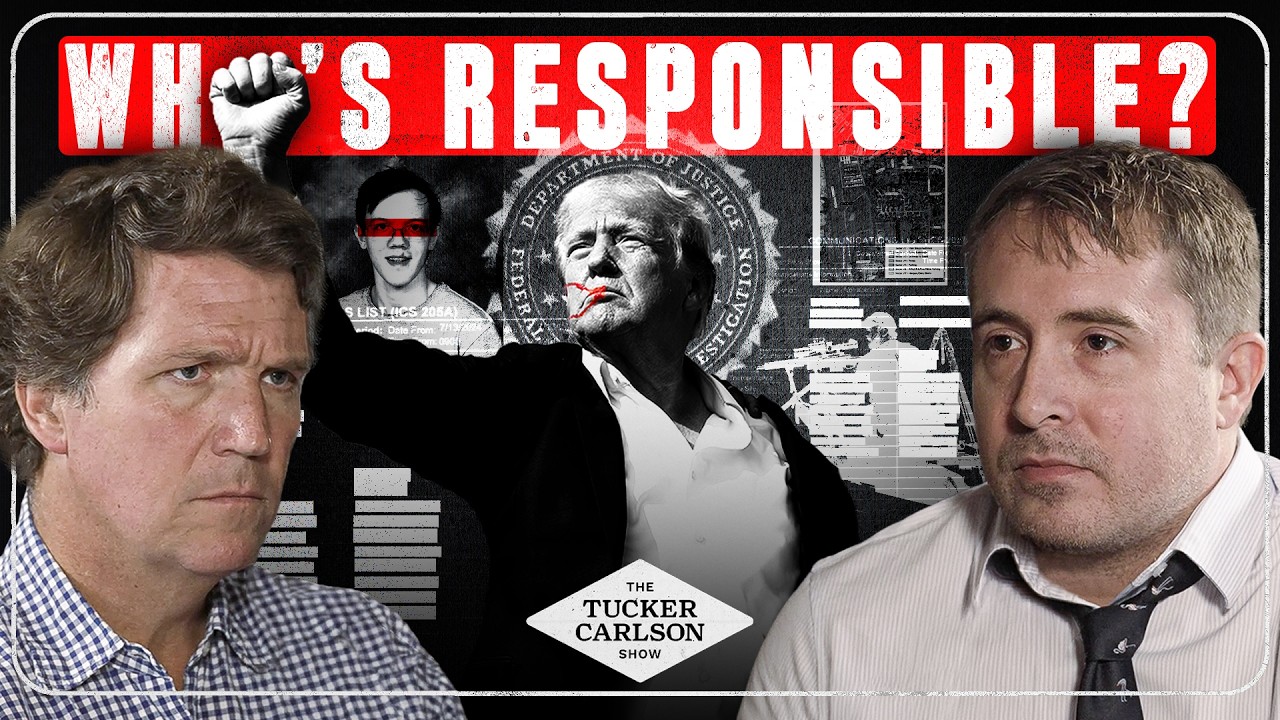
The Attempts on Trump’s Life, Why He Shut Down the Investigations & How It Altered History Forever
"Ken Silva details the numerous security failures, contradictory evidence, and unexplained actions by authorities and Donald Trump himself surrounding the 2024 assassination attempts, suggesting a deliberate cover-up and a profound shift in Trump's political stance."

Reckless Ben Speaks On $200k Lego Theft - H3 Show #274
"Reckless Ben details his ongoing investigation into a $200,000 Lego collection theft, exposing corporate fraud, police corruption, and a legal battle that has escalated into multiple felony charges and a GoFundMe controversy."