Nancy Guthrie: Top FBI ‘mindhunters’ and how they would get into the mind of suspect
YouTube · 1WiIUjZ2jr4
Quick Read
Summary
Takeaways
- ❖FBI profilers systematically interview convicted serial offenders, sometimes for months, to build a vast database of criminal psychology and motives.
- ❖Early profilers interviewed 38 serial offenders, which expanded to approximately 1,500 by the time Jim Clemente retired from the BAU.
- ❖Interviewing tactics include boosting offenders' egos, telling them they are being 'studied,' and sometimes offering plea concessions like taking the death penalty off the table.
- ❖Profilers review every crime scene and allow offenders to relive their crimes in detail to ensure honesty and gather comprehensive information.
- ❖The Nancy Guthrie abduction is speculated by profilers to be a 'need-driven' crime, potentially linked to a stalker obsessed with her daughter, Savannah Guthrie.
- ❖The ransom requests in the Nancy Guthrie case are considered opportunistic rather than genuine demands from the actual abductor.
- ❖The FBI maintains a 'Communicated Threat Assessment Database' (CTAD) to compare language patterns from various criminal communications, which could be vital for cases like Nancy Guthrie's.
- ❖Effective interviewing with dangerous criminals requires treating them with dignity and respect, building rapport, and avoiding judgment to elicit truthful information.
- ❖The abductor of Nancy Guthrie may have been unable to access Savannah Guthrie directly, leading them to target her mother as a 'next best thing' to satisfy their psychological needs.
Insights
1FBI's Empirical Profiling Database
The FBI's Behavioral Science Unit (later Behavioral Analysis Unit) developed a robust database by conducting extensive, structured interviews with convicted serial offenders. Initially, 38 offenders were interviewed, expanding to about 1,500 by the time Jim Clemente retired. These interviews, often involving 840-question protocols, capture the 'how' and 'why' of crimes, which helps profilers understand the 'who' and build institutional knowledge passed down through generations.
Jim Clemente states that the original profilers interviewed 38 serial offenders after conviction, and by his retirement, the number had grown to about 1,500. He mentions a protocol of '840 questions that we would go through with every single serial offender who agreed to talk to us.'
2Psychological Tactics for Offender Interviews
Profilers exploit the ego and loss of control experienced by long-term incarcerated offenders. They build rapport by telling offenders they want to 'study' and 'learn from them,' making the criminals feel significant. In some cases, prosecutors and judges agree to demand interviews in exchange for concessions, like removing the death penalty, using the offender's desires against them to gather vital information for public safety and future crime prevention.
Clemente explains, 'We used that to our advantage by basically building up their egos, telling them we wanted to study them, we wanted to learn from them.' He also notes, 'we were able to get the the prosecutor and the judge to agree to demand that and to order that of the offender in order to do things like take the death penalty off the off the table.'
3Nancy Guthrie Abduction as a 'Need-Driven' Stalker Case
Retired profilers Jim Fitzgerald and Ray Carr strongly believe the Nancy Guthrie abduction is a 'need-driven' crime, likely perpetrated by a stalker obsessed with her celebrity daughter, Savannah Guthrie. They suggest the abductor, unable to get close to Savannah, targeted her mother as a 'next best thing' to satisfy a deep psychological need rather than for financial gain, dismissing the ransom requests as opportunistic.
Jim Fitzgerald states, 'I can't help but think that there's there the only thing that I keep coming back to is somehow this this involves Savannah Guthrie.' He adds, 'This is something to do with Savannah on a a stalking type scenario.' Ray Carr reinforces this, saying, 'He couldn't get to Savannah. And so what did he do? He took the mother that gave birth to Savannah. That's the next best thing.'
4Challenges in Unsolved Cases and Information Control
The host expresses concern that law enforcement may be at a 'dead end' in the Nancy Guthrie case, with a source indicating a lack of significant new evidence. However, profilers emphasize that law enforcement typically withholds a substantial amount of information to protect the integrity of the investigation, making it difficult for the public or even external experts to fully assess the case's status.
The host states, 'My sense is that may actually not be the case [that they're withholding information].' He quotes a source saying, 'We got nothing.' Jim Clemente counters earlier, 'chances are they are holding back significant amount of information because you don't want to give everything out because obviously that can seriously hamper the investigation.'
Bottom Line
The FBI's interviewing strategy with serial offenders involves allowing them to 'relive' their crimes in detail, which, while distasteful, encourages them to provide comprehensive information due to their psychological gratification from recounting their acts.
This reveals a dark but effective psychological leverage point in criminal investigations, where the very pathology of the offender is used to extract intelligence, highlighting the ethical complexities and emotional toll on profilers.
This approach could inform strategies in other high-stakes information gathering scenarios where subjects derive satisfaction from recounting their actions, even if those actions are illicit, by creating a controlled environment for their 'performance.'
The perceived 'unusualness' of a crime, like the abduction of an elderly person, doesn't necessarily make it harder to profile if there's sufficient behavioral evidence at the crime scene and pre/post-offense behavior to analyze.
This challenges the common assumption that atypical crimes are inherently unprofilable. Instead, it emphasizes that the *volume and clarity of behavioral clues* are more critical than the crime's statistical commonality.
Investigators should focus on meticulously documenting all behavioral aspects of a crime, no matter how minor or unusual, as these are the data points profilers use to construct a profile, rather than dismissing a case as 'too unique.'
The delay in interviewing high-ego offenders like Bryan Kohberger (Idaho murders suspect) is a calculated strategy, allowing them to 'ferment' in prison until their arrogance wanes and the desire for recognition or a 'legacy' makes them more amenable to talking.
This demonstrates a strategic patience in criminal psychology, recognizing that an offender's psychological state evolves in incarceration, and timing is critical for obtaining reliable information. Immediate interviews with highly arrogant individuals are often unproductive.
In situations involving high-ego individuals, waiting for a shift in their psychological state, such as a loss of control or a desire to shape their narrative, can be a more effective long-term strategy for eliciting information than immediate confrontation.
Key Concepts
Ego Manipulation for Intelligence Gathering
This model describes the FBI's strategy of leveraging a convicted offender's ego and desire for significance to extract detailed information about their crimes. By presenting the interviews as 'studies' and treating offenders with a degree of 'respect,' profilers create an environment where the criminals feel important enough to share intricate details, which are then used to build comprehensive behavioral profiles.
Need-Driven vs. Profit-Driven Crime
This model differentiates between crimes motivated by deep psychological needs (e.g., obsession, sadism, control) and those primarily driven by financial gain. In need-driven crimes, the perpetrator's actions are often highly personal and specific to their psychological makeup, making them harder to profile using typical 'for-profit' crime patterns. The Nancy Guthrie case is framed as likely need-driven, possibly by a stalker, rather than a financial kidnapping.
Rapport Building in High-Stakes Interrogations
This model emphasizes the critical role of establishing trust and connection with individuals, even dangerous criminals, to facilitate open communication. Instead of immediately confronting them about the crime, interviewers spend significant time finding common ground and treating the person with respect, which increases the likelihood of obtaining accurate and reliable information.
Lessons
- When seeking information from difficult or high-ego individuals, consider leveraging their desire for recognition or importance to encourage cooperation, rather than solely relying on confrontation.
- In complex investigations, prioritize the meticulous collection and analysis of all behavioral evidence, no matter how minor, as these details form the foundation for accurate psychological profiling.
- For individuals in public-facing roles, maintain a comprehensive record of all communications, especially those exhibiting obsessive or unusual patterns, as these could become critical evidence in future security or criminal investigations.
FBI Profiler's Interview Strategy for Convicted Offenders
Allow the offender to 'ferment' in prison for a period, recognizing that their ego and sense of control will diminish over time, making them more receptive to interviews.
Thoroughly study every detail of the crimes committed by the offender, including crime scenes and known facts, before initiating any interview.
Initiate rapport building by treating the offender with dignity and respect, avoiding judgment, and finding common ground to establish a connection.
Frame the interview as a 'study' or an opportunity for the profiler to 'learn from them,' appealing to the offender's ego and desire for significance.
Utilize a structured interview protocol (e.g., 840 questions) to systematically cover all aspects of the crimes, allowing the offender to relive and detail their actions.
Cross-reference the offender's statements with pre-existing crime scene evidence and post-interview analysis to ensure accuracy and reliability of the information gathered.
Notable Moments
Jim Clemente recounts the emotional toll of building rapport with horrific offenders, describing it as 'leaving a mark on your soul' but necessary for the greater good of preventing future crimes.
This highlights the profound personal sacrifice and psychological burden carried by profilers, underscoring the ethical and emotional complexities inherent in their work.
Jim Fitzgerald directly addresses the abductor of Nancy Guthrie on the podcast, challenging them to reveal their motivation to avoid being remembered as 'just some sexual pervert who likes old women.'
This demonstrates a direct psychological tactic used by profilers to provoke a response from an anonymous offender, appealing to their ego and desire to control their narrative, even if it means an anonymous confession.
Ray Carr explains that the biggest mistake police officers make in interviews is going 'right to the crux,' advocating instead for spending 30 minutes building rapport before discussing the crime.
This provides a practical, experience-based insight into effective interrogation techniques, emphasizing the foundational importance of human connection and trust-building over immediate confrontation.
Quotes
"We used that to our advantage by basically building up their egos, telling them we wanted to study them, we wanted to learn from them."
"They might be a psychopath and and literally have no human empathy. They treat other people like they are pieces of furniture. They do not care."
"This is something to do with Savannah on a a stalking type scenario and that's why this is so out of the ordinary in terms of in not having been solved."
"If you treat somebody with respect, I've always found and Jim and I have had the ability to get some people that you would never think talk to us talk to us."
Q&A
Recent Questions
Related Episodes
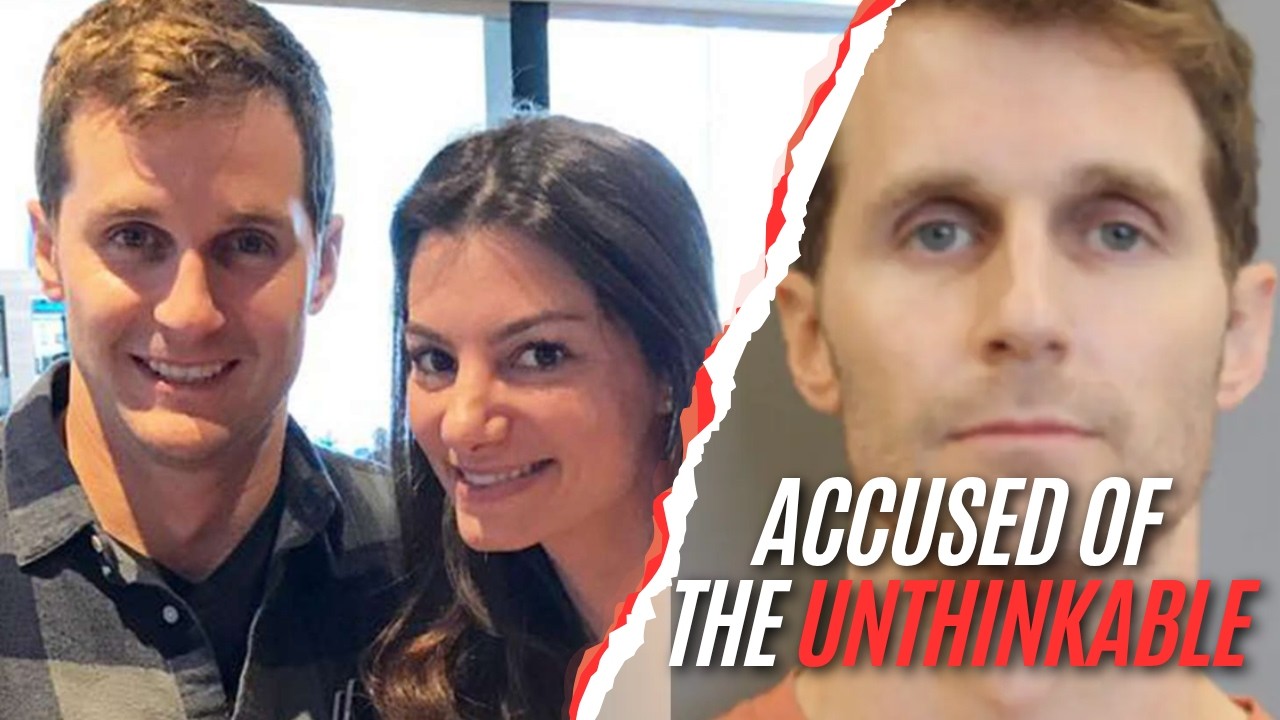
Software engineer killed pregnant wife and fled to Italy, investigators say - what went wrong?
"A Texas software engineer, accused of capital murder in the death of his pregnant wife, was released on a $1 million bond, only to cut off his ankle monitor, forge a passport, and flee to Italy, exposing critical flaws in the justice system."
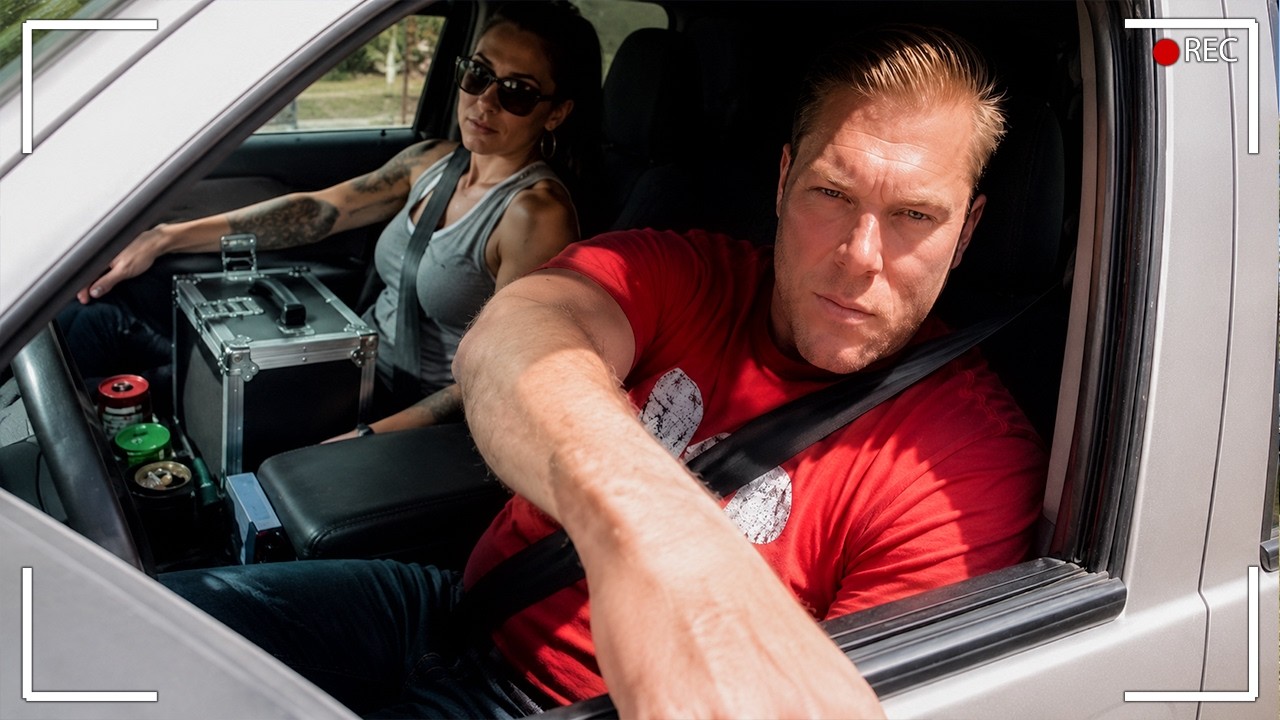
Psychotic Couple Thinks They Can Get Away With Double Murder
"A couple on the run for assault charges commits a double murder to steal an RV, leading to a cross-border manhunt and their eventual capture in Mexico."

The Love Bombing of Gloria Choi | Full Episode
"This episode details the brutal murder of Gloria Choi by her ex-boyfriend, Billy Rickman, and the controversial police response that failed to protect her despite multiple warnings and clear evidence of escalating danger."

New ransom note claims to know where Nancy Guthrie is — but is it real? Day 65 in the search
"A new ransom note surfaces on the day Savannah Guthrie returns to work, raising questions about its authenticity and the ongoing, politically fraught investigation into Nancy Guthrie's disappearance."