BREAKING: UMICH Consumer Sentiment Hits Lowest Point EVER | Receipts LIVE
YouTube · 1dF4lNHH0JQ
Quick Read
Summary
Takeaways
- ❖Consumer prices increased by 3.3% in March, largely due to a spike in energy prices linked to the Iran conflict.
- ❖The month-on-month increase in gasoline prices was the fastest on record since the government began tracking in 1967.
- ❖Disruptions in the Strait of Hormuz impact global supply chains for oil, natural gas, and unexpected inputs like helium, which is vital for semiconductors and MRIs.
- ❖US consumer sentiment has fallen to 47.6, its lowest recorded point, reflecting widespread public unease about the economy and job security.
- ❖Oil spot prices have reached record highs, indicating immediate supply shortages, while futures prices are lower, suggesting market optimism for future normalization that may be unfounded.
- ❖Iran has gained significant leverage by demonstrating its ability to disrupt shipping through the Strait of Hormuz, fundamentally altering global strategic calculus.
- ❖Prediction markets and traditional financial markets exhibit suspicious trading patterns around politically sensitive events, suggesting insider information is being used for profit.
- ❖The current administration's lax enforcement of white-collar crime and policies encouraging risky investments in 401ks (e.g., crypto, private equity) increase financial vulnerability for average citizens.
Insights
1Record Inflation and Energy Price Spikes
Consumer prices rose 3.3% in March, primarily driven by a surge in energy prices. This includes the fastest month-on-month increase in gasoline prices since 1967, directly impacting consumer budgets and overall inflation metrics, even those stripped of volatile food and energy components, as energy is an input for almost all goods and services.
Consumer prices rose 3.3% in March as energy prices spiked due to Iran conflict. () The fastest increase in gasoline prices since the government began keeping records of monthly gas prices back in 1967. ()
2Geopolitical Instability and Supply Chain Vulnerabilities
The conflict in the Middle East and Iran's demonstrated ability to disrupt shipping through the Strait of Hormuz has created significant supply chain issues. This 'air gap' in transit affects not only oil and natural gas but also critical industrial inputs like helium, which is essential for semiconductors and MRIs, leading to broader economic cost increases.
Helium is an input not only in your children's birthday party balloons, but also semiconductors. Very important for semiconductors. MRIs... () It's really hard to get oil right now today because of that chart that you just saw showing that there are very few ships transiting through the straight. So there's like this air gap... ()
3Lowest-Ever Consumer Sentiment Amid Economic Uncertainty
US consumer sentiment has fallen to 47.6, its lowest point on record. While partially influenced by partisan views, this decline also reflects genuine concerns about rising prices, particularly gasoline, and worries about job market stability, despite current low unemployment rates. This creates a disconnect between official optimistic forecasts and public perception.
US consumer sentiment down to 47.6, lowest it's been on record. () People volunteered when they said their finances were getting worse, concerns about gasoline prices and other indicators of rising inflation. ()
4Market Manipulation and Insider Trading in the Trump Era
Financial markets, including prediction markets and oil futures, show patterns indicative of insider trading, particularly around statements or actions by political figures like Donald Trump. Instances include large oil trades minutes before Trump's market-moving statements and perfect betting records on geopolitical events by anonymous accounts, suggesting privileged information is being exploited.
Huge trades in oil markets... Literally minutes before he said that, there was a bunch of huge trades in oil markets. I think it was like half a billion dollars worth or something. () You can see the records actually of various users of Poly Market... And lo and behold, there are a bunch of accounts for whom this is true about Venezuela. It's true about Iran. ()
Bottom Line
Iran's demonstrated ability to close the Strait of Hormuz, effectively unchallenged by the US Navy, grants it unprecedented leverage and fundamentally shifts the geopolitical landscape, allowing it to impose 'tolls' or conditions on global shipping.
This new reality means Iran can perpetually threaten global energy and supply chains, potentially leading to sustained higher costs for consumers and businesses worldwide, and forcing nations to negotiate on Iran's terms.
Companies could invest in alternative shipping routes or technologies (e.g., Arctic routes, advanced drone delivery for high-value goods) to mitigate reliance on contested waterways, or explore localized production to reduce international shipping needs.
The current economic boost from AI investment, particularly in data center building and an 'arms race' among AI companies, is tenuous and may not be sustainable, potentially leading to future layoffs and a significant economic downturn if many of these ventures fail.
Over-reliance on the AI sector for economic growth could create a bubble, and its eventual correction could destabilize the broader economy, impacting job markets and investment returns.
Investors should diversify beyond speculative AI ventures, and policymakers should consider fostering growth in other, more stable sectors to avoid an over-concentration of economic risk.
Opportunities
Helium-powered cargo balloons for shipping
Utilize large helium-filled balloons to transport goods, especially critical inputs like helium itself, over contested waterways or difficult terrain, bypassing traditional shipping routes and potential disruptions.
Key Concepts
Greater Fool Theory
This theory describes a speculative bubble where investors buy overvalued assets, not because they believe in their intrinsic value, but because they expect to sell them to a 'greater fool' at an even higher price. The administration's encouragement of risky investments in 401ks is framed as expanding the pool of 'fools' to prolong bubbles in assets like private credit or crypto.
Lessons
- Be skeptical of overly optimistic economic forecasts, especially those from politically motivated sources, and cross-reference with independent economic analyses.
- Understand the risks of prediction markets and highly speculative investments, particularly those tied to political events, as they are susceptible to insider trading and wealth transfer from uninformed participants.
- Review your retirement investment strategy to ensure it aligns with your risk tolerance, especially if considering assets like crypto or private equity, which the current administration is encouraging for 401ks.
How to Navigate Economic Uncertainty and Market Manipulation Risks
**Diversify Investments**: Avoid over-concentration in sectors or assets heavily influenced by geopolitical instability or speculative bubbles, such as certain AI ventures or highly volatile commodities.
**Scrutinize Economic News**: Differentiate between core economic data (e.g., inflation reports, unemployment) and politically motivated interpretations or forecasts, seeking out analyses from non-partisan sources.
**Be Wary of Prediction Markets**: Recognize that prediction markets, while offering 'price discovery,' are prone to insider trading, especially concerning political or military events. Participate with extreme caution or avoid them entirely if you lack privileged information.
Notable Moments
The hosts discuss Kevin Hasset's infamous 'cubic model' prediction during COVID-19, where he used an Excel regression to predict COVID cases would drop to zero by mid-2020, a forecast widely mocked by economists for being reverse-engineered to fit a desired political narrative.
This moment illustrates how political incentives can distort economic and scientific forecasting, leading to 'comically implausible' predictions that undermine public trust in official data and expert advice, particularly within administrations that prioritize intuition over evidence.
Quotes
"The thing that the Fed pays attention to is slightly better than the thing that the general voter pays attention to, but at some point they may converge in being both bad."
"If you are making any kind of trade or investment decision based on anything that Donald Trump touches and you don't have inside information, you are a chump."
"His job is to come up with the evidence that supports Donald Trump's intuition. That is literally what he has said. That's not how economists, researchers in general are supposed to operate."
Q&A
Recent Questions
Related Episodes

BREAKING: Iran Threatens To END Talks; U.S. Vows Retaliation; Hezbollah Collapsing? | TBN Israel
"Iran is leveraging Hezbollah and the Strait of Hormuz to manipulate US negotiations, while Israel asserts its right to dismantle Hezbollah's eroding but still dangerous infrastructure in Lebanon, independent of international talks."

🚨 THEY F*CKED AROUND FOR THE LAST TIME 😭😭😭
"This episode unleashes a torrent of highly opinionated commentary on the US-Iran deal, Israel's role, and a scathing critique of 'leftist' policies and immigration, particularly highlighting the UK grooming gang report as evidence of Western societal decay."

BREAKING: Protests ERUPT In Iran Over IRGC Surrendering To Trump - Infighting Clashes In Tehran
"Iran is experiencing severe internal infighting and protests as hardline IRGC elements clash with government figures over a perceived 'surrender' to the US, while mainstream Western media misrepresents the situation."
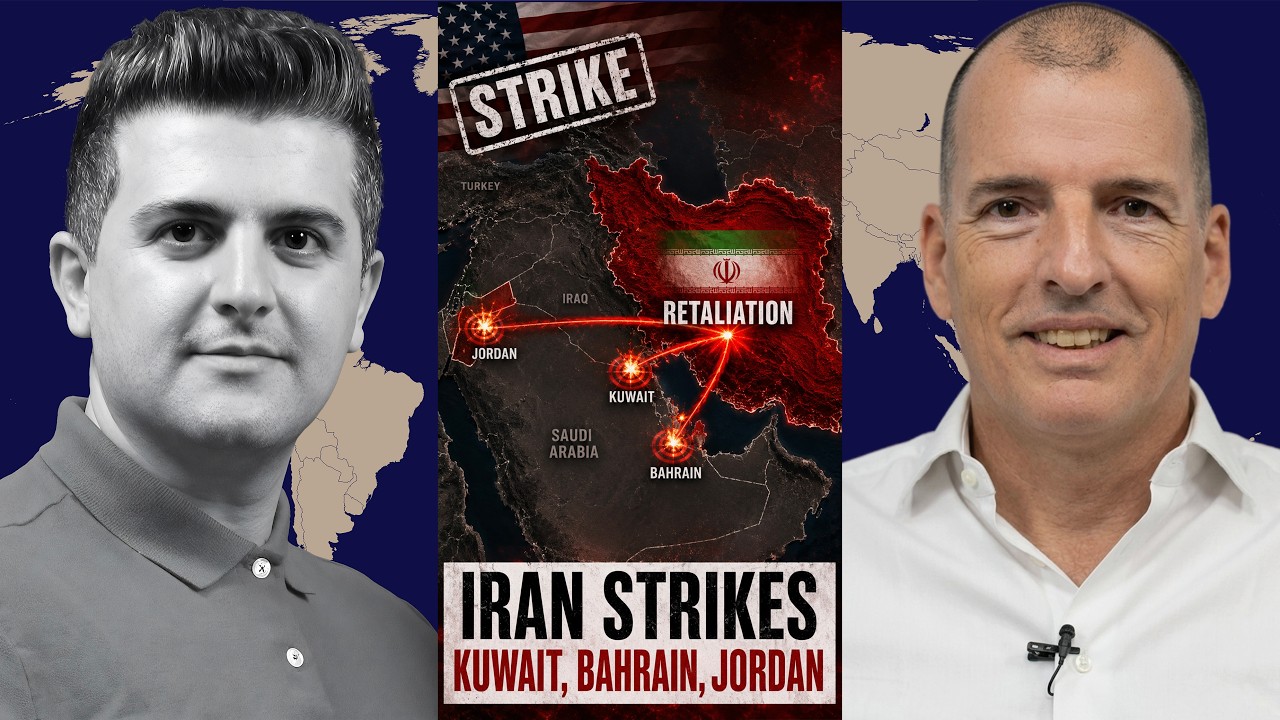
Alex Krainer: US STRIKES Iran – Iran RETALIATES Against Kuwait, Bahrain & Jordan!
"Amidst escalating US-Iran conflict and Iranian retaliation against regional US allies, this episode argues that US foreign policy is deeply controlled by an 'Anglo-Zionist conspiracy' led by the Rothschild banking dynasty, prioritizing Israeli interests over American ones."