Are We Being Herded Into World War 3?
YouTube · 2JNj5iEhgoU
Quick Read
Summary
Takeaways
- ❖The current global climate is a 'tinderbox,' more volatile than before World War II, with nations strategically positioning for conflict.
- ❖Modern warfare weaponizes information, markets, technology, and domestic divisions, making a traditional 'trigger' event unlikely.
- ❖The U.S. is experiencing unprecedented internal division and a profound loss of trust in its institutions, making it susceptible to external psychological warfare.
- ❖Information overload and algorithmic 'bubbles' prevent citizens from accessing comprehensive information, leading to poor collective decision-making.
- ❖A lack of accountability from leaders in government and institutions exacerbates national fragility and distrust.
Insights
1Global 'Tinderbox' Mirrors Pre-WWI Conditions
The guest argues that the current global landscape is more analogous to the period before World War I than World War II. Before WWI, the world was a 'tinderbox' with widespread readiness for conflict, making war almost a foregone conclusion, whereas before WWII, diplomacy still held some possibility. Today, nations are actively positioning themselves, creating a similar sense of impending, unavoidable conflict.
The guest states, 'I see massive parallels to before World War I. I think we are more of a tinderbox than we were before World War II.' ( - , - )
2Modern Warfare is Non-Kinetic and Systemic
Traditional World War II-style conflict with visible triggers and battle lines is obsolete. Modern warfare weaponizes narratives, financial markets, technology, supply chains, and domestic divisions. Cyberattacks targeting critical infrastructure like power grids and communication systems are the primary threat, capable of causing societal collapse without conventional bombing campaigns.
The host notes, 'Today there may never be a single invasion moment because everything is being weaponized at once: narratives, markets, technology, supply chains, and domestic division with psychological warfare coming from outside and from within.' ( - ). The guest adds, 'All an enemy has to do is turn off our power... Our cyber security and our power system has not been upgraded... I don't need bombers. I don't need nuclear weapons. I need cyber.' ( - )
3U.S. Domestic Division as a Strategic Vulnerability
The U.S. is more divided than ever, characterized by partisan 'us versus them' mentality and a refusal to engage in constructive debate. This internal fragility is so severe that external adversaries like Russia and China may not need to launch direct attacks; they can simply 'dump gas' on existing divisions, leading to self-inflicted civil conflict or regime change.
The guest states, 'In the US, I think we are more divided than we've ever been. It's us versus them and we talk at each other instead of with each other.' ( - ). Later, 'I think we are so fragile right now as a country that they're not going to need to cut our power... I don't think they're going to need to do anything where there could be a trace back to them. Think we'll do it to ourselves.' ( - )
4Erosion of Trust in Institutions and Lack of Accountability
Trust in nearly all major U.S. institutions—government, healthcare, education, law enforcement, military—has been lost due to perceived failures and a pervasive lack of accountability from those in power. This 'two-tiered system' where powerful individuals face no repercussions further entrenches distrust and prevents national progress, as every four years, new leadership attempts to undo prior actions.
The guest observes, 'We've lost faith in almost all of them because of things that have happened.' ( - ). The host adds, 'You never see any consequences or repercussions or anybody held accountable in any position of power. It's obvious obviously a two-tiered system.' ( - ). The guest laments, 'There's no ownership... just own up to it and tell us how you're going to fix it. Don't blame it on everybody else.' ( - )
Bottom Line
The U.S. is already one of the most dangerous countries in the world, not due to external threats, but internal issues like gun violence and incarceration rates.
This challenges the perception of 'American exceptionalism' and suggests that the nation's internal problems are as severe, if not more so, than those in countries often labeled as dangerous. It implies a need for introspection and addressing domestic issues before projecting global power.
A re-evaluation of national priorities to focus on internal stability, infrastructure, and social cohesion, potentially leading to a stronger, more resilient nation less susceptible to external manipulation.
External adversaries may not need to launch kinetic attacks on the U.S.; they can simply 'dump gas' on existing domestic divisions to trigger internal collapse or civil war.
This redefines the concept of national security, highlighting that the greatest threat might come from within, exacerbated by foreign influence. It means traditional military defenses are insufficient against this form of 'hybrid warfare.'
Developing robust national strategies for combating disinformation, fostering civic dialogue, and strengthening social cohesion to inoculate the population against foreign-backed psychological warfare and internal fracturing.
Key Concepts
The Tinderbox Analogy
Describes a situation where numerous underlying tensions and factors create an extremely volatile environment, ready to ignite into a major conflict with a small spark, similar to the state of Europe before World War I.
Chain of Events (Aviation Safety)
A concept from aviation safety where mishaps are rarely singular events but rather the culmination of a series of smaller, interconnected failures or issues. Applying this to geopolitics, current global escalations are seen as a chain of events that, if not broken, will lead to a disastrous outcome.
Information Bubbles
Refers to the phenomenon where individuals are primarily exposed to information that confirms their existing beliefs, often due to algorithmic curation or selective media consumption, leading to a fragmented understanding of reality and increased societal division.
Lessons
- Actively seek out diverse news sources and perspectives (e.g., using tools like Ground News) to avoid information bubbles and gain a more comprehensive understanding of events.
- Engage in constructive debate and 'devil's advocate' thinking, even on uncomfortable topics, to sharpen understanding and challenge personal biases rather than immediately dismissing opposing viewpoints.
- Demand accountability from leaders across all institutions, advocating for consequences for wrongdoing to rebuild trust and foster effective governance.
- Recognize the signs of a 'chain of events' escalating towards conflict, both domestically and internationally, and advocate for de-escalation and systemic change.
Notable Moments
The guest recounts seeing a political advertisement from Wisconsin where two opposing candidates jointly presented their shared goals and then their differing approaches, concluding with a mutual approval of the message.
This rare example of bipartisan civility and agreement on fundamental goals, despite differing methods, stands in stark contrast to the pervasive partisan warfare described throughout the episode. It highlights a potential path forward for political discourse that prioritizes shared national objectives over ideological conflict.
Quotes
"Today there may never be a single invasion moment because everything is being weaponized at once: narratives, markets, technology, supply chains, and domestic division with psychological warfare coming from outside and from within."
"I frequently when I'm talking to my wife, I'm saying, you know, the world right now is a tinder box. Everybody is on the edge of their seat waiting to see what's going to happen."
"I think we are so fragile right now as a country that they're not going to need to cut our power... I don't think they're going to need to do anything where there could be a trace back to them. Think we'll do it to ourselves."
"If you study every empire that has ever existed on the planet, they all end and they all end badly because they start believing their own lies and they stop taking accountability for what they do."
Q&A
Recent Questions
Related Episodes

🚨 THEY F*CKED AROUND FOR THE LAST TIME 😭😭😭
"This episode unleashes a torrent of highly opinionated commentary on the US-Iran deal, Israel's role, and a scathing critique of 'leftist' policies and immigration, particularly highlighting the UK grooming gang report as evidence of Western societal decay."
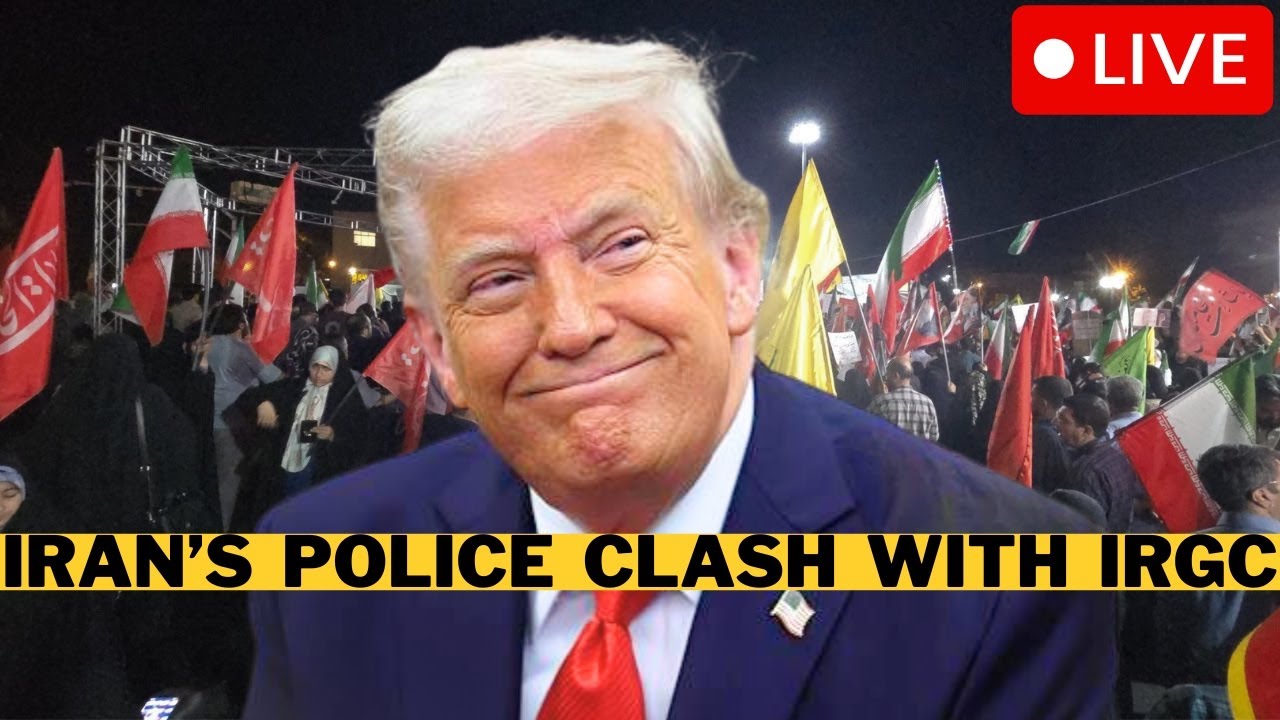
BREAKING: Protests ERUPT In Iran Over IRGC Surrendering To Trump - Infighting Clashes In Tehran
"Iran is experiencing severe internal infighting and protests as hardline IRGC elements clash with government figures over a perceived 'surrender' to the US, while mainstream Western media misrepresents the situation."
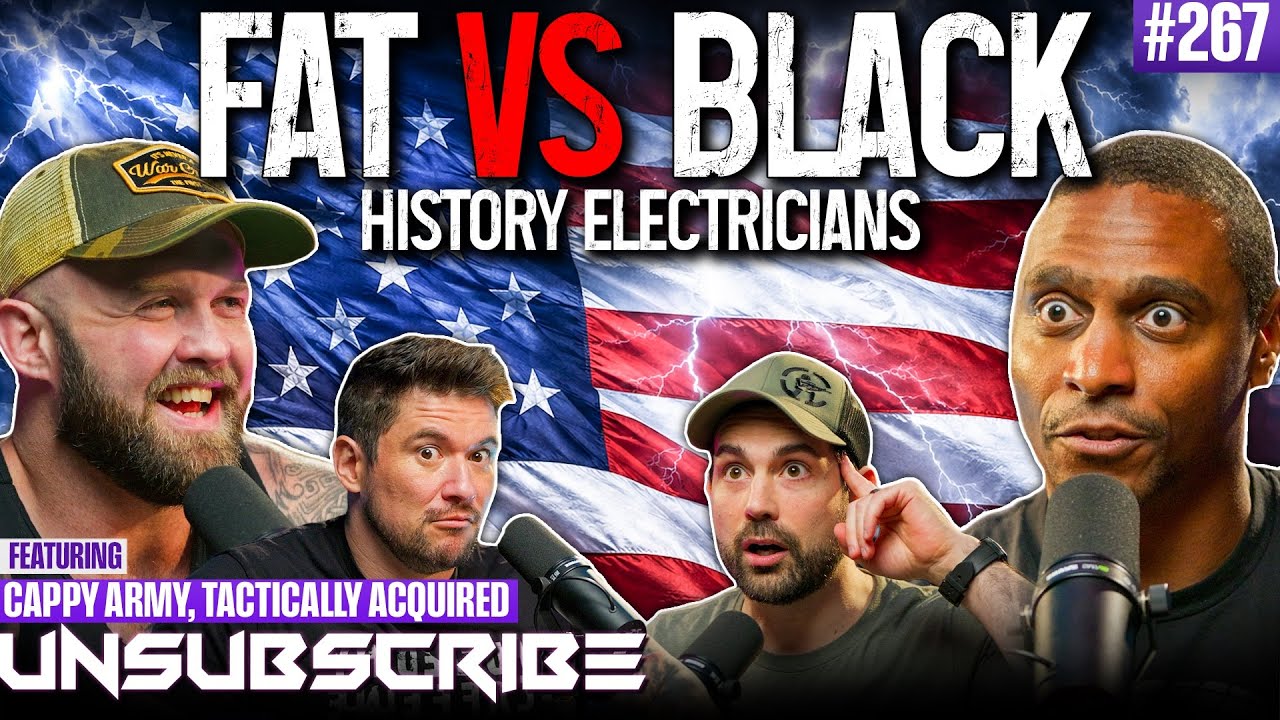
The Fat Electrician Vs Tactically Acquired | Unsubscribe Podcast 267
"This episode features military content creators discussing current geopolitical hotspots, advanced weaponry, and the surprising psychological warfare tactics of modern conflict, alongside their personal journeys building online communities."
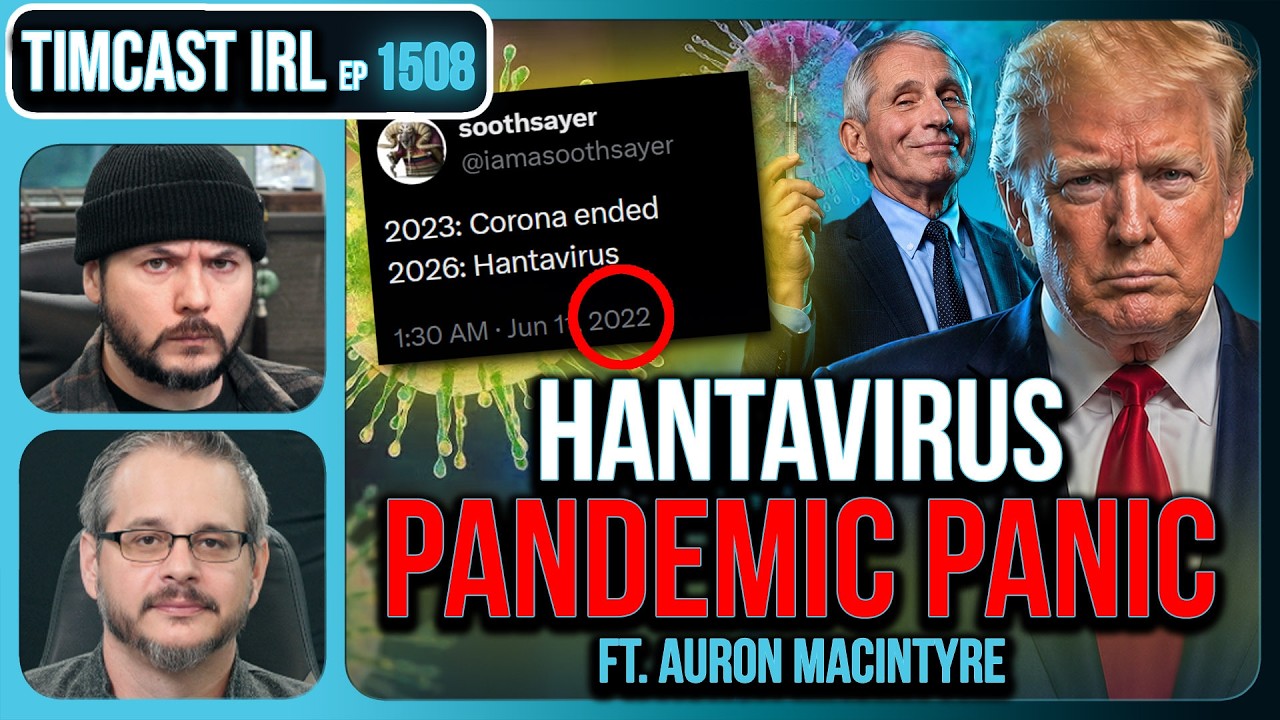
HANTAVIRUS PANDEMIC PANIC, Human To Human Spread Feared | Timcast IRL
"Tim Pool and his guests dismiss the Hantavirus panic as media desperation, pivot to discussing escalating political polarization, the rise of technocracy, and the weaponization of social issues."