Political Prophet Predicts the Next Phase in Iran, Trump’s War Plan, & Israel’s Plot to Sabotage It
YouTube · 2K2nQsTTjQE
Quick Read
Summary
Takeaways
- ❖The Middle East war will be a prolonged war of attrition, similar to Ukraine, with neither side conceding defeat.
- ❖Global economic consequences include oil at $200/barrel, widespread food shortages, and disruptions to global trade.
- ❖The US cannot withdraw from the Middle East without risking the collapse of the petrodollar and a global reorientation away from American hegemony.
- ❖China, despite its economic interests, lacks a geopolitical framework to effectively intervene and will struggle with the energy crunch.
- ❖Three major global trends will accelerate: de-industrialization, remilitarization (end of Pax Americana), and mercantilism.
- ❖Japan, despite structural weaknesses, possesses cultural resilience and entrepreneurial spirit, making it a strong long-term bet over China.
- ❖South Korea faces a precarious future due to North Korea and its low birth rate, exacerbated by an 'ossified' monopoly economy.
- ❖The GCC nations are the 'biggest losers' of the Middle East war, as their 'mirage' of prosperity built on cheap energy and US protection shatters.
- ❖Iran, though devastated, could potentially rise in 10-20 years by controlling the Strait of Hormuz and charging a significant toll.
- ❖Israel is the main beneficiary of the conflict, pursuing a 'Greater Israel Project' and allegedly manipulating the US to withdraw from the region.
- ❖The US military is ill-suited for a war with Iran, risking a 'Vietnam over' scenario if ground troops are deployed.
- ❖The US is projected to face internal sectarian violence and may 'colonize' Canada and Mexico for resources and labor.
- ❖Canada is described as a 'glorified resource colony' undergoing 'control demolition' through mass immigration, orchestrated by external powers like the City of London.
- ❖Western Europe faces potential civil war and insurgencies due to unassimilated immigrant populations, a result of policies like Angela Merkel's 'we can do this' approach.
- ❖Western civilization is being purposely destroyed from within, particularly by elite universities abandoning classic texts and promoting conformist ideologies.
- ❖Eschatological beliefs (e.g., Christian Zionism, Jewish messianic fever) are a significant, often underestimated, driving force behind current geopolitical events in Israel and the US.
Insights
1Protracted Middle East War and Global Economic Fallout
The guest predicts the war in the Middle East will be a drawn-out conflict of attrition, similar to the war in Ukraine, with neither side willing to concede. This will lead to dramatic global economic consequences, including oil prices reaching $200 a barrel, widespread food shortages forcing rationing, and significant disruptions to air travel and supply chains. The assassination of key Iranian figures, like Ali Larajini, has removed 'off-ramps' for negotiation, committing both sides to a long war.
The guest states, 'this war in Iran will be very similar to the war in Ukraine, meaning that this will be drawn out, be a war of attrition.' He adds, 'Iran has stated that its purpose, its goal, its strategy is to move oil to $200 a barrel.' (, )
2US Entrapment and the Petrodollar Dilemma
The United States is in a 'stuck' position, unable to negotiate a ceasefire with Iran due to Iranian demands for reparations and US withdrawal from the Middle East. Such a withdrawal would lead GCC nations to become client states of Iran, abandoning the petrodollar system, which would have severe repercussions for the American economy, which relies on foreign nations buying US dollars to sustain its $39 trillion debt. This would also trigger remilitarization in Japan and South Korea and a European pivot to Russia.
The guest explains, 'If the United States were to do that, then the GCC nations would collectively become client states of Iran... If the GCC were to abandon the petro dollar, then this would have severe repercussions on the American economy.' (, )
3Global Reorientation: De-industrialization, Remilitarization, Mercantilism
The prolonged energy crunch from the Middle East war will accelerate three major global trends. First, 'de-industrialization' as cities can no longer sustain large populations without cheap energy and food, necessitating a return to agriculture. Second, 'remilitarization' as the 'Pax Americana' ends, forcing nations like Japan to rearm. Third, 'mercantilism,' where advanced industrial nations like Japan and Germany must create self-sufficient supply chains due to disrupted global trade.
The guest outlines, 'this war it will accelerate three major trends... de-industrialization... remilitarization... mercantalism.' (, , )
4Israel as the Primary Beneficiary of Regional Conflict
The guest asserts that Israel is the main beneficiary of the Middle East war, which facilitates its 'Greater Israel Project' – a territorial ambition from the Nile to the Euphrates, believed to be divinely promised. To achieve this, Israel needs to remove America as the guarantor of GCC security. The war is seen as exposing the limits of American power and alienating the American public, potentially forcing a US withdrawal, thus clearing the path for Israeli regional dominance.
The guest states, 'if you look at the main beneficiary of this war, it is Israel because Israel has an ambition called the greater Israel project.' He adds, 'this war has shown the limitations of American power. It's it's really annoyed the American people.' (, )
5The 'Control Demolition' of Western Civilization
The guest argues that Western nations, particularly Canada and Western Europe, are undergoing a 'control demolition' through policies like mass immigration that are intentionally undermining their cultural identity and societal cohesion. He cites Canada's declining life expectancy and GDP, and Europe's demographic shifts, suggesting these are not accidental but part of a systematic plan, for which there is 'no historical precedent.' He attributes this to unseen 'shadow forces' and notes that Western universities are actively hostile to Western civilization's classics.
The guest describes Canada as being 'suppressed on purpose' and asks, 'why is this happening throughout the world at the same time?' concluding, 'It seems as though it's almost a control demolition of Western civilization.' (, , )
Bottom Line
Israel's 'Greater Israel Project' relies on the US being forced out of the Middle East, and the current conflict is seen as a deliberate strategy to achieve this by exposing American military limitations and public fatigue.
This implies that Israel's actions in the region are not solely defensive but strategically aimed at reshaping the geopolitical landscape to its long-term advantage, potentially at the expense of US influence and regional stability.
For geopolitical analysts, this offers a framework to interpret Israeli foreign policy beyond immediate security concerns, considering its broader, religiously-informed territorial ambitions and its strategic interactions with global powers.
The 'control demolition' of Western civilization, particularly in Canada and Europe, is being executed through mass immigration and the abandonment of core cultural values, driven by unseen 'shadow forces' and elite institutions.
This suggests that the societal and demographic changes in these regions are not organic or accidental but a deliberate, coordinated effort with profound, potentially destructive, long-term consequences for their national identities and stability.
For researchers and policymakers, this calls for a critical re-evaluation of immigration policies and cultural institutions, investigating potential underlying agendas and their impact on societal cohesion and national sovereignty.
Eschatological beliefs, particularly Christian Zionism in the US and messianic fever in Israel, are powerful, often underestimated, drivers of current geopolitical conflicts, influencing funding for settlements and strategic decisions.
This indicates that purely rational, secular analyses of Middle East conflicts may miss a significant motivational factor, suggesting that religious prophecies and end-times expectations are actively shaping political and military strategies.
For international relations scholars and intelligence agencies, understanding the role of eschatology is critical for predicting state and non-state actor behavior, especially in regions with deep religious significance, and for developing more effective diplomatic and security strategies.
Key Concepts
War of Attrition
A military strategy in which one side attempts to wear down the enemy by continuously inflicting losses, often over a prolonged period, until the enemy's ability to fight is severely degraded or eliminated.
Petrodollar System
The global financial arrangement where oil-producing nations, particularly the GCC, sell oil in US dollars and then recycle those dollars back into the American economy, underpinning the US dollar's status as the world's reserve currency.
Pax Americana
A period of relative peace and stability maintained by American global hegemony, where the US military guarantees security and prevents conflicts between other nations.
Mercantilism
An economic theory and practice where nations prioritize self-sufficiency and independent supply chains, often through protectionist policies, to maximize exports and minimize imports, especially in times of global trade disruption.
Eschatological Fever
A state of intense religious belief and expectation concerning the end times, often leading to actions or interpretations of events through a messianic or apocalyptic lens, influencing political and military decisions.
Control Demolition
A metaphor used to describe the intentional, systematic dismantling or destruction of a society or civilization from within, often through policies that appear counter-intuitive to national interest but serve a hidden agenda.
Lessons
- Re-evaluate long-term investment strategies to account for potential global energy price spikes, food shortages, and disruptions to international trade and supply chains.
- Consider the implications of a weakening 'Pax Americana' and the rise of mercantilism, potentially leading to increased national remilitarization and regional conflicts.
- Critically assess the narratives surrounding geopolitical events, recognizing the potential influence of eschatological beliefs and 'shadow forces' on state actions and international relations.
Notable Moments
Discussion of the US economy as a Ponzi scheme reliant on the petrodollar and foreign nations buying US debt, making US withdrawal from the Middle East impossible without severe economic repercussions.
This frames the US's geopolitical entanglement not as a choice but as an economic necessity, highlighting a fundamental vulnerability of the American financial system.
The guest's strong assertion that he would invest all his money in Japan over China due to Japan's cultural resilience and entrepreneurial spirit, despite its structural weaknesses.
This offers a contrarian view on East Asian power dynamics, emphasizing cultural factors over current economic or demographic trends as predictors of long-term national strength.
The detailed explanation of how South Korea's 'ossified' monopoly economy and intense competition for prestigious jobs contribute to its extremely low birth rate.
This provides a specific, economic-cultural link to a critical demographic crisis, offering a unique perspective on a global issue.
The claim that Israel has been conducting archaeological digs under the Al-Aqsa Mosque for two years to 'destroy the foundations' for a 'control demolition' and blame it on Iranians, to ignite a war between Arabs and Persians.
This is a highly incendiary and specific accusation that, if true, would reveal a deeply cynical and destructive strategy to achieve religious and geopolitical objectives.
The guest's analysis of Donald Trump's potential roles in the conflict, ranging from an unwitting actor manipulated by advisors to a figure with a 'messianic calling,' or even a victim of blackmail.
This highlights the profound uncertainty and speculative nature surrounding the motivations of powerful leaders in complex geopolitical situations, suggesting multiple, often hidden, drivers for their actions.
Quotes
"This war in Iran will be very similar to the war in Ukraine, meaning that this will be drawn out, be a war of attrition."
"The entire global economy is based on access to cheap energy. So unfortunately, I think that we can expect this war to drag on for years and years."
"The American economy is a Ponzi scheme that relies on foreign nations to continually buy US dollars."
"America doesn't have the power to stop kids from attacking each other on the playground anymore. So nations have to remilitarize."
"If I were to bet if if you give me like a billion dollars and said, 'In East Asia, you can invest your money either in China or Japan,'... I would invest all my money in Japan."
"The biggest loser of this war regardless of how how it turns out... is the GCC because for the past 30 40 years the GC is basically built on a mirage."
"If you look at the main beneficiary of this war, it is Israel because Israel has an ambition called the greater Israel project."
"The American military has not fought a real war for decades... Iran is completely different and the American military does not want to fight this war because they've war game this countless countless times and each war game they discover that they they they lose."
"It is in the best interest of America to eventually take over and colonize both Canada and Mexico."
"Canada was never really a nation state. It's more of a glorified resource colony for the British, the city city of London."
"It seems as though it's almost a control demolition of Western civilization, right? The Anglosphere, Western Europe. It seems as though these nations are being destroyed purposely."
"There's no such thing as multiculturalism. There's always a dominant culture that, you know, that insists on dominance, of course."
Q&A
Recent Questions
Related Episodes
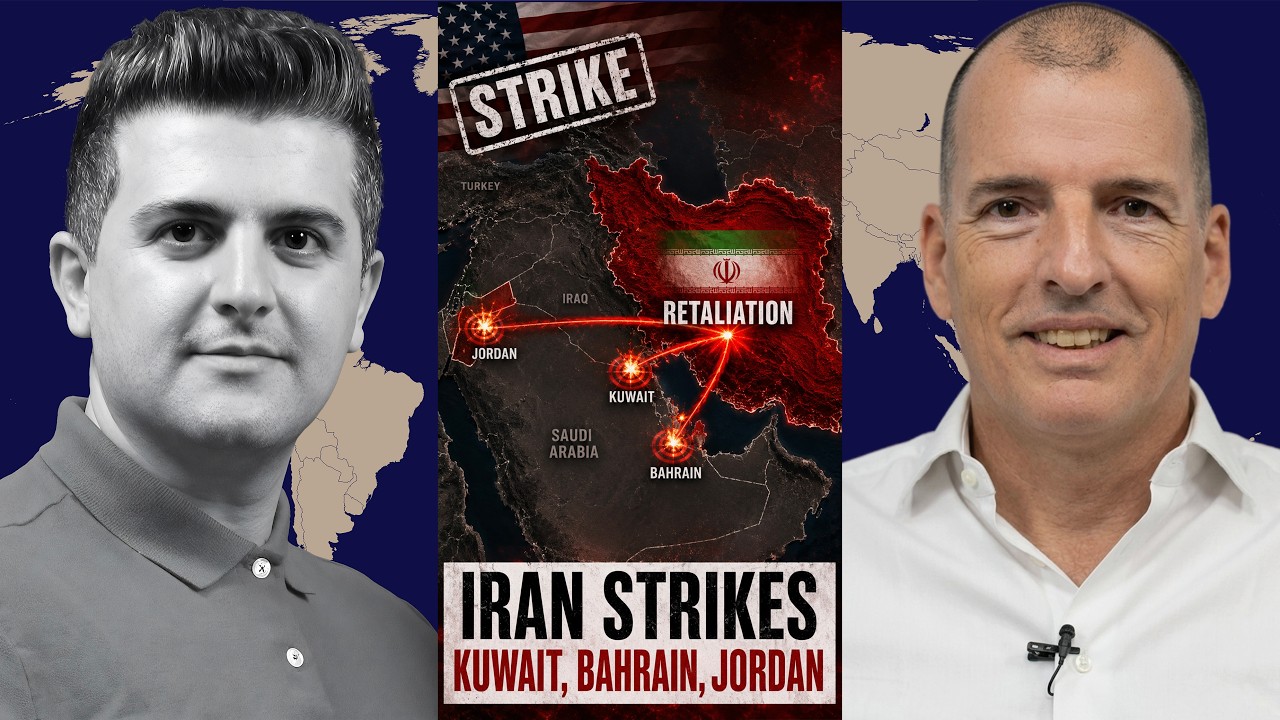
Alex Krainer: US STRIKES Iran – Iran RETALIATES Against Kuwait, Bahrain & Jordan!
"Amidst escalating US-Iran conflict and Iranian retaliation against regional US allies, this episode argues that US foreign policy is deeply controlled by an 'Anglo-Zionist conspiracy' led by the Rothschild banking dynasty, prioritizing Israeli interests over American ones."

LIVE: Trump HIDES FROM PUBLIC as US SOLDIER KILLED!!! 6/2/2026
"The host exposes alleged government cover-ups regarding military casualties, Trump's unexplained public absence, and questionable political appointments, arguing these reflect a 'regime of loser babies' and a failing foreign policy."

Iran Update: Israel’s Newest Bombing Campaign, the Oncoming War With China and How to Avoid It
"Colonel Wilerson reveals how the US and Israel are actively bombing China's strategic infrastructure in Iran, escalating a covert economic war that Beijing intends to win without direct military conflict by dismantling the dollar's global dominance."

Patrick Henningsen: Hezbollah JUST Fired Back at Israel - Iran Vows to “Crush” All Attacks
"Patrick Henningsen argues that the US and Israel initiated an illegal war against Iran, driven by Trump's incompetence and Israeli influence, leading to an inevitable escalation with severe global economic repercussions."