
Meatpackers Strike; Trump's War On 'Antifa' w/ Lisa Xu, Caitlyn Clark, Xavier de Janon | MR Live
YouTube · 2WKk2Ft_fk0
Quick Read
Summary
Takeaways
- ❖The JBS Gley plant strike in Colorado is the first major meatpacking strike in 40 years, involving 3,800 workers.
- ❖Meatpacking industry unionization rates plummeted from 90% post-WWII to 15% by 2019 due to union-busting tactics and consolidation.
- ❖JBS, a Brazilian-owned company, has faced $100 million in settlements for collusion, wage repression, and child labor violations.
- ❖Workers at JBS Gley are forced to pay up to $1,100 out-of-pocket for essential safety equipment like mesh vests and arm guards.
- ❖ICE officers were stationed outside the JBS plant during a strike authorization vote, an intimidation tactic that failed as workers voted 99% to strike.
- ❖Nine individuals were federally convicted on terrorism-related charges following a July 4th noise demonstration at an ICE detention center in North Texas.
- ❖The 'attack' on the ICE facility involved an unknown individual vandalizing vehicles and a surveillance camera, who later cooperated with the government.
- ❖The government labeled the protesters as a 'North Texas Antifa cell,' despite the political ideology being irrelevant to the federal charges.
- ❖Signal group chats and the act of deleting messages or leaving chats were used as primary evidence for 'concealment of evidence' and 'aiding terrorism' charges.
- ❖State-level charges in Texas for deleting messages from a group chat can carry decades-long prison sentences, criminalizing basic digital privacy actions.
Insights
1Historic Meatpacking Strike Against JBS
Workers at the JBS Gley beef packing plant in Colorado initiated the first major meatpacking strike in 40 years. This action challenges decades of industry consolidation and union suppression, which saw unionization rates drop from 90% to 15%. The strike addresses critical issues like dangerous line speeds, which lead to frequent injuries, and the company's practice of forcing workers to pay for their own personal protective equipment (PPE), costing up to $1,100 per worker.
Lisa Shu and Caitlyn Clark from Labor Notes detail the strike's context, citing the 1985-86 Hormel Foods strike as the last of its scale and explaining how JBS used tactics like closing unionized plants to reopen non-union ones. Caitlyn Clark describes the current strike's strong solidarity among a diverse, multilingual workforce, despite company intimidation tactics like stationing ICE officers during strike authorization votes.
2Criminalization of Dissent: The 'Antifa' Terrorism Convictions
Nine individuals were convicted on terrorism-related charges after a noise demonstration at an ICE detention center in North Texas. The prosecution leveraged a single act of vandalism by an individual (who later cooperated) and the use of encrypted Signal group chats to construct a narrative of an organized 'Antifa cell.' This case exemplifies the government's strategy to criminalize protest and collective organizing by associating digital privacy and communication with 'terrorist' activities, even when the political ideology is not directly relevant to the charges.
Javier de Janon of the National Lawyers Guild explains that the protest was a common noise demonstration for solidarity. He highlights that the individual who vandalized ICE vehicles was unknown to the defendants and later testified for the government. De Janon notes that the 'Antifa' label was 'purely political' and irrelevant to the federal charges, with the judge even questioning its relevance. He details how deleting messages from Signal chats led to 'concealment of evidence' charges, carrying severe penalties in Texas.
3Corporate Impunity and Government Complicity
The meatpacking industry operates with extreme consolidation, with four major companies controlling 85% of the US beef market. JBS, specifically, has a history of criminal operations, including $100 million in settlements for collusion, wage repression, and child labor violations. The company's ability to operate with such impunity is underscored by its alleged $5 million donation to Trump's inauguration fund, which reportedly expedited its IPO approval despite regulatory hurdles. This demonstrates a pattern of corporate malfeasance enabled by political influence.
Caitlyn Clark states that JBS alone accounts for 5-7% of all US beef and has spent $100 million in court settlements for various crimes. She mentions the company's Brazilian owners went to jail for insider trading and highlights the 'convenient $5 million donation to Trump's inauguration fund' that 'quickly waved through' their stock exchange public offering.
Lessons
- Support the JBS Gley meatpacking workers' strike by donating to the UFCW Local 7 hardship fund or the Essential Workers for Democracy strike support fund. (Links provided in podcast description).
- Show solidarity with striking workers by appearing on picket lines, bringing food, or honking in support to demonstrate public backing and put pressure on employers.
- Support the Prairieland defendants facing terrorism charges by donating to their fundraiser, writing letters, or attending court dates in Texas to raise awareness and provide moral support. (prairielanddefendants.com).
- Exercise caution and awareness regarding digital communications during protests, understanding that encrypted apps like Signal can be scrutinized by authorities, and even deleting messages can lead to severe charges in some jurisdictions.
- Be vigilant for potential informants or provocateurs at protests; question individuals engaging in undisciplined or destructive acts that could be used to criminalize broader movements.
Notable Moments
Discussion of the 1985-86 Hormel Foods strike and its defeat, which set a precedent for union busting in the meatpacking industry.
This historical context explains the 40-year gap in major meatpacking strikes and highlights the long-term challenges workers face against consolidated corporate power.
JBS stationed ICE officers outside the plant during a strike authorization vote to intimidate workers.
This reveals the extreme tactics corporations use to suppress labor organizing, leveraging the vulnerability of a predominantly immigrant workforce.
The 'Antifa' expert's testimony in the ICE protest trial was deemed irrelevant by the judge.
This underscores the political nature of the prosecution, where labels are used to demonize and criminalize dissent rather than focusing on actual legal offenses.
The individual who vandalized ICE vehicles at the protest was unknown to the defendants and later cooperated with the government.
This raises suspicions about potential provocateurs or informants, a recurring theme in protest movements, and highlights how individual actions can be used to implicate broader groups.
Quotes
"The meatpacking industry has only consolidated further... they had a particular union busting strategy of closing unionized plants... only to reopen surprise right in non-union plants."
"The vast majority of the workers... have either temporary protected status, their permanent residents. Many of them are citizens although they may have been born in a different country... JBS had several ICE officers stationed outside of the plant as an attempt to intimidate these workers out of voting."
"These employers are criminal operations. They operate like cartels with each other in the meatpacking industry... JBS alone has spent $100 million dollars in court settlements just over the last year, over industry collusion to repress worker wages, increased prices for consumers, child labor violations..."
"The injection of Antifa into this case was for my perspective purely political. In fact, after the so-called Antifa expert of the government gave his testimony, even the judge was asking that same question. What does this have to do with anything?"
"The government will need to prove intent knowledge... But I'm talking about if we have a signal chat here for um Hey guys, we got to coordinate a live show that we're doing. If the live show is not a is not found criminally um if we're not criminally liable for the live show, can we be liable for I mean, don't they have to prove that something illegal happened at the protest?"
"This federal government would say that if the live show is about anarchism, anti-fascism, and freeing immigrants, the live show is a crime. I mean, this is the the reality we find ourselves in."
Q&A
Recent Questions
Related Episodes

Top U.S. & World Headlines — February 4, 2026
"President Trump's controversial calls for nationalizing voting, escalating federal immigration enforcement, and tense international relations dominate headlines, alongside a significant media workers' strike for AI protections."
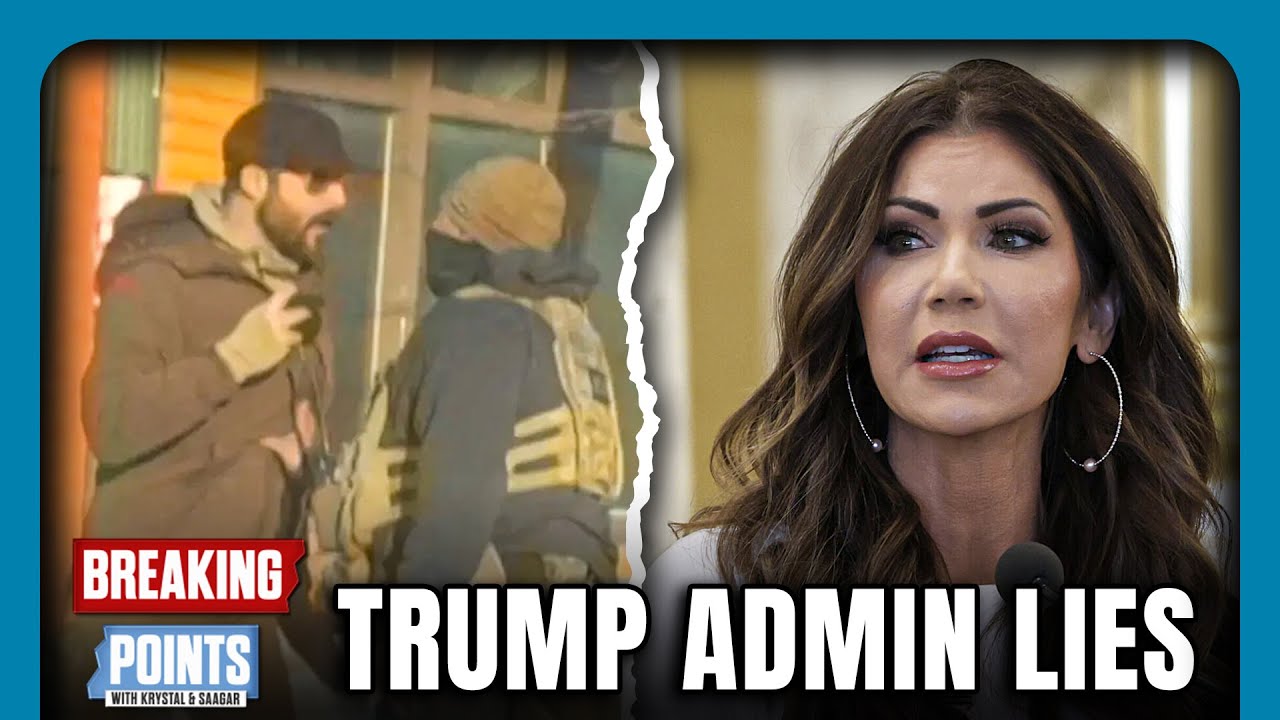
ROUNDUP: ALL Trump Admin LIES About MN Shooting
"This episode exposes the Trump administration's alleged lies and misrepresentations surrounding the fatal shooting of Alex Petti by federal agents in Minnesota, arguing it represents a severe erosion of civil liberties and public trust."
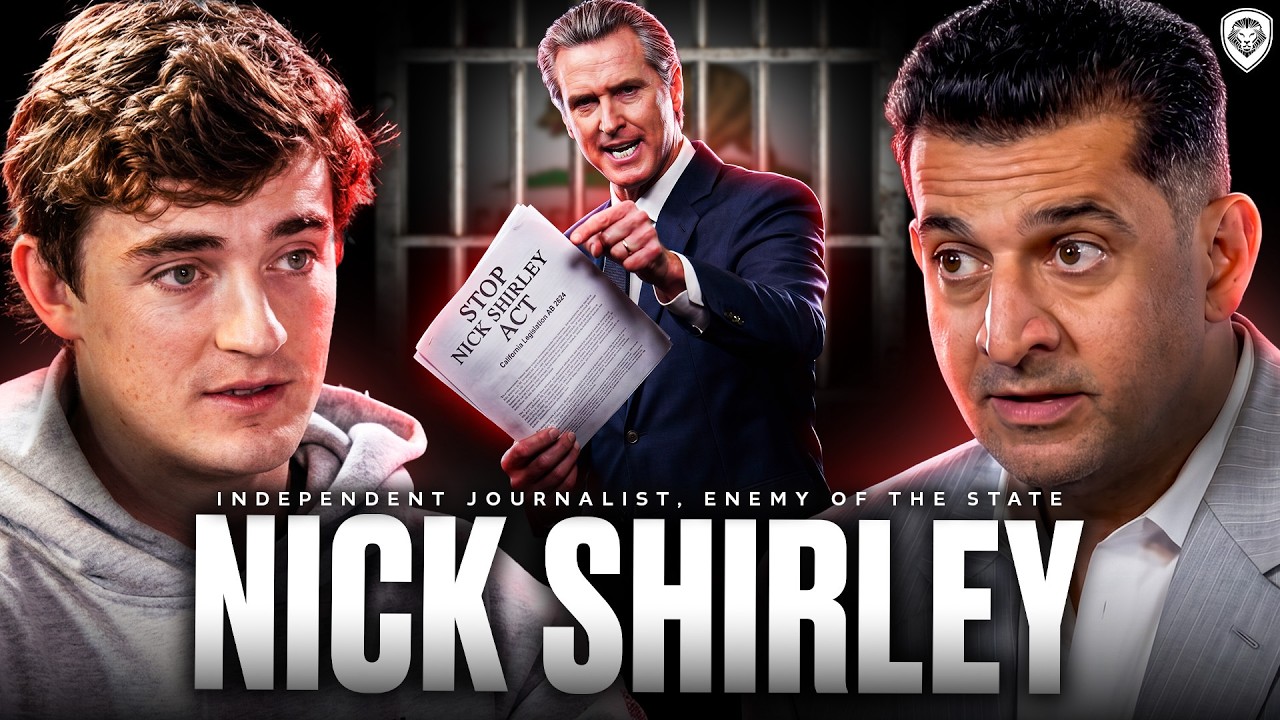
"Planning My Escape From Cuba" - Nick Shirley Returns | PBD #793
"Investigative journalist Nick Shirley details his perilous 24-hour trip to Cuba, where he exposed the harsh realities of communism under government surveillance, and discusses his ongoing efforts to uncover widespread fraud in California."

PBS News Hour full episode, March 3, 2026
"The U.S.-Israeli war with Iran escalates into its fourth day, prompting mass American evacuations and intense domestic political debate over its justification and long-term strategy."