
Alex Krainer: Iran CLOSES Strait of Hormuz Again – Trump’s Lebanon Position SLAMMED
YouTube · 2yEhYUY8RuM
Quick Read
Summary
Takeaways
- ❖The US-Iran ceasefire is extremely fragile, with Israel immediately breaching terms and the US equivocating.
- ❖Iran's long-term goal is permanent peace and the removal of all causes of Western interference to enable national development.
- ❖The fundamental cause of the conflict is the US empire's geopolitical imperative to dominate Eurasia and exploit Iran's natural resources.
- ❖Western economies are headed for severe stagflation due to unpayable national debts and excessive money printing.
- ❖The US dollar's dominance is fading, necessitating a currency overhaul and a 'major haircut' for bondholders.
- ❖The American empire is collapsing, with military misadventures weakening it and Iran representing a critical turning point.
- ❖Powerful banking families are identified as the core vested interests driving imperial expansion to re-float their failing financial system.
- ❖US politicians prioritize Israel over America, hindering an 'America First' foreign policy.
- ❖The European Union is predicted to disintegrate, mirroring the Soviet Union's collapse, due to unaccountable power and rising sovereigntist movements.
Insights
1Iran's Demand for Permanent Peace and National Development
Iran is not interested in temporary ceasefires but insists on a permanent peace to remove the underlying causes of conflict. For over 120 years, Western colonial powers have harassed Iran, preventing its society and economy from developing to full potential. This constant siege has also distorted its political process, necessitating a more repressive government to deal with internal and external threats. Iran views the current moment as critical to permanently remove these obstacles and will not return to the status quo.
Iranians were not interested in any kind of a ceasefire at all because they have been insisting since the beginning of this war that uh they want a permanent peace and they want to remove the the causes of the conflict. () ... Iran has been harassed by Western colonial powers for over 120 years now and this has prevented the Iranian society and their economy from developing to their full potential. ()
2The Geopolitical and Financial Roots of the Conflict
The conflict is fundamentally about the US empire's imperative to dominate the Eurasian landmass, with Iran being a primary obstacle to its hegemony in West Asia. The true goal is regime change to install a puppet government, allowing the West to exploit Iran's estimated fifth or sixth wealthiest natural resources and its 92+ million population as cheap labor. This aligns with the 'all wars are bankers' wars' slogan, as leading banking families seek new collateral to re-float their imploding, fraudulent monetary system.
The fundamental cause of the conflict is um it brings us back to the geopolitics of the empire and their imperative of dominating the Eurasian landmass and Iran is and has been for decades one of the main obstacles to the empire's hegemony over the western in Asia. () ... Iran is estimated to be the fifth or sixth wealthiest nation in the world in term of in terms of natural resources. () ... This is the ultimate cause of war and it brings us back to the you know slogan that all all wars are bankers wars. This is literally the truth. ()
3Inevitable Stagflation and Dollar Collapse in Western Economies
Western countries, particularly the United States, face a severe crisis of stagflation – economic stagnation coupled with rising price inflation. This is driven by an overhang of unpayable debts, with the US public debt approaching $40 trillion and total debt exceeding $120 trillion. Governments and monetary authorities are forced to monetize these bad debts by printing money, diluting the purchasing power of the currency. The dollar's dominance is fading, and a complete monetary system overhaul, including a new currency and 'major haircuts' for bondholders, is anticipated.
There's a 100% probability that the United States, but also other Western countries are going to uh have a severe crisis of stagflation, meaning economic stagnation coupled with uh rising price inflation. () ... the cause of this inflation is the overhang of unpayable debts that all western economies are now sinking into. () ... the dollar is going to be uh withdrawn from circulation and that a different a new different currency is going to replace it and then probably uh a lot of investors, a lot of bond holders are going to be having to take a major haircut. ()
4The American Empire's Limits and Impending Collapse
The American empire has reached its limits, with military misadventures weakening it little by little. Despite warnings from sober analysts within the US government about the catastrophic consequences of attacking Iran, the Trump administration proceeded, squandering political capital and becoming 'a war criminal.' This imperial collapse is driven by powerful banking interests willing to destroy their host nation to achieve their goals. Iran is seen as the 'graveyard of empires,' and the ultimate outcome will be the complete eviction of US and other Western interests from West Asia.
Empires always have their limitations. We have a long history of this always being the case and they always collapse. () ... Nevertheless, he went and did it. And so given that all these things are known ahead of events... Trump went ahead and pulled the trigger. () ... the current Western American Empire has reached that moment with Iran as have many empires in the past. Iran is known as the graveyard of empires. () ... the ultimate outcome will be complete eviction of not only United States but also other western interests from West Asia. ()
Bottom Line
US politicians, including those presented as 'good guys' like JD Vance, are largely beholden to Zionist interests, prioritizing Israel over America due to fear of powerful lobbying groups like AIPAC.
This subservience prevents a genuine 'America First' policy, leading to foreign entanglements and resource drain that ultimately harm US national interests, as evidenced by the lack of any congressman willing to say 'America First' over 'Israel First'.
A genuine shift towards national interest would require political figures with the courage and capital to challenge these entrenched interests, potentially leading to a re-evaluation of alliances and foreign policy priorities.
The European Union is on an inevitable path to disintegration, mirroring the Soviet Union's collapse, due to its unaccountable governance system where unelected bureaucrats pass laws written by secret lobbyists.
This structural flaw fuels widespread public discontent and boosts sovereigntist political factions, leading to a potential clash that could involve social uprisings, revolutions, or even civil wars within Europe.
The eventual disintegration could allow individual European nations to reclaim sovereignty, re-evaluate their economic and political alliances, and pursue policies more aligned with their national populations' interests, potentially leading to a 'much better future' after a rough transition.
Key Concepts
Graveyard of Empires
The concept that certain regions or conflicts historically lead to the downfall or significant weakening of major powers, applied here to Iran's role in the decline of the American empire.
Bankers' Wars
The idea that major conflicts are fundamentally driven by financial interests, particularly leading banking families, seeking to expand control, acquire collateral, and sustain a debt-based monetary system.
Imperial Overstretch
The theory that empires decline when the costs of maintaining their military and political commitments abroad exceed the benefits or the capacity of the domestic economy to support them.
Lessons
- Critically evaluate official narratives regarding geopolitical conflicts, looking beyond stated reasons to identify underlying economic and financial motivations.
- Prepare for potential economic instability, including stagflation and currency devaluation, by diversifying assets and understanding the implications of a possible monetary system reset.
- Demand greater accountability from political leaders regarding foreign policy decisions and their alignment with national interests, especially concerning powerful lobbying groups and financial institutions.
Notable Moments
The host highlights JD Vance's statement dismissing Iranian claims about Lebanon being part of the ceasefire, despite evidence from a Pakistani Prime Minister's tweet drafted in Washington.
This exemplifies the perceived deception and lack of good faith in US negotiations, further undermining the ceasefire's credibility and illustrating the administration's messaging control.
Tucker Carlson's commentary on leaders prioritizing global empire over national governance, stating that running the world is more appealing than the 'hard and messy' job of governing America.
This articulates a core critique of imperial overreach, suggesting that the allure of global power distracts leaders from domestic issues and leads to costly, unpopular foreign interventions.
Alex Krainer references Wesley Clark's account of a 2006 plan for Iranian regime change and General McKenzie's warnings about US military vulnerability to Iranian counterattacks.
These examples underscore that the risks and consequences of attacking Iran were well-known and predicted by US insiders, yet the decision was made anyway, highlighting the powerful, non-rational incentives driving imperial policy.
Krainer describes Vladimir Putin's consolidation of power by confronting and disenfranchising Russian oligarchs, forcing them to 'stay out of politics' and adhere to new rules.
This serves as a historical example of a nation successfully reining in powerful financial interests, offering a stark contrast to the perceived inability of the US political class to do the same.
Quotes
"Any leader whose focus is outward rather than on his own country is going to be a bad leader."
"There's no more certain way of destroying the foundation of society than inflation."
Q&A
Recent Questions
Related Episodes
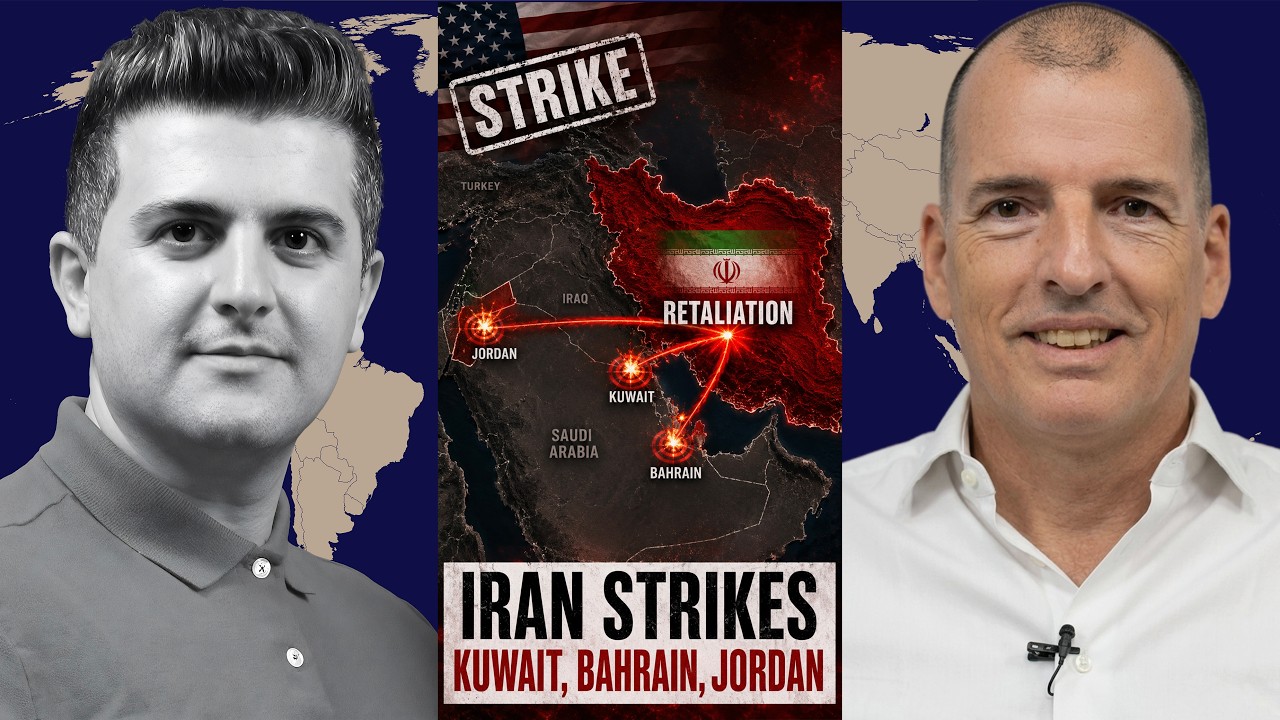
Alex Krainer: US STRIKES Iran – Iran RETALIATES Against Kuwait, Bahrain & Jordan!
"Amidst escalating US-Iran conflict and Iranian retaliation against regional US allies, this episode argues that US foreign policy is deeply controlled by an 'Anglo-Zionist conspiracy' led by the Rothschild banking dynasty, prioritizing Israeli interests over American ones."

LIVE: Trump HIDES FROM PUBLIC as US SOLDIER KILLED!!! 6/2/2026
"The host exposes alleged government cover-ups regarding military casualties, Trump's unexplained public absence, and questionable political appointments, arguing these reflect a 'regime of loser babies' and a failing foreign policy."

Iran Update: Israel’s Newest Bombing Campaign, the Oncoming War With China and How to Avoid It
"Colonel Wilerson reveals how the US and Israel are actively bombing China's strategic infrastructure in Iran, escalating a covert economic war that Beijing intends to win without direct military conflict by dismantling the dollar's global dominance."

Patrick Henningsen: Hezbollah JUST Fired Back at Israel - Iran Vows to “Crush” All Attacks
"Patrick Henningsen argues that the US and Israel initiated an illegal war against Iran, driven by Trump's incompetence and Israeli influence, leading to an inevitable escalation with severe global economic repercussions."