Top Generals DIRE WARNING: Iran War Will Be Disaster
YouTube · 30npitNUhfU
Quick Read
Summary
Takeaways
- ❖Pentagon generals are leaking warnings about the US military's inability to sustain a war with Iran due to depleted munition stockpiles, particularly air interceptors.
- ❖The US used 25% of its air interceptors in a 12-day conflict, and a 2023 war game indicated the US would last only one week in a war with China over Taiwan due to munition shortages.
- ❖Donald Trump publicly dismissed warnings from 'General Daniel Kaine' (a likely fictionalized name for a senior general), claiming an Iran war would be 'easily won,' attempting to box in military leadership.
- ❖The situation is compared to Eric Shinseki's ignored warnings about troop requirements before the 2003 Iraq War, highlighting a pattern of political disregard for military professional assessments.
- ❖Neoconservatives and Israeli interests are pushing for regime change in Iran, viewing the current Iranian government as weakened and seeking regional hegemony.
- ❖A recent diplomatic crisis, caused by the US ambassador to Israel's comments on Arab land belonging to Israel, jeopardizes US access to critical Gulf Arab bases needed for any Iran operation.
- ❖US military personnel, particularly sailors on the USS Gerald Ford, are experiencing extreme fatigue and low morale due to prolonged deployments and poor conditions, impacting operational readiness.
Insights
1Pentagon Leaks Reveal Dire Military Readiness Crisis for Iran War
Top Pentagon officials are reportedly leaking information to major news outlets (Axios, Washington Post, Wall Street Journal) to warn against a war with Iran. These authorized leaks highlight critical shortages of air interceptors and other munitions, exacerbated by support for Israel and Ukraine. A 2023 CSIS war game suggested the US could only sustain a war with China for one week due to munition depletion, a situation now worsened.
Leaks to Axios, Washington Post, Wall Street Journal; 2023 CSIS war game; Tyler Ragaway (twz.com) expert analysis on interceptor stocks.
2Trump Dismisses Military Warnings, Pushes Narrative of Easy Victory
Donald Trump publicly countered the Pentagon leaks via 'Truth' social media posts, dismissing warnings from 'General Daniel Kaine' (a likely fictionalized name for a senior general) and claiming an Iran war would be 'easily won.' This move is seen as an attempt to box in military leadership and force them to publicly support a war narrative, reminiscent of the political pressure on generals before the Iraq War.
Trump's 'Truth' social media posts regarding 'General Daniel Kaine' (Raisin Kane).
3Israel's Regional Ambitions and US Diplomatic Blunders Fuel Iran Tensions
Neoconservative elements and Israeli leadership are aggressively pushing for regime change in Iran, viewing the current Iranian government as weakened. This push is complicated by a recent diplomatic crisis where the US ambassador to Israel made comments implying Arab land belongs to Israel, causing outrage among Gulf Arab allies. This incident threatens US access to crucial regional bases needed for any military operation against Iran.
Mark Levin's advocacy for regime elimination; US ambassador to Israel Mike Huckabee's controversial comments; Gulf Arab allies' reactions.
4US Military Morale and Equipment Issues Undermine Readiness
Beyond munition shortages, the US military faces significant internal challenges. Sailors on the USS Gerald Ford are enduring exceptionally long deployments (up to 11 months) and poor living conditions, including clogged toilets and raw sewage, leading to widespread fatigue and low morale. This human cost of 'adventurism' further compromises operational effectiveness, as evidenced by past incidents like fighter jet losses attributed to fatigue.
Reports on USS Gerald Ford deployment length and conditions; attribution of fighter jet losses to fatigue during Houthi operations.
Bottom Line
The US ambassador to Israel's public statement claiming Arab land belongs to Israel created a diplomatic crisis, potentially jeopardizing US access to critical Gulf Arab military bases needed for any operation against Iran.
This diplomatic blunder directly undermines US strategic military positioning in the Middle East, as Gulf Arab allies are questioning US policy and their willingness to host American forces, complicating any potential military action against Iran.
For regional powers, this creates an opportunity to re-evaluate alliances and potentially assert greater independence from US military influence, forcing the US to reconsider its diplomatic approach and reliance on regional partners.
Key Concepts
The Shinseki Moment
Refers to Army Chief of Staff Eric Shinseki's ignored warnings in 2003 that invading Iraq would require 'several hundred thousand troops,' which proved accurate. The hosts use this to frame current Pentagon leaks as a similar, desperate attempt by military professionals to warn against a politically driven war that they know is logistically unsound.
Rally Around the Flag Effect
The idea that a president can boost approval ratings and political prospects by initiating a war, diverting attention from domestic issues. The hosts suggest Donald Trump views a war with Iran as a political benefit, echoing his past criticisms of Obama's potential use of war for political gain.
Sleepwalking into War
A historical analogy, referencing Christopher Clark's book 'The Sleepwalkers,' which describes how European powers stumbled into World War I. The hosts apply this to the current US-Iran situation, arguing that a lack of critical thinking and political will to challenge established alliances (like with Israel) is leading the US into an avoidable disaster.
Lessons
- Scrutinize official government statements and media narratives regarding military conflicts, especially when they contradict leaked information from military professionals.
- Recognize the historical pattern of political leaders dismissing military warnings for perceived political gain, as seen with Eric Shinseki before the Iraq War.
- Understand that geopolitical conflicts often involve multiple, complex motivations beyond stated objectives, including domestic political considerations and the agendas of allied nations.
Quotes
"When you have these guys going like, 'Please get us off. Like, do not make us do this.' It is a blaring like a flashing red light for the whole cuz nobody knows our capabilities more than them. So, when they're warning like this, they're doing their best."
"If this Iran thing really pops off, our stocks of critical interceptors which take years and huge sums of money to build will be really depleted. The stockpile is already an emergency."
"The problem isn't negotiations... The problem is them. That regime needs to be eliminated."
"This isn't existential. This is like a stupid luxury war of choice for the president's ego that almost no one wants."
Q&A
Recent Questions
Related Episodes

Pentagon Prepares For EXTENDED War With Iran
"This episode dissects the geopolitical maneuvers surrounding potential US-Iran conflict, revealing strategic leaks, Netanyahu's diplomatic sabotage playbook, and the true intent behind economic sanctions."

BREAKING: Iran Threatens To END Talks; U.S. Vows Retaliation; Hezbollah Collapsing? | TBN Israel
"Iran is leveraging Hezbollah and the Strait of Hormuz to manipulate US negotiations, while Israel asserts its right to dismantle Hezbollah's eroding but still dangerous infrastructure in Lebanon, independent of international talks."

🚨 THEY F*CKED AROUND FOR THE LAST TIME 😭😭😭
"This episode unleashes a torrent of highly opinionated commentary on the US-Iran deal, Israel's role, and a scathing critique of 'leftist' policies and immigration, particularly highlighting the UK grooming gang report as evidence of Western societal decay."
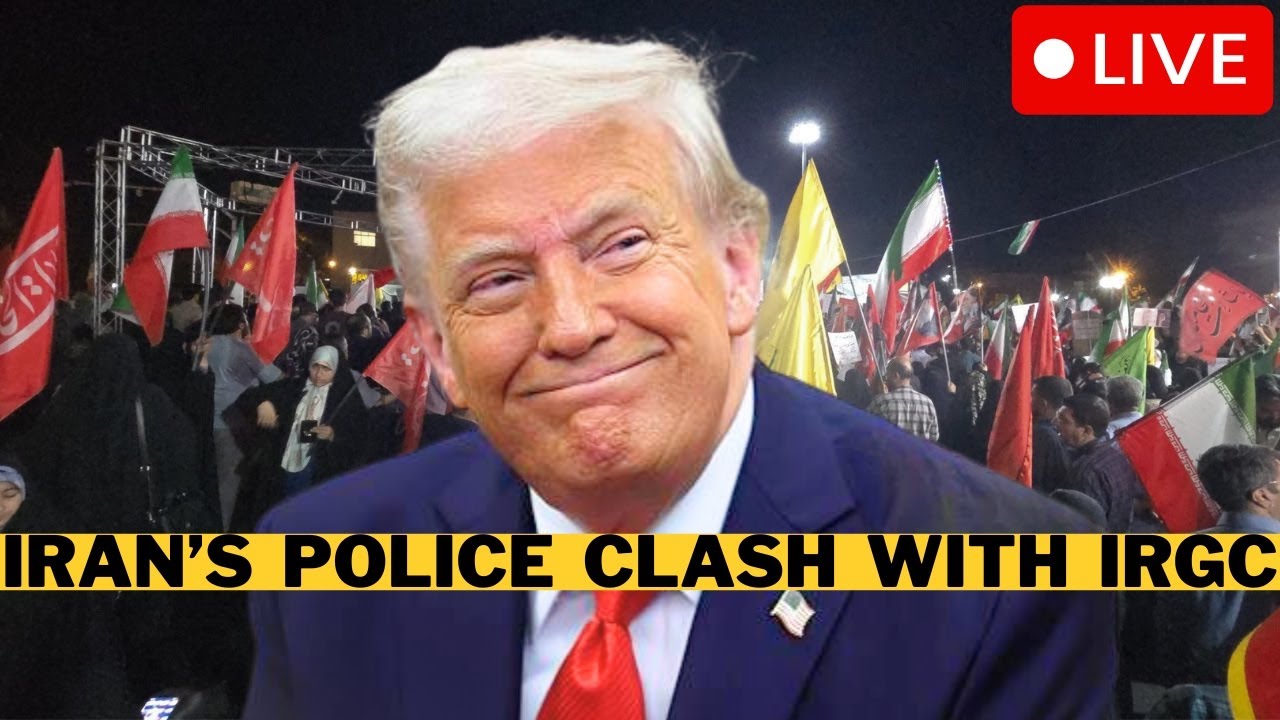
BREAKING: Protests ERUPT In Iran Over IRGC Surrendering To Trump - Infighting Clashes In Tehran
"Iran is experiencing severe internal infighting and protests as hardline IRGC elements clash with government figures over a perceived 'surrender' to the US, while mainstream Western media misrepresents the situation."