BREAKING: IRGC Launches ATTACK On Kuwait; U.S. Hellfire Missile Strikes Iran-Bound Ship | TBN Israel
YouTube · 321UEnkmSBs
Quick Read
Summary
Takeaways
- ❖The United States Central Command destroyed fortified targets on Kasim Island and disabled an Iran-bound oil tanker with a Hellfire missile in the Strait of Hormuz.
- ❖Iran's Revolutionary Guards retaliated by firing missiles and drones towards Kuwait and Bahrain, hitting Kuwait International Airport and causing casualties and significant damage.
- ❖The US imposed sanctions on Noetex, Iran's largest crypto exchange, to cut off a major financial channel for bypassing Western sanctions and funding the regime.
- ❖Iran maintains a 'shadow fleet' operating off Malaysia's coast, selling billions in crude oil to China despite sanctions, funding nearly half its government budget.
- ❖Saudi Arabia raised oil prices for Asian markets to a record premium due to the Strait of Hormuz blockade and regional instability, impacting global energy costs.
- ❖US-Iran negotiations for a ceasefire and nuclear program commitments are complicated by internal Iranian disagreements and ongoing Israeli military actions in Lebanon against Hezbollah.
- ❖The US is proposing to train the Lebanese army to disarm Hezbollah, a move supported by Israel but complicated by Iran's strategic use of Hezbollah as leverage.
Insights
1US Escalates Military and Economic Pressure on Iran
The US Central Command directly engaged Iranian assets by destroying fortified targets on Kasim Island and disabling an oil tanker, M/T Laxia, with a Hellfire missile in the Strait of Hormuz after it ignored warnings. Concurrently, the US Treasury sanctioned Noetex, Iran's largest cryptocurrency exchange, which was identified as a central channel for the regime to bypass sanctions and move hundreds of billions of dollars.
US Central Command announced a military operation against an oil tanker sailing near Kasim Island, releasing footage of a Hellfire missile strike on its engine room. The US Treasury imposed sanctions on Noetex, stating it handled over half of Iran's digital asset activity and allowed the regime to bypass sanctions.
2Iran Retaliates with Attacks on Gulf States
In response to US actions, Iran's Revolutionary Guards launched missile and drone attacks targeting Kuwait and Bahrain. Kuwait International Airport was hit, causing significant damage to Terminal One, injuring several people, and halting all passenger flights. Bahrain also reported intercepting three UAVs. These attacks are framed by Iran as direct responses to US strikes and an attempt to use Gulf states as leverage.
The Revolutionary Guards fired missiles towards Kuwait and Bahrain, claiming it was a response to the strike on a communications tower on Kasim Island. Kuwaiti authorities announced significant damage to their international airport and suspension of flights due to drone attacks.
3Iran's Sanctions Evasion Network and Global Energy Impact
Despite US sanctions and blockades, Iran sustains its economy through a vast 'shadow fleet' of old tankers operating off Malaysia's coast, transferring crude oil to China. This network generated approximately $31 billion for Iran last year, accounting for nearly 90% of its oil exports and almost half of its government budget. The regional instability, particularly the near-blockade of the Strait of Hormuz, has led Saudi Arabia to raise oil prices for Asian markets to a historic premium, directly impacting global energy costs.
Assessments presented in the US Congress indicate Iran earned about $31 billion last year from selling oil to China via a secret network of tankers off Malaysia. Saudi Aramco raised the price of Arab light crude for the Asian market to an especially high premium due to rising risks in the Gulf.
4Lebanon Front Complicates US-Iran Nuclear Negotiations
The ongoing conflict between Israel and Hezbollah in Lebanon is a critical factor in US-Iran negotiations. While the US seeks to prevent escalation in Lebanon to facilitate a broader agreement with Iran, Iran views Hezbollah as a strategic asset and aims to connect the Lebanon issue to any regional deal. Israel, while supporting US efforts to strengthen the Lebanese army against Hezbollah, insists on maintaining its freedom of action against the terrorist organization.
Trump expressed concern that fighting in Lebanon could derail a peace agreement with Iran. An American official stated Trump wants to prevent escalation so Lebanon doesn't become a central issue in negotiations. Iran views Hezbollah as a strategic asset and wants to ensure it's not crushed by Israel during talks.
Bottom Line
The US is actively 'closing the gray area' in maritime enforcement, signaling that even civilian vessels under foreign flags attempting to break the naval blockade will be directly targeted and disabled.
This aggressive stance shifts the risk calculus for entities attempting to aid Iran in sanctions evasion, potentially deterring future attempts but also raising the stakes for direct military confrontation.
Companies involved in maritime intelligence, satellite tracking, or advanced naval defense systems could see increased demand as nations seek to monitor and enforce maritime blockades more effectively.
Iran's financial resilience, despite sanctions, is heavily reliant on a sophisticated 'shadow fleet' and cryptocurrency networks, allowing it to fund its military and proxies even under intense pressure.
Traditional sanctions alone are insufficient to cripple Iran's economy; effective countermeasures require advanced cyber warfare, intelligence-led asset seizures, and international cooperation to dismantle these illicit financial infrastructures.
Specialized cybersecurity firms focusing on blockchain analytics and crypto-forensics, particularly those with expertise in state-sponsored illicit finance, could find significant opportunities in assisting governments to track and seize assets.
Key Concepts
Pressure Lever Strategy
Iran consistently uses attacks on US allies (Gulf states) and disruption of global trade (Strait of Hormuz) as 'pressure levers' to influence American foreign policy and negotiation terms, rather than directly confronting the US military.
Multi-Front Warfare
The conflict is not a single battlefield but a complex interplay across military (sea, air), economic (sanctions, crypto, oil smuggling), and political (negotiations, proxy groups) fronts, where actions in one arena have cascading effects on others.
Lessons
- Monitor global energy markets closely, as the Strait of Hormuz blockade and Saudi Arabian oil pricing decisions directly impact crude oil and gasoline costs worldwide.
- Evaluate supply chain vulnerabilities, particularly for businesses reliant on shipping through the Middle East, given the increased risk of attacks and disruptions in the Persian Gulf.
- Stay informed on US foreign policy shifts regarding Iran, as the hardening stance and multi-front pressure campaign could lead to rapid changes in regional stability and international trade dynamics.
Notable Moments
US Central Command destroyed fortified targets on Kasim Island and disabled an Iran-bound oil tanker with a Hellfire missile.
This marks a direct military escalation by the US against Iranian assets, demonstrating a hardened stance on enforcing the naval blockade in the Strait of Hormuz.
Iranian drone attack hit Kuwait International Airport, causing casualties and shutting down air activity.
This was a direct, retaliatory strike on a civilian target in a Gulf state, signaling Iran's willingness to broaden the conflict and use allies of the US as pressure points.
US Treasury imposed sanctions on Noetex, Iran's largest cryptocurrency exchange.
This move targets a critical financial 'oxygen pipe' for Iran, aiming to cripple its ability to bypass sanctions and fund its military and proxies through digital assets.
Saudi Arabia raised the price of its main type of oil for Asian markets to a historic record premium.
This reflects the direct impact of regional instability and the Strait of Hormuz blockade on global energy markets, leading to increased costs for major importers like China, India, and Japan.
Quotes
"United States Central Command Sentcom updated that as part of the blockade on the Strait of Hummus, a military operation was carried out against an oil tanker flying the flag of Batuena while it was sailing in international waters on its way to Karag Island."
"At the end of the day, you're negotiating with people who then have to negotiate inside their own system in order to see what they're allowed to give and what they are allowed to agree to."
"I like BB very much. I work with him excellently. I'm a president during wartime. He's a prime minister during wartime in a very important region of the world, and we work very well."
"You don't end this war by military force. It doesn't end with a bomb. It doesn't end with a bombing mission for a plane or with soldiers on the ground. That's not how this war ends. It ends with an agreement. And an agreement includes the financial component. And finances are key."
Q&A
Recent Questions
Related Episodes

Iran Update: Israel’s Newest Bombing Campaign, the Oncoming War With China and How to Avoid It
"Colonel Wilerson reveals how the US and Israel are actively bombing China's strategic infrastructure in Iran, escalating a covert economic war that Beijing intends to win without direct military conflict by dismantling the dollar's global dominance."

🚨 TOTAL F*CKING CHECKMATE 😂😂😂
"The host argues that Trump's 'ceasefire' with Iran was a calculated '5D chess' move to orchestrate a global energy market reshuffle, while simultaneously lambasting 'woke' domestic policies and the 'freefall' of anti-Trump conservative figures."
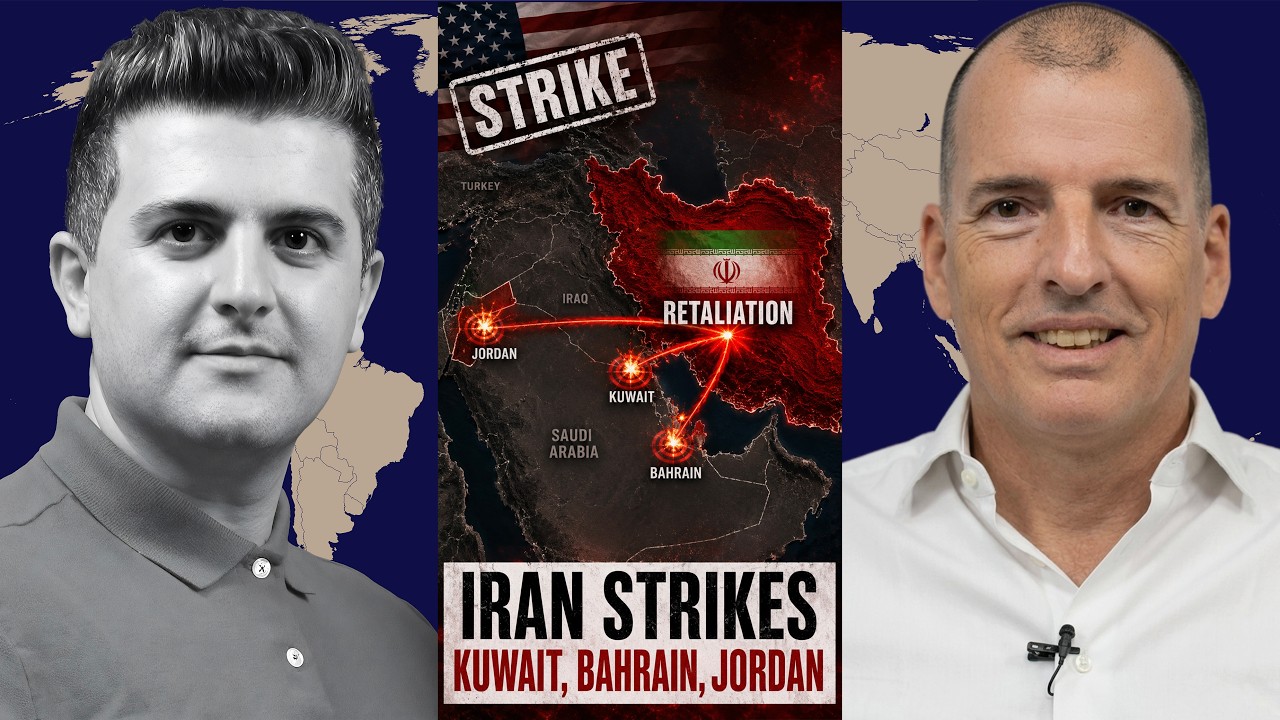
Alex Krainer: US STRIKES Iran – Iran RETALIATES Against Kuwait, Bahrain & Jordan!
"Amidst escalating US-Iran conflict and Iranian retaliation against regional US allies, this episode argues that US foreign policy is deeply controlled by an 'Anglo-Zionist conspiracy' led by the Rothschild banking dynasty, prioritizing Israeli interests over American ones."

Patrick Henningsen: Hezbollah JUST Fired Back at Israel - Iran Vows to “Crush” All Attacks
"Patrick Henningsen argues that the US and Israel initiated an illegal war against Iran, driven by Trump's incompetence and Israeli influence, leading to an inevitable escalation with severe global economic repercussions."