
Tim Walz Talks Honestly About ICE, Trump, Tom Homan and Kristi Noem
YouTube · 32ytVXOhxmE
Quick Read
Summary
Takeaways
- ❖ICE and Border Patrol agents engaged in taunting, aggressive behavior, and chemical weapon deployment against protesters in the Twin Cities.
- ❖Federal agents operated without coordination with state or local law enforcement, creating chaos and undermining trust.
- ❖The federal government denied state investigators a judicial warrant to access the crime scene where Alex Prey was killed by a federal agent, obstructing a lawful murder investigation.
- ❖Governor Walz believes federal actions were politically motivated, stemming from former President Trump's past electoral losses in Minnesota and Stephen Miller's agenda.
- ❖Community-led resistance, including neighborhood watch groups and peaceful protests, was crucial in forcing federal concessions, such as the removal of Greg Bavino.
- ❖Walz advises other states to coordinate legal communities, support grassroots leaders, and maintain professional policing standards when facing federal overreach.
- ❖The Minnesota National Guard adopted a community-focused approach, handing out donuts and coffee, which fostered trust with protesters, contrasting sharply with federal tactics.
Insights
1Federal Tactics Undermine Local Law Enforcement and Community Trust
Governor Walz details how federal ICE and Border Patrol agents deployed in Minnesota used aggressive, militarized tactics, including wearing mismatched uniforms, covering faces, taunting citizens, and deploying chemical weapons. This behavior directly contradicted established community policing principles and eroded trust between law enforcement and residents. Local police and the National Guard, in contrast, focused on de-escalation, transparency, and community engagement, which led to protesters offering food to National Guard troops.
Walz describes federal agents 'all kitted up like they're in Afghanistan,' with 'mass faces covered and just the aggressive nature of it.' He contrasts this with the National Guard coming in 'professional uniforms with vests on to separate us, no masks, names on their uniforms, handing out donuts, hot chocolate, and coffee, having conversations.' He notes that 'many Americans view ICE as making cities less safe' due to these images and chaos.
2Federal Obstruction of State Murder Investigation
Following the killing of Alex Prey by a federal agent, the federal government actively obstructed a state-led murder investigation. They denied local law enforcement access to the crime scene despite a lawful judicial warrant, refused to provide information about the officer involved, and removed the body from the state. This unprecedented refusal to cooperate with state authorities on a homicide investigation highlights a severe breach of inter-agency protocols and state sovereignty.
Walz states, 'They went and got a warrant to gain access to the crime scene that was denied... they're rejecting the judge's order.' He adds, 'They rushed them away from the scene, ruined the crime scene or at least made it more difficult and then refuses to give us any information about this.'
3Political Motivations Behind Federal Actions
Governor Walz asserts that the federal government's aggressive deployment of ICE and Border Patrol in Minnesota was not primarily about immigration enforcement but rather a politically motivated act. He links it to former President Trump's past electoral losses in the state and an attempt to 'demonize Somali' communities and 'test out the power of this new team they put together' under Stephen Miller's influence.
Walz believes 'they're mainly doing this because Donald Trump lost Minnesota three times.' He also states, 'I think it's here because he lost three times... it was a perfect Steven Miller issue to demonize Somali and to take on a blue state.'
4Community Resistance as the Ultimate Defense Against Overreach
Walz emphasizes that the most effective defense against federal overreach is organized community resistance. He credits the sustained, peaceful protests and community vigilance, such as neighborhood watches alerting residents to ICE presence, with forcing federal concessions like the removal of Greg Bavino. This highlights the power of collective action and civil disobedience in a democracy.
Walz states, 'The last line of defense is the people.' He notes, 'Donald Trump had that meeting with me today and Greg Bino's gone because of the grandma who stood on the street in 40 below. To the students who walked out of St. Paul Central High School... To the folks who are out there blowing their whistles, alerting their neighbors.'
Lessons
- Governors and mayors should proactively coordinate with the legal community and grassroots leaders to prepare for potential federal overreach.
- Encourage and protect peaceful protests, understanding that community mobilization is a critical defense mechanism against authoritarian tactics.
- Maintain high standards of professional policing and community engagement, even when federal agencies act provocatively, to preserve local trust and order.
- Document and publicly challenge federal misinformation and obstruction, using facts and transparency to counter gaslighting and false narratives.
- Foster community resilience and mutual aid networks to support affected populations and maintain social cohesion during periods of conflict.
State Response to Federal Overreach
**Legal & Grassroots Coordination (Early Stage):** Immediately convene legal experts to strategize defenses and coordinate with 'grasstop' and emerging community leaders. Show respect and support for peaceful protesters, as they are key to resisting overreach.
**Maintain Professional Policing:** Direct local law enforcement to uphold due process and professional standards, even when dealing with federal provocations. Prioritize de-escalation and community trust over aggressive tactics, ensuring citizens are treated with respect and not subjected to excessive force.
**Public Communication & Transparency:** Communicate clearly with the public about federal actions and the state's response. Use local law enforcement (e.g., National Guard) to protect peaceful assemblies and ensure public safety, explaining their role to prevent misinterpretation.
**Document & Challenge Obstruction:** Systematically document all instances of federal non-cooperation, denial of warrants, or obstruction of state investigations. Publicly challenge federal lies and gaslighting with factual evidence, particularly regarding incidents like officer-involved shootings.
**Build Community Resilience:** Support community-led initiatives like neighborhood watches and mutual aid efforts (e.g., food banks, tutoring) to protect vulnerable populations and maintain social cohesion, demonstrating the state's commitment to its citizens.
Quotes
"This is one of the first times in American history you're using the federal government to suppress the rights of a state, to show this, to disregard the 10th Amendment, and to be openly hostile."
"They came in here, they being the federal government, to terrorize the citizens, not about immigration."
"My end state is a restoration of constitutional rights and accounting of these two killings with people holding trial and stop this assault."
"They are not law enforcement. They are not professionals. How dare they slander that?"
"I don't know what a trial would find with these guys... But you know what you do? You follow the procedures. You do the investigation. You put it in front of a grand jury. You get an indictment. You go to trial. You have a jury of your peers and you see what happens on that."
Q&A
Recent Questions
Related Episodes

Trump's ICE Gets PUT ON NOTICE by ACLU | PoliticsGirl
"The ACLU's Chief Political and Advocacy Officer details how the Trump administration's escalated ICE enforcement and alleged constitutional violations are being challenged through legal action, state-level 'Firewall for Freedom' initiatives, and massive citizen protests."
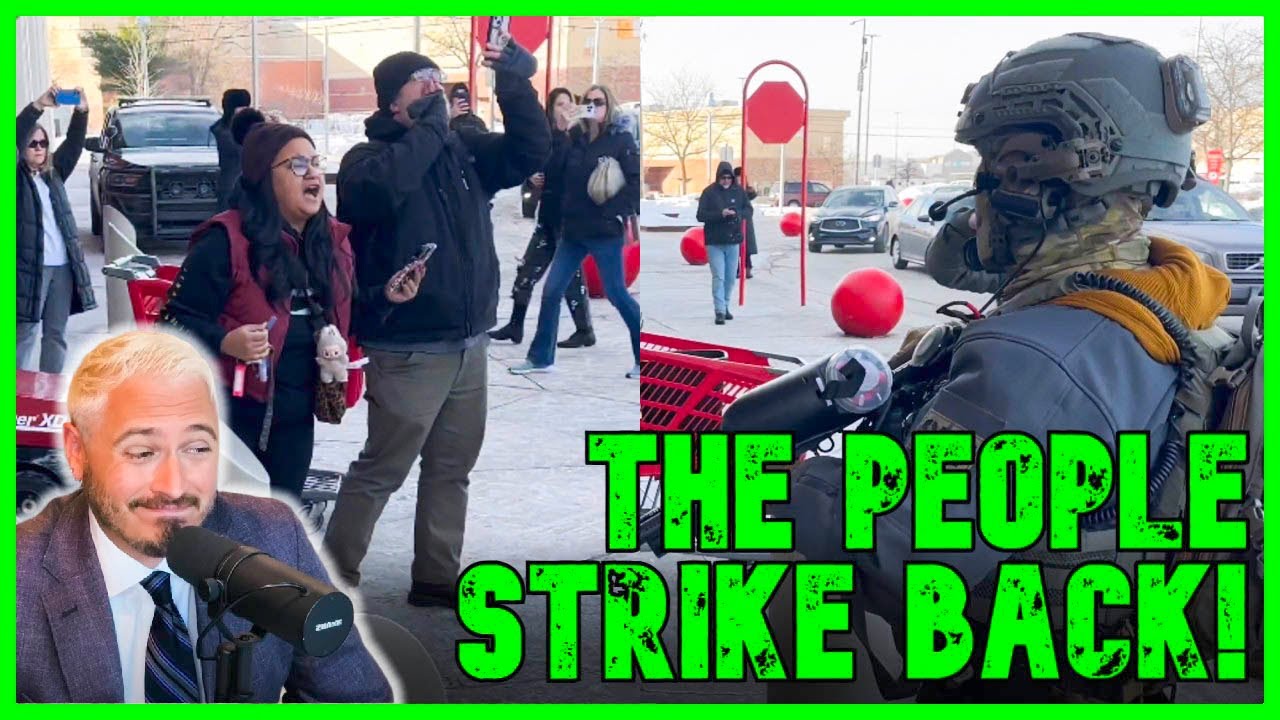
‘YOU’RE A B*TCH!’: Americans EXPLODE At ICE Thugs TO THEIR FACE | The Kyle Kulinski Show
"Host Kyle Kulinski presents multiple graphic videos and eyewitness accounts of alleged ICE abuses, including assaults, illegal detentions, and sexual misconduct, arguing that these actions are galvanizing widespread public resistance and exposing a growing authoritarian state."

George Floyd 6 Years Later. Redistricting War in The South. Talarico Senate Campaign
"This episode exposes the ongoing legislative battles and strategic resistance against efforts to diminish Black political power, from federal policing reform to state-level gerrymandering and calls for economic boycotts by Black athletes."

LIVE: Ex-TOP Prosecutor BREAKS SILENCE On Trump Election Scheme | The Weekend Show
"Former Assistant Attorney General for Civil Rights, Kristen Clark, details how a recent Supreme Court ruling delivered a 'death nail' to the Voting Rights Act, exposing a coordinated agenda to dismantle civil rights and consolidate white political power."