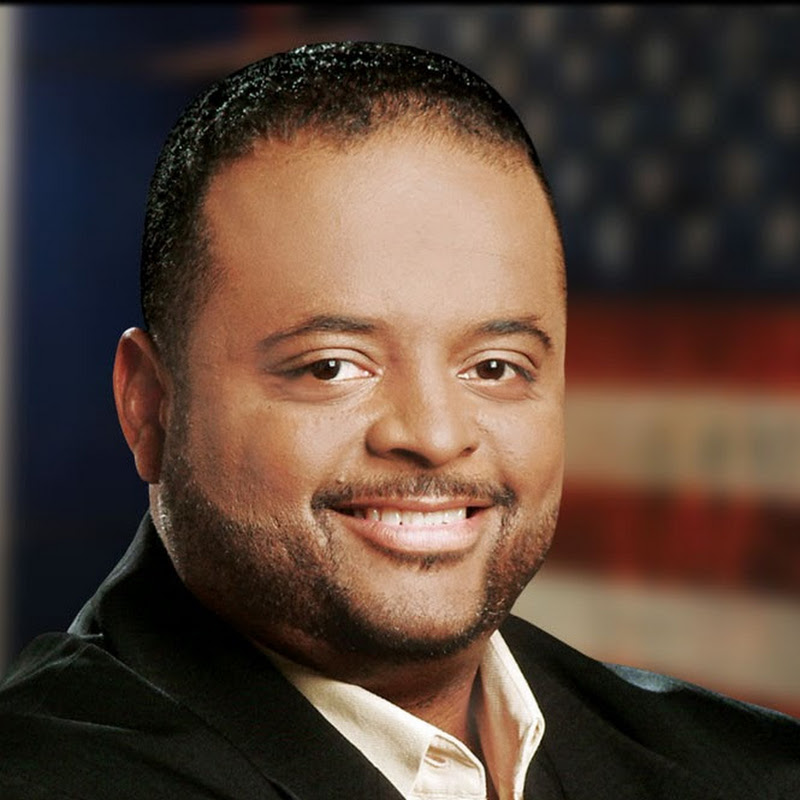
New Minneapolis ICE Shooting Video, Philly Sheriff Warns ICE, Black Women Jobless Spike
YouTube · 3hzFffPidJU
Quick Read
Summary
Takeaways
- ❖A newly released ICE officer's video of the Renee Good shooting in Minneapolis is presented as evidence against the officers, leading to charges for Officer Jonathan Ross.
- ❖A retired FBI agent criticizes the Minneapolis ICE shooting, stating deadly force is not authorized merely to stop a fleeing suspect and reflects a failure of training.
- ❖Minneapolis City Councilwoman Robin Wonsley connects the ICE shooting to the George Floyd murder, accusing the Trump administration of a smear campaign against the victim and federal attempts to cover up the incident.
- ❖Philadelphia Sheriff Rochelle Bilal warns ICE agents against 'thuggish behavior' in her county, threatening arrest and criticizing their lack of identification and minimal training (47 days).
- ❖The Trump administration's economic policies are criticized for leading to only 500,000 jobs created in 2025, compared to 2 million under Biden in 2024, with Black unemployment rising significantly.
- ❖Bishop William Barber calls for a national voter mobilization effort, emphasizing state-level organizing, principled action over partisanship, and targeting infrequent poor and low-wage voters with specific economic messages.
- ❖The current Congress's composition, enabling many of the criticized policies, is attributed to a narrow 7,000-vote margin in a context where 90 million people did not vote.
Insights
1Minneapolis ICE Shooting Video Undermines Officers' Case
A new video from the perspective of an ICE officer involved in the shooting death of Renee Good in Minneapolis is presented as detrimental to the officers' defense. The Hennepin County DA has stated Officer Jonathan Ross will be charged. A retired FBI firearms instructor, Steve Lasner, asserts that deadly force is not justified to stop a fleeing suspect unless the vehicle is used as a weapon, which he states the video does not support. He highlights a failure in training and selection of officers with appropriate temperament.
Roland Martin plays the ICE officer's video twice, and then features retired FBI agent Steve Lasner's analysis. Minneapolis City Councilwoman Robin Wonsley draws parallels to the George Floyd case, noting federal attempts to prevent local investigation and frame Good as an aggressor.
2Philadelphia Sheriff Vows Arrests for ICE Misconduct
Philadelphia County Sheriff Rochelle Bilal publicly warns ICE agents that 'thuggish behavior' in her jurisdiction will result in arrest. She criticizes ICE for operating without proper identification (masks, no badge numbers), insufficient training (47 days), and disregarding local law enforcement protocols. She asserts that federal agents committing crimes in Philadelphia will not be 'whisked away' and will face state charges.
Sheriff Bilal's direct statement: 'ICE, do not bring your thuggish behavior to my county or we're going to put you in jail.' She details her office's intent to transport arrested ICE agents and highlights the lack of cooperation from federal agencies with local law enforcement.
3Trump Administration's Economic Performance Criticized
The Trump administration's economic policies are depicted as failing, with only an estimated 500,000 jobs created in 2025, a significant drop compared to 2 million under the previous administration in 2024. Black unemployment is noted as 'much, much higher' year-over-year, and unemployed individuals are remaining jobless for longer periods. The White House's attempts to 'spin' these numbers are dismissed, particularly regarding manufacturing job losses and the negative impact of tariffs.
Morgan Harper Jones, Director of Policy and Advocacy for the American Economic Liberties Project, provides these statistics and critiques the White House's messaging, including a senior economic advisor's focus on higher wages for existing manufacturing jobs despite overall losses.
4Grassroots Mobilization as Key to Political Change
Bishop William Barber advocates for a 'moral agenda' through sustained grassroots mobilization, emphasizing that resistance alone is insufficient. He highlights the untapped power of infrequent poor and low-wage voters, noting that millions in key states did not vote in recent elections. Barber stresses the importance of state-level organizing, connecting economic pain (e.g., loss of healthcare, food stamps) to political power, and using data-driven micro-organizing strategies to target specific communities.
Bishop Barber cites examples from North Carolina and Kentucky, where targeted mobilization of infrequent voters led to significant electoral shifts. He points out that the current Congress's composition is due to a mere 7,000-vote margin, demonstrating the potential impact of increased voter turnout.
Bottom Line
The host and guests argue that the Trump administration's deployment of federal agents (like Border Patrol) into cities far from borders, and their aggressive tactics, are a deliberate strategy to normalize violence and suppress opposition, extending beyond immigrants to target all citizens.
This suggests a broader authoritarian agenda where federal agencies are weaponized against perceived political enemies, eroding civil liberties and local governance.
Local and state governments can proactively establish legal frameworks and inter-agency agreements that protect residents from federal overreach, and civil rights organizations can educate citizens on their rights when confronted by unidentified federal agents.
The discussion highlights that the perceived economic benefits of the Trump administration are largely 'spin,' with actual data showing anemic job growth, rising unemployment for specific demographics, and negative impacts from policies like tariffs on small businesses.
This indicates a disconnect between political rhetoric and economic reality, potentially leading to voter disillusionment if the economic struggles are not effectively addressed or explained.
Political campaigns and advocacy groups can leverage this data to craft compelling economic messages that resonate with voters experiencing these hardships, proposing concrete solutions rather than relying on abstract promises.
Lessons
- Document all interactions with law enforcement: Always record interactions with federal agents or any law enforcement, as personal recordings can be crucial evidence in cases of misconduct.
- Know your rights and jurisdiction: Understand the limitations of federal agencies like Border Patrol outside border zones and your right to remain silent or refuse searches without a warrant.
- Engage in grassroots voter mobilization: Identify and organize infrequent voters in your community by connecting specific economic and social issues to the power of their vote, focusing on local and state elections as drivers for national change.
Notable Moments
Roland Martin challenges a Black conservative's defense of federal law enforcement, questioning the legitimacy and identification of masked agents and drawing parallels to historical abuses.
This highlights the internal debate within the Black community regarding law enforcement and the critical need for transparency and accountability from federal agencies, especially when operating outside traditional roles.
The discussion on the economic impact of AI, noting that while it promises productivity gains, it also leads to job displacement in professional services, creating uncertainty that the current government is ill-equipped to manage.
This points to a looming economic challenge that requires proactive governmental policy and investment in workforce retraining, which is currently lacking, exacerbating economic instability.
Quotes
"Deadly force is never authorized merely to stop a fleeing suspect. Yes, if a vehicle is being used as a weapon, that changes the analysis, but nothing in this video supports that. If anything, it appeared the driver was just trying to avoid the agents altogether."
"ICE, do not bring your thuggish behavior to my county or we're going to put you in jail."
"They are going after everyone. And they tried this out in my home city of Chicago when they went in and said we're going to take out violent you know immigrant and criminals and things of that nature. But somehow you're on the south side detaining black residents over there in their apartment building. How did we get there?"
"The current Congress that is turning loose this president, most of what he's done, he could not have done it without the Congress, right? He could not have passed the big, deadly, ugly, destructive bill... Mike Johnson is the speaker because of 7,000 votes in a plan when 90 million people didn't vote."
Q&A
Recent Questions
Related Episodes
Black Woman Killed in ICE Pursuit. Newsom “Can’t Read” Remark. Tariff Repayment Push. TPS Fight
"This episode dissects multiple critical events, from the tragic deaths during an ICE pursuit and a police shooting, to debunking a viral controversy around Governor Gavin Newsom's remarks, and honoring Reverend Jesse Jackson's enduring legacy in economic and media justice."
Reality distortion has become the norm
"David Pakman dissects the pervasive political reality distortion, highlighting Donald Trump's consistent pattern of fabricating facts, exhibiting cognitive decline, and undermining democratic institutions."
NC Mom Sues Hospital For Negligence. Black NFL Coaches Win Major Ruling. Drug Test Scandal Exposed
"This episode exposes systemic failures and racial disparities across healthcare, professional sports, and politics, featuring a mother's harrowing hospital negligence lawsuit, a landmark NFL discrimination ruling, and alarming findings on flawed drug tests criminalizing new mothers."

Fulton Calls FBI Search Intimidation. Haitian TPS Ending. Sonya Massey Killer Sentenced.
"Fulton County officials frame an FBI search of their election center as an intimidation tactic, while Haitian TPS holders face imminent deportation, and a former Illinois deputy receives a 20-year sentence for Sonia Massie's murder, all against a backdrop of critical commentary on the Trump administration's economic and immigration policies."