
PBS News Hour full episode, Jan. 2, 2026
YouTube · 419DJYGkVvw
Quick Read
Summary
Takeaways
- ❖Iran's protests, now in their sixth day, began due to skyrocketing inflation and have escalated into a national call for systemic reform across 17 provinces.
- ❖At least 44 people have been arrested and eight killed in Iran, including a 15-year-old, as protesters chant 'Death to the dictator.'
- ❖President Trump threatened US intervention if Iran violently kills peaceful protesters, a statement Iran's Foreign Minister called 'reckless and dangerous.'
- ❖Experts are skeptical of US intervention in Iran, noting the regime's history of mass executions and the potential for vague threats to be unfulfilled.
- ❖The Kennedy Center was renamed the 'Donald J. Trump and John F. Kennedy Center for the Performing Arts' after Trump appointed a new board and himself as chair.
- ❖Several artists, including Doug Varone and The Cookers, canceled performances at the Trump-Kennedy Center, citing political differences and the renaming.
- ❖Trump-Kennedy Center President Richard Grenell claims the center is in 'phenomenal financial situation' due to President Trump's fundraising, raising over $130 million in 10 months.
- ❖Grenell attributes declining ticket sales to a broader industry trend and emphasizes a shift to 'revenue-neutral programming' that appeals to donors and corporate sponsors.
- ❖A new subclade K flu variant (H3N2) is rapidly spreading, causing high flu activity in 32 states, with over 7 million infected and 3,000 deaths this season.
- ❖The current flu vaccine has a 'mismatch' with the subclade K variant, reducing efficacy against infection but still offering protection against severe disease.
- ❖Johns Hopkins virologist Andrew Pekosz recommends getting the flu shot even late in the season, as it provides protection against the tail end of the flu.
- ❖Political analysts express skepticism about the Ukraine peace plan, citing President Trump's pressure on Zelenskyy and the unreliability of US security guarantees.
- ❖President Trump issued two vetoes against unanimous congressional bills (Colorado water pipeline, Florida tribal land), which some lawmakers suggested was political retaliation.
Insights
1Iran Protests Escalate Amid Economic Crisis and Regime Crackdown
Demonstrations in Iran, initially sparked by the collapse of the Iranian rial and skyrocketing inflation, have expanded into a nationwide movement demanding systemic reform. The government has responded with arrests and killings, including a 15-year-old. Experts note the protests are the largest since the 2022 'Woman, Life, Freedom' uprising, driven by deep-seated grievances over systemic mismanagement, corruption, and repression.
Protests are in their sixth day, spreading to nearly 17 provinces. At least 44 arrested, 8 killed. Holly Dagres states they are the largest since 2022, triggered by economic collapse, but grievances are systemic mismanagement, corruption, and repression. Roya Boroumand notes the surprising intensity given the 2022 crackdown.
2US Intervention Threats in Iran Spark Debate and Skepticism
President Trump threatened US intervention if Iran violently kills peaceful protesters, stating, 'We are locked and loaded and ready to go.' However, experts like Holly Dagres and Roya Boroumand express skepticism about the practical implications of such threats. They highlight the Iranian regime's history of brutality, including mass executions, and question whether the US would follow through, potentially creating a 'red line' scenario similar to the Obama administration's experience in Syria.
Trump's quote: 'If Iran violently kills peaceful protesters... the United States of America will come to their rescue. We are locked and loaded and ready to go.' (). Holly Dagres mentions the UN finding of 'crimes against humanity' in 2022 and 2,045 executions in 2025. She compares potential inaction to the 'Obama administration's red line for Syria.' (). Roya Boroumand emphasizes the need for clarity in US statements to avoid vague threats that could endanger protesters.
3Trump-Kennedy Center Faces Artist Boycotts and Financial Defense
The renaming of the Kennedy Center to the 'Donald J. Trump and John F. Kennedy Center for the Performing Arts' and President Trump's appointment as chairman led to significant backlash, including artist cancellations and a drop in televised Honors viewership. Center President Richard Grenell defends the changes, asserting the institution is in 'phenomenal financial situation' due to Trump's fundraising prowess, having raised over $130 million in 10 months. He argues for 'revenue-neutral programming' that attracts corporate sponsors and donors, criticizing 'woke or not popular' shows.
Jeffrey Brown reports on cancellations by Chuck Redd, The Cookers, Kristy Lee, and Doug Varone (). Doug Varone states the renaming 'goes completely against every principle and every mission' (). Richard Grenell claims 'phenomenal situation financially' (), 'raised more than $130 million' (), and attributes viewership drops to overall TV decline ().
4New Flu Variant Causes Severe Season, Vaccine Still Recommended
The current flu season is severe, with a new subclade K variant (part of H3N2) spreading rapidly and causing high illness and hospitalization rates across 32 states. This variant has mutations that allow it to evade existing immunity and reduce the efficacy of the current vaccine against infection. However, virologist Andrew Pekosz stresses that the vaccine still offers protection against severe disease and is recommended, even if taken later in the season.
Flu activity is 'high or very high in 32 states' (). Andrew Pekosz explains subclade K has 'mutations at a couple of what I call hot spots' () leading to a 'mismatch between the vaccine strain and the circulating virus' (). He states, 'even in a year when there's a mismatch... we oftentimes still see a signal of protection against severe disease' () and 'not a bad idea to go get vaccinated' ().
5Skepticism Surrounds Ukraine Peace Plan and Trump's Vetoes
Political analysts David Brooks and Jonathan Capehart express strong skepticism regarding the reported progress on a Ukraine peace plan, citing President Trump's pressure on Zelenskyy to make concessions and the unreliability of US security guarantees. They question whether Putin, who does not view Ukraine as a legitimate country, would accept such a deal. Additionally, Trump's recent vetoes of unanimous congressional bills are interpreted as political retribution and a strategy to exert leverage over those who oppose his policies.
David Brooks: 'color me skeptical' (), Trump 'pressuring Zelenskyy to make concessions, slow-walking the weapons' (), 'Putin does not think Ukraine is a country' (). Jonathan Capehart questions if Trump wants 'peace or surrender' (). On vetoes, Jonathan Capehart states, 'Yes, I do' believe it's political retribution (). David Brooks: 'you don't have to guess' (), Trump 'said it out loud' () for the Florida case, and it's about 'leverage' ().
Lessons
- If you haven't already, get your flu shot, as it can still provide protection against severe illness even with the current vaccine mismatch.
- Stay informed about the evolving situation in Iran, paying attention to credible news sources for updates on protests and international responses.
- Support arts organizations that align with your values, especially those facing political pressures or financial challenges, by attending performances or donating.
Quotes
"If Iran violently kills peaceful protesters, which is their custom, the United States of America will come to their rescue. We are locked and loaded and ready to go."
"Renaming it Donald Trump Center, it seems to go completely against every principle and every mission that the center stands for. I couldn't put myself or my dancers into that building right now."
"When I arrived at the then-Kennedy Center, we had no money in the bank, and we -- again, we were paying staff with debt reserves. That's immoral. You cannot run an institutional."
"Even if you're in a part of the country that's starting to experience a rise in influenza cases, not a bad idea to go get vaccinated because it'll protect you against the tail end of the flu season."
"Vladimir Putin does not think Ukraine is a country. And so you can't argue people into a peace they do not want to have."
Q&A
Recent Questions
Related Episodes

LIVE: Trump HIDES FROM PUBLIC as US SOLDIER KILLED!!! 6/2/2026
"The host exposes alleged government cover-ups regarding military casualties, Trump's unexplained public absence, and questionable political appointments, arguing these reflect a 'regime of loser babies' and a failing foreign policy."

🚨 TOTAL F*CKING CHECKMATE 😂😂😂
"The host argues that Trump's 'ceasefire' with Iran was a calculated '5D chess' move to orchestrate a global energy market reshuffle, while simultaneously lambasting 'woke' domestic policies and the 'freefall' of anti-Trump conservative figures."
🚨 WTF!! NO ONE F*CKING SAW THIS COMING.. 😂😂😂
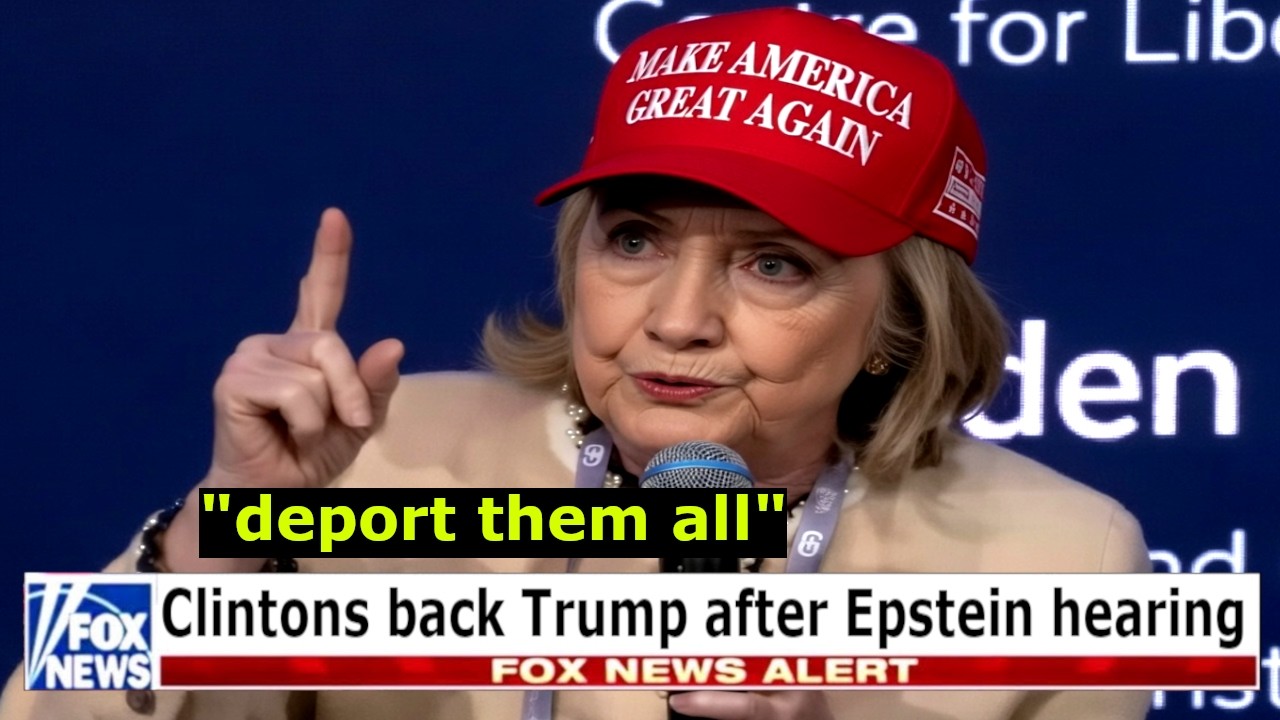
"The host reacts with shock and strong opinions to Hillary Clinton's unexpected stance on deportation, AOC's perceived incompetence, and Marco Rubio's 'diabolical' speech advocating for national sovereignty and Western civilization."

🚨 THEY F*CKED AROUND FOR THE LAST TIME 😭😭😭
"This episode unleashes a torrent of highly opinionated commentary on the US-Iran deal, Israel's role, and a scathing critique of 'leftist' policies and immigration, particularly highlighting the UK grooming gang report as evidence of Western societal decay."