
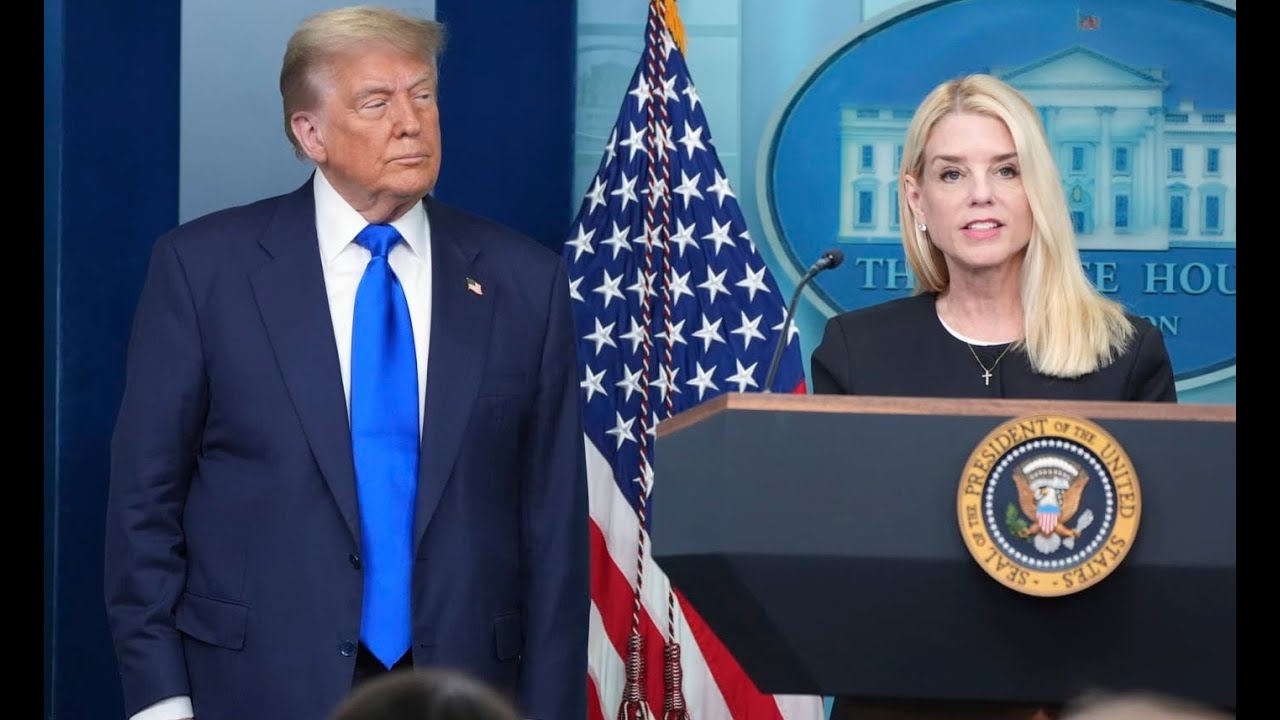
Trump drops BOMBSHELL THREAT in shock announcement
YouTube · 51pm9MFvcho
Quick Read
Summary
Takeaways
- ❖Donald Trump advocated for Republicans to 'nationalize the voting' in at least 15 places.
- ❖The U.S. Constitution grants states primary authority over elections; the federal government cannot unilaterally nationalize voting.
- ❖Mark Elias interprets Trump's statement as an intent for Trump himself and his 'supplicants' to take over election administration.
- ❖The Department of Justice's efforts to collect granular voter data (SSN, DOB, party affiliation) are seen as a prerequisite for a federal takeover of elections.
- ❖States must protect voter data and assert their constitutional prerogatives to prevent federal interference.
- ❖Proactive measures include offensive litigation, public education on election threats, and increased voter responsibility.
Insights
1Trump's Call to 'Nationalize Voting' and its Legal Impossibility
Donald Trump stated that Republicans 'ought to nationalize the voting' in at least 15 places, claiming widespread illegal voting. However, the U.S. Constitution assigns states the power to run elections. The federal government has no inherent ability to nationalize voting; only Congress can enact laws to supplant state control, and such laws are not anticipated.
Trump's statement on Dan Bonino's show; Mark Elias's legal explanation of state vs. federal election authority.
2Interpretation of Trump's Intent: Personal Control, Not Federal Policy
Mark Elias argues that Trump's use of 'Republicans' in his statement is a proxy for himself and his loyalists. Trump's actual intent is to personally seize control of voting processes, consistent with prior statements about seizing ballot boxes and his administration's actions, such as the DOJ executing a search warrant in Georgia.
Elias's interpretation: 'What Donald Trump has in mind is that he Donald Trump should take over the voting. When he says Republicans, he just means him and his supplicants should give him the power.'
3Voter Data Acquisition as a Precursor to Election Takeover
The Department of Justice's efforts to obtain granular voter information (social security numbers, dates of birth, party affiliation) from states are a critical first step. States' unique ability to run elections stems from their voter files; without this data, a federal entity cannot effectively administer an election. Acquiring this data would enable a claim of being able to 'administer the election' and 'take over the voting.'
Elias details DOJ's pursuit of 'granular information at the voter level' and explains how this data is 'the foundational data necessary to run elections.'
4Proactive Defense Strategy: Litigation, Education, and Voter Engagement
To counter potential election subversion, a multi-pronged proactive approach is necessary. This includes filing offensive lawsuits to challenge restrictive policies, educating the public about ongoing threats, and encouraging voters to be more responsible by verifying registration, knowing polling places, and understanding voting rules. This shifts from a reactive legal response to a preventative one.
Elias outlines 'three things': lawyers filing proactive cases (80 cases in 40 states), the independent media's role in education, and voters taking 'more responsibility than they've had to in the past.'
5State Officials' Role in Protecting Constitutional Prerogatives
Governors, Secretaries of State, and Attorneys General in 'blue states' must actively protect voter data and assert their constitutional authority over elections. They need to be prepared to go to court and refuse federal demands, drawing on the 10th Amendment and separation of powers principles. Many states, however, have not yet implemented sufficient protective measures.
Elias states, 'governors to guard their data and to guard their constitutional prerogatives by being ready to go to court and be willing to tell the Trump administration no.' He also references an article detailing 'seven things that every blue state could do to improve their voting laws.'
Lessons
- State election officials, especially in 'blue states,' must prioritize protecting their voter data from federal requests and be prepared to legally challenge any attempts by the federal government to interfere with state election administration.
- Voters should proactively verify their registration status, understand their state's voting rules, know their polling place, and make a concrete plan to vote to minimize the risk of their vote being discounted or suppressed.
- Support organizations engaged in proactive election litigation and public education efforts to challenge voter suppression tactics and inform the public about potential threats to election integrity.
Safeguarding State Elections Against Federal Interference
**Secure Voter Data:** State Secretaries of State and election officials must aggressively protect granular voter information (SSN, DOB, party affiliation) from federal Department of Justice requests, as this data is crucial for election administration.
**Assert Constitutional Authority:** Governors, Attorneys General, and state legislators must understand and be prepared to defend their state's constitutional prerogatives over election 'time, place, and manner' by being ready to litigate against federal overreach.
**Proactive Legal Defense:** Engage in offensive litigation to challenge and dismantle policies or laws that enable voter suppression or election subversion, rather than solely reacting to federal actions.
**Educate the Electorate:** Utilize independent media and community outreach to inform citizens about potential threats to election integrity and empower them with knowledge about their voting rights and responsibilities.
**Empower Individual Voters:** Encourage and assist voters in verifying their registration, understanding local voting rules, locating polling places, and making a concrete voting plan to make their vote harder to suppress or subvert.
**Strengthen State Voting Laws:** Blue states should proactively enact legislation to improve their voting laws, making them more resilient against attempts by federal or partisan actors to undermine them, as outlined in Mark Elias's 'seven things' article.
Quotes
"Our elections are run by states. They're not run by the federal government."
"What Donald Trump has in mind is that he Donald Trump should take over the voting."
"We need governors to guard their data and to guard their constitutional prerogatives by being ready to go to court and be willing to tell the Trump administration no."
Q&A
Recent Questions
Related Episodes

A major shift is happening right now
"Donald Trump is losing his grip on the Republican party and movement, evidenced by internal dissent and a broader political landscape grappling with a collapse of accountability and truth."

“Explosive!” New Republican ballot scandal SURGES INTO NEWS
"A California sheriff and gubernatorial candidate seized over half a million ballots, an act the hosts frame as a dangerous escalation in Republican efforts to undermine election integrity and normalize ballot seizures."

SHOCK Ruling on Trump Deportation PLOT + DEBUNKED Election WARRANT?!? | It's Complicated
"The Fifth Circuit Court's controversial ruling redefines 'seeking admission' for non-citizens, potentially allowing indefinite detention for millions, while a federal search warrant for 2020 election ballots is criticized as a 'test run' for future election interference."
Justice Department CAUGHT pulling Epstein CON
"The Department of Justice released only half of the promised Jeffrey Epstein files, a move the hosts condemn as a deliberate 'rope-a-dope' strategy to suppress transparency and protect powerful figures."