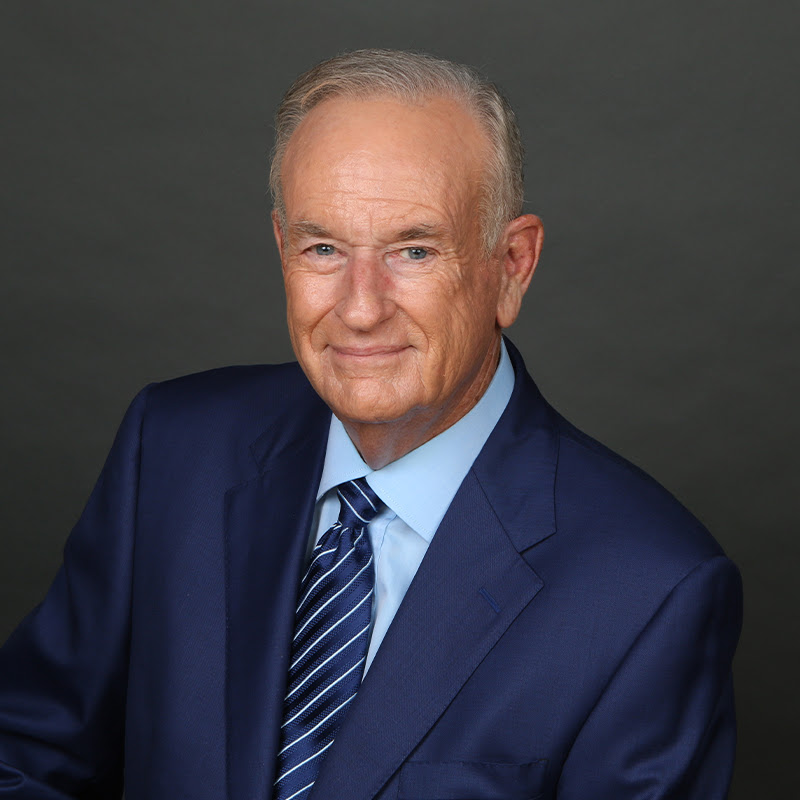
Fall of the Press, Why Democracy Needs the Rich, Iran’s Threat & Ukraine Peace Talks | Feb. 18, 2026
YouTube · 54ePtXS7HHg
Quick Read
Summary
Takeaways
- ❖The American press is widely perceived as corrupt and deliberately omits facts for political reasons.
- ❖Major news outlets failed to report the trans identity of murderers in high-profile cases, allegedly to avoid 'demonizing' trans people.
- ❖The media is accused of covering up President Biden's mental state and providing disparate coverage for George Floyd looters versus January 6th rioters.
- ❖Wealthy individuals are vital for democracy by offering diverse political counterweights to left-leaning 'professional influencers' (media, academics, entertainers).
- ❖Entrepreneurs, often wealthy, drive innovation that makes technology and information more affordable and accessible.
- ❖The current affordability crisis is attributed to government regulation in key sectors (housing, medical care, education), not income inequality.
- ❖Political demonization of the rich is viewed as a power grab to reduce their influence and amplify that of 'professional influencers'.
Insights
1Mainstream Media's Deliberate Omission of Facts
Bill O'Reilly asserts that major news organizations like the Associated Press, CNN, ABC, NBC, MSNBC, and The New York Times intentionally omit crucial facts, such as the trans identity of murderers, from their reporting. He argues this is done to avoid 'demonizing' certain groups, but constitutes deceitful journalism that prioritizes social agendas over factual reporting.
O'Reilly cites the Rhode Island hockey game shooting (Robert/Roberta Doran) and a Canadian mass shooting (Jesse Van Rouselar) where the trans identity of the perpetrator was not reported by these agencies. He also mentions the alleged cover-up of President Biden's mental state and the disparate coverage of George Floyd looters versus January 6th rioters.
2The Essential Role of the Rich in Democracy
Professor John O. McInness, author of 'Why Democracy Needs the Rich,' argues that wealthy individuals are vital for a healthy democracy. They provide a diverse range of political views that can counterbalance the often-unidirectional leanings of 'professional influencers' (media, academics, entertainers). Their financial independence allows them to support unpopular or contrarian opinions, which is crucial for democratic debate.
McInness states that the rich have 'very diverse political views' unlike professional influencers who 'all lean one way to the left.' He cites Elon Musk's takeover of Twitter as an example of a wealthy individual using his independence to foster diversity of opinion by reducing censorship.
3Government Regulation, Not Wealth, Drives Affordability Crisis
While 90% of Americans believe there is a cost-of-living crisis, Professor McInness contends that this is primarily caused by government regulation, not the existence of wealthy individuals. He points out that sectors with heavy government intervention, such as housing, medical care, and education, experience affordability issues, whereas less regulated sectors, particularly technology driven by entrepreneurs, have made many things more affordable.
McInness notes that 'sectors where the government regulates a lot, housing, medical care, education, those have an affordability crisis.' He contrasts this with technology, where 'everyone can have a library on their cell phone' and communication is 'much more affordable.'
Bottom Line
The political demonization of the rich by the Democratic Party is a strategic 'power grab' to reduce the influence of wealthy individuals and simultaneously increase the power of 'professional influencers' (media, academics, entertainers) who predominantly align with one political ideology.
This reframes the debate around income inequality from a purely economic or social justice issue to a political struggle for control over public discourse and policy, suggesting that attacks on the rich serve to consolidate power for a specific ideological bloc.
Understanding this dynamic allows for a more nuanced analysis of political rhetoric surrounding wealth, enabling individuals and organizations to identify underlying power motivations rather than solely focusing on surface-level economic arguments.
Key Concepts
Media Gatekeeping
The concept that media outlets selectively control the flow of information, choosing what to report and what to omit, thereby shaping public opinion and political narratives. O'Reilly argues this is done for political protection rather than journalistic integrity.
Entrepreneurial Innovation as Public Good
The idea that the risk-taking and innovation of wealthy entrepreneurs lead to new technologies and services that ultimately benefit society by making goods and information more accessible and affordable for everyone.
Counterbalancing Influence
The theory that a diversity of influential voices, including those from wealthy individuals with varied political views, is necessary to prevent a monolithic ideological control, particularly from 'professional influencers' who may lean heavily in one political direction.
Lessons
- Critically evaluate news sources for deliberate omissions or selective reporting, especially concerning sensitive social or political topics, rather than passively accepting narratives.
- Recognize that economic affordability issues in key sectors like housing, healthcare, and education may stem more from government regulatory frameworks than from wealth distribution, prompting a re-evaluation of policy solutions.
- Consider the role of independent wealthy individuals and entrepreneurs as potential counterweights to dominant ideological influences in media and academia, and support platforms that foster diverse opinions.
Notable Moments
Bill O'Reilly explains the significance of Ash Wednesday, detailing its observance across various Christian denominations (Roman Catholic, Baptist, Lutheran, Methodist, Episcopal, Presbyterian) and its core philosophy of humility and atonement for sins.
This segment highlights a significant religious and cultural tradition that O'Reilly believes is increasingly unknown to younger, secular-reared generations, underscoring a perceived decline in religious literacy and the Judeo-Christian foundations of the nation.
Quotes
"The American people believe the press is largely corrupt, which it is... giant corporate media controls pretty much what you see on television and the major urban newspapers."
"If you want to get into sociology, get out of journalism and go into sociology. Your job is to report the facts."
"The press has been covering for a lot of people... Everybody knew that Biden was not mentally up to running this country... The White House court knew it. Covered it up."
"Affordability problems... they're not caused by the rich. They're caused rather by government regulation."
"One way the rich help is by able to counterbalance these [professional influencers] by getting out and supporting people who do not have these views. So that's one important perspective that in which they help democracy boost."
"If you reduce the influence of the wealthy... you actually increase the influence of what I call the professional influencers because they're the people who have influence in politics, the media, academics, entertainers, and they're just tremendously on one side of the political spectrum."
Q&A
Recent Questions
Related Episodes
"Fighting Solves EVERYTHING!" Who's To Blame For Political Violence? + Maria Machado On Trump
"This episode dissects the escalating political violence in the US, with panelists fiercely debating the role of partisan rhetoric and media in radicalization, alongside an interview with Venezuelan opposition leader Maria Machado on US intervention and her country's future."

"CATASTROPHIC Failure!" Trump Dinner Assassination Attempt & Royal Visit | With Kari Lake
"Piers Morgan and Kari Lake dissect the catastrophic security failure during an assassination attempt on Donald Trump at the White House Correspondents Dinner, blaming media rhetoric while also discussing King Charles III's high-stakes US visit."
Press Corp Humiliated as Press Sec Makes Them Regret Ignoring Swalwell’s Open Secret
"This episode exposes the alleged hypocrisy and corruption within Washington D.C., focusing on the Eric Swalwell scandal, Democratic Party tactics, and the media's role in shaping narratives."
Andrew Tate | PBD Podcast | Ep. 721
"Andrew Tate defends his involvement in a controversial Miami nightclub incident and articulates his radical theories on why American society is collapsing, blaming decentralized power, modern capitalism, and feminism."