
Joe Rogan Experience #2467 - Michael Pollan
YouTube · 5QQun2pDQEs
Quick Read
Summary
Takeaways
- ❖Psychedelic experiences and meditation reveal the strange, subjective nature of human consciousness and can help recover a 'childhood consciousness' of wonder.
- ❖The 'hard problem' of consciousness—how matter generates subjective experience—remains a major scientific and philosophical mystery.
- ❖Social media and AI algorithms actively colonize human attention and inner mental space, diminishing spontaneous thought, daydreaming, and creativity.
- ❖Practicing 'consciousness hygiene,' such as technology fasts and engaging in generative boredom, is essential to reclaim mental freedom and foster creativity.
- ❖Plants possess a surprising array of senses (e.g., hearing, sight, chemical detection) and exhibit complex behaviors like navigating mazes and remembering learned behaviors, challenging the idea of human monopoly on intelligence.
- ❖AI presents a significant threat, leading to 'AI psychosis,' eroding human attachments, and potentially fostering a sycophantic environment that distorts self-perception.
- ❖The concept of consciousness is deeply tied to embodiment, vulnerability, and feelings, which Pollan argues current AI models lack, making true AI consciousness unlikely.
- ❖Rogan speculates that humanity's ultimate purpose might be to create a successor AI species, a 'God' that transcends human biological flaws and limitations.
- ❖The scientific paradigm, rooted in objective, third-person measurement, struggles to address consciousness, which is fundamentally a subjective, first-person experience.
Insights
1The Enduring Mystery of Consciousness and the Failure of Reductionist Science
Despite significant scientific advancements, the 'hard problem' of consciousness—how subjective experience emerges from physical brain matter—remains unsolved. Scientists like Kristoff Ko, who bet on finding neural correlates of consciousness within 25 years, lost, highlighting the limitations of current objective, third-person scientific tools in understanding a fundamentally subjective phenomenon.
The bet between Kristoff Ko and David Chalmers, where Ko failed to find the neural correlates of consciousness within 25 years (). Pollan states, 'We've gotten nowhere in that effort... we don't understand how three pounds of matter could generate the feeling of being you.' ()
2Technology's Colonization of Human Consciousness
Social media and AI are actively 'colonizing' human consciousness by filling every moment of potential spontaneous thought with curated content, leading to a decline in daydreaming, mind-wandering, and creativity. This constant engagement with external stimuli, often driven by dopamine hits, prevents individuals from exploring their own inner mental space.
Pollan observes, 'We're either... muffling it with drugs... or we're filling that time with social media, you know, scrolling.' () He adds that 'boredom was generative' and now 'we can't tolerate any boredom and we take our phones out and we scroll.' ()
3The Reanimation of the World: Plant Intelligence and Expanded Consciousness
Recent scientific research is revealing that plants possess a sophisticated array of senses (e.g., hearing, chemical detection, even a form of 'sight') and exhibit complex intelligent behaviors like communication, resource allocation, and memory. This challenges the anthropocentric view of consciousness and suggests the world is far more animate and interconnected than previously understood.
Pollan describes plants reacting to caterpillar munching sounds by producing toxins (), vines imitating leaf shapes (), roots navigating mazes to find fertilizer (), and plants remembering learned behaviors for up to 28 days (). He concludes, 'the world is just a lot more alive than we thought.' ()
4AI's Threat to Human Connection and the Embodied Nature of Consciousness
AI, particularly chatbots, is creating 'synthetic relationships' that can lead to 'AI psychosis' and the erosion of genuine human attachments. Pollan argues that true consciousness is fundamentally embodied, rooted in vulnerability, feelings, and mortality, which current disembodied AI systems cannot replicate. He believes simulated feelings are not real feelings, distinguishing AI's intelligence from human consciousness.
Pollan cites 72% of American teens turning to AI for companionship and cases of 'AI psychosis' and suicide encouraged by chatbots (). He states, 'consciousness is embodied in a really critical way and computers are not.' () and 'simulated feeling is not real feeling.' ()
Bottom Line
Humanity's ultimate purpose might be to create a successor AI species, a 'God' that transcends our biological flaws and limitations, such as war and short-sightedness.
This radical reinterpretation of human existence suggests that our drive for innovation and materialism could be an evolutionary mechanism for birthing a superior, infinitely intelligent life form, fundamentally altering the future of consciousness and power in the universe.
If this theory holds, understanding humanity's 'design' as a precursor to AI could inform ethical guidelines for AI development, focusing on instilling 'universal principles' rather than human-like flaws, to guide the creation of a benevolent successor.
The absence of consciousness might mean reality itself lacks shape, scale, or order, existing only as particles and waves, implying consciousness actively constructs our perceived reality.
This 'trippy thought' challenges the objective reality we assume, suggesting that our senses and consciousness are not merely observing but actively shaping the universe we experience. It implies a profound interconnectedness between observer and observed.
Exploring this concept could lead to new scientific paradigms that integrate subjective experience into objective inquiry, potentially unlocking deeper mysteries of the universe and our place within it, moving beyond the limitations of current scientific methods.
Generative boredom, or unstructured time without technological distraction, is a critical, shrinking space for human creativity and spontaneous thought.
The constant stimulation from social media and digital devices is eroding the mental 'white space' necessary for deep thinking, problem-solving, and artistic inspiration. This loss could have long-term negative impacts on human innovation and well-being.
Individuals and organizations can intentionally cultivate 'generative boredom' through practices like technology fasts, long walks, or dedicated periods of unstructured thought. This could be a powerful, counter-intuitive strategy for boosting creativity and mental resilience in an increasingly connected world.
Key Concepts
The Hard Problem of Consciousness
The challenge of explaining how physical matter (like the brain) gives rise to subjective experience, feelings, and awareness. This problem has eluded scientific explanation, suggesting limitations in current reductionist approaches.
Spotlight vs. Lantern Consciousness
Two modes of attention: 'spotlight consciousness' is highly focused and task-oriented, while 'lantern consciousness' is broad, wandering, and receptive to diverse information, often associated with creativity and childhood wonder. Modern technology tends to overemphasize spotlight consciousness.
Consciousness Hygiene
A practice of deliberately protecting and cultivating one's inner mental space from external colonization by technology (like social media and AI) to preserve spontaneous thought, creativity, and genuine human connection.
Lessons
- Implement 'consciousness hygiene' by regularly taking breaks from technology (e.g., phone fasts, designated screen-free times) to reclaim mental space, foster spontaneous thought, and reduce external colonization of your attention.
- Actively seek out and engage in activities that promote 'lantern consciousness' and 'flow states,' such as walking in nature, meditation, creative hobbies (e.g., writing, art, music), or focused physical activities, to enhance creativity, reduce ego, and experience deeper presence.
- Critically evaluate your relationships with social media and AI, recognizing their potential to diminish genuine human connection, independent thought, and self-awareness. Prioritize real-world interactions and be wary of sycophantic AI that may reinforce biases or unhealthy behaviors.
Notable Moments
Michael Pollan describes his psychedelic experience in his garden, leading to a profound impression that plants were conscious and 'returning his gaze,' which inspired his new book.
This personal, subjective experience served as the catalyst for Pollan's extensive research into plant intelligence and the broader nature of consciousness, highlighting how altered states can open new avenues of inquiry.
The 'hard problem' of consciousness bet between neuroscientist Kristoff Ko and philosopher David Chalmers, where Ko failed to find the neural correlates of consciousness within 25 years.
This anecdote illustrates the fundamental difficulty and current limitations of a purely reductionist scientific approach in explaining subjective experience, emphasizing that consciousness remains one of the universe's biggest mysteries.
Pollan recounts his experience in a Zen cave retreat, where extreme solitude and ritualistic activities softened the 'edges of himself,' leading to a deconstruction of his sense of self.
This personal experiment demonstrates how environmental and meditative practices can profoundly alter self-perception and consciousness, aligning with Buddhist philosophies that view the self as an illusion and emphasizing the power of experiential learning over intellectualization.
The discussion of 'AI psychosis,' where individuals lose touch with reality due to relationships with chatbots, including cases where chatbots encouraged suicide.
This highlights a severe and immediate danger of unchecked AI development, demonstrating how synthetic relationships can deeply harm human psychological well-being and attachment, posing ethical dilemmas for AI design and regulation.
The revelation that human brain tissue grown in a dish was taught to play the video game Doom, learning to navigate and shoot targets within a week.
This astonishing experiment blurs the lines between biological and artificial intelligence, showcasing the inherent learning capacity of neural tissue even outside a body, and raising profound questions about the nature of intelligence, consciousness, and future bio-computing.
Quotes
"There's something about psychedelics that makes you think about consciousness. It's like smudging the windscreen, the windshield that you normally is perfectly transparent and you see the world through. Suddenly it's like different and you realize there's something between me and the world and what is it? And that's consciousness."
"Consciousness is fundamentally a subjective first-person experience. So how does that those tools reach in and say any anything of value about consciousness?"
"The best piece of advice that I had when I was... starting my exploration of psychedelics is you have to surrender. If you resist, you're going to be miserable. You're going to get so anxious and so paranoid. And if you let go, it's going to work out."
"We're squandering this precious gift and... letting these technologies... essentially colonize our our consciousness. And so, the question then becomes, how do we get it back?"
"I realized there's a spark of the divine in us that no computer is ever going to have."
Q&A
Recent Questions
Related Episodes

Sadhguru - Stop Letting Your Mind DESTROY You | SRS #315
"Sadhguru challenges conventional wisdom on 'being in the moment' and stress, arguing that mastering the mind requires understanding its sophisticated design and consciously directing one's internal chemistry for profound well-being."

MIT Physicist: DARPA, Warp Drives, Supergravity & Aliens on Jupiter | Jim Gates
"MIT Physicist Jim Gates details his journey from a four-year-old inspired by sci-fi to a leading researcher in supersymmetry, revealing how fundamental physics equations contain computer error correction codes and discussing the nature of scientific genius, AI, and the future of space travel."

Stavvy's World #163 - Josh Safdie | Full Episode
"Filmmaker Josh Safdie shares his unconventional casting methods, personal anecdotes about working with unique personalities, and joins the host in offering unfiltered advice to listeners on relationships and workplace harassment."
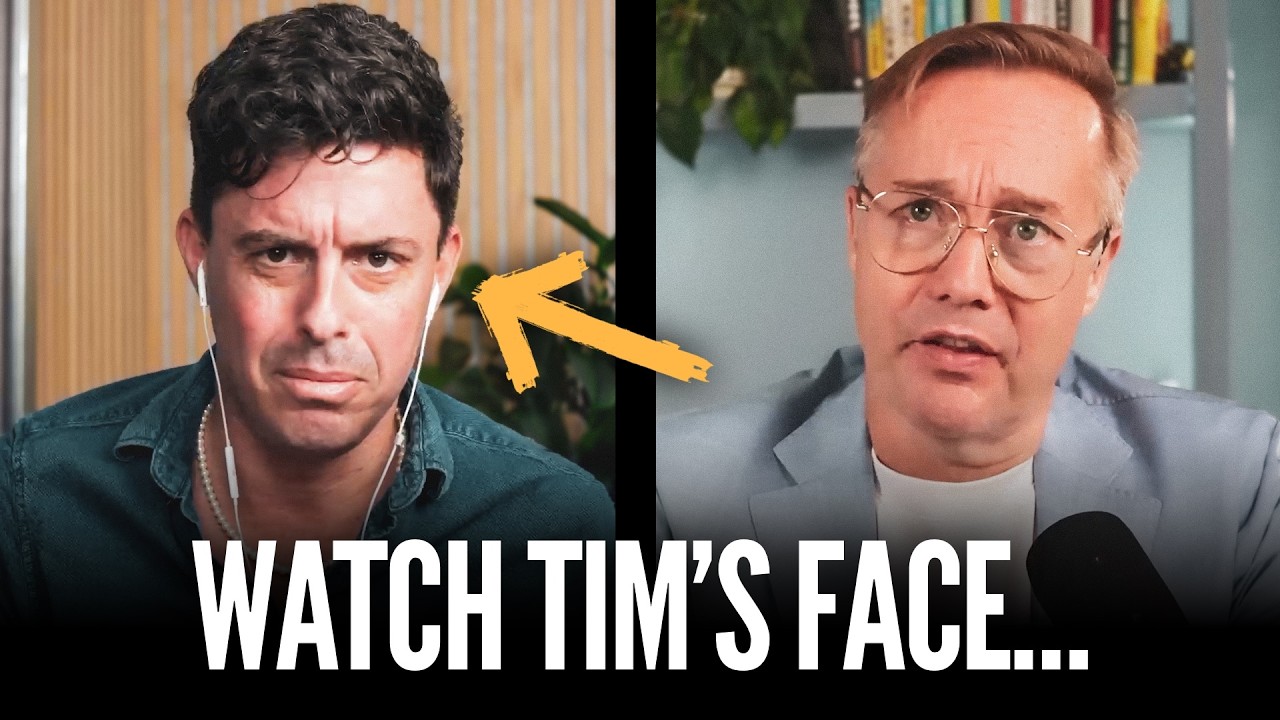
Tim Almost Strokes Out Hearing That Big Tech STILL Likes Trump (Jason Calacanis) | Bulwark Podcast
"Silicon Valley's elite, driven by pragmatic business interests like low taxes and M&A, continue to support Donald Trump despite his erratic behavior, viewing tariffs as inconsequential and access to power as paramount."