BREAKING: Hezbollah RAGES As U.S. Hormuz Blockade CRUSHES Iran; FBI Launches Probe | TBN Israel
YouTube · 5Qj0eDfdIYw
Quick Read
Summary
Takeaways
- ❖The US naval blockade in the Strait of Hormuz is inflicting an estimated $435 million in daily losses on Iran, pushing its oil infrastructure to the brink of irreversible damage.
- ❖Iran has halted steel exports and faces a projected 70% inflation jump, indicating severe economic distress under sustained pressure.
- ❖Hezbollah is actively sabotaging potential Israel-Lebanon peace talks by escalating military activities in southern Lebanon and hiding weapons in civilian homes.
- ❖The FBI is investigating a series of suspicious deaths and disappearances of American nuclear scientists, suspecting an organized foreign intelligence operation.
- ❖Iran is attempting to negotiate a de-escalation of the Hormuz blockade through Oman, but seeks to defer the nuclear issue, a condition rejected by the US.
- ❖Arab countries are reportedly shifting alliances, praising Israel's stand against Iran and criticizing Western nations for perceived inaction during crises.
Insights
1US Naval Blockade Pushes Iran's Oil Infrastructure to Collapse
The ongoing American naval blockade in the Strait of Hormuz has created critical pressure within Iran's oil pipelines and underground systems. Estimates suggest Iran is losing approximately $435 million daily and has halted 1.5 million barrels of oil per day. This sustained pressure could lead to irreversible damage to oil fields, requiring years and billions to repair, and has forced Iran to stop steel exports, contributing to a projected 70% inflation spike.
The host states Iran is losing '$435 million a day because of the American blockade' and that 'oil storage tanks at the just terminal have reportedly reached maximum capacity,' potentially forcing 'all production from its wells within days.' Trump described the internal pressure building in pipelines and storage tanks, predicting 'severe damage' within days. Iran also 'stopped steel exports until the end of May' following strikes.
2Hezbollah Sabotages Lebanon-Israel Peace Efforts Through Escalated Conflict
Hezbollah is actively working to prevent any political arrangement or security agreement between Israel and Lebanon. The organization is reportedly preparing a campaign against Lebanese President Joseph Aun to weaken him and disrupt negotiations, specifically a rumored summit on May 11th. Hezbollah's strategy involves turning southern Lebanese villages into an 'open combat zone' and using civilian areas, including children's rooms, to hide weapons, forcing Israel to choose between inaction (allowing Hezbollah to strengthen) or action (drawing accusations of hitting civilian targets).
Lebanese security officials told Elhadat that 'the Shia terrorist organization wants to turn the villages from southern Lebanon into an open combat zone' to 'disrupt the negotiations with Israel.' The IDF found 'weapons hidden inside a child's room' in a destroyed Hezbollah infrastructure. Naim Kasim stated, 'Lebanon's negotiations do not obligate,' emphasizing Hezbollah's independent armed status.
3Iran's Negotiation Strategy: Hormuz First, Nuclear Later
Facing severe economic pressure from the blockade, Iran is attempting to negotiate a de-escalation by offering to reopen shipping lanes in the Strait of Hormuz, but crucially, wants to leave the nuclear issue for a later stage. This strategy aims to regain economic leverage and avoid direct commitments on its nuclear program. Oman is mediating these expert-level talks, but the US, under Trump, maintains a clear precondition: direct talks and no nuclear program.
Iran is 'offering the United States to reopen the shipping lanes and the finding and leave the nuclear issue for the later stage.' 'Oman is trying to promote expert level talks' on the strait. Trump 'was very clear when he said that they do not speak through mediators. They can call directly and that the first rule before talks begin is that Iran has no nuclear program.'
4FBI Investigates Suspicious Deaths of US Nuclear Scientists, Suspecting Foreign Espionage
The FBI has launched an expanding investigation into a series of unusual cases involving American nuclear scientists who have disappeared or been found dead. Former FBI official Chris Swicker noted a pattern in some cases: individuals leaving home suddenly without essentials. While no public conclusion exists, the White House's directive to consolidate these cases suggests a belief in a foreign intelligence effort, with China, Russia, and Iran mentioned as possible suspects. This indicates a covert war over critical scientific knowledge.
There is 'growing suspicion of an international espionage operation against American scientists.' 'A series of disappearances and deaths of nuclear scientists in the United States is raising suspicions of an organized intelligence operation possibly led by China, Russia or Iran.' Former FBI official Chris Swicker warned of a 'similar pattern' in some cases.
Bottom Line
The US is employing economic pressure as a 'precision weapon' against Iran, forcing the regime to pay for its continued refusal to negotiate on US terms, rather than solely relying on military strikes.
This strategy aims to achieve geopolitical objectives (dismantling Iran's nuclear program, curbing its regional influence) by making the cost of non-compliance economically unbearable, potentially leading to internal collapse or forced concessions without direct military engagement.
Businesses and policymakers should analyze the effectiveness of such 'precision economic warfare' as a model for future international conflicts, considering its potential to reshape global trade, supply chains, and diplomatic leverage.
Hezbollah's tactic of embedding military infrastructure within civilian areas in southern Lebanon creates a 'permanent shield,' exploiting international norms and humanitarian concerns to deter Israeli retaliation and maintain operational freedom.
This tactic complicates military responses, increases civilian casualties, and fuels propaganda narratives, making it a significant challenge for nations combating non-state actors operating within populated zones.
Defense strategists and international law experts need to develop new frameworks and technologies to address the ethical and practical dilemmas posed by adversaries deliberately operating from civilian cover, balancing military necessity with civilian protection.
Lessons
- Monitor global oil prices and supply chain stability closely, as the US blockade on Iran's oil and the ongoing tensions in the Strait of Hormuz could trigger significant market volatility.
- Analyze the geopolitical implications of shifting alliances in the Middle East, particularly the growing alignment between Israel and some Arab states against Iran, to anticipate future regional power dynamics and investment opportunities.
- Evaluate the risks of covert intelligence operations targeting critical scientific and technological assets, and strengthen cybersecurity and physical security protocols, especially for personnel involved in sensitive research.
Notable Moments
The host describes the current conflict as a 'war that has not stopped, it has simply changed shape,' fought across multiple domains: economic pressure in Iran, ground operations in Lebanon, and intelligence operations in Washington.
This reframing highlights the evolving nature of modern warfare beyond conventional military engagements, encompassing economic, proxy, and intelligence dimensions, making it harder to define and resolve.
The host notes that the message from the Gulf states emphasizes that 'the Iranian people are not the regime but its victim,' separating the regime from its populace.
This distinction is crucial for shaping international policy and public opinion, aiming to delegitimize the Iranian regime while avoiding collective punishment of its citizens, potentially fostering internal dissent.
Quotes
"Trump was very clear when he said that they do not speak through mediators. They can call directly and that the first rule before talks begin is that Iran has no nuclear program."
"If Israel does not act, Hisbala gets stronger. If Israel does act, Hisbala cries that villages in South Lebanon are being hit. Civilian villages."
"A true friend is not measured in comfort but in crisis."
Q&A
Recent Questions
Related Episodes

Patrick Henningsen: Hezbollah JUST Fired Back at Israel - Iran Vows to “Crush” All Attacks
"Patrick Henningsen argues that the US and Israel initiated an illegal war against Iran, driven by Trump's incompetence and Israeli influence, leading to an inevitable escalation with severe global economic repercussions."
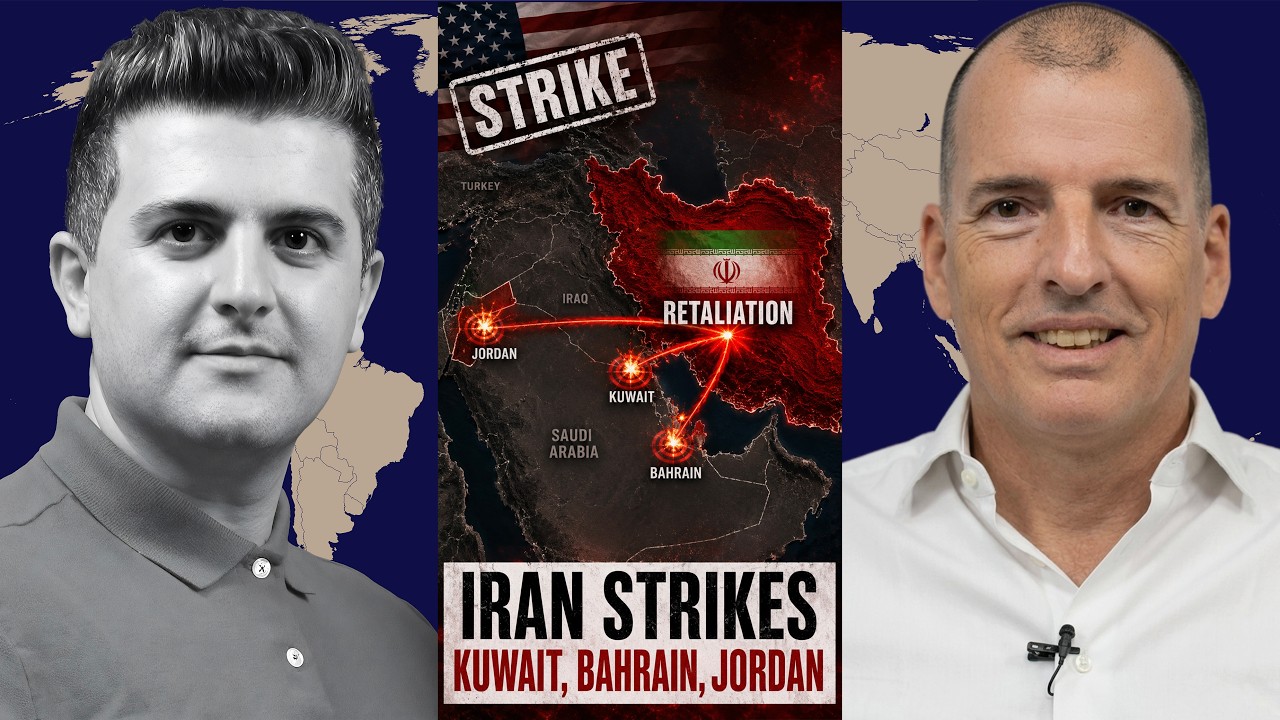
Alex Krainer: US STRIKES Iran – Iran RETALIATES Against Kuwait, Bahrain & Jordan!
"Amidst escalating US-Iran conflict and Iranian retaliation against regional US allies, this episode argues that US foreign policy is deeply controlled by an 'Anglo-Zionist conspiracy' led by the Rothschild banking dynasty, prioritizing Israeli interests over American ones."

LIVE: Trump HIDES FROM PUBLIC as US SOLDIER KILLED!!! 6/2/2026
"The host exposes alleged government cover-ups regarding military casualties, Trump's unexplained public absence, and questionable political appointments, arguing these reflect a 'regime of loser babies' and a failing foreign policy."

Iran Update: Israel’s Newest Bombing Campaign, the Oncoming War With China and How to Avoid It
"Colonel Wilerson reveals how the US and Israel are actively bombing China's strategic infrastructure in Iran, escalating a covert economic war that Beijing intends to win without direct military conflict by dismantling the dollar's global dominance."