Don Lemon ARRESTED Under Klan and FACE Acts, w/ Michael Knowles, Mike Davis, Bill Shipley, and Blum
YouTube · 5YS_q1LbeoE
Quick Read
Summary
Takeaways
- ❖Don Lemon was federally arrested and charged with violating the Ku Klux Klan Act and the FACE Act for his role in an agitator-led ICE protest at City's Church in St. Paul, Minnesota.
- ❖The FACE Act makes it a crime to intentionally injure, intimidate, or interfere with religious freedom at a place of worship by force, threat of force, or physical obstruction.
- ❖Megyn Kelly and legal experts assert that Lemon's 'journalist' defense is invalid, as even journalists are subject to laws against trespass and obstruction.
- ❖Video evidence shows Lemon coordinating with protest organizers, knowing their plans, encouraging disruption, and providing support (e.g., coffee) to protesters.
- ❖The DOJ pursued a grand jury indictment for Lemon after a magistrate judge initially declined charges and a chief district judge advised improving the affidavit or going to a grand jury.
- ❖Crime journalist Howard Bloom hypothesizes that Brian Coberger, the Idaho student murderer, may have had an accomplice, citing 150+ stab wounds in a 9-13 minute timeframe, unknown male DNA on the knife sheath, and Coberger's first question upon arrest: 'Was anyone else arrested?'
- ❖The official narrative of the Idaho murders lacks a clear motive and struggles to explain how one person could inflict such extensive injuries across two floors in a short, dark timeframe without leaving more bloody footprints.
Insights
1Don Lemon's Arrest and the Invalidity of Journalistic Immunity
Don Lemon was arrested on federal charges, including conspiracy against rights (Ku Klux Klan Act) and violating the FACE Act, stemming from his involvement in a church protest. Megyn Kelly and her guests argue that his claim of being a journalist does not shield him from these charges. They cite his pre-protest coordination with organizers, on-camera statements encouraging disruption, and providing coffee to protesters as evidence of active participation rather than objective reporting. Legal experts emphasize that the First Amendment protects free speech but not criminal acts like trespass or obstruction, especially in places of worship protected by federal statutes.
Lemon was charged with 18 U.S.C. Section 241 (Klan Act) and 18 U.S.C. Section 248 (FACE Act). Video shows Lemon kissing an organizer, discussing 'clandestine' plans, and telling viewers to 'subscribe' during the disruption. He stated, 'Trauma is part of the process... that's what protesting is about.' (, , ) He also supplied coffee to protesters ().
2Evidence Suggesting an Accomplice in Idaho Student Murders
Crime journalist Howard Bloom presents a hypothesis that Brian Coberger may not have acted alone in the Idaho student murders. His theory is based on several inconsistencies and pieces of evidence: the extreme brutality (over 150 stab wounds) inflicted on four victims within a very short timeframe (9-13 minutes), the prosecutor's inability to rule out a second weapon, the presence of 'unknown male DNA' on the knife sheath, and Coberger's first question upon arrest: 'Was anyone else arrested?' Bloom also notes the lack of a clear motive and the absence of expected bloody footprints, suggesting a possible cleanup.
150+ stab wounds across four victims in 9-13 minutes (). Prosecutor stated, 'I cannot rule out that another weapon was involved.' (). Unknown male DNA found on the knife sheath (). Coberger's first question upon arrest: 'Was anyone else arrested?' (). Dr. Brent Tarvy, a forensic criminologist, also questioned if one killer could have contained two victims simultaneously or inflicted different types of lethal force ().
Bottom Line
The Department of Justice's decision to pursue charges against Don Lemon, despite initial judicial reluctance and media outcry, signals a potential shift towards applying federal laws like the FACE Act more uniformly, even to high-profile figures or those claiming journalistic privilege.
This could lead to increased scrutiny and prosecution of individuals involved in disruptive protests, regardless of their public profile or stated intentions, particularly if their actions physically obstruct or intimidate. It challenges the perceived 'two-tiered justice system' where certain groups are exempt.
Legal defense firms specializing in First Amendment and protest law may see increased demand. Media organizations might need to re-evaluate their guidelines for journalists covering protests to ensure they do not cross legal lines into active participation.
The continued questioning of the single-perpetrator theory in the Idaho murders, even after a plea agreement, suggests that official narratives in high-profile cases can remain vulnerable to scrutiny if key evidentiary questions are left unanswered.
This could fuel public distrust in the thoroughness of investigations or the motivations behind quick resolutions in sensitive cases. It highlights the potential for critical journalism to uncover lingering doubts that official channels may overlook or suppress.
Independent investigative journalists and true-crime authors have an ongoing role in examining cold cases or cases with unresolved questions, potentially uncovering new leads or pressuring authorities for further transparency. Forensic science and cold case analysis could see renewed public interest and funding.
Key Concepts
Journalistic Immunity Fallacy
The misconception that being a journalist grants special legal protections or immunity from laws that apply to ordinary citizens, particularly when actively participating in or facilitating illegal activities rather than merely observing or reporting.
Retribution as Primary Purpose of Justice
The view that the criminal justice system's primary goal is to punish offenders for their wrongdoing, with secondary purposes being rehabilitation or deterrence. This model emphasizes accountability and consequences for criminal acts, regardless of perceived social or political motivations.
Lessons
- Understand the legal boundaries of protest and journalistic coverage: The First Amendment protects speech and assembly, but not criminal acts like trespass, physical obstruction, or intimidation, especially in protected spaces like churches or clinics.
- Verify information from official sources: Do not rely solely on social media or partisan news outlets for legal analysis, especially when conflicting reports emerge about judicial decisions or agreements.
- Support independent investigative journalism: Encourage and consume reporting that delves into unresolved questions in criminal cases, even when official narratives are presented as final, to ensure accountability and the pursuit of truth.
Notable Moments
Megyn Kelly highlights video evidence of Don Lemon actively participating in the church protest, including coordinating with organizers and supplying coffee to protesters.
This directly contradicts Lemon's claim of being a passive journalist and provides concrete evidence for his alleged violation of federal laws, undermining his defense.
Howard Bloom reveals the presence of 'unknown male DNA' on the Idaho murder knife sheath and Coberger's first question upon arrest: 'Was anyone else arrested?'
These details are highly suggestive of a possible accomplice and directly challenge the official narrative of a lone perpetrator, raising significant questions about the completeness of the investigation.
Quotes
"Trauma is part of it. Being disturbed is our First Amendment right to disturb you. No, it isn't."
"Journalists do not have the First Amendment right to violate federal law."
"This is textbook Face Act violation and textbook... modern-day clansmen who are terrorizing white Christian churches on purpose."
"You cannot use free speech as a justification to commit additional crimes. You cannot claim that your status as a journalist... gives you some kind of blanket immunity to break the law. That's not true."
"What occurred in that church is not a protest... What it emphatically was not is a protest."
Q&A
Recent Questions
Related Episodes
6 Pizza Problems Caught on Bodycam
"From racist rants to armed robbery and attempted murder, this episode details six real-life incidents where minor pizza disputes escalated into serious criminal charges, all captured on bodycam footage."

HOT TOPICS | Donald Trump In The Epstein Files - They Arrested The Wrong Don!
"Don Lemon and Congressman Jason Crow discuss the weaponization of the justice system against journalists and critics of Donald Trump, alongside the controversial handling of the Epstein files and the rise of independent media."
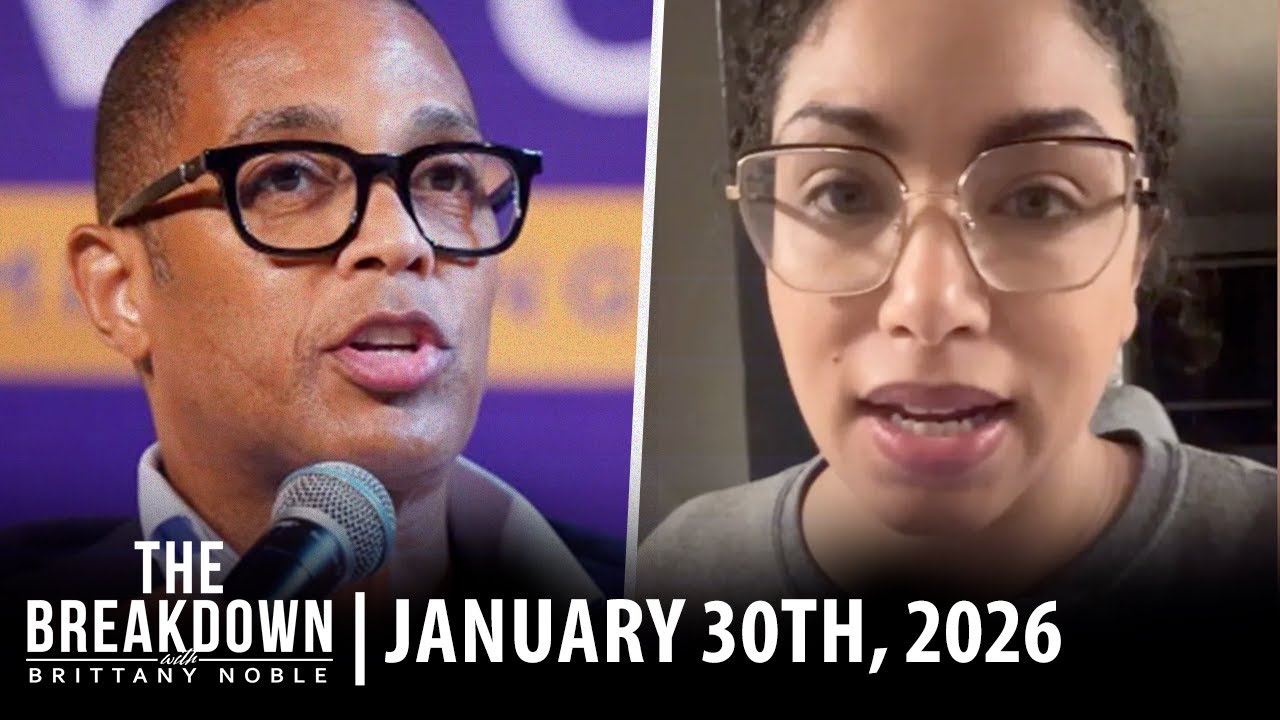
rump’s DOJ arrests journalists Don Lemon, Georgia Fort
"Federal agents arrested prominent journalists Don Lemon and Georgia Fort for covering a church protest, sparking widespread condemnation and raising critical questions about First Amendment rights and the weaponization of the Justice Department."

🚨 THEY F*CKED AROUND FOR THE LAST TIME 😭😭😭
"This episode unleashes a torrent of highly opinionated commentary on the US-Iran deal, Israel's role, and a scathing critique of 'leftist' policies and immigration, particularly highlighting the UK grooming gang report as evidence of Western societal decay."