BREAKING: Uranium Tunnels MINED; Trump Warns Ultimate Alternative; Israel Ready for WAR | TBN Israel
YouTube · 6xXzlnegzZE
Quick Read
Summary
Takeaways
- ❖Iran has fortified its enriched uranium stockpiles by collapsing tunnels and placing mines, making any removal or destruction operation more difficult and dangerous.
- ❖The US-Iran agreement is a temporary 60-day memorandum focused on a ceasefire and opening the Strait of Hormuz, not a final nuclear deal.
- ❖Israel maintains deep skepticism about the agreement, fearing it's an Iranian tactic to gain time and legitimize its proxies without truly dismantling its threat capabilities.
- ❖Iran's Revolutionary Guards commander, Ahmad Vahidi, a hardliner wanted for the 1994 Buenos Aires bombing, is a key influential figure pushing against early concessions.
- ❖Israel asserts it will not allow Hezbollah to return to its border, regardless of any US-Iran ceasefire, and will maintain a security buffer within Lebanon.
Insights
1Iran's Nuclear Fortification and Cyber Warfare
Iran has accelerated the fortification of its enriched uranium stockpiles by deliberately collapsing tunnels and placing mines at storage site entrances. This significantly complicates both potential American military operations and the implementation of any agreement requiring material removal. Concurrently, Iran's banking coordination council reported a limited cyberattack against four major national financial bodies, raising questions about the evolving, multi-front nature of the conflict.
Iran has booby-trapped the uranium tunnels. The entrances were collapsed and mines were placed at the site. () In recent weeks, Iran has accelerated the fortification of its enriched uranium stockpiles through the deliberate collapse of tunnels and the placement of mines. () Today, Iran's banking coordination council announced that several of its systems were subjected to a limited cyber attack, which hit four national financial bodies. ()
2Divergent US and Israeli Objectives in Iran Agreement
The United States, under Trump, seeks a diplomatic achievement by preventing Iranian nuclearization, delaying military confrontation, and reducing regional tension, aiming for a public win like opening the Strait of Hormuz and destroying enriched nuclear material. In contrast, Israel views the agreement with skepticism, fearing it's a temporary measure that allows Iran to waste time and remove military pressure without addressing its full spectrum of threats, including missiles and terror proxies. Israel's primary goal is a truly weakened Iran and its proxies, not merely a temporary pause.
From Washington's perspective, preventing Iranian nuclearization, delaying the military confrontation and reducing the regional tension are worthy goals. () From Israel's perspective, the central question is not only what is written in this agreement, but what's not included in it. () Israel doesn't need an agreement. Israel needs a weakened Iran and weakened Iranian proxies. ()
3Hezbollah's Enduring Threat and Israel's Red Line
Iran has strategically worked to preserve Hezbollah, its proxy in Lebanon, which it has invested billions in over decades. While a US-Iran agreement might include a ceasefire, Israel unequivocally states it will not permit Hezbollah to return to the international border. Israel intends to maintain a security buffer inside Lebanon, asserting its right to act against Hezbollah, which it characterizes as foreign terrorists funded by Iran, regardless of any diplomatic understandings.
Even if Iran is able to force some kind of ceasefire in this greater agreement that includes Iran, on Lebanon and on Hezbollah specifically, that doesn't mean Israel can't fight against Hezbollah. () There is no scenario where Hezbollah is allowed back to the international border with Israel, and the IDF allows that. That simply won't happen. () Hezbollah is not a grassroots movement within Lebanon. They're terrorists whose goal is and will be to destroy Israel on behalf of Iran. ()
4Ahmad Vahidi's Influence on Iranian Hardline Stance
Ahmad Vahidi, commander of the Revolutionary Guards, has emerged as a highly influential figure in Tehran, advocating for a hardline approach against the United States and opposing early concessions. Vahidi, a founder of the Revolutionary Guards and Quds Force, is wanted for the 1994 Buenos Aires bombing and was instrumental in building Hezbollah's power. His influence suggests that any agreement will be subject to internal power struggles within Tehran, potentially undermining its effectiveness.
Ahmad Vahidi. He's the commander of the Revolutionary Guards, and according to reports, Vahidi has become one of the most influential centers of power in Tehran in recent months. He pushed for a hard line against the United States, opposed the early concessions... () He's one of the founders of the Revolutionary Guards, was involved in the establishment of the Quds Force, served as defense minister and interior minister, and is wanted in connection with the bombing of the Jewish community in the in Buenos Aires, Argentina, in 1994... ()
Bottom Line
Iran's strategy of booby-trapping its nuclear facilities with mines and collapsing tunnels creates a physical barrier that complicates both military intervention and diplomatic material removal, effectively increasing the cost and risk of enforcement.
This tactic shifts the leverage in negotiations, forcing external powers to accept less stringent terms or face a more dangerous and prolonged operation, potentially allowing Iran to retain more control over its nuclear program.
International inspection regimes and diplomatic efforts must develop new verification and enforcement mechanisms that account for such physical obstructions, potentially involving advanced remote sensing or more robust on-site access demands, rather than relying on traditional disarmament models.
Qatar's alleged attempt to secretly negotiate with Tehran to protect its Ras Laffan gas facility in exchange for pressuring the US highlights how critical energy infrastructure becomes a strategic pawn in regional conflicts, even for non-belligerents.
The vulnerability of global energy supply chains to regional conflicts can create complex, clandestine diplomatic channels and unintended leverage points, where economic security can override political alliances.
Nations reliant on Middle Eastern energy must diversify supply chains and invest in robust cybersecurity and physical defenses for critical energy infrastructure globally, recognizing that economic targets are increasingly part of modern warfare.
Lessons
- Israel must demand clear inspection mechanisms, short timetables, and automatic sanctions for any violations in future agreements with Iran, rather than accepting vague or prolonged frameworks.
- European nations should be educated on how the Iranian threat extends beyond Israel to global energy security, maritime trade, and terror activities on Western soil, fostering broader international support against Iran's destabilizing actions.
- Moderate Arab states should collaborate with Israel to build a shared interest in preventing Iran from dictating regional prices and power dynamics, strengthening a united front against Iranian hegemony.
Notable Moments
The hosts wish Donald Trump a happy 80th birthday, emphasizing his leadership and wisdom in decision-making.
This moment highlights the strong personal and political alignment between the podcast's perspective (likely pro-Israel and conservative) and Donald Trump's administration, framing his actions as beneficial for regional stability.
The podcast promotes an Israeli-made supplement, Vinya, for reservists returning to civilian life, citing benefits for focus and energy.
This segment offers a glimpse into the personal challenges faced by Israeli reservists juggling military duty and civilian life, and how local businesses are addressing these needs, connecting the geopolitical discussion to the daily lives of citizens.
Quotes
"The agreement with Iran is only the end of the first chapter and the beginning of Israel's next war."
"If it does not happen, we have the ultimate alternative and I hope that we will never need to use it again."
"Israel doesn't need an agreement. Israel needs a weakened Iran and weakened Iranian proxies."
"Hezbollah is not a grassroots movement within Lebanon. They're terrorists whose goal is and will be to destroy Israel on behalf of Iran."
"The war with Iran does not end on the day that the document is signed. It only shifts into the question of who uses the time that it received better."
Q&A
Recent Questions
Related Episodes

Patrick Henningsen: Hezbollah JUST Fired Back at Israel - Iran Vows to “Crush” All Attacks
"Patrick Henningsen argues that the US and Israel initiated an illegal war against Iran, driven by Trump's incompetence and Israeli influence, leading to an inevitable escalation with severe global economic repercussions."
BREAKING: Protests ERUPT In Iran Over IRGC Surrendering To Trump - Infighting Clashes In Tehran
"Iran is experiencing severe internal infighting and protests as hardline IRGC elements clash with government figures over a perceived 'surrender' to the US, while mainstream Western media misrepresents the situation."
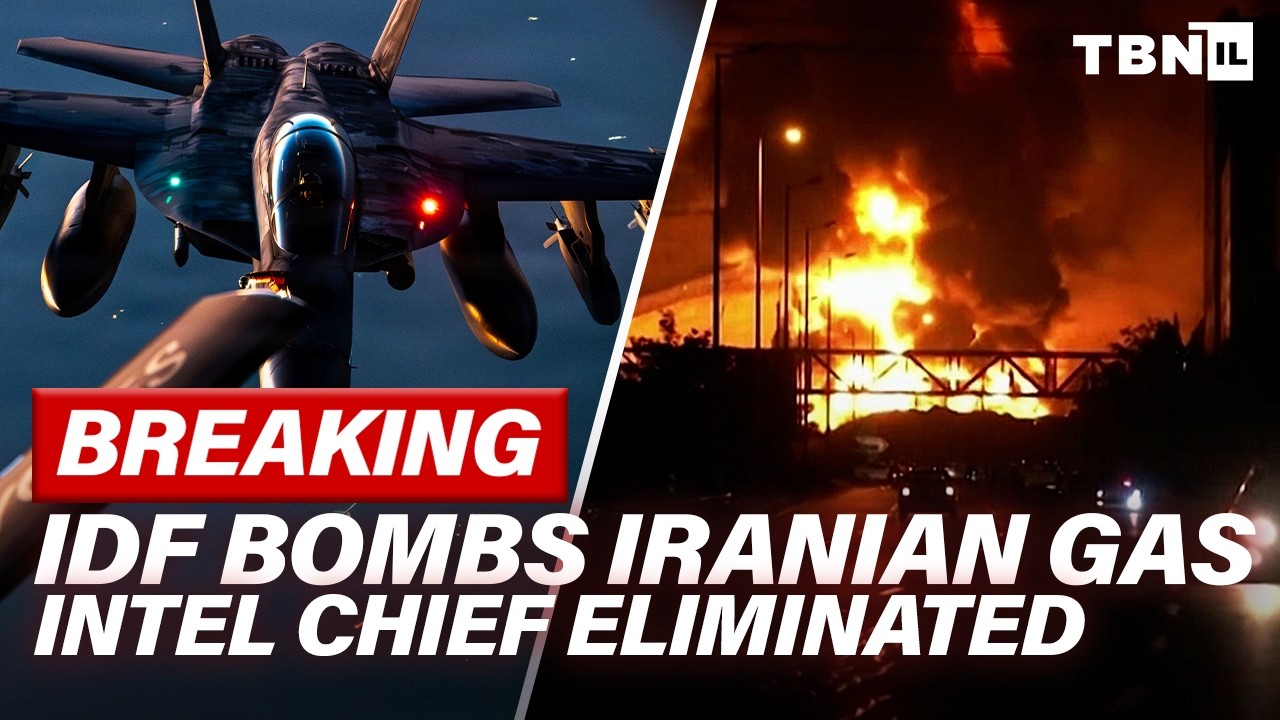
BREAKING: Israel BOMBS Major Iran Gas Site; Top Mullah ELIMINATED; Iran Vows VENGEACE | TBN Israel
"Israel and the United States have escalated their 'Roaring Lion War' against Iran, striking its largest gas facilities, eliminating key intelligence and military figures, and disrupting missile production, while Iran threatens a broader energy war in the Gulf."

BREAKING: Iran Threatens To END Talks; U.S. Vows Retaliation; Hezbollah Collapsing? | TBN Israel
"Iran is leveraging Hezbollah and the Strait of Hormuz to manipulate US negotiations, while Israel asserts its right to dismantle Hezbollah's eroding but still dangerous infrastructure in Lebanon, independent of international talks."