
IHIP News: Trump's WORST NIGHTMARE! New Dems TAKE HIM OUT After HORRIFIC Voting Rights Act!
YouTube · 7EWD-JE2Xqg
Quick Read
Summary
Takeaways
- ❖Voters are tired of politicians beholden to corporations and lobbyists, preferring public servants.
- ❖Progressives aim for structural change, unlike liberals who 'play around the edges'.
- ❖Public financing of campaigns and ranked-choice voting are critical for empowering grassroots candidates.
- ❖Anti-black racism is the most materially damaging form of bigotry, exacerbated by the dismantling of the Voting Rights Act.
- ❖Reparations are presented as a solution to repair society by addressing racial wealth inequality and historical injustices.
- ❖The origins of the tipped minimum wage are rooted in slavery and Jim Crow, demonstrating how racism harms all workers.
- ❖Billionaires are products of a rigged system, and their wealth often comes from exploitation, not patriotism.
- ❖Progressive legislators must challenge corporate Democrats and dismantle symbols of white supremacy.
Insights
1The Electorate Rejects Corporate-Beholden Politicians
The host and guest argue that American voters are increasingly rejecting politicians who accept corporate and lobbyist money, viewing them as 'prostitutes' to special interests rather than representatives of the people. Chris Rab's primary victory in Pennsylvania's 3rd congressional district, described as the 'bluest district in the country,' is cited as evidence of this shift, where grassroots organizing triumphed over establishment politics.
The host states, 'people in America want politicians who are not prostitutes,' and Chris Rab's victory is presented as a direct result of 'organizing always defeats organized money.'
2Structural Reforms are Key to Democratic Integrity
The guest emphasizes that fundamental changes to the electoral system, such as public financing of campaigns and ranked-choice voting, are essential to dismantle the influence of money in politics. Public financing, like New York's system where a dollar raised can be matched by $12, allows grassroots candidates to compete effectively, while ranked-choice voting ensures winners achieve a simple majority, enhancing voter agency.
Chris Rab details New York's public financing system (up to $12 back for every $1 up to $250) and ranked-choice voting, stating these 'helped him raise significant funds from a grassroots supported campaign.'
3Anti-Black Racism as the Foremost Crisis
The host and guest contend that anti-black racism is the most severe and materially damaging form of bigotry currently, surpassing other rising forms of prejudice. They highlight its weaponization through the courts, leading to the dismantling of the Voting Rights Act and the potential loss of crucial black representation in Congress. They argue that corporate media ignores this crisis due to benefiting from it.
The host declares, 'Antilack racism is in my opinion 911 house is on fire out of control because they are weaponizing it now through the courts.' Chris Rab adds that corporate media 'doesn't want to cover this because they benefit from it.'
4Reparations as a Societal Repair Mechanism
Chris Rab argues that reparations are not merely about compensating black individuals but about 'repairing society itself.' He explains that even with fully funded progressive programs, radical wealth inequality based on race would persist. Reparations, he states, would invest in areas historically neglected due to government complicity and attacks, addressing root causes of inequality for everyone.
Chris Rab states, 'Reparations is not about um repairing black people. It's about repairing society itself.' He explains it would address 'radical uh wealth inequality based on race.'
5The Intertwined Fates of All Americans Through Systemic Racism
The guest illustrates how systemic racism, particularly the historical roots of policies like the tipped minimum wage, continues to harm diverse groups, including white women. He explains that the $2.13 tipped minimum wage originated from slavery and Jim Crow, where white employers refused to pay black labor, forcing reliance on tips. This historical injustice now victimizes millions, showing that 'our fates are intertwined.'
Chris Rab details the $2.13 tipped minimum wage's origins in slavery and Jim Crow, stating, 'millions of white people who are earning a poverty wage, particularly white women, are being victimized because of white racism generations later.'
6Dismantling Symbols of White Supremacy
Both the host and guest express a strong desire to dismantle any monuments or symbols associated with Donald Trump or white supremacy, white Christian nationalism, and fascism. They view this as a necessary step to send a message about the nation's desired identity and to move towards a multi-racial democracy.
The host suggests 'tearing every single bit of it down' related to Trump's additions, and Chris Rab agrees, stating, 'These are these are memorials in one kind or another to white supremacy and white Christian nationalism and fascism. Um and they must be destroyed.'
7The Efficacy of Progressive Policies: Child Tax Credit Example
The guest cites the Biden administration's extension of the child tax credit during the pandemic as evidence that progressive policies can achieve significant positive outcomes. This policy, which provided money to families even if they didn't make enough to be taxed, reduced child poverty by nearly 50% in one year, demonstrating the capacity for meaningful change when political will aligns with people's needs.
Chris Rab notes, 'in the pandemic, in the American Rescue Plan, they extended the child tax credits... it decreased child poverty by almost 50% in one year's time.'
Bottom Line
The term 'politician' should be redefined to specifically refer to individuals who serve themselves and moneyed interests, while 'public servants' are those who genuinely serve the people and the public good.
This linguistic reframing aims to clarify the distinction between corrupt and ethical elected officials, providing a clearer framework for voters to identify and support candidates committed to public welfare over private gain.
Advocates can adopt this precise language to sharpen public discourse, making it easier to expose and challenge politicians perceived as corrupt, while elevating the status of genuine public servants.
The Congressional Black Caucus (CBC) members, often representing poorer districts, are structurally incentivized to accept lobbyist and PAC money due to the difficulty of raising funds from their constituents in a system that demands constant fundraising.
This highlights a systemic flaw where even representatives of marginalized communities are forced into a cycle of corporate dependence, undermining their ability to fully advocate for their constituents' interests and making them vulnerable to accusations of being 'sellouts.'
Understanding this structural pressure can shift the focus from individual blame to advocating for comprehensive campaign finance reform that specifically addresses the challenges faced by representatives from lower-income districts, ensuring they can be truly independent.
Key Concepts
Organizing Always Defeats Organized Money
The guest, Chris Rab, asserts that grassroots community organizing and collective action consistently overcome the influence and resources of well-funded, entrenched political and corporate interests, as demonstrated by his primary victory.
Philanthropy is Not Policy
The guest argues that while individual billionaires may engage in charitable giving, such philanthropy cannot replace comprehensive, systemic policy changes necessary to address deep-rooted societal issues like wealth inequality and exploitation. True change requires structural reform, not just private donations.
Lessons
- Support candidates who advocate for public financing of campaigns and ranked-choice voting to diminish corporate influence in politics.
- Engage with 'low-information voters' by asking about their personal concerns and finding common ground, rather than relying on political labels like 'liberal' or 'progressive'.
- Advocate for policies that address anti-black racism as a primary societal crisis, understanding its material impact on all communities, including the historical context of economic policies like the tipped minimum wage.
Notable Moments
The host and guest discuss the concept of 'prostitute politicians' who take money from corporations and lobbyists, contrasting them with 'public servants' who serve the people.
This establishes a core theme of the episode: the corrupting influence of money in politics and the need for a fundamental shift in political representation.
Chris Rab explains how New York's public financing system and ranked-choice voting enabled a grassroots candidate like Mandani to succeed.
This provides concrete examples of structural reforms that can counter corporate money and empower progressive candidates, offering a practical path forward.
The host describes anti-black racism as a '911 house is on fire' crisis, emphasizing its material damage and weaponization through the courts.
This moment underscores the urgency and severity of anti-black racism as the most pressing form of bigotry, challenging listeners to prioritize this issue.
Chris Rab passionately agrees with the host's call to dismantle any structures or symbols associated with Trump, white supremacy, and fascism.
This highlights a commitment to not just policy change but also symbolic and cultural transformation to reject oppressive ideologies and build a truly multi-racial democracy.
Quotes
"Liberals want to play around the edges. Progressives believe in structural change."
"If you take care of black women, you take care of everybody."
"Reparations is not about um repairing black people. It's about repairing society itself."
"Our fates are intertwined. But we have to we have to lift these stories up and show that we indeed have more in common than what divides us."
Q&A
Recent Questions
Related Episodes

Iran Deal Skepticism. Whoopi Vs Vance. Potomac Park Invasion. Racist Hurls Slurs At Black Boy.
"This episode dissects multiple instances of alleged anti-Black policies and racial injustice, from the Trump administration's legal challenges to reparations and the Iran deal, to police brutality and the erasure of Black history."
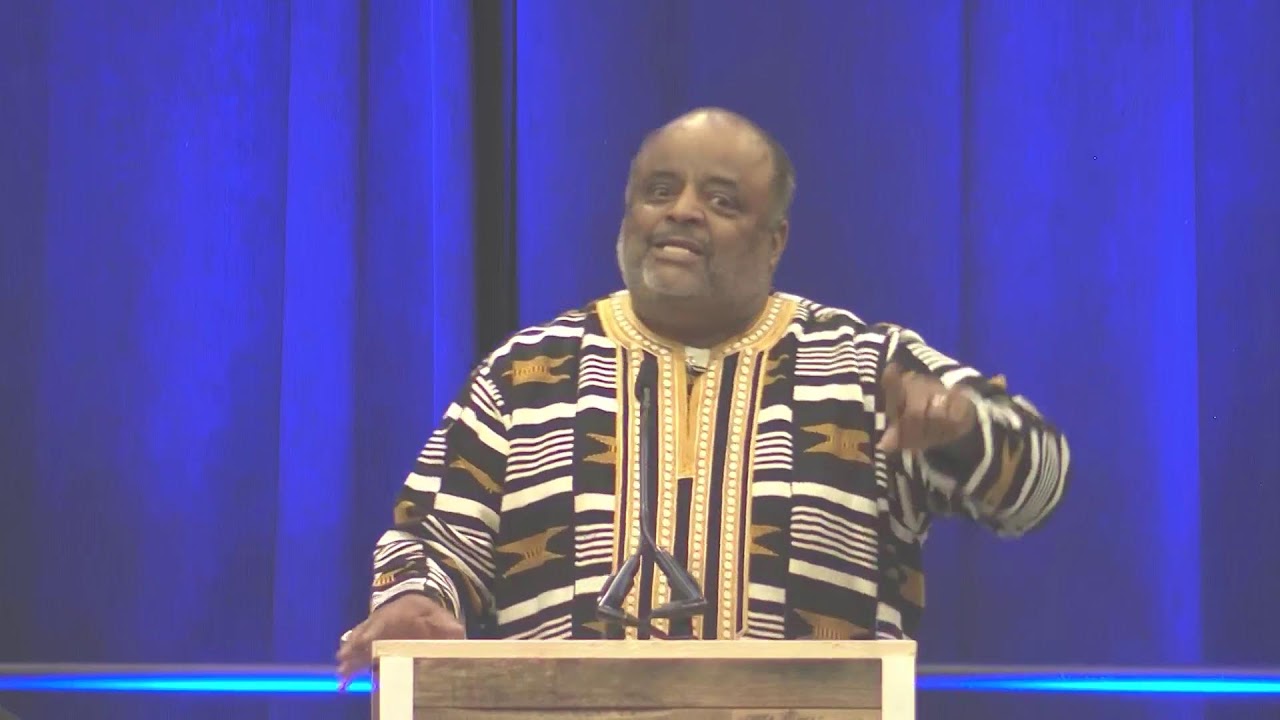
Roland speaks at Columbus Educ. Assoc. MLK Dinner
"Roland Martin challenges the audience at an MLK dinner to move beyond passive celebration and engage in active, sustained political and economic struggle, emphasizing that 'rest time is over' for those seeking real societal change."

Contested Primary Elections. Facebook Marketplace Shooting. Hey Black Girl Affirmations#TheBreakdown
"This episode explores a Georgia lawsuit challenging a new election law, highlights a community-driven real estate project building Black wealth, and features initiatives empowering Black women and girls."

Trump Just ENDED JD Vance’s White House Dreams
"A New York Times article and internal White House dynamics reveal Donald Trump's deep dissatisfaction with J.D. Vance, potentially ending Vance's 2028 presidential ambitions and highlighting a broader struggle for control within the Republican Party."