
🚨 WTF are the JEWS DOING IN NY?? 😭😭
YouTube · 7IKCvb5kAx4
Quick Read
Summary
Takeaways
- ❖Tyler Olive's documentary on Kiryas Joel is defended as legitimate journalism, not anti-Semitic, despite its controversial findings.
- ❖The host refutes misleading statistics about Kiryas Joel, clarifying that a 13,000 per capita income is skewed by a median age of 15, and all residents speak English.
- ❖Kiryas Joel's low crime rate, despite its poverty, is highlighted as evidence against the narrative that poverty inherently leads to violence.
- ❖The community's extensive use of welfare programs (SNAP, Medicaid, housing assistance) is attributed to systemic design, not fraud, due to large family sizes.
- ❖Men in Kiryas Joel often study Torah full-time, especially in the first two years of marriage, while their wives work to support the family.
- ❖The community funds its own private schools, volunteer emergency services (EMS, fire, AAA), and provides internal charity and discounted groceries.
- ❖Satmar Hasidic Jews in Kiryas Joel are strongly anti-Zionist, believing a Jewish state should only form after the Messiah's arrival and opposing Israel's secular nature.
- ❖The host advocates for the right of any group to form homogeneous communities, drawing parallels between Kiryas Joel and a hypothetical 'white Christian community'.
- ❖Residents primarily use flip phones to avoid internet access and 'porn', reflecting a strong cultural emphasis on traditional values and isolation from secular influences.
Insights
1Defense of Investigative Journalism on Controversial Communities
The host strongly defends YouTuber Tyler Olive's documentary on Kiryas Joel, arguing that investigating the community's welfare reliance and social structure is legitimate journalism, not anti-Semitic. He criticizes those who smear Olive for asking valid questions.
Tyler Olivera did what no mainstream investigative journalist or content creator would do for years of fears of being smeared as an anti-semite. That's true, by the way. And I think that anyone just smearing this guy as an anti-semite for investigating this community is honestly a terrible, terrible move and a lie. He's allowed to ask questions.
2Correction of Misleading Poverty Statistics
The host corrects the documentary's initial portrayal of Kiryas Joel's per capita income ($13,000/year) as 'extremely low,' by pointing out that the median age is 15 years old. Adjusting for the 60% child population, the adult per capita income is closer to $35,000, which, while not high, is significantly less dire.
per capita income is 13,000 per year. Wow, that really is extremely low. Except the median age is 15 years old. So like when when you actually look at the stats, it's like true, but 60% of the community is children. So per capita 13,000 is not high, but 60% is children. So that comes out to per capita for adults. It comes clo way closer to 35,000.
3Homogeneous Communities and the 'Ethnostate' Argument
The host agrees with Tyler Olive's implicit argument that if Hasidic Jews can live in a self-segregated, religiously homogeneous community like Kiryas Joel (which he terms a 'Jewish ethnostate'), then white people should also be allowed to form 'white Christian communities' without societal condemnation. He criticizes multiculturalism as 'slop'.
If these acidic Jews can live exclusively in their own Jewish ethnostate... Then why can't white people do it in Arkansas? And this is what I have to say that he is completely and utterly correct. If white people want to build a white Christian community and white Christians decide to move there and they don't want other people that aren't white Christians in that community, I see zero issue with it whatsoever.
4Low Crime Rate Challenges Poverty-Violence Narrative
The host highlights Kiryas Joel's status as one of the safest, least violent areas in the country, despite its reported poverty. He uses this to argue against the 'leftoid narrative' that poverty is the primary cause of violence in 'ghetto communities,' suggesting culture plays a more significant role.
This completely debunks the entire lefttoid narrative that um, oh, the reason why certain ghetto communities are violent is because they're poor. Well, that is a lie because this community is relatively poor and there is no violence. It is considered basically the safest, least violent area in the country.
5Community-Funded Self-Sufficiency and Volunteerism
Kiryas Joel demonstrates extensive community-funded self-sufficiency, including private schools (not a taxpayer drain), volunteer fire and EMS services (90-second response time), and a 'kosher AAA' for roadside assistance. This communal support system is praised as a model for other communities.
They also send their kids to private schools instead of being a drain on the taxpayer... This is all private schools and it's individual families that are either paying... So, there is a there is a volunteer emergency service group um called Hatala... We have a 90 second response. ...Jewish sponsored trucks that just work as like a completely uh completely autonomous volunteer AAA service.
6Anti-Zionist Stance of Satmar Hasidim
The Satmar Hasidic community in Kiryas Joel is described as 'wildly anti-Zionist.' Their opposition to the State of Israel is twofold: they believe a Jewish state should only be established after the Messiah's arrival, and they object to Israel's secular nature, which they see as violating Torah values.
These guys are w wildly anti- Zionist Jews... The first part uh major issue among the hidic community with the uh state of Israel is because they believe that only after the messiah shows up... And two, it's because Israel is secular ultimately. you know, there's abortions, there's um all this sort of [ __ ] that uh goes completely against, I guess, Torah values or biblical values.
7Economic Structure: Men Study Torah, Women Work
A common practice in Kiryas Joel is for men to study Torah full-time, especially for the first two years after marriage, while their wives work to support the family. This division of labor is seen as enabling spiritual focus for men and large families.
My wife. My wife. See, the ultimate feminist. No one saw it coming... there is this culture in hidic communities where um basically the men get married at like the age of 181 19... And then um they study Torah for like the next two years full-time... and then after that they go to work.
Bottom Line
The community's strict control over information access (e.g., flip phones to avoid internet/porn) is a key factor in maintaining its cultural and religious homogeneity, preventing exposure to secular influences that could challenge traditional values.
This highlights a deliberate strategy for cultural preservation that contrasts sharply with modern, interconnected societies. It suggests that limiting external information flow is a powerful, albeit controversial, tool for maintaining social cohesion and traditional norms within a community.
For communities seeking to preserve specific cultural or religious values, this model suggests that controlling access to external media and information can be more effective than relying solely on education or social pressure. This could inform strategies for niche social platforms or 'walled garden' digital environments for specific groups.
The host's comparison of Kiryas Joel to Dearborn, Michigan (a Muslim-majority community) frames the debate on homogeneous communities by selectively highlighting perceived positive outcomes (low crime, self-sufficiency) in Kiryas Joel and negative outcomes (violence, expulsion of Christians) in Dearborn, despite both being ethnically/religiously concentrated.
This reveals a bias in how 'homogeneous communities' are evaluated based on the specific group in question. It underscores how discussions about self-segregation and cultural preservation are often not ideologically neutral but are deeply intertwined with existing social and political biases towards different ethnic or religious groups.
Analysts should be aware of this selective framing when evaluating arguments for or against homogeneous communities, recognizing that the perceived 'success' or 'failure' of such communities is often judged through a lens of pre-existing cultural and political preferences rather than objective criteria.
Key Concepts
Homogeneous Community Model
This model suggests that communities with shared cultural, religious, and ethnic values can achieve high levels of social cohesion, mutual support, and low crime rates, potentially at the cost of integration with broader society. The host argues this model's success in Kiryas Joel should be applicable to other groups.
Welfare System Exploitation (Legal)
This model describes how individuals or communities can legally maximize benefits from existing welfare programs (e.g., SNAP, Medicaid, housing assistance) by structuring their lives (e.g., having many children, lower reported income) to meet eligibility criteria, even if it leads to significant reliance on taxpayer funds. The host frames this as a flaw in the system, not fraud by the recipients.
Lessons
- Re-evaluate assumptions about the relationship between poverty and crime by considering communities like Kiryas Joel, which maintain low crime rates despite economic challenges.
- Examine existing welfare systems for unintended incentives that may encourage large families or long-term reliance, as highlighted by the Kiryas Joel case.
- Consider the potential benefits and drawbacks of fostering homogeneous communities, including their capacity for self-sufficiency and strong internal support, while also acknowledging potential issues with integration and external perception.
Notable Moments
Tyler Olive's repeated attempts to interview men in Kiryas Joel about their work and family size are met with evasiveness or the same answer: 'My wife works, I study Torah.'
This interaction highlights a cultural norm within the community where men prioritize religious study, and direct questions about financial support are met with reluctance, underscoring the community's insular nature and potential sensitivity around welfare use.
A Kiryas Joel resident asks Tyler Olive, 'Do you work for Hamas?' after being questioned about his job.
This moment, which the host finds humorous and meme-worthy, illustrates the community's perceived isolation from mainstream media and its immediate suspicion of outsiders, especially given recent geopolitical events and heightened anti-Semitism concerns.
The host points out a 'flip phone vending machine' in Kiryas Joel, explaining that residents use these phones to avoid internet access and 'porn'.
This detail vividly demonstrates the community's deliberate efforts to control external influences and maintain traditional values by limiting access to modern technology, emphasizing cultural preservation over technological integration.
Tyler Olive's video sponsor pulls out after learning the documentary's topic was Kiryas Joel.
This incident underscores the controversial and sensitive nature of investigating Jewish communities, highlighting the fear of being labeled anti-Semitic and the real-world consequences for content creators tackling such subjects.
Quotes
"Tyler Olivera did what no mainstream investigative journalist or content creator would do for years of fears of being smeared as an anti-semite. That's true, by the way."
"It's easy to crap on Somali's gaming the American welfare system, but are you brave enough to call out the Jews doing the same? Except the Jews aren't doing the same. The Somali are literally committing fraud."
"If white people want to build a white Christian community and white Christians decide to move there and they don't want other people that aren't white Christians in that community, I see zero issue with it whatsoever."
"This completely debunks the entire lefttoid narrative that um, oh, the reason why certain ghetto communities are violent is because they're poor. Well, that is a lie because this community is relatively poor and there is no violence."
"The State of Israel is a secular state. They are not the Jewish people. They are not us and we are not them. They are not Jewish at all."
"The only difference is over here the money is being spent for us and our mouth to eat. And in Bronx, it's being spent for the NYPD to find fight."
"You thought the the rich Jews control everyone. You fool. It was the poor Jews controlling the rich Jews controlling everyone all along. Those absolute buffoons."
Q&A
Recent Questions
Related Episodes
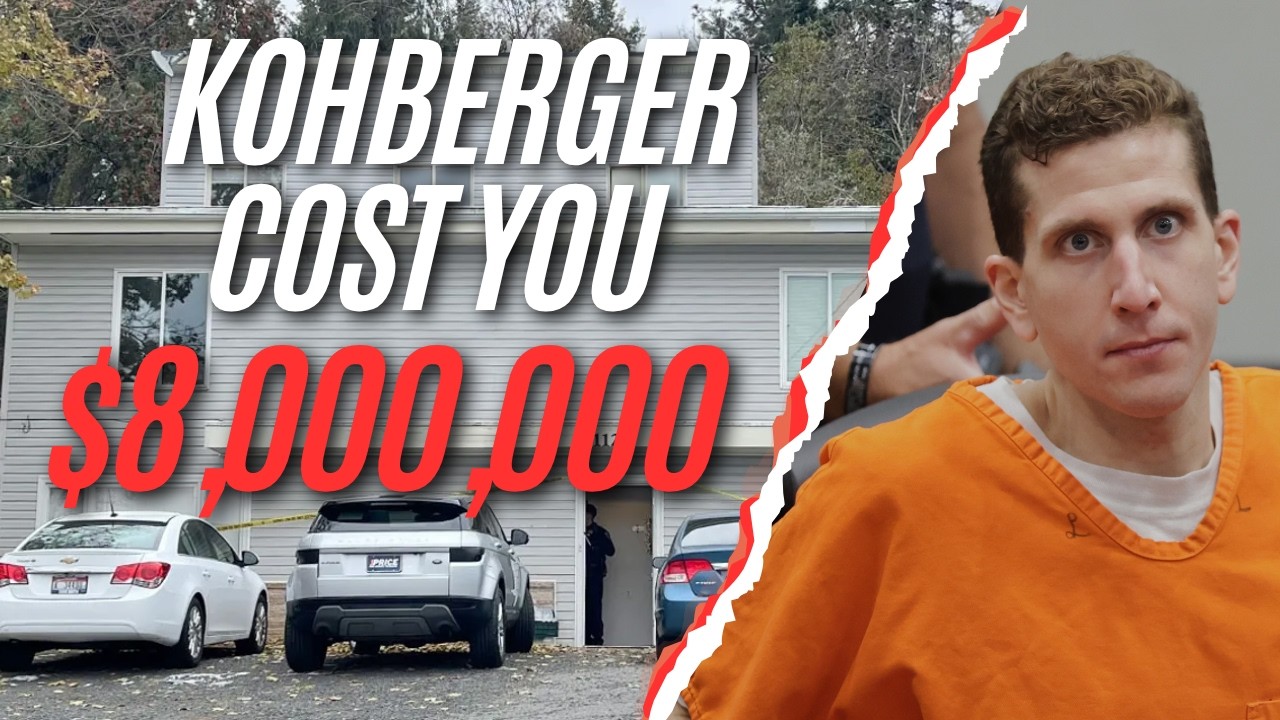
Bryan Kohberger cost taxpayers $8,000,000 as secret battle to hide documents continues
"The Bryan Kohberger murder case has cost Idaho taxpayers over $8 million, primarily for his defense, despite no trial, sparking an ongoing legal battle for transparency over how the public funds were spent."

Outrage Over Sick & Twisted Reactions to Karmelo Anthony Verdict by His Supporters
"Dave Rubin dissects the racialized reactions to a murder verdict, the Democratic Party's embrace of a controversial candidate, and California's election integrity issues, all while the US engages in military action against Iran."

Asmongold definitely isn’t gay - H3 After Dark #64
"The H3 crew dives into a chaotic mix of cringe TikToks, personal high school lesbian drama, AI masturbation consultants, and a viral cop interaction, all while dissecting online misogyny and Madonna's unexpected Kick stream."
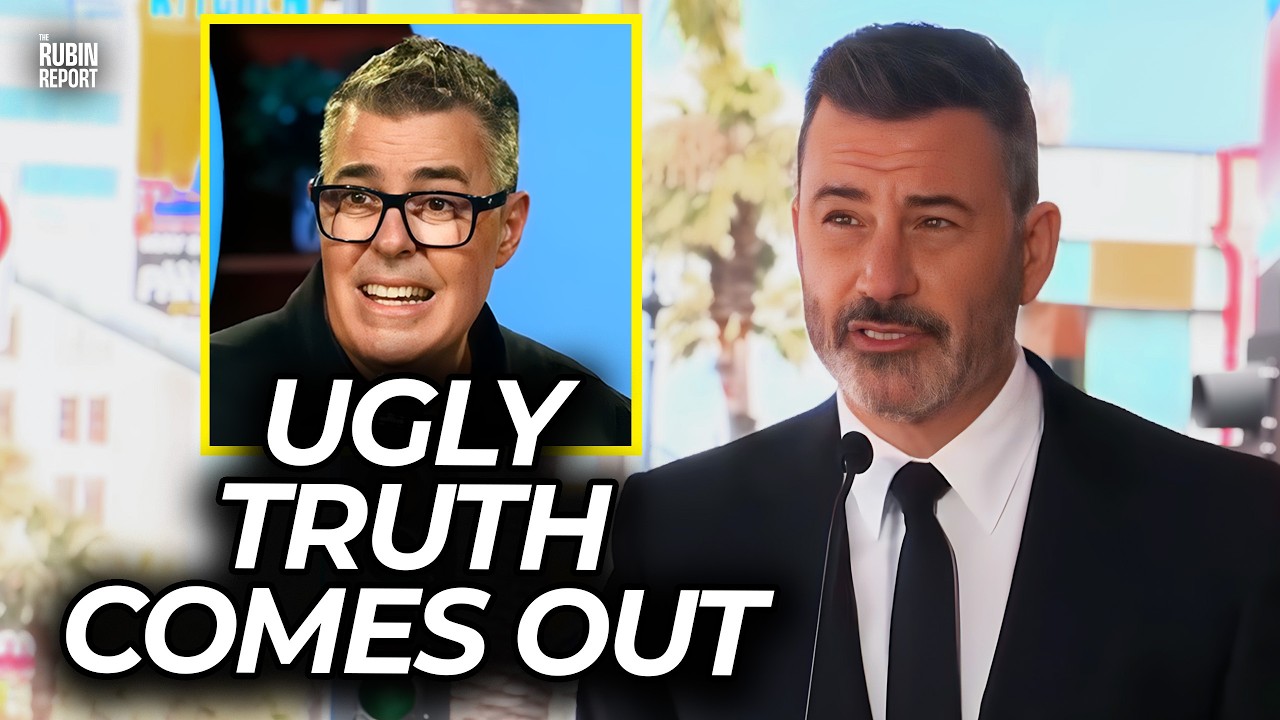
Jimmy Kimmel Gets Emotional Admitting Political Differences w/ Adam Carolla
"Dave Rubin, Dr. Drew, and Sage Steele discuss how personal relationships can transcend political divides, critique LA's failed homelessness policies, and debunk media-fueled public health scares, all while sharing personal stories of overcoming financial struggles."