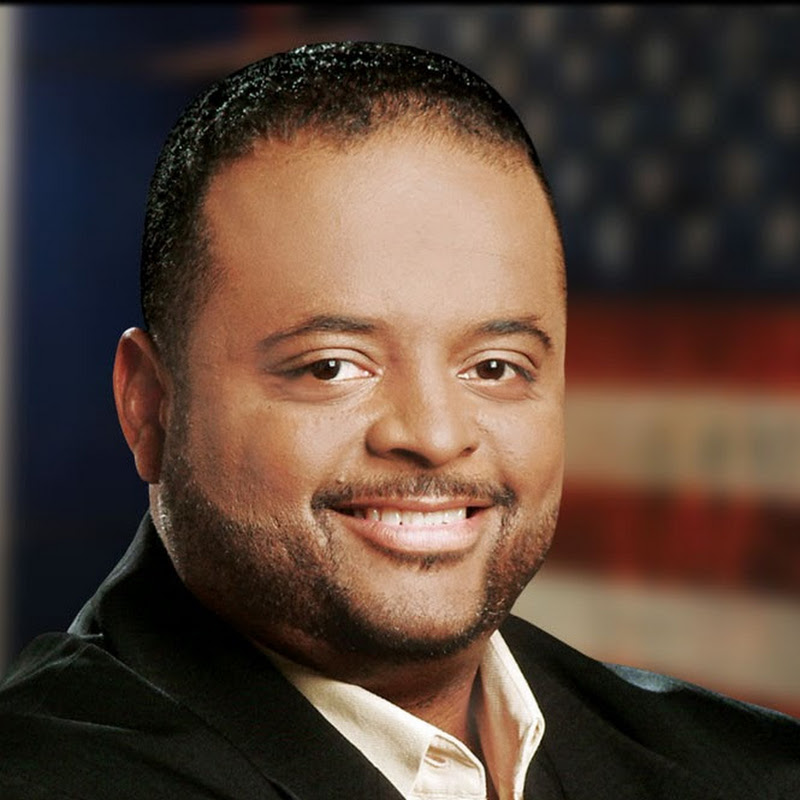
Justin Fairfax Murder-Suicide. Black Men’s Mental Health Crisis Examined
YouTube · 7Py4L3wV0vA
Quick Read
Summary
Takeaways
- ❖Former Virginia Lieutenant Governor Justin Fairfax shot and killed his wife, Serena, before taking his own life, a tragedy linked to ongoing divorce proceedings, loss of custody, and severe depression.
- ❖The incident highlights the critical, often untreated, mental health crisis among Black men, characterized by rising rates of depression and suicide.
- ❖Societal pressures, the 'fallen high-status Black man' phenomenon, and the presumption of incompetence contribute to mental health struggles.
- ❖Cultural stigma and a lack of trust in the mental health system prevent many Black men from seeking necessary help.
- ❖Vulnerability is reframed as a strength, crucial for men to express pain and prevent destructive implosions.
- ❖Community-centric approaches, including churches, barbershops, and fraternities, are proposed as effective mental health delivery systems for Black men.
- ❖The discussion emphasizes male responsibility for seeking help and the community's role as 'first responders' to signs of distress.
Insights
1The 'Fallen High-Status Black Man' Phenomenon
Dr. Aldwin Tart introduces the concept of the 'fallen high-status Black man' to describe individuals like Justin Fairfax, who experience a public loss of status (political career, reputation) compounded by personal crises (divorce, custody battles, alcoholism, depression). This combination creates immense pressure, making it difficult for them to cope and seek help due to perceived weakness and public scrutiny.
Dr. Tart outlines Fairfax's specific risk factors: public figure status, pending divorce, loss of children, alcoholism, gun ownership, political demise, sexual abuse allegations, political defeat, and IRS issues, calling it a 'narcissistic injury cascade.'
2Stigma and Reluctance to Seek Mental Health Support Among Black Men
A significant barrier to mental wellness for Black men is the cultural expectation to 'cowboy up' or 'struggle through it,' viewing vulnerability as a weakness. This, combined with a lack of trust in a mental health system where only 4% of psychologists are Black men, leads to suppression of emotions rather than expression.
Dr. Tart notes that men often believe seeking help makes them 'weak' or 'disqualifies' them. He contrasts this with Black women, who utilize therapy at two to three times the rate of Black men and have lower suicide rates. Roland Martin also recounts CNN producers' reluctance to feature men discussing domestic violence.
3The Role of Community as 'First Responders' and Healing Spaces
The panel advocates for a radical shift towards community-oriented mental health support, where informal networks like fraternities, churches, and barbershops become primary sites for men to open up. This approach normalizes discussions about pain and provides immediate, accessible support, leveraging existing social structures.
Dr. Kevin Washington highlights the 'doing together' aspect of male relationships (fixing cars, playing sports) as opportunities for 'being' moments where deeper conversations can occur. Dr. Tart suggests using 'motivational interviewing' (e.g., 'On a scale of 1 to 10, how happy are you?') to encourage honesty and proposes churches as the number one mental health delivery system for Black men, along with barbershops and gyms.
4Interconnectedness of Mental Health and Domestic Violence
The episode asserts that domestic violence is often a symptom of unaddressed mental health issues in men. Ignoring the psychological roots of anger, ego, narcissism, or trauma in men means only treating the symptom (violence) rather than the cause, perpetuating a cycle of harm.
Roland Martin challenges the idea of discussing domestic violence 'only from a female perspective,' arguing that if men are committing it, the conversation must involve understanding and confronting male mental health. Dr. Tart states, 'If you do not address the mental health issue, then it's going to lead to domestic violence.'
Lessons
- Act as a 'first responder' for male friends and family: Don't accept superficial 'I'm good' responses. Ask deeper questions like, 'On a scale of 1 to 10, how happy are you?' to encourage genuine sharing.
- Utilize and build community-based support networks: Engage in men's ministries, barbershop discussions, or fraternity circles to create safe spaces for vulnerability and mutual support, making mental health conversations a new norm.
- Prioritize self-care and professional help: Recognize that vulnerability is a strength. If experiencing depression, sleeplessness, or overwhelming stress, seek professional psychological help (e.g., call 988 or consult a therapist) to prevent escalation into destructive behaviors.
- Challenge cultural norms: Actively work to dismantle the stigma around mental health in male communities, promoting the idea that seeking help is a sign of strength and responsibility, not weakness.
Quotes
"Serena didn't deserve her ending. Serena did not deserve what Justin did to her."
"I'm angry at Justin. I'm in shock. I'm appalled. I don't know what to say. I keep asking, 'What more could I have done? How did I not see this coming?'"
"If I cannot express this out in the world to someone as how I'm frustrated, it often may implode within our homes."
"The stronger the if we're talking about mental wellness or mental fitness is actually to be vulnerable about what's going on."
"The manlier thing to do is to be vulnerable and say, 'I'm not going to let what's going on in my life... bleed out on my family.'"
"Men are literally yelling and screaming, 'I need help.' But you can't hear it because they don't yell and scream the same way women do."
"A person is a person because they're other people. And if you don't understand what that just meant, understand the impact of one person engaged in the process of of suicide, homicide, and how that impacts many persons."
Q&A
Recent Questions
Related Episodes

Amanda Knox and John Ramsey - Megyn Kelly's "Double Feature" of Fascinating Interviews
"This episode features two individuals, Amanda Knox and John Ramsey, whose lives were irrevocably altered by tragic crimes and subsequent wrongful accusations, revealing systemic failures in justice and media manipulation."

Sadhguru - Stop Letting Your Mind DESTROY You | SRS #315
"Sadhguru challenges conventional wisdom on 'being in the moment' and stress, arguing that mastering the mind requires understanding its sophisticated design and consciously directing one's internal chemistry for profound well-being."

Every Time You Think This Story Can't Get Weirder—IT DOES | The Trio
"A bizarre tale unfolds in MAGA D.C. as a Students for Trump founder and his associate are arrested, revealing a two-week-long Secret Service impersonation scheme involving fake badges, club entry, and claims of ordering airstrikes."

Contested Primary Elections. Facebook Marketplace Shooting. Hey Black Girl Affirmations#TheBreakdown
"This episode explores a Georgia lawsuit challenging a new election law, highlights a community-driven real estate project building Black wealth, and features initiatives empowering Black women and girls."