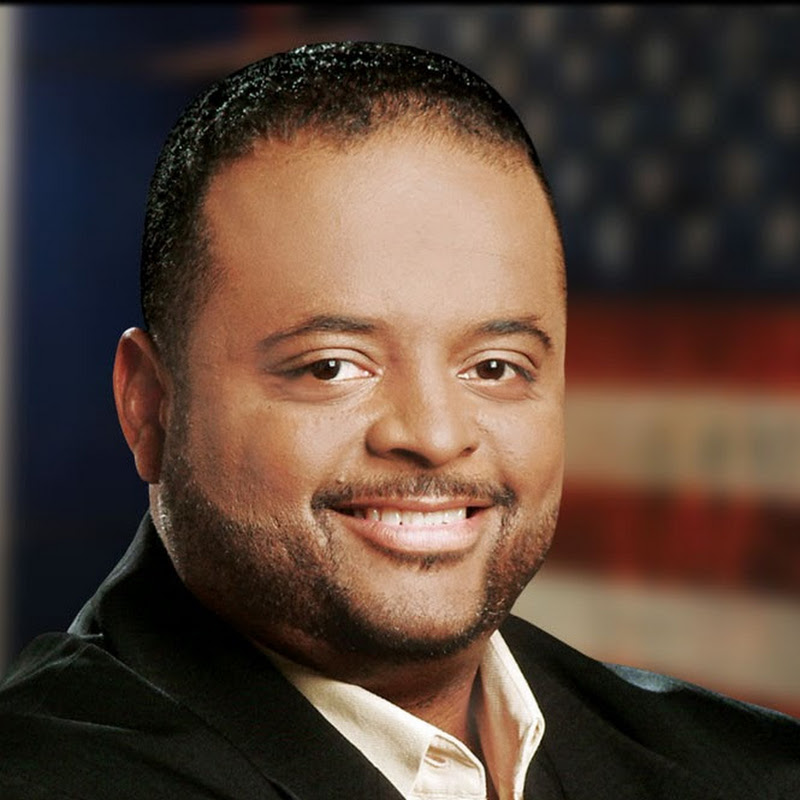
Roland Checks Nick Cannon And Chilli. Black MAGA Claims Collapse
YouTube · 7aAyD2oX8u4
Quick Read
Summary
Takeaways
- ❖Chilli's defense for accidentally reposting anti-Michelle Obama content and donating to Republicans is questioned due to social media interface design and donation records.
- ❖Anton Daniels' claims about Trump's permanent HBCU funding and successful Opportunity Zones are factually incorrect; HBCU funding was a pre-existing program, and Opportunity Zones largely benefited developers, not low-income communities.
- ❖Nick Cannon and Amber Rose's simplified historical claims about Democrats creating the KKK and Republicans freeing slaves ignore critical context, such as the role of Southern Democrats, the Lily White movement, and the complex motivations behind historical events.
- ❖American history reveals 'whiteness' as the consistent driver of racial policy, with both Democrats and Republicans having anti-Black factions and policies throughout history.
- ❖The host emphasizes the importance of understanding specific policies and individual candidate stances in contemporary politics, rather than relying on broad party labels or celebrity opinions.
- ❖Trump's administration took actions detrimental to Black communities, including canceling a settlement for Black residents in Lowndes County, Alabama, pulling out of a Cancer Alley lawsuit, and pardoning police officers convicted of violence against Black individuals.
Insights
1Chilli's Disputed MAGA Alignment
Chilli from TLC faced scrutiny for allegedly reposting an anti-Michelle Obama meme and making donations to Donald Trump and Republicans. She claimed the repost was accidental due to being 'not computer savvy' and that donations were intended for veterans' groups, not political campaigns. Roland Martin refutes the 'accidental repost' claim by demonstrating the distinct placement of Instagram buttons and questions the lack of awareness regarding political donations made under her legal name.
Chilli's video explanation (), Roland Martin's demonstration of Instagram buttons (), and reference to 14-17 contributions in her name matching her legal name in Stone Mountain, Georgia ().
2Debunking Trump's 'Benefits' for Black Communities
Conservative commentator Anton Daniels claimed Trump made HBCU funding permanent and that Opportunity Zones benefited Black people. Roland Martin clarifies that permanent HBCU funding was part of a $250 million program (only $85 million for HBCUs, the rest for Hispanic institutions) that existed under Bush and Obama, and was sponsored by Congresswoman Alma Adams, not initiated by Trump. He also states that Opportunity Zones primarily benefited developers, with no evidence presented by the Trump White House or proponents like Senator Tim Scott showing significant benefit for Black or low-income communities.
Anton Daniels' claims (), Roland Martin's factual correction on HBCU funding () and Opportunity Zones (), citing a Black preacher who initially supported them but later stated they weren't working (). Biden-Harris administration provided $17 billion to HBCUs ().
3Correcting Historical Narratives on Parties and Race
Nick Cannon and Amber Rose asserted that Democrats created the KKK and Republicans freed slaves, and that Democrats don't care about Black people while Republicans do. Roland Martin provides extensive historical context: Southern Democrats created the KKK, but Southern Republicans also formed the 'Lily White movement' to oppose Black advancement. The Emancipation Proclamation only freed slaves in rebellious territories, and the 13th, 14th, and 15th Amendments were driven by 'Radical Republicans' alongside Northern Democrats. The 'switch' of parties on civil rights occurred later, with figures like LBJ pushing civil rights legislation and Southern Democrats flipping to the Republican party.
Nick Cannon and Amber Rose's claims (), Roland Martin's historical breakdown of party origins (), the Emancipation Proclamation (), Radical Republicans (), Southern Democrats and the KKK (), the Redeemers (), the Lily White movement (), and the 'switch' in the 1960s ().
4Trump Administration Actions Detrimental to Black Communities
Roland Martin challenges Black Trump supporters to acknowledge specific actions taken by the Trump administration that negatively impacted Black communities. These include getting rid of a settlement for Black residents in Lowndes County, Alabama, who suffered from sewage issues; pulling out of a lawsuit concerning Black people in Louisiana's 'Cancer Alley'; withdrawing from a lawsuit in Dallas where an HOA discriminated against low-income Black people; reducing a felony conviction to a misdemeanor for a white deputy who beat a Black woman; and pardoning two cops convicted in the death of a Black man in Washington D.C., and refusing to move forward with indictments in the death of Breonna Taylor.
Roland Martin's direct questions about Trump's actions () regarding Lowndes County (), Cancer Alley (), Dallas housing discrimination (), the LA deputy (), DC cops (), and Breonna Taylor ().
Bottom Line
The pattern of 'simple Simon Negroes' emerging during election seasons to discourage voting or promote specific, often historically inaccurate, political narratives is a recurring tactic to suppress Black political engagement.
This suggests a deliberate effort to sow confusion and apathy within the Black electorate, making it harder to organize and push for a collective agenda.
Recognizing this pattern allows for proactive education campaigns and robust fact-checking to inoculate the community against such narratives, fostering more informed and strategic political participation.
Many Black celebrities and influencers lack the historical and policy depth to provide credible political commentary, often relying on 'his story' (personal or simplified narratives) rather than comprehensive 'history.'
Blindly following celebrity political endorsements can lead to misinformed decisions and support for policies that do not align with the community's best interests.
The Black community should shift its reliance from celebrity opinions to well-researched analysis and policy-focused discussions, demanding accountability and factual basis from public figures who engage in political discourse.
Key Concepts
The 'Whiteness' Framework
This model posits that the fundamental driving force behind American racial history and policy is 'whiteness' and its preservation, rather than the shifting platforms or ideologies of specific political parties. Both Democrats and Republicans have historically contained factions that advanced or opposed Black interests based on this underlying racial dynamic.
Contextual History vs. 'His Story'
This model distinguishes between superficial or self-serving 'his story' (often promoted by those with limited knowledge) and nuanced, deeply researched 'history.' It emphasizes that understanding historical events, quotes, and party actions requires comprehensive context, including the motivations of various factions within parties, economic interests, and social pressures, rather than isolated facts or soundbites.
Lessons
- Prioritize in-depth historical reading from credible sources (e.g., Gerald Horne, Eric Foner, W.E.B. Du Bois, Robert Caro) to understand the complex history of race and politics in America, rather than relying on short social media clips or celebrity soundbites.
- Critically evaluate political claims from celebrities and influencers by demanding specific policy details and historical context, challenging misinformation directly.
- Engage with the political process by challenging both Democratic and Republican candidates on their specific stances and policies that impact the Black community, rather than adhering to rigid party loyalty or disengagement.
- Support platforms and individuals who provide fact-based, nuanced analysis and education on political and historical issues relevant to the Black community.
Quotes
"It's called whiteness. Whiteness is what has driven this entire thing. Because when you understand Ronald Reagan... it's not about Republicans are great, Democrats are awful, Democrats are amazing, Republicans are pathetic."
"The real issue for black folks is not where did the Republicans stand in 1865. It's not where did the Democrats stand in 1964. The real question is where does the Republican party stand in 2026 and where does the Democratic party stand in 2026?"
"I have never identified as a Democrat. I ain't never identify as Republican. I don't even waste my breath identifying as an independent. I'm black and when I decide how I'm going to vote, I decide based upon a set of issues that are my issues and I'm willing to defend that vote or those issues at any time."
"This is one of the main issues I have with individuals like Nick Cannon and Amber Rose is specifically Nick Cannon as a man. You wait until you get in the presence of someone that thinks like you and have the same position as you to now come to the forefront and say, 'Oh, yeah, I with Trump.'"
"The problem we have today, we got folk who don't read, who don't study, and they choose to go to YouTube University and Tik Tok College and Instagram uh uh ent."
Q&A
Recent Questions
Related Episodes

Ken Paxton Dominates Cornyn Ahead of Race Against RADICAL Talarico, Plus SHOCK Prince Andrew Stories
"Megyn Kelly delivers a sharp analysis of Ken Paxton's decisive victory in the Texas Republican primary and his upcoming battle against a 'radical' Democratic opponent, alongside explosive new allegations of predatory behavior and corruption surrounding Prince Andrew and Sarah Ferguson."

A major shift is happening right now
"Donald Trump is losing his grip on the Republican party and movement, evidenced by internal dissent and a broader political landscape grappling with a collapse of accountability and truth."

HOT TOPICS | WARNING: Donald Trump's Iran War Chaos Has Hit the Point of No Return!
"Don Lemon delivers a scathing critique of Donald Trump's recent actions, framing them as desperate, unconstitutional attempts to consolidate power, undermine democracy, and distract from economic and foreign policy failures, all while questioning his mental stability."

Trump RUSHES Election Scheme as Midterms HAUNT HIM
"The hosts and guest expose the SAVE Act as a deceptive voter suppression tactic, drawing a stark contrast between the protection of gun rights and the erosion of voting rights."