
UAE Faces MASSIVE PRESSURE On Sudan Mercenaries
YouTube · 7w_fikDquT4
Quick Read
Summary
Takeaways
- ❖Sudanese army drone strikes killed over 60 people, including 26 civilians, in West and North Kordofan.
- ❖The UAE-backed RSF is blamed for shelling that killed three, with a hospital reportedly hit.
- ❖The US is proposing a UN-backed humanitarian truce and a 'Quad' roadmap involving the US, Egypt, UAE, and Saudi Arabia.
- ❖A US advisor acknowledged 'too much time has gone by' and promised 'serious talk and action' at the UN.
- ❖Channel 4's Lindsay Hilsum pressed officials on applying 'real leverage' on countries arming Sudanese factions, specifically the UAE.
- ❖The Sudanese Prime Minister characterized RSF fighters as 'mercenaries' paid by the UAE, demanding disarmament for any truce.
- ❖Hosts criticized international officials for deflecting blame and spreading culpability to avoid directly implicating the UAE as the 'key driver' of the conflict.
Insights
1UAE's Alleged Role as Key Conflict Driver
The hosts and some international observers assert that the UAE is the primary external driver of the Sudan conflict, allegedly funding and supplying the Rapid Support Forces (RSF) with mercenaries. This involvement is linked to the extraction of gold from Sudan, reportedly at $5,000 an ounce.
Channel 4's Lindsay Hilsum directly questioned US advisor Msad Bulos about pressuring Abu Dhabi to 'stop taking the gold which is coming out of Sudan at $5,000 an ounce.' The hosts explicitly state, 'everybody who's following this is like no it's the UAE that is the key driver of this conflict.'
2International Community's Perceived Evasion and Weak Pressure
Despite the severe humanitarian crisis in Sudan, international officials, particularly from the US and UK, are perceived as failing to apply meaningful pressure on the UAE. Their responses at the Munich Security Conference were characterized as evasive, deflecting, and lacking concrete commitments to hold the UAE accountable.
Hosts criticized UK Foreign Secretary Yvette Cooper for 'unimpressive answers,' 'filibustering forever' instead of addressing pressure on the UAE, and attempting to 'pour as many other culpable parties on top of it' to 'spread out the blame.' US advisor Msad Bulos, while acknowledging 'it's about time to act,' did not detail specific leverage against the UAE.
3Sudanese Government's Stance on RSF and Truce Conditions
The Sudanese Prime Minister, Camille Idris, firmly believes that the RSF consists primarily of foreign mercenaries paid by the UAE and that any ceasefire must be coupled with the disarmament, demobilization, and reintegration of these fighters into civilian life.
Idris stated that a ceasefire 'will never work unless it's paired with disarmament, demobilization, and reintegration,' emphasizing that RSF fighters 'must surrender their weapons, dismantle forces, and be reintegrated to civilian life.' He explicitly called the RSF 'mercenaries' paid by the UAE.
Bottom Line
The 'polite' atmosphere of high-level security conferences like Munich can mask a lack of genuine accountability for severe global conflicts.
This 'respectability politics' allows officials to avoid direct answers and concrete actions, prolonging conflicts and civilian suffering without facing immediate diplomatic repercussions.
Journalists and civil society organizations must continue to aggressively challenge evasive responses at such forums to expose the gap between diplomatic rhetoric and on-the-ground realities.
The global disinterest in the Sudan conflict is a significant factor in the lack of effective international intervention.
When major powers and global media outlets do not prioritize a conflict, the political will to apply meaningful pressure on involved parties, even those with clear culpability, diminishes significantly.
Advocacy groups should focus on increasing public awareness and media coverage of the Sudan crisis to generate greater international pressure and demand accountability from implicated nations.
Lessons
- Recognize that diplomatic statements at high-profile conferences may not reflect the full extent of international pressure or commitment to resolving conflicts.
- Critically evaluate official responses regarding complex geopolitical issues, especially when specific questions about accountability and leverage are met with broad or evasive answers.
- Understand that external economic interests, such as resource extraction (e.g., gold), can be significant drivers of prolonged conflict and external support for warring factions.
Notable Moments
Channel 4's Lindsay Hilsum directly challenging US advisor Msad Bulos and UK Foreign Secretary Yvette Cooper on the lack of 'real leverage' and pressure on the UAE regarding its support for the RSF.
This moment highlighted the direct confrontation between journalistic inquiry and diplomatic evasiveness, underscoring the perceived failure of international bodies to hold powerful states accountable.
Quotes
"It's about time to act. In fact, next week at the UN with the honorable secretary Cooper, we're going to have some some serious talk and action."
"What is the pressure you're putting on Abu Dhabi to stop taking the gold which is coming out of Sudan at $5,000 an ounce?"
"Everybody who's following this is like no it's the UAE that is the key driver of this conflict."
Q&A
Recent Questions
Related Episodes

Alex Krainer: US STRIKES Iran – Iran RETALIATES Against Kuwait, Bahrain & Jordan!
"Amidst escalating US-Iran conflict and Iranian retaliation against regional US allies, this episode argues that US foreign policy is deeply controlled by an 'Anglo-Zionist conspiracy' led by the Rothschild banking dynasty, prioritizing Israeli interests over American ones."

Iran Update: Israel’s Newest Bombing Campaign, the Oncoming War With China and How to Avoid It
"Colonel Wilerson reveals how the US and Israel are actively bombing China's strategic infrastructure in Iran, escalating a covert economic war that Beijing intends to win without direct military conflict by dismantling the dollar's global dominance."

Patrick Henningsen: Hezbollah JUST Fired Back at Israel - Iran Vows to “Crush” All Attacks
"Patrick Henningsen argues that the US and Israel initiated an illegal war against Iran, driven by Trump's incompetence and Israeli influence, leading to an inevitable escalation with severe global economic repercussions."
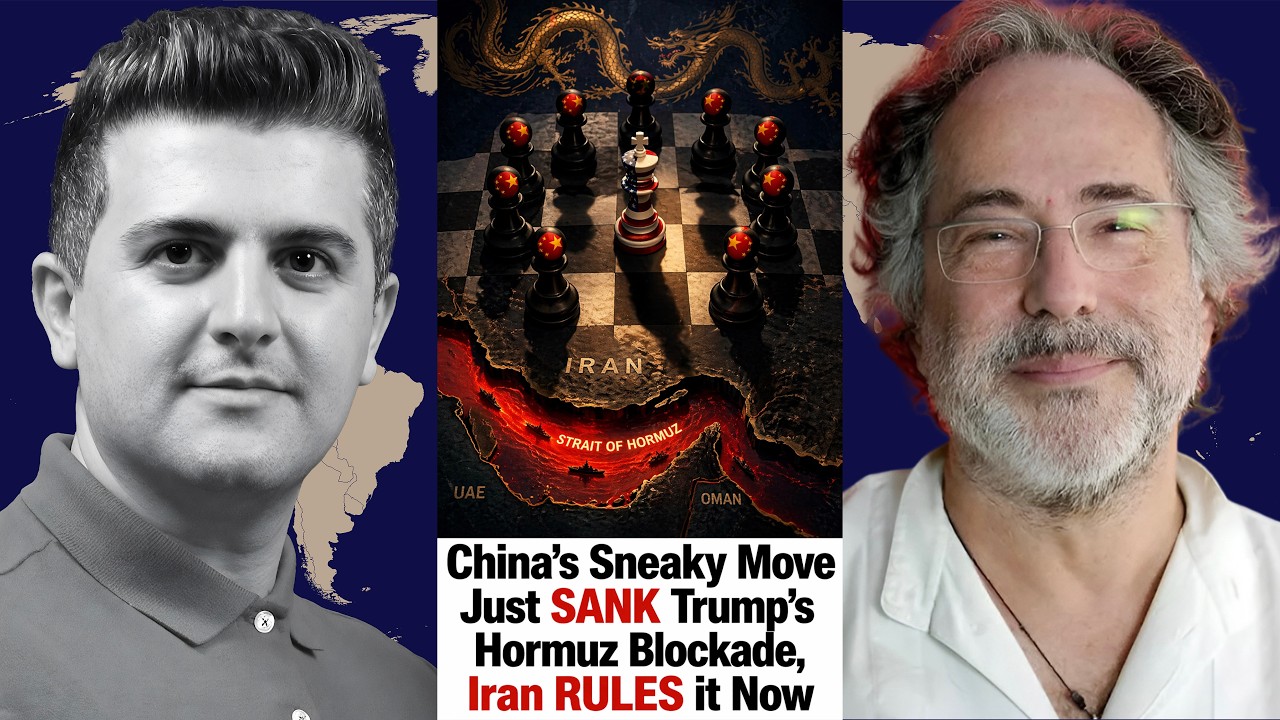
Pepe Escobar: “Total Failure”: Trump’s Blockade Just Backfired Disastrously
"Pepe Escobar argues that the US blockade against Iran, spearheaded by Donald Trump, has utterly failed and backfired, accelerating global economic chaos and challenging US geopolitical dominance."