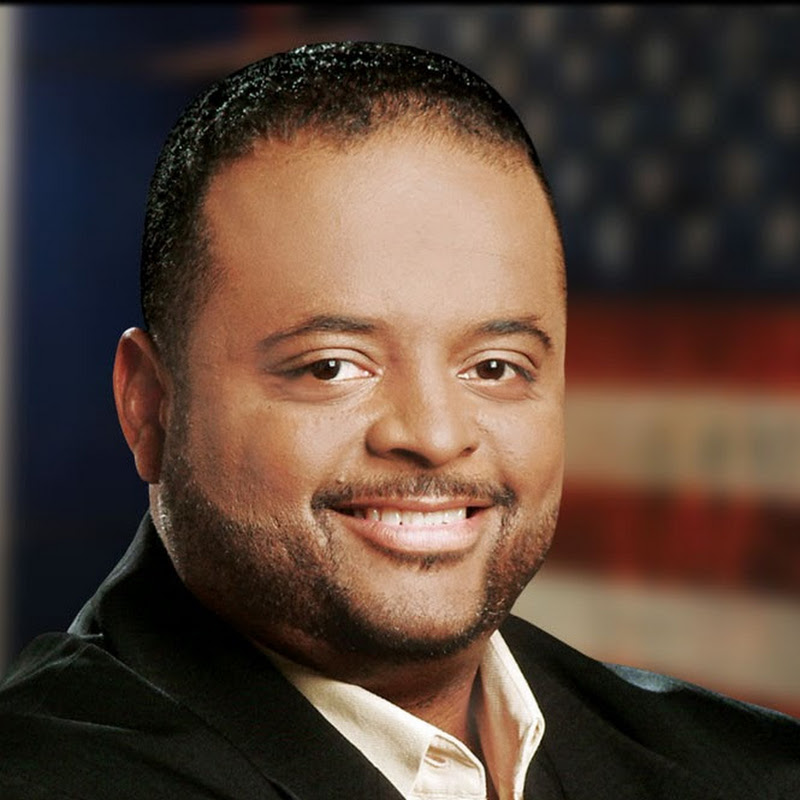
Capital Prep Middletown Townhall | #RolandMartinUnfiltered
YouTube · 83XUJDgGXUE
Quick Read
Summary
Takeaways
- ❖Capital Prep's Bridgeport school is the number one high school in Connecticut for college preparation, despite being the lowest-funded.
- ❖The school replicates practices of wealthy private schools, focusing on high expectations (college is assumed) and longer 'time on task' with dedicated 'illuminators' (teachers).
- ❖Teachers' unions are accused of prioritizing employee interests and union dues over student outcomes, actively opposing successful charter schools.
- ❖Middletown's Black and Hispanic students face significant achievement gaps in ELA and Math, with drastically fewer college options based on SAT scores.
- ❖A state senator is accused of illegally removing $4.5 million from the budget for Capital Prep Middletown, despite the school winning the state's application process.
- ❖Community leaders are calling for aggressive voter mobilization to remove elected officials who obstruct educational progress for children.
Insights
1Capital Prep's Proven Success and Underfunding
Capital Prep's Bridgeport school has been the number one high school in Connecticut for college preparation for three consecutive years, sending 100% of its graduates to four-year colleges. This achievement occurs despite it being the lowest-funded high school in the state, receiving $11,525 per student annually, less than half of what Bridgeport ($18,000) or Middletown ($23,500) public schools receive. The school's model replicates wealthy private school practices, emphasizing academic advisors, sports requirements, and an unwavering expectation that all students will attend college.
Dr. Perry states, 'Our Capitol Prep Harbor School in Bridgeport is the number one high school in the state of Connecticut for college preparation. Period.' and 'We're also the lowest funded high school in the entire state. $11,525 a year.'
2Political Obstruction of Capital Prep Middletown
Capital Prep's application for a charter school in Middletown was ranked number one out of six applicants due to its strong design and the significant need in the community. However, State Senator Matt Lesser, deeply connected to teachers' unions, and the teachers' union president (also a state senator) allegedly removed $4.5 million allocated for the school from the state budget in the 'dark of the night.' This action is the basis of a lawsuit against the state, as it contradicts state law (General Statute 10-66E) which mandates the State Board of Education to determine funding for approved charter schools.
Dr. Perry explains, 'we were number one... State senator who is deeply connected to the teachers union... decided that they were going to take the money out of the budget for the school.' and details the lawsuit based on 'general statute 10-66'.
3Dire Educational Disparities in Middletown
Data from 2014-2015 to 2024-2025 reveals a stark 'academic apartheid' in Middletown. The average achievement gap between white and Black students on state ELA exams is 32 percentage points and 30 points in math. For Hispanic students, it's 28 points in ELA and 27 in math. This translates to significantly limited college options: white students (average SAT 991) have 621 college options, while Black students (average SAT 838) have only 78, and Hispanic students (average SAT 841) have 94. Many of the limited options for Black and Hispanic students are out-of-state, adding economic and logistical burdens.
Richard Begansky Jr. states, 'the achievement gap is how whites or subgroups perform... for tonight's argument... looking at the difference between black and white and on average in ELA that's 32 points... in math it's uh 30%.' and details college options based on SAT scores.
4Teachers' Unions Prioritize Employment Over Outcomes
Dr. Steve Perry argues that teachers' unions shift emphasis from student outcomes to employee interests, making education about 'employment, not about outcomes.' He asserts that the primary reason for opposition to Capital Prep is that its teachers are not unionized and therefore do not pay union dues. This financial incentive drives the union's political actions, leading to the obstruction of successful, non-unionized charter schools, regardless of their positive impact on children.
Dr. Perry states, 'One of the things that the teachers union does is it takes the emphasis off the product... and puts it on the employees. It makes it about employment, not about outcomes.' and 'The reason why Jan Hockadell, who is the teachers union's president and state senator, is against Capitol Prep, is because the teachers are not paying into her union.'
5The Power of Black-Controlled Education and Curriculum
The speakers emphasize the importance of Black-owned and controlled school systems, where the community dictates curriculum and hiring. Capital Prep, for example, has a high percentage of African-American faculty and integrates Black history and culture daily, rather than confining it to specific months. This control ensures that education is culturally relevant and empowering, countering historical narratives that often idolize figures like George Washington without acknowledging their role in slavery.
Roland Martin states, 'when you look at the numbers across this country, less than 2% of all teachers in the country are black males. Yet when you look at charter schools, especially those that are blackrun charter schools, it is a much higher percentage because they are determining who gets hired.' Dr. Perry adds, 'Not only is capital prep number one in terms of his academic performance... we're also typically one or two in terms of the percentage of African-American faculty who we hire.'
Bottom Line
Connecticut, often perceived as progressive, has the greatest educational achievement gap in the United States, making it 'the belly of the beast' and 'epitome of racism' in terms of educational equity.
This challenges the perception of Northern states as inherently more equitable than Southern states, revealing that systemic racial disparities in education are deeply entrenched nationwide, even in seemingly affluent areas.
Advocates can leverage this stark reality to push for federal and state policies that specifically address achievement gaps in states like Connecticut, rather than solely focusing on traditionally recognized 'problem' areas, and expose the hypocrisy of politicians who claim to support civil rights while obstructing educational advancement.
The political blocking of Capital Prep Middletown is not about the school's performance or resources, but explicitly about preventing teachers from opting out of union dues, highlighting a direct financial conflict of interest for elected officials tied to unions.
This reveals that the opposition to charter schools, particularly successful ones, is often driven by union financial self-preservation rather than genuine concerns about educational quality or public funding, making it a 'diabolical' act against children's futures.
Community organizers can expose this financial motivation to voters, framing it as corruption that directly harms children. This could galvanize public support against union-backed politicians who prioritize dues over student success, potentially leading to policy changes that protect charter school funding from political interference.
The historical context of Black Americans' 'religious fervor for education' post-slavery, where formerly enslaved people negotiated for schools on plantations, should inform modern-day community mobilization against educational obstruction.
This historical precedent demonstrates that Black communities have always understood education as a fundamental tool for liberation and advancement, and that collective, non-compromising action is necessary to secure it. It reframes the current fight as a continuation of a long-standing struggle.
Activists can draw parallels to historical figures and movements, inspiring a renewed sense of urgency and determination within the Black community. By connecting current struggles to past victories, they can empower individuals to demand educational equity with the same 'no compromise' stance as their ancestors.
Opportunities
Replicate Elite Private School Models for Underserved Communities
Capital Prep's success stems from directly observing and replicating the educational practices of wealthy, largely white private schools (e.g., academic advisors, sports requirements, high college expectations) and applying them to predominantly Black and Latin communities, proving that the model works regardless of socioeconomic background.
Key Concepts
Academic Apartheid
Dr. Steve Perry uses this term to describe the systemic educational disparity in Middletown, Connecticut, where African-American children, if they were their own district, would be among the lowest-performing in the state, lacking access to the same resources as white children, leading them to believe they are less intelligent.
Twice As Good
Dr. Steve Perry tells his students that despite being the best and having the highest-performing school, they still 'got to be twice as good' because systemic forces can 'come behind you and do dirt,' referencing the political blocking of Capital Prep Middletown despite its merit.
Lessons
- Mobilize and organize local communities, especially faith-based organizations, to demand accountability from elected officials regarding educational policies and funding.
- Demand clear, public stances from all political candidates on their support for high-performing schools like Capital Prep, making it a non-negotiable issue for voter support.
- Utilize voting power to remove elected officials who obstruct educational progress for children, particularly those influenced by special interests like teachers' unions.
- Educate the community on local educational data and the long-term ramifications of poor school performance, connecting it directly to economic opportunity and generational well-being.
- Support independent Black-owned media platforms that highlight local issues and hold politicians accountable, as mainstream media often overlooks these critical community struggles.
Community Mobilization for Educational Equity
**Educate and Inform**: Share local educational data (achievement gaps, college options) with the community, emphasizing the dire consequences of inaction. Utilize town halls, church pulpits, and social media.
**Demand Accountability from Officials**: Require all political candidates (from local school boards to state governors) to publicly state their position on supporting high-performing schools and addressing educational disparities. Refuse to host or support candidates who evade these questions.
**Leverage Voting Power**: Organize voter registration drives and 'get out the vote' campaigns, explicitly linking electoral choices to educational outcomes. Encourage voters to 'redistribute the pain' by voting out unsupportive officials.
**Sustain Relentless Pressure**: Maintain continuous pressure on elected officials through protests, public forums, and legal actions (like lawsuits) if necessary. Do not compromise on the demand for quality education.
**Empower Youth**: Involve students directly in advocacy efforts, allowing them to articulate their needs and confront politicians. Their presence and voices can be a powerful catalyst for change, mirroring historical civil rights movements.
Notable Moments
Dr. Steve Perry's personal story of growing up in Middletown public housing, being in remedial classes until high school, and having guidance counselors who discouraged his college aspirations.
This personal narrative grounds the educational crisis in lived experience, highlighting how systemic issues affect individuals and underscoring the transformative power of belief and opportunity that Capital Prep aims to provide.
The host, Roland Martin, directly challenges State Senator Matt Lesser and Governor Ned Lamont for their inaction and refusal to attend the town hall, threatening to publish their contact information to mobilize followers.
This demonstrates a direct, aggressive approach to political accountability, using media influence to pressure officials who avoid public scrutiny on critical community issues, signaling a 'no more compromises' stance.
Dr. Perry recounting a conversation with State Board of Education Commissioner Charlene Russell Tucker where he informed her that state legislators had broken the law by removing funding for Capital Prep Middletown, and her attorney abruptly ended the meeting when pressed on the legal interpretation.
This illustrates the alleged illegality and lack of transparency in the political process, suggesting that officials were aware of legal breaches but unwilling to rectify them without external pressure, leading to the current lawsuit.
The Capital Prep Harbor Sharks students standing up in the audience, symbolizing the 'highly educated, passionate young scholars' that politicians 'don't want to see happen in Middletown' because it 'will shift the power dynamic.'
This visual moment powerfully connects the abstract policy debate to the tangible impact on real students, emphasizing that the fight is about empowering a new generation and challenging existing power structures.
Quotes
"My position has always been the same. If it works, I support it. But if it doesn't work, then we should not be continuing doing the same thing over and over and over again."
"You would not see an explosion in this country of parents demanding school choice if they were successful public schools."
"If you teach him to read, he will be of no use to us. You can't enslave a person who knows their humanity."
"I don't listen to what you say. I watch what you do. And if you are voting against the interests of children and the proper outcomes, you are not an education advocate. You are not an ally. And in fact, I will use another language. You are actually my enemy."
"This is nothing to do with kids. The reason why Jan Hockadell, who is the teachers union's president and state senator, is against Capitol Prep, is because the teachers are not paying into her union. It is a fact."
"If you don't like capital prep then why have you not come to the table with another option?"
"You cannot be credible praising the signing of a civil rights law if you're standing in the way of your own district's kids being taught. What that says to me that you don't actually support civil rights because a proper education is also silver rights."
"Connecticut has the greatest achievement gap in the United States of America. So you're actually in the belly of the beast, the epitome of racism."
"This state has a long history of trying to stop black educational advancement."
"If you are blocking the educational advancement of black and Latino children, you are no different than Jim Clark in Mississippi. You're no different than Bull Connor in Alabama. The only difference is you have a smile on your face."
Q&A
Recent Questions
Related Episodes
NC Mom Sues Hospital For Negligence. Black NFL Coaches Win Major Ruling. Drug Test Scandal Exposed
"This episode exposes systemic failures and racial disparities across healthcare, professional sports, and politics, featuring a mother's harrowing hospital negligence lawsuit, a landmark NFL discrimination ruling, and alarming findings on flawed drug tests criminalizing new mothers."

LIVE! Love Forward Together Mass People’s Assembly & Moral March Mobilization In Raleigh, NC
"Thousands marched across North Carolina in the 'This Is Our Selma' movement, led by Reverend William Barber, to combat gerrymandering, voter suppression, and advocate for a proactive, love-driven vision of social and economic justice."

George Floyd 6 Years Later. Redistricting War in The South. Talarico Senate Campaign
"This episode exposes the ongoing legislative battles and strategic resistance against efforts to diminish Black political power, from federal policing reform to state-level gerrymandering and calls for economic boycotts by Black athletes."

All Roads Lead To the South: Nat’l Day Of Action For Voting Rights | Mass Rally | Montgomery, AL
"A mass rally in Montgomery, Alabama, ignites 'Freedom Summer 2026' to combat the Supreme Court's decimation of Black political power and demand unprecedented voter mobilization across the South."