
Alex Krainer: Iran AVOIDED US Tanker – Then DID THIS in the Strait of Hormuz
YouTube · 8ELGP4iroAg
Quick Read
Summary
Takeaways
- ❖The US-Iran conflict is framed as a result of an internal 'tug of war' within the US administration, with pro-war factions, influenced by 'Zionist' and financial interests, pushing for escalation.
- ❖Iran's strategy of maintaining military strength is seen as the only effective defense against a Western 'war machine' that consistently disregards peace agreements and seeks regime change.
- ❖The 'banking cartel' is identified as the core driver of imperial wars, using political control of regions to extract wealth, making conflicts like those against Russia and Iran perpetual until the system changes.
- ❖Western narratives about nuclear programs, human rights, or democracy are dismissed as 'garnish' for public consumption, masking the true objective of taking political control of resource-rich nations.
- ❖Historical analogies, such as the 1938 Czechoslovakia crisis, are used to illustrate how demands are continuously escalated and 'goalposts moved' to make peace impossible and justify military intervention.
- ❖The West actively creates an 'arc of crisis' by rigging nations and exploiting separatist movements or terrorist networks to destabilize emerging powers and maintain global hegemony.
- ❖European nations are seen as complicit in this 'war machine,' subordinating their militaries and economies to confront Russia, despite public opposition, due to 'fake democracies' and powerful underlying incentives.
Insights
1US-Iran Skirmishes: A Tug of War and Disinformation
Recent US-Iran military actions, including a US attack near Bandar Abbas and Iran's response on a Kuwaiti base, are interpreted as part of an internal conflict within the US administration. While some, like Trump, may seek to end wars, powerful 'Zionist' and financial interests are pushing for continued escalation. The US narrative often misrepresents events, such as an American tanker attempting to pass the Strait of Hormuz with its transponder off, to justify retaliatory strikes.
Host Nema details the US attack on Bandar Abbas and Iran's response on an American base in Kuwait, mentioning the US tanker incident. Alex Krainer states, 'in the United States administration, there's a tug of war between people who want to continue and escalate the war and people who want to end it.' He attributes pressure to 'Jewish Zionist' figures and their donors. [] - []
2Economic Imperialism as the Core Driver of Western Wars
The fundamental incentive behind Western imperial wars, particularly against resource-rich nations like Iran and Russia, is identified as the 'banking cartel.' This cartel extracts wealth by gaining political control over regions. The objective is not peace or security, but continuous wealth extraction, which means wars will persist until this underlying monetary system is fundamentally changed.
Alex Krainer states, 'the incentives for imperial wars always go back to the banking cartel because... taking political control of a region of a... nation of a colony is how they extract wealth from those regions and that's what it's all about.' He adds that these wars 'are not going to stop until this whole system is defeated.' [] - []
3Israel's Isolation and Self-Destructive Path
Israel is increasingly isolated, losing support even among its traditional allies in the Gulf, who have rejected the Abraham Accords. Despite sustaining casualties and failing to defeat any of its enemies, Israel's political class is perceived as unable to change course, instead pursuing a 'path of self-destruction' driven by 'ethnos supremacism and hegemony.' This fanaticism is seen as a danger to the world, with a willingness to use extreme measures, including nuclear weapons.
Alex Krainer notes, 'Israel is really truly isolated. And not only is it isolated, it's it's it's losing capability to wage war.' He describes their leadership as 'fanatically devoted to one set of principles and one set of goals that they're willing to pay every price in it.' [] - []
4Propaganda and 'Moving Goalposts' Justify Perpetual War
Official justifications for war, such as Iran's nuclear program or ballistic missiles, are dismissed as fabricated narratives ('garnish for the narrative') designed for public consumption. The true objective is always regime change and political control. This is demonstrated by the 'moving goalposts' phenomenon, where even if a country meets initial demands, new, impossible conditions are introduced to ensure conflict, as seen in the 1938 Czechoslovakia crisis.
Krainer states, 'The objective is regime change. Everything else is just fodder for public consumptions for the PR machinery.' He uses the example of Czechoslovakia in 1938, where after concessions were met, 'a whole new set of demands' were invented to make acceptance impossible, leading to invasion. [] - []
Bottom Line
The only way for independent nations like Iran, Russia, and China to survive against the Western 'war machine' is to become 'porcupine-like' — so militarily formidable that no one dares attack them.
This suggests that military strength and deterrence, rather than diplomatic agreements, are the only reliable means of preserving sovereignty against a relentlessly expansionist power. It implies a future of armed neutrality or continuous military buildup for non-aligned states.
For nations seeking to maintain independence, investing heavily in advanced, asymmetric defense capabilities (like North Korea's model) could be seen as a pragmatic survival strategy, shifting focus from international diplomacy to robust self-reliance.
The 'Anglo-Zionist system' deliberately distorts religious faiths (Judaism, Christianity, Islam) into 'fake versions' to facilitate its geopolitical agendas, turning them into tools for 'rampage' and division.
This implies that religious institutions and narratives are actively manipulated by powerful geopolitical actors to serve imperial goals, rather than spiritual ones. It suggests that religious conflicts may be orchestrated or exacerbated for strategic advantage.
Critical analysis of religious rhetoric and its alignment with political agendas could help individuals and communities identify and resist manipulation, fostering genuine interfaith dialogue and cooperation against common geopolitical exploitation.
Key Concepts
Goalpost Moving
A tactic where demands are continually escalated or changed after initial concessions are met, making it impossible for the opposing side to satisfy the requirements and thus justifying further pressure or conflict. This is exemplified by the historical analogy of Czechoslovakia in 1938 and the hypothetical demands on Iran's nuclear and missile programs.
Arc of Crisis
A geopolitical strategy where a series of unstable or conflict-prone regions are deliberately created or exploited to destabilize and weaken target nations or emerging powers. This involves rigging national systems, supporting separatist movements, or using terrorist networks to create flashpoints and enable 'divide and rule' tactics.
Lessons
- Critically analyze mainstream media narratives about geopolitical conflicts, especially those involving resource-rich nations, to identify underlying economic and political motivations beyond stated humanitarian or security concerns.
- Recognize the 'moving goalposts' tactic in international negotiations: if demands keep escalating despite concessions, the true objective is likely not resolution but rather regime change or destabilization.
- Support movements and political candidates who genuinely advocate for non-interventionist foreign policies and challenge the influence of financial and military-industrial complexes on national decision-making.
Notable Moments
The host details a specific incident where an American oil tanker attempted to pass through the Strait of Hormuz with its transponder switched off, leading to Iranian IRGC forces firing upon it and forcing it to turn back. This was followed by a US retaliatory attack on an 'empty patch of land' near Bandar Abbas, with no reported casualties.
This specific event highlights the immediate, low-level military exchanges and the differing narratives surrounding them, illustrating the 'tug of war' and the potential for manufactured provocations in the US-Iran conflict.
Alex Krainer recounts the 1938 crisis between Germany and Czechoslovakia, where demands for autonomy for the Sudeten Germans were met by Czechoslovakia, only for the German representative to disappear and return with new, impossible demands (the Godesberg ultimatum), ultimately leading to Germany overrunning Czechoslovakia.
This historical analogy serves as a powerful illustration of the 'moving goalposts' mental model, demonstrating how seemingly legitimate demands can be used as a pretext for invasion and regime change, regardless of concessions made.
Quotes
"In the United States administration, there's a tug of war between people who want to continue and escalate the war and people who want to end it."
"The incentives for imperial wars always go back to the banking cartel because... taking political control of a region of a... nation of a colony is how they extract wealth from those regions and that's what it's all about."
"The objective is regime change. Everything else is just fodder for public consumptions for the PR machinery."
"If we're if we're going down, we're taking everybody with us with us."
Q&A
Recent Questions
Related Episodes

Patrick Henningsen: Hezbollah JUST Fired Back at Israel - Iran Vows to “Crush” All Attacks
"Patrick Henningsen argues that the US and Israel initiated an illegal war against Iran, driven by Trump's incompetence and Israeli influence, leading to an inevitable escalation with severe global economic repercussions."

LIVE: Trump HIDES FROM PUBLIC as US SOLDIER KILLED!!! 6/2/2026
"The host exposes alleged government cover-ups regarding military casualties, Trump's unexplained public absence, and questionable political appointments, arguing these reflect a 'regime of loser babies' and a failing foreign policy."
BREAKING: Protests ERUPT In Iran Over IRGC Surrendering To Trump - Infighting Clashes In Tehran
"Iran is experiencing severe internal infighting and protests as hardline IRGC elements clash with government figures over a perceived 'surrender' to the US, while mainstream Western media misrepresents the situation."
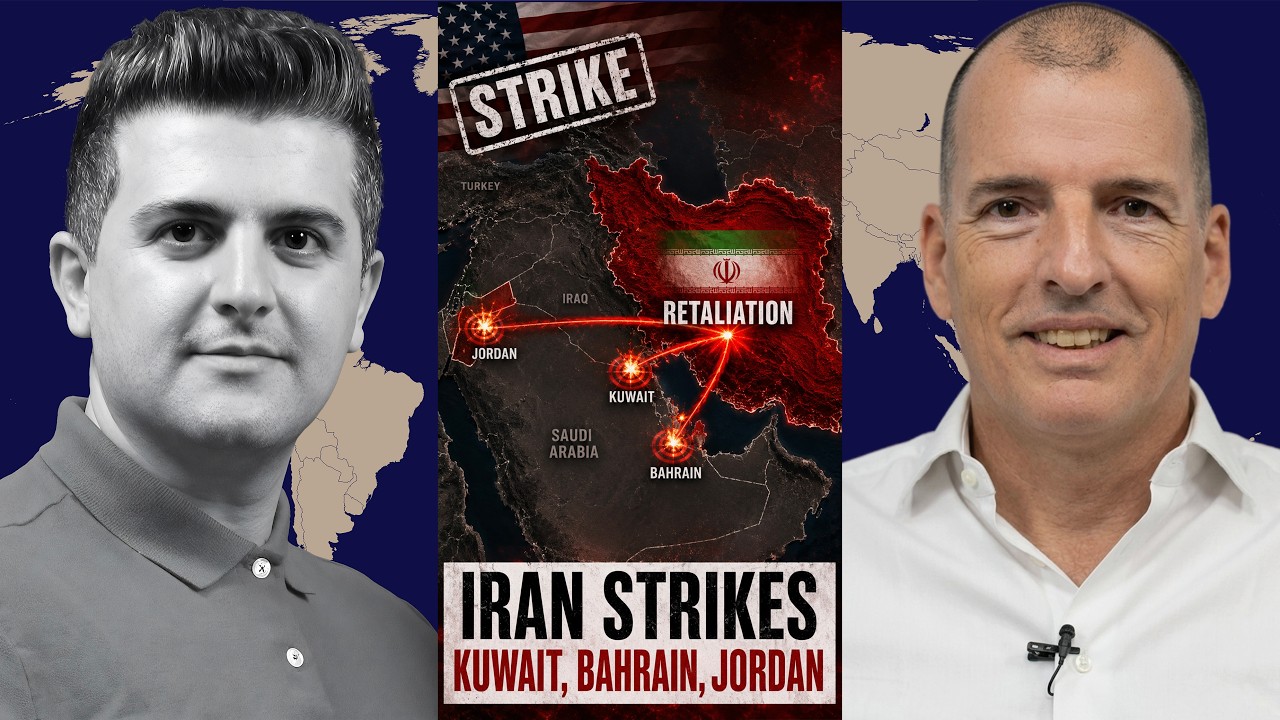
Alex Krainer: US STRIKES Iran – Iran RETALIATES Against Kuwait, Bahrain & Jordan!
"Amidst escalating US-Iran conflict and Iranian retaliation against regional US allies, this episode argues that US foreign policy is deeply controlled by an 'Anglo-Zionist conspiracy' led by the Rothschild banking dynasty, prioritizing Israeli interests over American ones."