BREAKING: Tehran Hit by Mystery Explosions; Trump Keeps Strike Plan Secret | TBN Israel
YouTube · 8Y3e1-64Esg
Quick Read
Summary
Takeaways
- ❖A series of mysterious explosions occurred in Tehran and other Iranian cities, officially attributed to gas leaks, but widely suspected to be sabotage.
- ❖The US has deployed significant military assets, including carrier strike groups and missile destroyers, to the region, signaling readiness for a 'long campaign' against Iran.
- ❖Iran's Supreme Leader made a rare public appearance amidst reports of being moved to an underground bunker due to potential US strikes.
- ❖Official 'negotiations' are described as a strategic delay, with both the US and Iran buying time for military preparations and internal maneuvering.
- ❖Israel is actively involved, providing intelligence to the US and preparing to suppress Iranian missile launches if a US strike occurs.
- ❖Hamas continues to engage in guerrilla warfare in Gaza, testing ceasefire boundaries and rebuilding capabilities, prompting Israeli retaliatory strikes.
- ❖Hezbollah in Lebanon is issuing direct threats, and Israel is conducting 'mowing the grass' operations to prevent the rebuilding of attack infrastructure.
Insights
1Mysterious Explosions in Iran Point to Internal Sabotage or Covert Operations
Multiple explosions rocked Tehran and other Iranian cities, including Bandarabas (Iran's largest commercial port) and Akvaz near the Iraqi border, resulting in fatalities. The Iranian regime attributed these to gas leaks, a claim dismissed by analysts as an 'obvious lie.' Israel and the US deny involvement, but the timing and strategic locations suggest either internal sabotage by regime enemies or covert external operations, especially given reports of Revolutionary Guard figures being harmed.
Reports of powerful explosions in Bandarabas and Akvaz, resulting in six fatalities and partial building collapses. Iranian regime claimed gas leaks (, , ). Israel and US denied involvement (, , ). Revolutionary Guard officers were reportedly injured or eliminated (, , ).
2US Military Buildup Signals Preparation for a Prolonged Campaign, Not a Limited Strike
The United States Central Command (CENTCOM) issued a sharp public warning to Iran against 'unsafe or unprofessional conducts' in the Strait of Hormuz, backed by the presence of the USS Abraham Lincoln carrier strike group, missile destroyers, and air defense systems. US Air Force exercises simulate rapid deployment and sustained combat air power. Analysts assess this buildup is for a 'long campaign' to remove Iran's nuclear and missile threat, not a 'one-time strike,' as quick, limited attacks are deemed insufficient to prevent Iranian retaliation.
CENTCOM issued a sharp public warning against unsafe conduct in the Strait of Hormuz (). The USS Abraham Lincoln, missile destroyers, and air defense systems are operating in the theater (). US Air Force is conducting readiness exercises for 'fast and sustained response, not a one-time strike' (, ). Mati Shashani states US planners conclude 'quick limited attacks would not remove Iran's nuclear and missile threat' and that the positioning is for a 'long campaign, not a short strike' (, ).
3Diplomacy is a Strategic Delay, Not a Genuine Negotiation
Despite official talks about progress towards negotiation frameworks, analysts characterize the current diplomatic efforts as a 'negotiation about whether negotiations will even begin.' Iran demands sanctions lifted first, while the US insists on irreversible concessions. This 'holding pattern' allows both sides to buy time: Iran to suppress internal protests and signal defiance, and the US to finalize intelligence, logistics, and defensive coverage for allies, with weather conditions also influencing timing. The 'clock is strategic, not diplomatic.'
Mati Shashani states, 'What we are watching is negotiation about whether negotiations will even begin' (). Iran wants sanctions lifted first; the US wants irreversible concessions (). 'This is not a breakthrough. It's a holding pattern, waiting for something substantially to change' (). 'The clock is strategic. It's not diplomatic at this point' ().
4Israel's Covert and Overt Role in the Escalation
Israel is deeply involved, primarily through intelligence sharing with the US, providing targeting data and assessments of Iran's missile infrastructure. If the US strikes, Israel's participation would focus on suppressing missile launches aimed at its territory, targeting launchers, storage sites, and command nodes inside Iran to prevent mass civilian casualties. Iran has openly stated it would target central Israel heavily in any conflict.
Israeli intelligence is feeding the United States targeting data, lessons from previous operations and assessments of Iran's missile infrastructure (). If the United States strikes, Israeli participation would likely focus on suppressing missile launches aimed at Israel (). Iran has already said openly it would target central Israel early and heavily in the next round ().
5Hamas Continues Guerrilla Warfare in Gaza, Testing Ceasefire Limits
Despite a ceasefire agreement, Hamas is actively engaged in a guerrilla campaign against IDF forces in Gaza, using small cells, covert movements, and intelligence collection on IDF routines. Incidents in eastern Rafa, including the emergence of armed NUKBA terrorists from tunnels and direct approaches to IDF forces, demonstrate Hamas's intent to test the agreement's boundaries and avoid disarmament. Israel responds with rapid, forceful strikes, targeting commanders and infrastructure.
Hamas is trying to bring the fighting back (). IDF and Shinbet identify growing attempts by Hamas to engage in a guerrilla campaign (). Incidents include NUKBA terrorists emerging from tunnels in eastern Rafa () and armed terrorists approaching IDF forces in the yellow line area (). The IDF policy is a 'rapid and forceful response' to ceasefire violations ().
6Hezbollah's Threats and Israel's 'Mowing the Grass' Strategy in Lebanon
Hezbollah's Secretary-General Naim Kasim has issued direct threats of war, leading Israeli officials to view Lebanon as a front that could ignite if the US confronts Iran. The IDF is conducting 'mowing the grass' operations in southern Lebanon, striking Hezbollah terrorists and infrastructure to prevent them from rebuilding attack capabilities and firing towards the Israeli home front. Israel warns that any Hezbollah attempt to exploit US-Iran tensions will result in a 'harsher response.'
Hezbollah Secretary-General Naim Kasim has been issuing threats (). Israeli officials see Lebanon as a front that could ignite at any moment (). The IDF identifies its actions in Lebanon as 'mowing the grass' (), aimed at preventing Hezbollah from rebuilding attack capabilities (). Any attempt by Hezbollah to exploit tension will lead to a 'harsher response' ().
Lessons
- Monitor official statements and independent analyses from TBN Israel and similar sources for real-time updates on US-Iran tensions, as diplomatic rhetoric may mask underlying military preparations.
- Assess the implications of a potential prolonged military campaign in the Middle East on global oil markets and supply chains, given Iran's strategic position in the Strait of Hormuz.
- Be aware that 'negotiations' may serve as a strategic delay rather than a genuine peace process, indicating a need for vigilance regarding escalating military readiness rather than de-escalation.
Quotes
"The games are over and the plan to take down the Ayatollah regime in Iran is on its way. President Trump is throwing Iran one last lifeline for negotiations, but keeping things ambiguous."
"What we are watching is negotiation about whether negotiations will even begin. Iran wants sanctions lifted first. The United States wants irreversible concessions first. These positions do not meet anywhere in the middle."
"The American military buildup is not symbolic at all... This is being positioned for a long campaign, not a short strike. This is critical. US planners conclude that quick limited attacks would not remove Iran's nuclear and missile threat."
"The clock is strategic. It's not diplomatic at this point."
"This moment is about readiness, not about peace. Yet, the question now is simple. Who blinks first? Is it Washington or Tehran?"
Q&A
Recent Questions
Related Episodes

BREAKING: Iran Threatens To END Talks; U.S. Vows Retaliation; Hezbollah Collapsing? | TBN Israel
"Iran is leveraging Hezbollah and the Strait of Hormuz to manipulate US negotiations, while Israel asserts its right to dismantle Hezbollah's eroding but still dangerous infrastructure in Lebanon, independent of international talks."

Patrick Henningsen: Hezbollah JUST Fired Back at Israel - Iran Vows to “Crush” All Attacks
"Patrick Henningsen argues that the US and Israel initiated an illegal war against Iran, driven by Trump's incompetence and Israeli influence, leading to an inevitable escalation with severe global economic repercussions."
BREAKING: Israel BOMBS Major Iran Gas Site; Top Mullah ELIMINATED; Iran Vows VENGEACE | TBN Israel
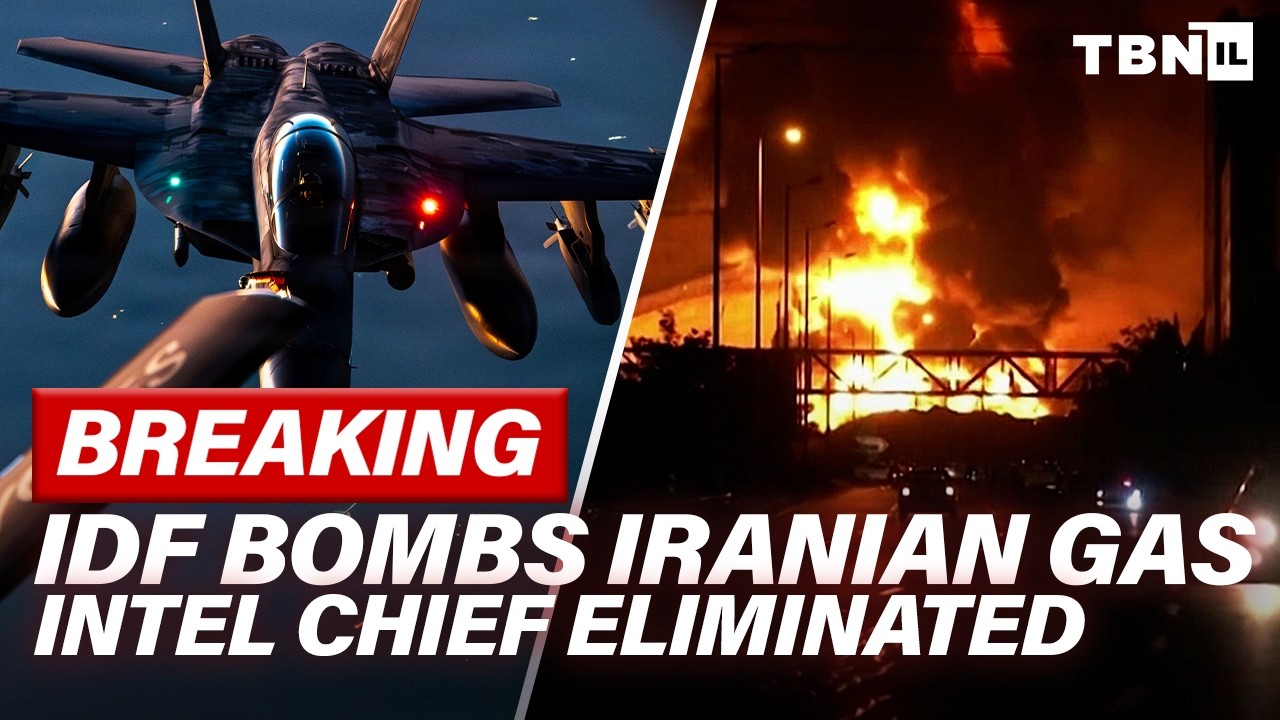
"Israel and the United States have escalated their 'Roaring Lion War' against Iran, striking its largest gas facilities, eliminating key intelligence and military figures, and disrupting missile production, while Iran threatens a broader energy war in the Gulf."

BREAKING: U.S. SINKS Iranian Boats; Iran Talks Stall; Israel Hits Beirut | TBN Israel
"The U.S. and Israel escalate military actions against Iran and its proxies, while diplomatic talks stall over Iran's nuclear program, Strait of Hormuz fees, and the future of Hezbollah."