NEW VIDEO PROVES Woman STRUCK ICE Agent, Activist Says COME AT US | Timcast IRL
YouTube · 8cw2rbJHllQ
Quick Read
Summary
Takeaways
- ❖Cell phone footage shows Renee Good's vehicle making contact with an ICE agent before he fired shots, impacting the narrative of the incident.
- ❖A former prosecutor initially questioned later shots but, after seeing the full video, suggested no prosecution would occur for the agent.
- ❖The host argues Renee Good's prior contact with law enforcement and her wife's alleged instruction to 'drive, baby, drive' indicate awareness and criminal culpability.
- ❖A guest contends the officer's actions were not justified, believing Good was trying to flee, not accelerate towards him, and that the officer's past trauma should not excuse 'trigger-happy' behavior.
- ❖The Department of Justice blocked Minnesota state officials from participating in the investigation of the ICE shooting, citing mutual distrust.
- ❖This federal intervention is seen as a significant escalation in federal-state conflict, with predictions that the federal government will shield the agent from state prosecution.
- ❖A prolonged debate occurred over the legal definition of 'due process' for non-citizens and the lawful deportation of individuals like Kilmar Abrigo Garcia, including his alleged MS-13 affiliation.
Insights
1New Video Footage Shifts Narrative on ICE Shooting
Newly released cell phone footage from the officer involved in the shooting of Renee Good shows prior contact with activists, an exchange of words, and a clear impact sound as Good's car hits the ICE agent. The host and a former prosecutor interpret this as evidence that Good was aware of law enforcement engagement and that the agent's initial shot was justifiable due to being struck. The footage also shows Good looking directly at the agent and spinning the wheel before accelerating.
The video at , , , , , , , , , .
2DOJ Blocks State Investigation, Escalating Federal-State Conflict
The Department of Justice (DOJ) made the 'highly unusual move' of blocking the Minnesota Bureau of Criminal Apprehension (BCA) from participating in the investigation of the ICE shooting. This reversal of an initial agreement for a joint investigation is attributed to 'mutual distrust' between federal and state authorities. The host predicts this means the federal government will prevent the ICE agent from facing state-level prosecution, regardless of the merits of the case, due to political motivations and a desire to protect federal agents.
CNN report cited at , host's prediction at , , , .
3Debate on Justified Force and 'Deadly Weapon' Status of a Vehicle
The panel extensively debates whether the ICE agent's use of deadly force was justified. The host argues that a vehicle is legally a deadly weapon, and the agent's prior trauma (being dragged by a car six months prior) created a reasonable fear of harm. A guest, Aaron, counters that the video shows Good attempting a three-point turn to flee, not accelerate towards the officer, and that the low speed of impact (if any) did not constitute an 'imminent threat of death or serious injury.'
Discussion of vehicle as deadly weapon at , . Guest's counter-argument at , , , , , . Officer's prior trauma at .
4Contention Over 'Due Process' for Non-Citizens in Immigration Cases
A significant portion of the debate centers on the legal concept of 'due process' for non-citizens, specifically in the context of Kilmar Abrigo Garcia's deportation. The host argues that immigration courts are part of the executive branch, not the judiciary, and non-citizens are subject to 'expedited removal' without a jury trial or traditional court hearing, which constitutes their 'due process.' The guest disputes this, citing Supreme Court rulings and administrative errors in Garcia's case, arguing that minimum standards of due process apply to all individuals within the US, regardless of citizenship status.
Discussion of due process and immigration courts at , , , , , , , . Kilmar Abrigo Garcia case discussed from onwards.
Bottom Line
The federal government's direct intervention to block a state-level criminal investigation into a federal agent's actions sets a dangerous precedent for the balance of power between federal and state authorities, potentially leading to increased friction and questions of jurisdiction.
This move suggests a willingness by the federal executive to shield its agents from state prosecution, which could embolden federal law enforcement in blue states and further politicize local legal processes. It also implies a potential breakdown of traditional inter-agency cooperation.
This situation creates an opportunity for legal scholars and civil liberties organizations to challenge the scope of federal immunity and the limits of state sovereignty in investigating federal agents, potentially leading to landmark legal battles that redefine federal-state boundaries.
The intense public and media debate over minute details of police shooting videos, coupled with political tribalism, demonstrates how factual evidence can be interpreted through partisan lenses, making objective legal outcomes difficult and fueling public distrust.
This polarization means that even with clear video evidence, public opinion and political pressure can heavily influence whether an officer is prosecuted or exonerated, potentially undermining the integrity of the justice system and exacerbating social divisions.
There's an opportunity for independent, non-partisan bodies to develop standardized, transparent frameworks for analyzing use-of-force incidents, potentially utilizing advanced forensic video analysis to provide more universally accepted interpretations, thereby reducing partisan influence.
Lessons
- Recognize that legal proceedings involving law enforcement, especially federal agents, are increasingly influenced by political dynamics and federal-state power struggles, not solely by legal merits.
- Understand the differing interpretations of 'due process' for citizens versus non-citizens, particularly in immigration law, and how this impacts the rights and treatment of individuals.
- Be aware that video evidence in controversial incidents is often subject to varied interpretations based on pre-existing biases and political affiliations, making critical analysis essential.
- Consider the implications of federal agencies asserting jurisdiction over state investigations, as this could set precedents for future conflicts over authority and accountability.
Notable Moments
The panel reviews the newly released cell phone footage of the ICE shooting, focusing on the moment Renee Good's car appears to strike the agent and the alleged 'drive, baby, drive' instruction.
This is the central piece of evidence debated, directly impacting the justification of the shooting and the perceived intent of the driver.
The host reveals that the Department of Justice has blocked Minnesota state officials from investigating the ICE shooting, sparking immediate discussion on federal overreach.
This is a critical development that shifts the entire legal and political landscape of the case, highlighting a direct conflict between federal and state authority.
A prolonged and heated debate erupts over the definition of 'due process' for non-citizens and the specifics of Kilmar Abrigo Garcia's deportation, with the guest and host presenting fundamentally different legal understandings.
This segment illustrates the deep ideological divides and complex legal interpretations surrounding immigration policy, demonstrating how even basic constitutional terms can be contentious.
Quotes
"You want to come at us? I say go get yourself some lunch, big boy. Go ahead. Get out of the car. Get out of the car."
"So, when they approached her, saying get out of the vehicle, and she attempted to flee, this was not a panic. This was she knew she was engaged uh with law enforcement to a certain degree."
"If trauma from six months ago makes you this trigger happy because of your PTSD, you honestly should not be on the field in my opinion as a cop."
"The feds are not allowing a criminal investigation uh from the state of a cop who shot a lady... The federal government and the state governments are have bicted and are now at odds with each other."
"Immigration courts are part of the executive branch... You don't go before a jury or a judge for issues of immigration."
Q&A
Recent Questions
Related Episodes

SHOCK Ruling on Trump Deportation PLOT + DEBUNKED Election WARRANT?!? | It's Complicated
"The Fifth Circuit Court's controversial ruling redefines 'seeking admission' for non-citizens, potentially allowing indefinite detention for millions, while a federal search warrant for 2020 election ballots is criticized as a 'test run' for future election interference."
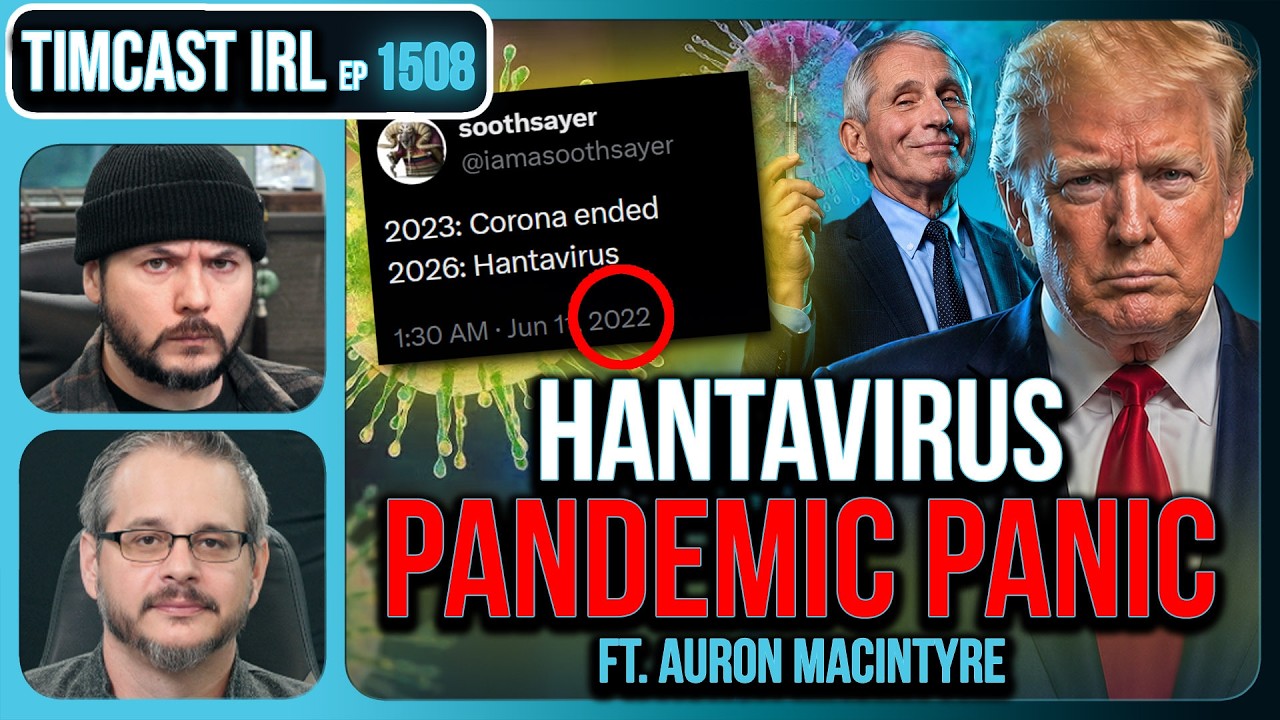
HANTAVIRUS PANDEMIC PANIC, Human To Human Spread Feared | Timcast IRL
"Tim Pool and his guests dismiss the Hantavirus panic as media desperation, pivot to discussing escalating political polarization, the rise of technocracy, and the weaponization of social issues."

Cory Booker GOES OFF on Trump and Democrats’ Tax Plan
"Senator Cory Booker delivers a passionate critique of Trump's administration and Congressional inaction, while advocating for bold Democratic policies, including a controversial tax plan that would eliminate federal income tax for most Americans."
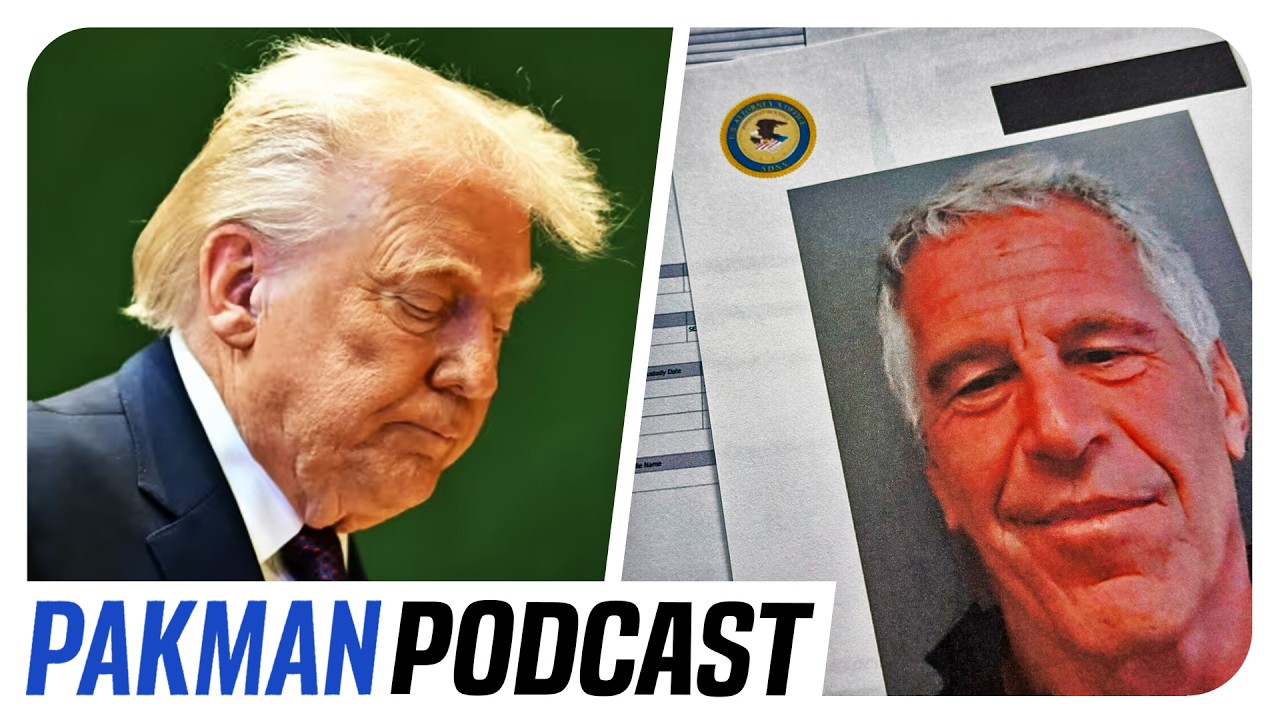
Texas panic rises as Epstein problem gets worse
"Republicans face unexpected challenges in Texas, escalating political fallout from Epstein files, and concerning revelations about ICE's militarization and training, all while navigating internal hypocrisy."