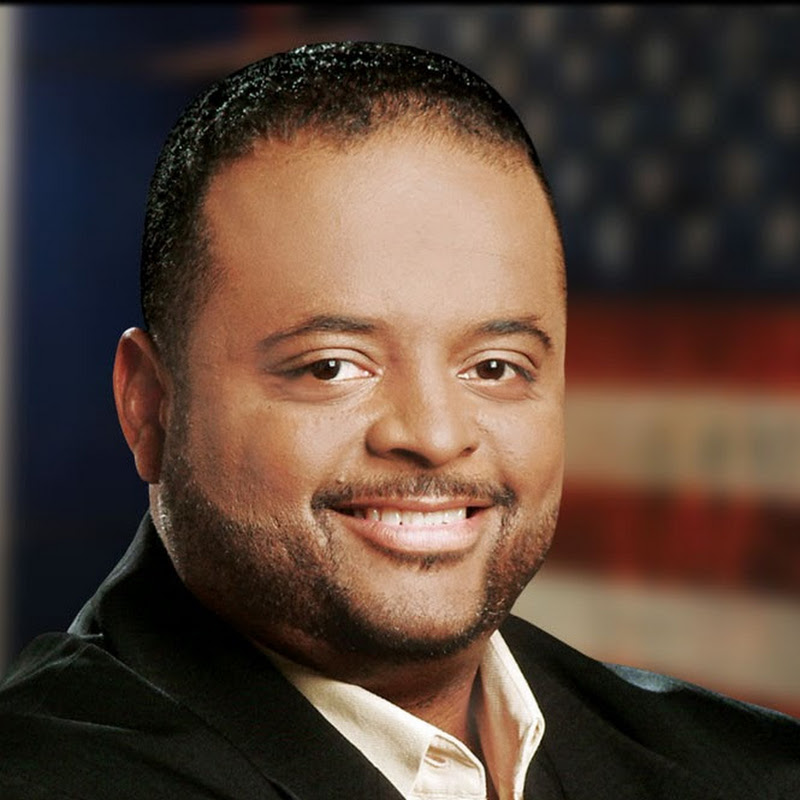
Iyanla Speaks! Black Women, Black Men and Domestic Violence | A BSN Exclusive Presentation
YouTube · 8oiJPivoHZI
Quick Read
Summary
Takeaways
- ❖Domestic violence impacts all communities, but the discussion centers on African-Americans, citing nearly 200 domestic violence-related deaths this year.
- ❖Iyanla Vanzant asserts that Black men and women are not enemies, but rather victims of a system designed to demoralize and dehumanize them, leading to internal conflict.
- ❖Unacknowledged generational trauma, grief, and sadness contribute significantly to emotional dysfunction and violence within the Black community.
- ❖Black men are often emotionally illiterate, taught to suppress vulnerability, which leads to anger, fear, and sadness manifesting as aggression or isolation.
- ❖Black women are conditioned to love sacrificially, often over-giving and over-excusing, which can perpetuate dysfunctional relationships.
- ❖Hopelessness is a 'disease' spreading among Black men, leading to a sense of having 'nothing to lose' and increasing the risk of extreme violence.
- ❖Emotional regulation is a learned skill, not innate, and requires intentional practice to prevent escalating conflicts.
- ❖Both the perpetrator and the victim in abusive relationships often suffer from unaddressed mental health issues or 'wounds'.
- ❖Community involvement, including churches and social organizations, must move beyond performative gestures to provide tangible resources and safe spaces for healing.
- ❖Parents must teach children emotional literacy and conflict resolution from an early age to prevent the perpetuation of trauma.
Insights
1Generational Trauma as a Root Cause of Domestic Violence
Iyanla Vanzant posits that the Black community carries deep, unacknowledged wounds from slavery and systemic dehumanization. This inherited trauma, grief, and sadness, never properly processed or given a 'funeral,' manifests as emotional illiteracy and dysfunction, contributing to the high rates of domestic violence. The societal setup actively pits Black men against Black women, exacerbating these underlying issues.
Vanzant states, 'All of us were our descendants of slaves. All of us carry a wound, a wound that has never been acknowledged. We carry grief that has never had a funeral. We carry sadness that was never given a name.' She adds, 'Black men are not the enemy of black women, and black women are not the enemy of black men. But that is how it's been set up.'
2Emotional Illiteracy and Suppressed Vulnerability in Black Men
Black men are culturally conditioned to 'suck it up,' 'don't show weakness,' and 'don't ask for help,' leading to emotional illiteracy. They often lack the vocabulary to identify complex emotions beyond happy, sad, or angry. This suppression, combined with societal dehumanization, causes a buildup of unaddressed feelings that can overwhelm the nervous system and erupt as violence.
Vanzant notes, 'most men, black men, are emotionally illiterate. They know happy. They know sad. They know angry. They may know irritated. They don't know embarrassment... They have a very limited emotional vocab vocabulary.' Roland Martin adds, 'men are taught suck it up and move on. Don't show weakness. Don't ask for help. Don't be a punk.'
3The Role of Hopelessness in Escalating Violence
A significant 'disease' spreading among Black men is hopelessness, driven by feelings that 'no matter how hard I try, I'm not getting ahead' and 'it's never enough.' This sense of having nothing to lose can push individuals to 'go off the deep end,' leading to extreme acts of violence, including murder-suicides.
Vanzant states, 'one of the diseases that's spreading among black men that we really have to address is hopelessness... When that happens, they don't have anything to lose. So, they'll just go there, go off the deep end.' Roland Martin connects this to cases like the man who shot his children, where the mother reported him saying, 'the demons are too strong.'
4Black Women's Over-Giving and Sacrificial Love
Black women are often taught to love deeply, loyally, and sacrificially, which can lead to over-giving, over-explaining, over-excusing, and over-extending themselves in relationships. This pattern, while rooted in love, can inadvertently enable dysfunction and prevent both partners from confronting necessary truths, leading to personal loss and continued abuse.
Vanzant explains, 'black women have been taught to love deeply, to love loyally and to love sacrificially. We will sacrifice ourselves for the love of our partner, our family, our children.' She adds, 'we overgive, we overexplain, we overexcuse, and we overextend.'
5The Necessity of Personal Responsibility and 'Spiritual Hygiene'
Both men and women must take individual responsibility for their 'inner well-being' or 'spiritual hygiene.' This involves identifying personal 'wounds,' understanding their origins, and actively working to heal them through therapy, prayer, meditation, or other self-care practices. Without this internal work, external solutions or community efforts will be insufficient.
Vanzant emphasizes, 'we each Roland, you, me, everybody listening, watching, has to begin to take responsibility for their own internal well-being.' She provides worksheets for men ('What is the wound I carry?') and women ('Love without losing yourself'), stressing, 'you have to make your inner well-being... a priority.'
Bottom Line
The person who stays in an abusive relationship also has a mental health issue, often rooted in wounds like 'remaining loyal to people who treat me badly' or not knowing how to ask for help.
This reframes the victim's role, not as blame, but as an acknowledgment of their own unaddressed trauma, which is crucial for their healing journey and breaking the cycle of abuse.
Develop support systems and therapeutic approaches specifically tailored to help individuals identify and heal the 'wounds' that lead to staying in abusive situations, alongside interventions for perpetrators.
The algorithms of social media actively drive anger and fear, flooding feeds with depravity and conflict, which distracts from and suppresses messages of healing and constructive action within the Black community.
This highlights how digital platforms exacerbate division and hinder collective healing efforts, making it harder for positive, solution-oriented content to gain traction.
Create and promote alternative digital spaces and content strategies that prioritize healing, emotional literacy, and community building, actively countering the negative algorithmic bias. Encourage intentional consumption of media that uplifts and informs rather than inflames.
Men are rarely gifted massages or other healthy 'release valves' for tension, leading to suppressed pressure that can explode into violence.
This points to a societal oversight in providing accessible and acceptable outlets for men's emotional and physical stress, contributing to unhealthy coping mechanisms.
Promote and normalize healthy stress-release activities for men (e.g., golf, massages, hobbies) and encourage partners/friends to facilitate these opportunities, recognizing them as essential for mental health and preventing destructive outbursts.
Key Concepts
The Wound vs. The Harm
This model distinguishes between the underlying emotional or psychological 'wound' (e.g., inherited trauma, feelings of worthlessness) and the 'harm' (e.g., violence, abuse) that results from it. Healing requires addressing both the wound and taking responsibility for the harm caused, rather than solely focusing on behavior.
Spiritual Hygiene
A framework for maintaining internal well-being through intentional practices that cleanse the mind, clear the heart, align the body, and embrace spiritual truths. It emphasizes personal responsibility for emotional regulation and mental balance, contrasting it with external distractions or coping mechanisms like substance abuse or excessive consumption.
Lessons
- Download and utilize Iyanla Vanzant's 'Spiritual Hygiene' worksheets for men and women to identify personal 'wounds' and begin the healing process.
- Create or seek out safe spaces within your community (e.g., men's groups, women's circles, church ministries) where individuals can openly discuss emotions and traumas without judgment.
- Practice emotional regulation by learning to identify and name specific feelings (beyond just happy, sad, angry) and developing healthy coping mechanisms for stress and disappointment.
- For men, actively seek out opportunities to be vulnerable and ask for help, challenging the societal conditioning to 'suck it up.' For women, learn to 'love without losing yourself,' providing support without over-giving or enabling dysfunction.
- Advocate for public policies and community programs that fund mental health services, trauma-informed care, and domestic violence prevention, and support leaders who prioritize these initiatives.
Initiating Personal and Communal Healing from Trauma
**Step 1: Identify Your Wound (Personal)**: Use Iyanla Vanzant's worksheets to ask: 'What is the wound I carry?' and 'Where did it come from?' For men, also ask: 'What was I taught about being a man and expressing emotion?' For women: 'What am I thinking about the current relationships with the men in my life?'
**Step 2: Cultivate Emotional Literacy & Regulation (Personal)**: Learn to feel and name emotions beyond basic ones. Develop healthy 'release valves' for pressure (e.g., hobbies, exercise, meditation, therapy) to prevent emotional buildup and explosive reactions.
**Step 3: Create Safe Spaces for Vulnerability (Communal)**: For men, actively seek or create environments where it's safe to be wounded, broken, and vulnerable. For women, learn to offer presence and hold space for men without judgment or over-involvement, allowing them to process their own healing.
**Step 4: Practice Intentional Presence & Support (Interpersonal)**: Be present for loved ones without enabling dysfunction. If someone is struggling, offer to 'walk with them' to therapy or support groups. For those in abusive situations, offer a safe place but encourage an 'exit plan' rather than just complaining.
**Step 5: Advocate and Mobilize (Community-Wide)**: Support political leaders and community initiatives that fund mental health and domestic violence programs. Compile and share lists of Black mental health professionals. Use your personal platform to share messages of healing and collective responsibility, countering divisive narratives.
Notable Moments
Iyanla Vanzant shares her personal experience of staying in a nine-year abusive marriage where her husband physically beat her, even while pregnant, and how her son witnessed him choking her. She explains she stayed due to an inherited 'wound' of 'remaining loyal to people who treat me badly.'
This powerful personal testimony provides raw, specific evidence for her arguments about the deep-seated nature of trauma, the 'wound' vs. 'harm' distinction, and the complex reasons why victims stay, reinforcing the need for internal healing and external support.
Roland Martin recounts a men's church retreat where participants prioritized games and leisure over deep, honest conversations about their struggles, leading him to leave in frustration.
This illustrates the pervasive issue of Black men lacking and avoiding safe, structured spaces for emotional vulnerability and accountability, highlighting a critical gap in community support for mental and relational health.
A caller, Karen, expresses anger and frustration that the Black community is 'killing kids' and making 'excuses,' feeling that adults are 'letting our kids down.' Iyanla Vanzant reframes her anger as 'passion' and challenges her to channel it into service.
This exchange demonstrates the common reaction of anger and blame, but Vanzant's reframe offers a constructive path forward, emphasizing that strong emotions can be a catalyst for action rather than just a source of judgment or stagnation.
Roland Martin shares a story of a Black father whose son committed murder, and the father publicly stated they would not mortgage their house to defend him, emphasizing the son's need to accept consequences.
This highlights a powerful example of accountability and setting boundaries, even in extreme circumstances, contrasting with common tendencies to protect children from consequences, which can prevent them from learning ultimate lessons.
Quotes
"Black men are not the enemy of black women, and black women are not the enemy of black men. But that is how it's been set up."
"If you are a man in this country, a black man in the United States of America, you carry a wound. Now, how you've mastered it or denied it or accommodated it or tolerated it, eventually that wound simply by your history is going to come forward. Now, your wound is one thing. The harm you cause is something else."
"You got to learn to feel and then name what you're feeling. Unfortunately, most men, black men, are emotionally illiterate."
"If men commit 96% of all domestic violence, I we have got to confront what is going on between the ears of these men."
"One of the diseases that's spreading among black men that we really have to address is hopelessness. Because I've talked to a lot of brothers and they say it's like no matter how hard I try, I'm not getting ahead. No matter what I do, it's never enough. It's never right. And they're talking about both in the world and at home. At home, I'm not appreciated, you know, and everybody's not collegebound."
"Black women have been taught to love deeply, to love loyally and to love sacrificially. We will sacrifice ourselves for the love of our partner, our family, our children. And in doing so, very often we sacrifice what we know, what we feel, what we sense."
"You're not going to leave until it hurts bad enough. What you have to let her know or him because Roland there are brothers that are being abused by women in their homes. You have to let them know first of all you are a safe place for them to come to."
"The act of murder, the act of murder suicide, the act of physical beating, again, it just flows down. It has a ripple effect."
"We all have to do our work, whatever it is. And it everybody's not going to church, Roland. Everybody's not going to the temple. But everybody can be healthy. Everybody can be regulated. We all have to learn a new language."
"Nobody wakes up ready to beat somebody. Stuff leads to that. What we are trying to do is confront the stuff."
Q&A
Recent Questions
Related Episodes

Sadhguru - Stop Letting Your Mind DESTROY You | SRS #315
"Sadhguru challenges conventional wisdom on 'being in the moment' and stress, arguing that mastering the mind requires understanding its sophisticated design and consciously directing one's internal chemistry for profound well-being."
Stavvy's World #181 - Jaboukie Young-White | Full Episode
"Stavros Halkias and Jaboukie Young-White dive into chaotic family histories, modern relationship dilemmas, and the absurdities of celebrity culture, offering unfiltered comedic takes and unconventional advice to callers."

Difficult People. Stress Headaches. Dementia Care. What’s Taking a Toll #SecondOpinion
"This episode reveals how difficult people accelerate aging, stress causes chronic headaches, and the critical need for early dementia diagnosis and caregiver support, especially within the Black community."
KOUNTRY WAYNE - MILLION DOLLAZ WORTH OF GAME EPISODE 372
"Comedian Kountry Wayne reveals his unconventional, high-volume content creation strategy using only cell phones and a large, distributed team, alongside candid discussions on financial responsibility for children, modern relationships, and the detrimental glorification of incarceration."