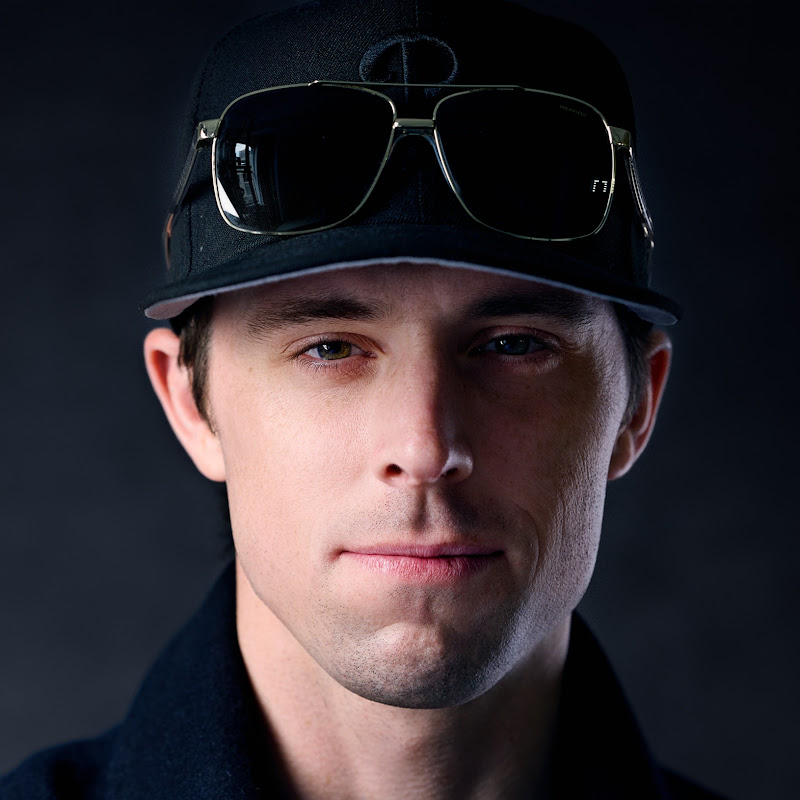
“Darkest Part!” - Cartel Cop on Cartel Occult, “R*pe Tree” & Life-Changing Cure | Matt Thomas • 379
YouTube · 9n_Uz0vN3WA
Quick Read
Summary
Takeaways
- ❖Matt Thomas, a 32-year Arizona Sheriff's veteran, spent the majority of his career fighting the Sinaloa cartel, primarily dealing with mid-level to upper management figures.
- ❖The psychological toll of the job led Thomas to seek therapy and eventually medically supervised ketamine treatments, which he describes as a 'miracle drug' for processing trauma.
- ❖Thomas experienced auditory exclusion during high-stress cartel house raids, a common physiological reaction to extreme adrenaline.
- ❖Cartel operations on the border involve brutal human exploitation, including 'rape trees' and the use of drug-laced water bottles to force migrants to continue hiking.
- ❖The cartels have increasingly adopted occult practices and 'narco-saints' like Santa Muerte and Jesus Malverde, which Thomas believes correlates with a disregard for human life.
- ❖Thomas's personal journey, from a rough neighborhood to law enforcement, was influenced by his WWII veteran grandparents and a desire to provide for his family.
- ❖He successfully advocated for law enforcement officers in Arizona to legally access ketamine therapy under medical supervision, challenging the governing board's initial resistance.
Insights
1Ketamine Therapy as a 'Miracle Drug' for Law Enforcement Trauma
Matt Thomas underwent medically supervised ketamine treatments to address decades of cumulative and acute stress, claustrophobia, and sleep issues stemming from his law enforcement career. Despite initial skepticism and bureaucratic hurdles (cops couldn't do it, but firefighters could), he successfully advocated for its legality for officers. The six-session treatment, which included mandatory counseling, allowed his brain to process past, present, and future traumas, releasing emotional attachments to horrific memories without erasing the memories themselves. This resulted in a significant personality change, making him calmer and less prone to anger, effectively 'beating the statistic' of early death post-retirement for law enforcement.
Thomas describes his journey from a buddy suggesting he get help, seeing a therapist, learning about ketamine from a retired SEAL, and his shrink calling it a 'miracle drug' (). He details fighting the governing board with a cocaine-as-medical-procedure analogy (), getting a scholarship, and a doctor covering his fees to 'move the needle' for law enforcement (). He explains the 'hippie-ish' process, grounding devices, and how his brain processed past traumas like a friend's death () without emotional breakdown ().
2The Evolution of Cartel Brutality and Occult Practices
Thomas witnessed a significant shift in cartel operations from the early 90s to the 2000s and beyond. Initially, 'mafiosos' had certain 'lines you didn't cross,' like harming women or children. However, with the rise of structured cartels and the adoption of 'narco-saints' like Santa Muerte and Jesus Malverde, their behavior became increasingly dehumanized. This included horrific practices such as 'rape trees' (trophy sites for smugglers to sexually assault women) and the use of drug-laced concoctions to force migrants through the desert. Thomas believes this embrace of occult beliefs, which often involve prayers for evil and power, directly correlated with a greater disregard for human life and increased violence.
Thomas explains how cartels evolved from 'mafiosos' to more overt, structured organizations (). He describes 'rape trees' as trophy sites for smugglers () and recounts a story of a woman carrying morning-after pills because she expected to be raped multiple times during her journey (). He details the cartels feeding migrants water mixed with meth and fentanyl to keep them moving (). He connects the rise of Santa Muerte and Jesus Malverde () to a change in cartel behavior, where they 'started caring less about humanity' and disregarded previous 'lines you didn't cross' ().
3The Psychological Toll and Hyper-Vigilance of Law Enforcement
A career in law enforcement, particularly fighting cartels, instills a constant state of hyper-vigilance and can lead to profound psychological scars. Thomas describes experiencing survivor's guilt after a colleague's death and a 'death wish' mentality in his younger years, where he actively sought out dangerous situations. The constant exposure to violence and the need to 'flip a switch' between combat and normal family life creates a unique and intense mental burden. This hyper-vigilance persists even off-duty, as illustrated by an incident where a simple neighborly interaction triggered an immediate emergency action plan in his mind.
Thomas discusses survivor's guilt after a colleague's death () and admitting he 'didn't plan on living this long' in his 20s, actively seeking dangerous situations (). He describes the 'seconds of pure chaos followed by hours of nothing' () and the need to 'flip a switch' between dealing meth and attending a daughter's dance recital (). He recounts an incident where a neighbor returning keys triggered a full tactical response in his mind, highlighting persistent hyper-vigilance ().
Bottom Line
The cartels' adoption of 'narco-saints' and occult practices like Santa Muerte is not merely a cultural phenomenon but a strategic tool that desensitizes members, allowing them to commit increasingly brutal acts without moral conflict, thereby enhancing their operational ruthlessness.
This suggests that counter-cartel strategies must consider not just economic and logistical disruption, but also the ideological and psychological underpinnings that enable extreme violence. Addressing these 'spiritual' aspects might be a novel area for intervention or understanding their resilience.
Develop intelligence programs focused on understanding and mapping the evolving religious and occult practices within cartel structures to predict shifts in their operational brutality or recruitment tactics. This could inform psychological warfare or community outreach efforts.
The 'miracle drug' potential of ketamine therapy for first responders' trauma is severely hampered by outdated regulations and bureaucratic resistance, despite clear medical and personal benefits.
This creates a significant disparity in mental healthcare access, leaving many officers suffering unnecessarily and contributing to high rates of PTSD, suicide, and early mortality post-retirement. The resistance from governing boards, often based on a 'doing drugs legally' mindset, ignores scientific evidence and the unique occupational trauma faced by law enforcement.
Advocate for nationwide legislative reform to standardize and expand access to psychedelic-assisted therapies like ketamine for first responders, similar to the guest's successful local efforts. This includes public education campaigns, data collection on treatment efficacy, and direct engagement with law enforcement agencies and governing bodies to update policies.
Key Concepts
Compartmentalization
Law enforcement officers, especially those in high-stress roles, often compartmentalize traumatic experiences to continue functioning. While effective in the short term, this can lead to long-term psychological issues like PTSD, as emotions remain suppressed and can resurface unexpectedly.
Apex Predator Mentality
Some officers adopt an 'apex predator' mindset, viewing their role as hunting 'bad guys' who also hunt them. This drive can lead to extreme dedication and a willingness to confront danger, but also a 'death wish' or disregard for personal safety, contributing to long-term psychological stress.
Lessons
- Law enforcement agencies should actively explore and destigmatize medically supervised psychedelic therapies like ketamine for officers suffering from PTSD and cumulative stress, following the model of the Arizona Sheriff's Office.
- Individuals in high-stress professions should proactively seek mental health support, recognizing that psychological trauma can manifest in unexpected ways (e.g., claustrophobia) and that traditional therapy can be a gateway to more effective treatments.
- Policymakers and citizens must engage with border issues beyond political rhetoric, focusing on the human rights violations perpetrated by criminal organizations and advocating for policies that address exploitation rather than merely border crossings.
Notable Moments
Thomas recounts a harrowing cartel house raid where he, as point man, misinterpreted a 'no, no, no' as 'go, go, go,' leading him to clear a potentially rigged house alone, only to find it empty.
This illustrates the extreme pressure, miscommunication potential, and psychological intensity of cartel operations, highlighting the fine line between life and death in such environments and the physiological effects of adrenaline.
Thomas describes his wife's visceral reaction to entering a 'yabaradia' (herb store), feeling an 'evil' presence that caused her unborn son to kick intensely, and a 'keep the law away' candle breaking when he tried to purchase it.
This moment provides a unique, almost supernatural, perspective on the perceived spiritual darkness associated with cartel occult practices, contrasting the rational law enforcement view with a deeply cultural and intuitive understanding of evil.
Quotes
"Hunting bad guys, hunting men is the ultimate hunt, 'cause that's somebody that hunts you back."
"In my profession, that is being called a miracle drug. And I've seen some of the results of that, and I would tend to agree."
"Your brain is going to do what your brain needs to do to repair itself."
"You'll always remember the scene... but the emotion attached to it kind of either goes away or dulls enough so that it's not causing you to emotionally break down."
"Our job is basically seconds of pure chaos, followed by hours of nothing."
"Our border policies were allowing a criminal organization to thrive on people, and they were victimized. And so we were complicit in that, whether we want to admit it or not as a country."
"Your sheriff is the most important elected official that you will hire as a people, because that's where the line was drawn in the sand when 2020 happened."
Q&A
Recent Questions
Related Episodes

Sadhguru - Stop Letting Your Mind DESTROY You | SRS #315
"Sadhguru challenges conventional wisdom on 'being in the moment' and stress, arguing that mastering the mind requires understanding its sophisticated design and consciously directing one's internal chemistry for profound well-being."
🚨 THEY… F*CKING... FOUND… OUT… 😂😂😂
"The host delivers a fiery, unfiltered commentary on global and domestic political events, framing them as a battle between a 'collapsing globalist order' and a 'resurgent new right' that prioritizes national sovereignty and traditional Western values."

This Has Never Happened Before | Financial Audit
"A 37-year-old man faces a staggering $40,000 in collections, a decaying relationship, and a history of job losses, all while blaming external factors and resisting fundamental financial advice."

EXPLOSIVE New Report CONNECTS Epstein Associate to Trump Insider?!?!
"An investigative journalist uncovers how Russian model Kira Dictiar, a key recruiter for Jeffrey Epstein, maintained ties to a Trump administration State Department official and Vladimir Putin's alleged partner, raising serious questions about uninvestigated connections."