
THE KARATE KID, PART III (1989) Movie Reaction! | First Time Watch! | Ralph Macchio | Pat Morita
YouTube · A3oHPjVJ-50
Quick Read
Summary
Takeaways
- ❖Daniel LaRusso's character undergoes a significant, uncharacteristic departure, making it difficult for hosts to stay engaged.
- ❖The villain, Terry Silver, is praised for his effective manipulation and portrayal as a sociopathic entrepreneur.
- ❖Mr. Miyagi's boundless capacity for forgiveness and patience remains a consistent and powerful element of the story.
- ❖The film's narrative felt 'oversaturated' and relied on 'brute force' to drive the plot, lacking the subtlety of its predecessors.
- ❖The character of Jessica Andrews is deemed largely superfluous, serving mainly as Daniel's external conscience.
Insights
1Daniel LaRusso's Inconsistent Character Arc
The hosts express significant disappointment with Daniel's character in Part III, noting a 'massive departure' from his core values established in the first two films. They find his lying, stealing, and aggressive behavior uncharacteristic, making it hard to root for him despite understanding his intentions to help Mr. Miyagi. This shift felt unearned and primarily served the plot's need for conflict.
Michael Boo states, 'it feels like Daniel's departure from who he is as a core character in the first and the second one is so massive that it's hard for me to stay on board.' Ashley Morgan adds, 'had Daniel done the tournament without that moment of like lying and stealing... The execution was poor and through that I kept making poor decisions.'
2Terry Silver as an Effective, Manipulative Villain
Despite their critiques of the overall plot, the hosts commend Thomas Ian Griffith's portrayal of Terry Silver. They highlight his ability to embody a 'sociopath entrepreneur' driven by revenge, effectively manipulating Daniel and Crease. His 'villain monologue' and 'dead look in his eyes' are cited as examples of his menacing and compelling performance.
Ashley Morgan notes, 'His manipulation was crazy.' Michael Boo adds, 'I really really believed Terry Silver. Thomas Ian Griffith did a really really great job of playing Terry and kind of, you know, playing this dichotomy of like the sociopath entrepreneur who's out for revenge and then this like really really nice guy.'
3The Film's Shift to 'All Karate' Over Emotional Depth
A central critique is that 'The Karate Kid Part III' prioritizes karate action and tournament drama over the nuanced emotional relationships and coming-of-age themes that defined the earlier films. This shift made the emotional beats feel 'heightened and faster' rather than the 'slow burn' the hosts were accustomed to, leading to a less impactful story.
Michael Boo explains, 'this one's more about karate... this was just fully karate. It's the tournament. It's I want to make him pay. It's we're we're teaching the bad kind of karate. It was all karate instead of like the emotional relationships around it.'
4Mr. Miyagi's Unwavering Forgiveness and Wisdom
Throughout Daniel's misguided actions, Mr. Miyagi consistently demonstrates immense patience, forgiveness, and wisdom. His ability to understand Daniel's struggles and offer guidance without anger, even after Daniel's significant missteps, is highlighted as a powerful and consistent aspect of his character.
Ashley Morgan states, 'Mr. Miyagi's ability for forgiveness is has no bounds.' Michael Boo adds, 'Mr. Miyagi doesn't get mad. He never gets mad. He understands. There's a solution to everything.'
Key Concepts
The Mentor's Unwavering Patience
Mr. Miyagi consistently demonstrates infinite patience and forgiveness, even when Daniel makes poor decisions and lies. This highlights the power of unconditional support in mentorship, allowing the mentee to learn from mistakes without fear of permanent condemnation.
Character Consistency vs. Narrative Necessity
The hosts critique the film for sacrificing Daniel's established character traits (e.g., integrity, respect for Miyagi's teachings) to create conflict. This model emphasizes the challenge in writing sequels to maintain character authenticity while introducing new dramatic arcs.
Lessons
- For storytellers: Maintain character consistency across sequels to preserve audience investment and avoid alienating viewers from established personas.
- For filmmakers: Ensure supporting characters serve a vital, non-superfluous narrative purpose, integrating their arcs meaningfully into the main plot.
- For writers: Balance action and plot progression with emotional depth, allowing character relationships to develop organically rather than forcing conflict through extreme or uncharacteristic behavior.
Quotes
"It feels like Daniel's departure from who he is as a core character in the first and the second one is so massive that it's hard for me to stay on board."
"Mr. Miyagi's ability for forgiveness is has no bounds. Oh my god. No bounds. No bounds. And like at least I was very glad that that was consistent."
"This one's more about karate... this was just fully karate. It's the tournament. It's I want to make him pay. It's we're we're teaching the bad kind of karate. It was all karate instead of like the emotional relationships around it."
Q&A
Recent Questions
Related Episodes

RED, WHITE & ROYAL BLUE Movie Reaction! | First Time Watch | Nicholas Galitzine, Taylor Zakhar Perez
"CinePals hosts react to 'Red, White & Royal Blue,' praising its witty writing and visual storytelling while critiquing certain plot pacing and character agency issues."
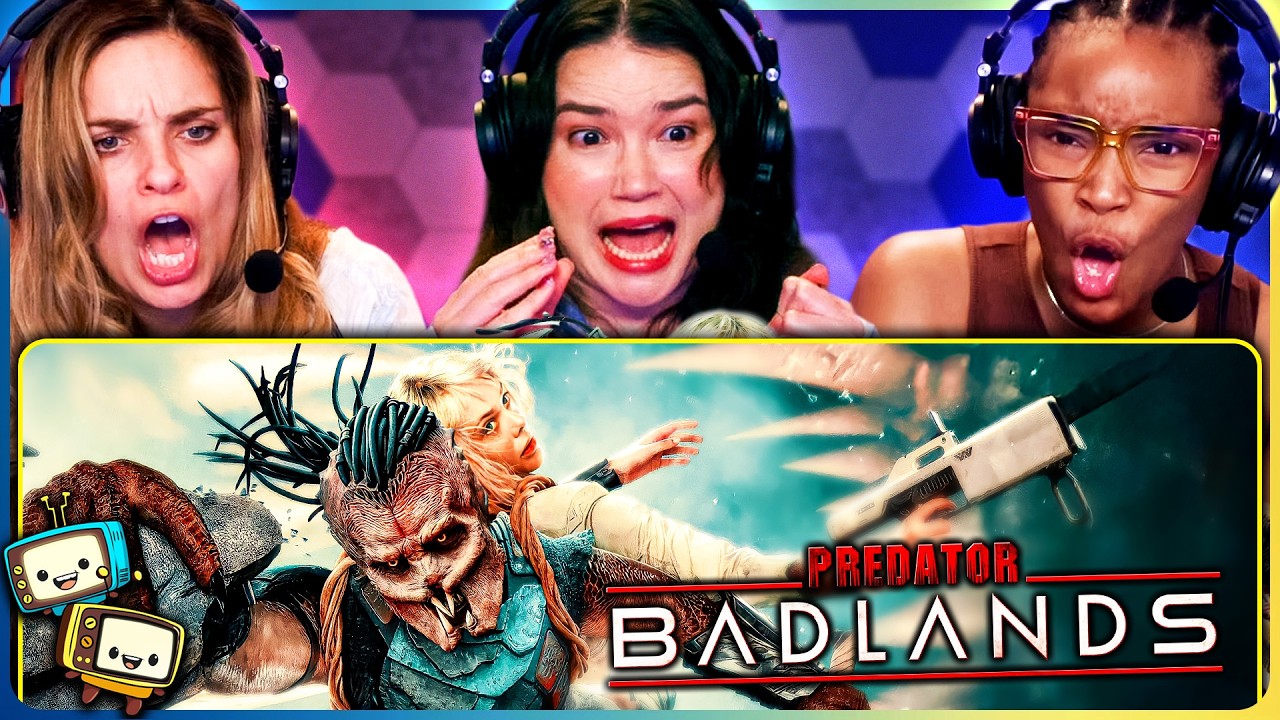
PREDATOR: BADLANDS Movie Reaction! | First Time Watch | Dimitrius Schuster-Koloamatang, Elle Fanning
"This 'Predator: Badlands' reaction unpacks how the film redefines the Predator narrative, focusing on an underdog protagonist, complex family dynamics, and a unique 'Predator as prey' planet, all while seamlessly integrating the Wayland-Yutani Corporation."

JUMANJI: WELCOME TO THE JUNGLE Movie Reaction! | First Time Watch! | Dwayne Johnson | Jack Black
"CinePals hosts Michael Boost and Viven Day dissect Jumanji: Welcome to the Jungle, praising its fresh take on the classic, standout performances, and immersive world-building while offering gamer-specific critiques."

THE SECRET OF NIMH (1982) Movie Reaction! | First Time Watch! | Dom DeLuise | Elizabeth Hartman
"Hosts Jabby and Ashley react to the 1982 animated film 'The Secret of NIMH,' expressing surprise at its dark themes and mature storytelling, a stark contrast to contemporary G-rated movies."