
MAGA DUMPS Trump Over Iran War Betrayal (w/ Jen Psaki)
YouTube · A5d-E5voNxU
Quick Read
Summary
Takeaways
- ❖The Trump administration's communication strategy for the war in Iran is an 'F minus' due to inconsistent messaging, lack of planning, and contradictory justifications for military action.
- ❖The war's escalation, including potential ground troops and rising gas prices, is creating significant political problems for Trump and Republicans, particularly in military-heavy states like Texas and Georgia.
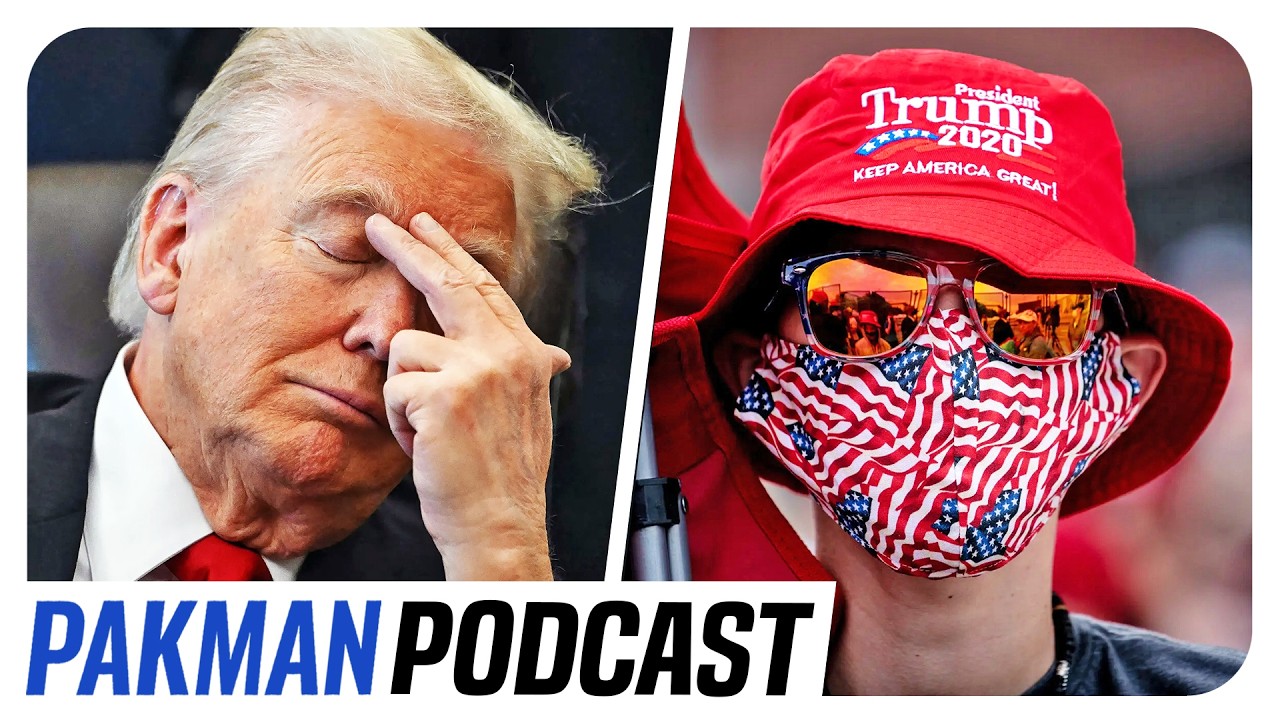
- ❖The MAGA base's approval of the Iran war is driven by loyalty to Trump, demonstrating that 'MAGA is another way of saying Trump' rather than adherence to specific anti-war or America First ideologies.
- ❖Trump's informal communication style, relying on 'cell phone' interviews with reporters, blurs the line between access and actual information, raising concerns about journalistic objectivity and the dissemination of unverified claims.
- ❖Democratic primaries are currently defined by generational shifts and an anti-establishment sentiment, favoring candidates perceived as 'not like a politician' or willing to take risks with bold messaging.
- ❖Future Democratic presidential candidates will need to combine toughness against perceived systemic failures with an uplifting vision for the country to succeed in 2028.
- ❖The Illinois Senate primary victory of Juliana Stratton, using a provocative 'Trump' ad, highlights the effectiveness of breaking traditional political communication norms to gain attention and mobilize primary voters.
Insights
1Trump's Incoherent Iran War Messaging and Policy Failure
Jen Psaki and Dan Feifer, both former White House communications professionals, characterize the Trump administration's messaging on the war in Iran as a 'freaking disaster' and an 'F minus.' They highlight the lack of a clear, consistent message, with Trump and his team offering rotating and often contradictory rationales for the military action. This communication breakdown stems from a fundamental policy problem: the absence of a robust planning process, clear objectives, or an 'exit strategy' for the war. The hosts note Trump's use of the word 'excursion' instead of 'incursion' as an example of the administration's unserious approach, which has led to public confusion, rising gas prices, and international diplomatic challenges.
Psaki states, 'I have no idea what the message is. Nobody knows what the message is.' She explains that good talking points are 'based on the justification for why you're doing something... and if that doesn't exist, it's really hard to write good talking points.' Feifer adds, 'It's just a rotating series of rationale that are often in conflict with each other.' (, , )
2MAGA Loyalty Overrides Policy on Iran War
Despite Trump's 'America First' rhetoric and previous opposition to foreign wars, a significant majority (85-90%) of self-identified MAGA voters approve of the war with Iran. Dan Feifer argues this demonstrates that 'MAGA is another way of saying Trump,' meaning the base's loyalty is to the individual, not a consistent set of ideological views like anti-interventionism or smaller government. This creates a disconnect with high-profile MAGA figures (e.g., Tucker Carlson, Megan Kelly) who oppose the war, but their dissent does not sway the core base. This loyalty-driven dynamic makes it difficult to predict the Republican party's future post-Trump.
Feifer notes, '85 to 90% of self-identified MAGA voters are okay with approve of the war with Iran. And that is like a very interesting divide.' He elaborates, 'MAGA is another way of saying Trump. What Trump is for, they are for.' (, )
3Democratic Primary Divides: Generational and Anti-Establishment
Jen Psaki and Dan Feifer identify key dividing lines shaping current Democratic primaries beyond traditional ideological splits (center vs. left). These include a generational divide, with younger candidates challenging older incumbents (e.g., Seth Moulton vs. Ed Markey), and an 'inside vs. outside' or anti-establishment trend. Candidates who are perceived as 'not like a politician' or who defy political gravity, even amidst scandal, are gaining traction. This suggests a voter desire for authenticity and a rejection of traditional Washington politics, even if it means supporting less conventional figures.
Psaki observes about the Maine primary, 'Maybe scandal matters a lot less than it did back in the age the day. Maybe Trump has muted that a bit for people.' Feifer adds, 'The second divide is generational... and then the third one is inside outside.' (, )
4The Perils of Trump's 'Cell Phone' Communication and Access Journalism
Trump's unconventional communication strategy involves frequently taking unscheduled calls from reporters, leading to a stream of often contradictory and unverified statements. Psaki and Feifer discuss the 'agit' this causes for professional communicators and the ethical dilemma for journalists. While access to the president is generally valued, Trump's approach blurs the line between access and actual information, as he often lies or 'vomits words' without substance. This can lead to 'breathless selfie videos' from reporters treating every utterance as an exclusive, without sufficient context or fact-checking, ultimately undermining serious reporting.
Psaki describes the 'agit' of reporters calling the president directly, stating, 'There's no way that doesn't shade how they report things or talk about them even if it's not conscious.' Feifer adds, 'There is this confusing access with information. Which if the president talks to you but he doesn't tell you anything and he lies... what is the value?' (, )
Lessons
- For political campaigns, prioritize clear, consistent messaging rooted in well-defined policy objectives to avoid public confusion and maintain credibility, especially on critical issues like war.
- Understand that for a significant portion of the electorate, loyalty to a leader can supersede specific ideological positions; campaign messaging should account for this dynamic rather than assuming policy alignment.
- Democratic candidates should consider embracing unconventional communication strategies and authentic, anti-establishment personas to break through in crowded primaries, as traditional political approaches may be less effective.
- Journalists covering high-profile political figures, especially those prone to misinformation, must rigorously fact-check and contextualize statements, distinguishing between mere access and substantive information.
- Future presidential candidates should aim to present a vision that is both tough enough to address systemic issues and inspiring enough to appeal to a broader sense of national unity and progress, moving beyond purely negative campaigning.
Notable Moments
Jen Psaki's personal reaction to the Iran war announcement, expressing fear due to Trump's lack of impulse control and planning.
This provides a human, insider perspective on the gravity of presidential decisions and the specific concerns about Trump's leadership style in a crisis.
The hosts' discussion on the term 'excursion' used by Trump instead of 'incursion' to describe military action.
This highlights the perceived unseriousness and communication gaffes of the administration, which can have significant implications for public perception and international diplomacy.
The analysis of Juliana Stratton's 'Trump' ad in the Illinois Senate primary.
This serves as a concrete example of how aggressive, unconventional, anti-Trump messaging can be highly effective in mobilizing primary voters and breaking through in a crowded media landscape, even if it defies traditional political norms.
Quotes
"Donald Trump has no impulse control. He's not a planner. He's not a policy wonk or expert. He doesn't listen to anyone around him. And so the concern I had once I had some coffee and digested a bit was how are we going to unwind from this?"
"No one voted for Donald Trump for the goal of going to war with Iran. In fact, people probably voted for the if they if they voted on war at all, they voted for the opposite of that."
"MAGA is another way of saying Trump. What Trump is for, they are for. And that is just that we have to accept."
"It's not a messaging problem. It's it's not a com problem. It's a policy problem. This one I think is actually both."
"I both want people that reporters to take what he says seriously and hold him to account for those things, but also not treat his every utterance as like this huge exclusive get when he's just vomiting words into your phone."
Q&A
Recent Questions
Related Episodes

Trump Dirt REVEALED: Iran, Zohran, Pardons, Deportations
"Journalists Maggie Haberman and Jonathan Swan reveal how Donald Trump operates in his second term, detailing his inner circle, policy priorities, and the surprising checks on his executive power."

Trump Just ENDED JD Vance’s White House Dreams
"A New York Times article and internal White House dynamics reveal Donald Trump's deep dissatisfaction with J.D. Vance, potentially ending Vance's 2028 presidential ambitions and highlighting a broader struggle for control within the Republican Party."
What happens to Trump voters when Trump is gone?
"The David Pakman Show explores the contentious path forward for Trump voters after his political era, exposing alleged corruption, economic misrepresentation, and the necessity of media literacy."

HOT TOPICS | Is Donald Trump Destroying MAGA?!
"Don Lemon declares the MAGA movement is collapsing, citing Donald Trump's escalating political missteps, economic failures, and alienation of his core base and former allies."