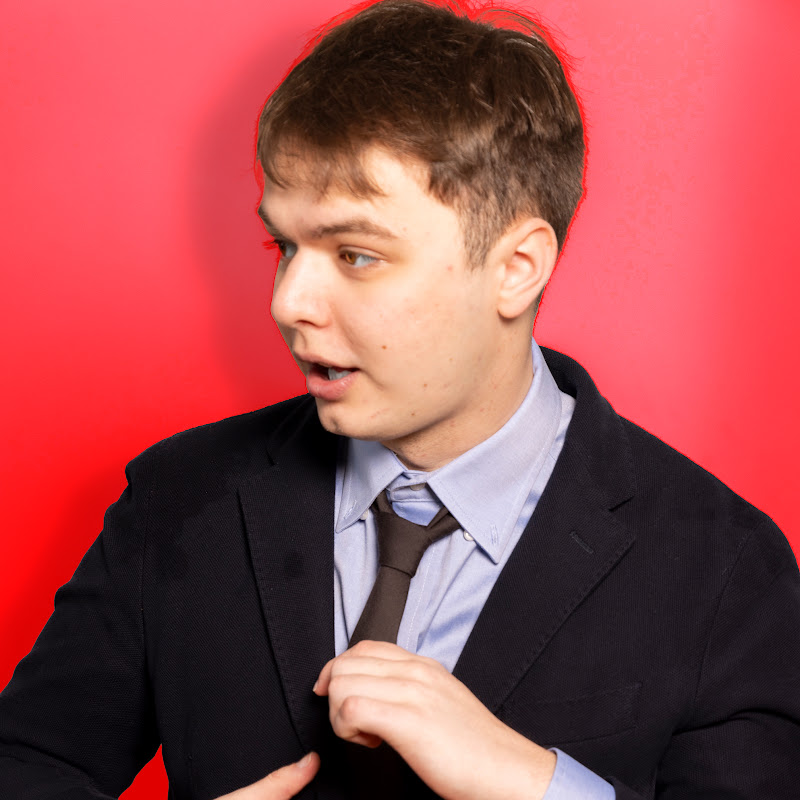
Trump FALLS ON STAGE… here’s the TRUTH?
YouTube · ANWsT2I6iMY
Quick Read
Summary
Takeaways
- ❖The White House Correspondents' Dinner hotel shooting was a genuine incident, with the host Adam Mockler being in the lobby just minutes before it occurred.
- ❖Conspiracy theories claiming the shooting was staged are dismissed as irrational, given the shooter's quick apprehension and distance from the main event.
- ❖Both right-wing (MAGA) and some left-wing influencers are criticized for immediately politicizing the event with unverified claims for engagement.
- ❖Radicalization, particularly among young, disaffected men, is identified as a major societal problem, driven by loneliness, economic struggles, and divisive online content.
- ❖The hosts argue that violence from the right is statistically more prevalent, and Republican rhetoric, especially from figures like Donald Trump, significantly escalates political tension.
Insights
1Firsthand Account of White House Correspondents' Dinner Shooting
Host Adam Mockler was in the hotel lobby minutes before a shooter sprinted in and was tackled, and was at a nearby Substack party during the subsequent lockdown. He recounts the initial confusion, conflicting reports, and the eerie atmosphere before details emerged.
Adam Mockler states, 'I was in the hotel lobby about 10 minutes before this shooting took place... I was in this exact lobby' and 'literally just like 5 minutes from where that shooting happened.'
2Debunking the 'Staged' Conspiracy Theory
Both hosts strongly reject the idea that the shooting was staged, emphasizing that the gunman, Cole Thomas Allen, was immediately tackled in the lobby, two levels above the actual dinner, and never breached security. They argue that the complexity and risk of staging such an event, combined with the perceived incompetence of figures like Cash Patel, make it highly improbable.
Adam Mockler states, 'He sprinted in as fast as he could and he immediately got taken down and tackled to the ground and shot at. He did not get into the security... The dinner was happening two levels below where this guy ran in.' Mike Nellis adds, 'I don't think it makes any sense for this to have been staged.'
3Critique of Political Opportunism and Social Media Incentives
The hosts criticize both MAGA influencers and some on the left for immediately spreading unverified information and conspiracy theories to gain engagement and political advantage. They highlight how the 'broken incentive structure' of platforms like X (Twitter) rewards sensationalism over factual reporting, preventing rational discourse.
Mike Nellis notes, 'you have a ton of MAGA influencers on the right who didn't know anything about what had happened... And they were immediately like, 'The Democrats are trying to murder our president.'' He also calls out 'folks on the left because the is this stage let me spread conspiracy theories.'
4Radicalization as a Systemic Problem
The discussion identifies radicalization, particularly among young, disaffected, and isolated men, as a major societal issue. Contributing factors include loneliness, easy access to guns, lack of mental health infrastructure, economic struggles (young men earning less, less likely to own homes or start businesses), and the spread of misinformation by politicians and influencers.
Mike Nellis states, 'we have like the perfect storm of a series of problems here in America today is you have a ton of disaffected young men who are lonely and isolated and spending all their time on the internet with easy access to guns, no mental health care infrastructure, no understanding of how to build an economy that works for young men.'
5Disproportionate Political Violence from the Right
While condemning all political violence, the hosts argue that violence originating from the right is statistically far more likely. They cite examples like Melissa Hortman's assassination, the Gretchen Whitmer kidnapping plot, attacks on Democratic offices, January 6th, and Charlottesville, contrasting it with the Republican party's tendency to deny or create conspiracy theories about right-wing violence while blaming the left.
Mike Nellis asserts, 'if you just look at the statistics, violence from the right is far more likely by a significant margin.' Adam Mockler adds, 'The Republican party is led by somebody whose entire cabinet is full of the most hyperbolic, sensationalist, apocalyptic people possible.'
Key Concepts
Occam's Razor
The hosts apply Occam's Razor to argue that the simpler explanation for the shooting (a radicalized individual acting alone) is more likely than complex conspiracy theories involving high-level staging, especially given the perceived incompetence of those accused.
Broken Incentive Structure
Social media platforms are described as having a 'broken incentive structure' where immediate, sensational, and often unverified claims generate more engagement and financial reward for influencers, leading to the rapid spread of misinformation during crises.
Running Against Ghosts
Mike Nellis describes a Republican political strategy where they 'run against ghosts,' creating a distorted image of their opponents (Democrats) and then campaigning against that fabricated image, which can be effective when the public is disaffected.
Lessons
- Exercise extreme discernment when consuming news and commentary online, especially during chaotic events, as social media incentives often prioritize engagement over accuracy.
- Support independent media and creators who prioritize honesty and rational analysis over sensationalism and political opportunism, fostering a more responsible information ecosystem.
- Advocate for systemic solutions to address radicalization, including improved mental health infrastructure, economic policies that support young people, and responsible gun control measures.
Notable Moments
Adam Mockler's personal account of being in the hotel lobby shortly before the shooting and experiencing the lockdown at a nearby event.
Provides a unique, firsthand perspective that grounds the narrative in reality, directly countering speculative and conspiratorial online narratives.
Donald Trump tripping and falling while being escorted off stage, an incident largely overlooked amidst the chaos.
Highlights the physical frailty of an elderly president, drawing a parallel to how similar incidents involving President Biden receive disproportionate media attention, exposing a double standard.
RFK Jr. 'dipping off stage and leaving his wife behind' during the evacuation.
Offers a small, telling detail about the individual reactions of public figures under duress, potentially reflecting character or priorities.
Caitlyn Collins from CNN being the only journalist actively seeking information from security guards and reporting live amidst the confusion.
Showcases an example of responsible, proactive journalism in a chaotic situation, contrasting with the immediate, unverified claims made by many online influencers.
Quotes
"I personally do not think this was staged. As somebody that was there, I just don't know how you possibly number one convince somebody to run in and ruin their life. Number two, what's the idea here?"
"I want every single one of them to live to the end of this because I want to prosecute the [expletive] out of them."
"The minute they found out that nobody had been hurt, they moved on like normal people do."
"The Republican party is despicable with the way they create and seow radicalization and fear in America."
"Trump remains a symptom of the problem... The problem exists far beyond now. He's like the most glaring like he's the tumor, right? But the tumor was caused by sugar, right?"
Q&A
Recent Questions
Related Episodes
"Fighting Solves EVERYTHING!" Who's To Blame For Political Violence? + Maria Machado On Trump
"This episode dissects the escalating political violence in the US, with panelists fiercely debating the role of partisan rhetoric and media in radicalization, alongside an interview with Venezuelan opposition leader Maria Machado on US intervention and her country's future."

🚨 LEFTISTS ARE F*CKING SEETHING 😂😂😂
"The host aggressively celebrates perceived 'wins' for the right-wing, from global conflicts and domestic politics to cultural shifts, framing them as a 'humiliation' for the 'leftist world order' and a testament to Donald Trump's influence."

"CATASTROPHIC Failure!" Trump Dinner Assassination Attempt & Royal Visit | With Kari Lake
"Piers Morgan and Kari Lake dissect the catastrophic security failure during an assassination attempt on Donald Trump at the White House Correspondents Dinner, blaming media rhetoric while also discussing King Charles III's high-stakes US visit."
Victor Marx: The Man Who Weaponized Faith. | Candace Ep 329
"Corby Hall, inventor of the Fold AR, details his unsettling encounters with self-proclaimed pastor Victor Marx, exposing alleged spiritual and financial manipulation, including requests for guns for Haiti and attempts to control his business, which the host frames as 'dark psychiatry' and a microcosm of broader societal deception."