
Amb. Chas Freeman: Negotiations… or the Brink of All-Out War?
YouTube · AdJzX_YXSEU
Quick Read
Summary
Takeaways
- ❖US policy towards Iran is not based on a coherent strategy but on domestic political considerations and Israeli interests.
- ❖The Trump administration's negotiation team has a consistent record of failure in international diplomacy.
- ❖Iran's missile force is considered an unnegotiable deterrent, essential for its defense against Israel.
- ❖An external attack on Iran would likely unify its populace behind the government, despite existing domestic unrest.
- ❖Arab Gulf countries and Turkey actively counsel against a US/Israeli attack on Iran, refusing to allow their territory or airspace to be used.
- ❖Russia and China support Iran's territorial integrity but are not military allies committed to its defense.
- ❖The Epstein files controversy is framed as a distraction from the corruption of the Western political elite and an attempt to whitewash Israel's connections.
- ❖European nations are increasingly recognizing the loss of the war in Ukraine and seeking independent foreign policies, no longer fully reliant on the US.
- ❖US interests in West Asia have narrowed to maintaining transit routes and supporting Israel, rather than broader economic stability.
Insights
1US Policy Towards Iran Lacks Coherence and Strategy
Ambassador Freeman states that Donald Trump's administration operates without a clear policy process or strategy regarding Iran. He suggests that decisions, such as deploying an armada, are not based on well-defined objectives but rather on impulsive actions or external pressures.
Donald Trump does not know what he wants and what he's why he's doing what he's doing. There is no policy process in Washington. There's no strategy that is developed. He has surrounded himself with yesmen.
2US Actions Primarily Serve Israeli Interests
A core argument is that the US military deployment and threats against Iran are primarily for Israeli purposes, aiming to establish Israel as the unchallenged hegemon in West Asia by neutralizing Iran, its principal obstacle.
The unstated but obvious purpose of all of this which is to level every country that opposes Israel in West Asia. To make Israel the unchallenged hegeimon of West Asia and Iran is the principal obstacle to that. This is basically the United States being used by Israel for Israeli purposes.
3Trump's Negotiation Team Has a Record of Failure
The American negotiation team, including Jared Kushner, is characterized by a consistent lack of success in previous diplomatic efforts, such as in Gaza and Ukraine, suggesting their current efforts with Iran are unlikely to yield positive results.
The people on the American side of those negotiations Witco Kushner etc have an unblenmished record of failure. They have not accomplished anything in any negotiation that they have entered. There is no ceasefire in Gaza... The Ukraine war, same team, same result. If this were baseball, I would say they're batting zero.
4Iran's Missile Force is a Credible Deterrent
Iran's extensive missile capabilities are presented as a significant deterrent, capable of overwhelming Israeli defenses and causing severe damage, which reportedly led Israeli military advisors to counsel against a direct attack.
Netanyahu probably went home and talked to his military who are intelligent people and they said if we do this we're going to pay a terrible price. We could not stop Iranian missiles at the end of the so-called 12-day war in June... Iran would respond to an attack on it by the United States with a huge barrage of perhaps as many as 2,000 missiles all at once to overwhelm Israeli defenses and devastate Israel.
5External Attack Would Unify Iran, Not Overthrow Government
Despite significant domestic unrest and economic difficulties within Iran, any external military confrontation by the US would likely cause Iranians to rally behind their country and government, rather than leading to regime change.
If you confront Iran Iranians like that they rally behind their country... if Mr. Trump attacks he will clarify the situation not against the government but in favor of it.
6Regional Powers Oppose War with Iran
Arab states and Turkey are actively working to prevent a war between the US/Israel and Iran, understanding the severe regional consequences. They have reportedly advised against using their territory or airspace for an attack.
The Gulf Arab countries all of whom have sided basically with Iran do not attack Iran they have council do not use our airspace do not use any base on our territory to attack Iran... Turkey has played a very active role with the Arabs despite the fact that the Turks and the Arabs have a lot of differences... they all agreed, you know, we don't want another Israeli attack on Iran.
7Russia and China are Friends, Not Allies, to Iran
While Russia and China share an interest in supporting Iran's territorial integrity and provide some technological and political support, they are not committed to militarily defending Iran against a US or Israeli attack.
Iran has friends but they're not allies. They are not committed to defend Iran... China will not extend its protection to Iran. It will be happy to support Iran to the extent Iran wants its support with technology, with weaponry... but it is not going to send troops or counterattack the United States or Israel.
Bottom Line
The Epstein files controversy is a deliberate distraction from the widespread corruption of the Western political elite and an attempt to shield Israel from scrutiny regarding its connections.
This suggests a coordinated media effort to control narratives and protect powerful figures, undermining public trust in institutions and media integrity.
Independent media and investigative journalism have an opportunity to expose these deeper connections and challenge state-sponsored narratives, though they face significant pressure.
The current US-Iran standoff is a 'lose-lose' situation for all parties involved: the US, Iran, and Israel, with no clear path to a beneficial outcome for anyone.
This implies that the current policy trajectory is inherently destructive, leading to negative consequences across the board rather than achieving any stated or unstated objectives.
A re-evaluation of fundamental assumptions and a shift towards genuine diplomatic engagement, potentially led by non-aligned third parties, could be the only way to break the cycle.
US interests in West Asia have significantly diminished, now primarily focused on maintaining transit routes and supporting Israel, rather than broader economic stability or counter-terrorism.
This redefinition of US interests means traditional allies in the region can no longer rely on the US as a consistent partner for regional stability, forcing them to forge new alliances and policies.
Regional powers can leverage this shift to increase their autonomy and pursue greater integration among themselves, reducing external dependencies and fostering local solutions to regional challenges.
Lessons
- Recognize that US foreign policy, particularly in West Asia, may be driven more by domestic political pressures and external lobbying than by coherent national strategy.
- Understand that military threats against Iran, rather than weakening its government, are likely to consolidate domestic support for the regime.
- Evaluate international diplomatic efforts with skepticism, especially when led by individuals with a documented history of negotiation failures.
Quotes
"This is basically the United States being used by Israel for Israeli purposes. Or maybe it's by the United States being used by Zionists in the United States to support Israel's objective."
"If this were baseball, I would say they're batting zero. They have no achievements at all of any consequence."
"Deterrence is not weapons. Deterrence is the mind of the actors involved."
"Israel is the pro source of instability in the region not Iran."
"The Epstein files are a reproach to the entire western democratic system which is now, you know, basically what they say is if you're a bureaucrat, if you have a lot of money, you're an oligarch, you can get away with anything. There is no accountability."
"If there were no Israel, there would be no problem. The United States wouldn't be very concerned about Iran and to the extent we were concerned we'd probably be looking for ways to strengthen relations with Iran rather than weaken them."
Q&A
Recent Questions
Related Episodes

Iran Deal Skepticism. Whoopi Vs Vance. Potomac Park Invasion. Racist Hurls Slurs At Black Boy.
"This episode dissects multiple instances of alleged anti-Black policies and racial injustice, from the Trump administration's legal challenges to reparations and the Iran deal, to police brutality and the erasure of Black history."

PBS News Hour full episode, June 12, 2026
"The U.S. and Iran inch closer to a contentious peace deal amidst conflicting terms, while President Trump hosts a UFC cage fight on the White House lawn, and Gaza's children struggle for education in war-torn conditions."
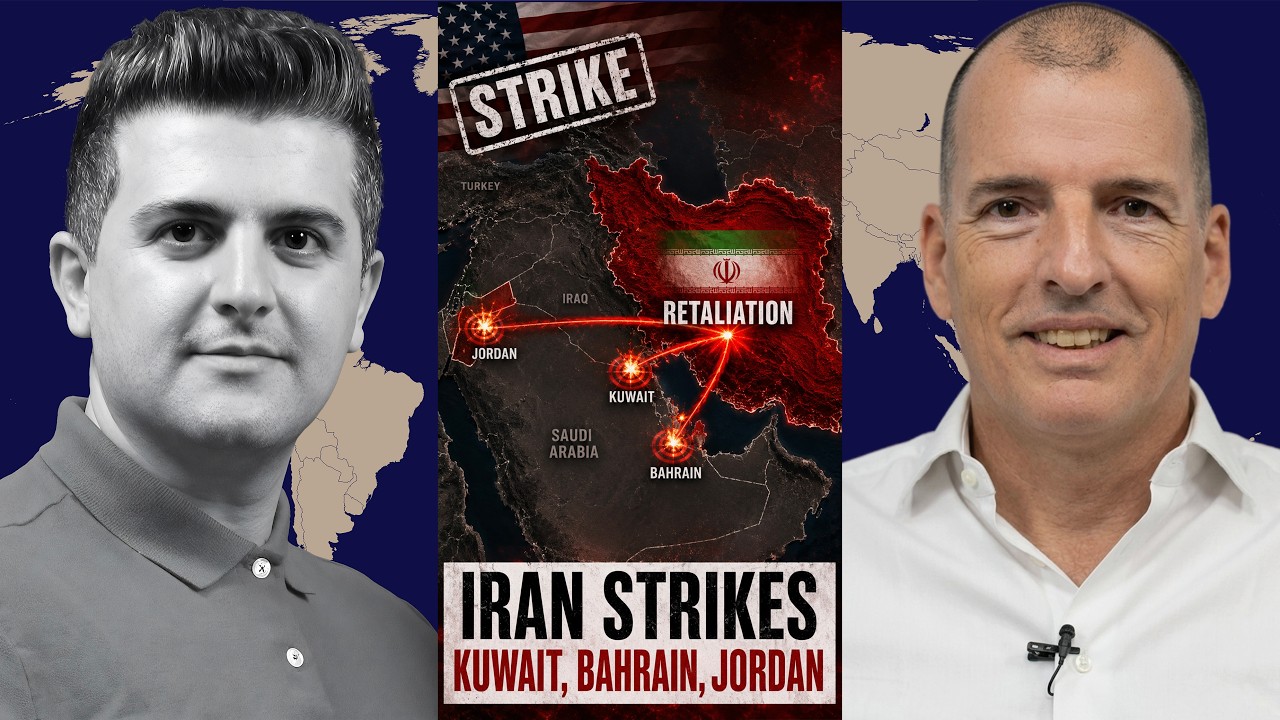
Alex Krainer: US STRIKES Iran – Iran RETALIATES Against Kuwait, Bahrain & Jordan!
"Amidst escalating US-Iran conflict and Iranian retaliation against regional US allies, this episode argues that US foreign policy is deeply controlled by an 'Anglo-Zionist conspiracy' led by the Rothschild banking dynasty, prioritizing Israeli interests over American ones."

Larry Johnson: Iran Missiles Rain Down on Northern Israel – Massive Strikes!
"Geopolitical analyst Larry Johnson details how Israel's recent strike on an 'empty building' in Beirut triggered direct Iranian missile retaliation, escalating regional tensions and jeopardizing a US-Iran peace deal brokered by Pakistan."