
Is This The Dumbest DC Conspiracy Yet?
YouTube · AvNYtPrxOEk
Quick Read
Summary
Takeaways
- ❖Jennica Pounds, known as 'Data Republican,' claims Punchbowl News controls Senator John Thune, preventing him from advancing the 'Save America Act.'
- ❖Pounds' 'evidence' includes Thune's appearance on a Punchbowl podcast and corporate subscriptions to the publication, which the hosts describe as nonsensical.
- ❖Pounds has a documented history of misinterpreting data, yet her past claims led to Elon Musk cutting refugee funding and Politico Pro losing significant revenue.
- ❖Despite the absurdity, powerful figures like Senator Mike Lee and a DOJ official have amplified similar conspiracy theories from Pounds.
- ❖The hosts argue that Pounds reframes corporate influence as a media attack, appealing to a Republican base that distrusts the press.
Insights
1The 'Punchbowl-Thune' Conspiracy Theory
Jennica Pounds, operating as 'Data Republican,' alleges that Senator John Thune is controlled by Punchbowl News, an insider DC publication. Her theory posits that this control prevents Thune from eliminating the filibuster to pass Donald Trump's 'Save America Act,' a piece of legislation focused on Republican voting restrictions. The 'evidence' includes Thune's appearance on a Punchbowl podcast and the fact that companies and congressional offices subscribe to Punchbowl.
Pounds created flowcharts attempting to link corporate sponsorships of Punchbowl to Thune's legislative decisions, suggesting a nefarious connection based on a single podcast appearance and subscriptions.
2Jennica Pounds' History of Misinformation and Influence
Jennica Pounds, a software engineer, rose to prominence online as an 'amateur Doge vigilante' beloved by Elon Musk. She is notorious for misinterpreting data and generating 'scandals' based on tenuous connections. Her past influence on Musk led to cuts in refugee funding. A similar campaign against Politico Pro, alleging they received 'USAID funds' (actually just subscriptions from government agencies), resulted in numerous agencies canceling their subscriptions, causing significant revenue loss for Politico.
Will Summer details Pounds' past as an 'amateur Doge vigilante' who would present spreadsheets to Elon Musk, leading to cuts like refugee funding (). Andrew Edgar recounts her previous campaign against Politico Pro, which caused them to 'lose a fair bit of revenue' ().
3Real-World Consequences of Absurd Conspiracies
Despite the illogical nature of Pounds' theories, they are taken seriously and amplified by influential figures. Elon Musk previously retweeted her frequently, and Senator Mike Lee has publicly supported her claims. A high-ranking DOJ official, Harmy Dylan, also amplified an older, similar attack on Punchbowl. This amplification translates into tangible impacts, such as cuts to humanitarian aid and financial losses for media organizations, demonstrating the power of confidently presented misinformation.
Elon Musk retweeted 'Data Republican' 'all the time' (). Senator Mike Lee 'has been really into this' (). Harmy Dylan, a top DOJ official, 'randomly pulled RTE something from May' of a previous year targeting Punchbowl (). Andrew Edgar notes the 'unimaginable actual human cost' of humanitarian aid cuts influenced by Pounds ().
Bottom Line
The strategy of framing corporate influence as a media attack allows conspiracy theorists to bypass traditional political arguments (e.g., campaign finance reform) and instead rally support around a 'beat up the media' narrative.
This tactic weaponizes public distrust of media, diverting attention from systemic issues and making it harder to address genuine concerns about lobbying or corporate power.
Journalists and analysts can proactively expose the rhetorical shifts used by conspiracy theorists to reframe political issues, thereby inoculating audiences against such manipulations.
The 'screenshot of text out of context' tactic has evolved into creating overly complicated, yet visually authoritative, flowcharts or data presentations that are too complex for casual observers to debunk quickly.
This complexity lends an air of legitimacy to false claims, making them harder to dismiss outright and allowing them to spread before detailed fact-checking can occur.
Develop tools or educational content that simplifies the deconstruction of complex, misleading visual 'evidence,' helping the public quickly identify logical fallacies in such presentations.
Lessons
- Be skeptical of 'data-driven' claims, especially when presented by self-proclaimed experts who lack formal journalistic or analytical accountability.
- Always question the underlying logic of complex flowcharts or 'evidence' that seems to connect disparate entities, particularly when a simpler, more direct explanation might exist.
- Recognize that even absurd conspiracy theories can have serious real-world consequences, influencing public opinion, policy, and the financial stability of organizations.
Notable Moments
The hosts discuss the absurdity of the Punchbowl-Thune conspiracy, noting the 'cottage cheese ad' appearance of the flowcharts.
This sets the tone for the discussion, highlighting the illogical and visually unconvincing nature of the 'evidence' presented by Jennica Pounds.
Andrew Edgar reveals that 'Data Republican' previously alleged Bill Kristol was secretly funded by USAID due to his opposition to 'Grock' (Doge).
This anecdote further illustrates Pounds' history of making baseless and often nonsensical accusations against public figures and organizations.
The hosts explain how 'Flyout Days' is simply the name of Punchbowl's podcast, not a 'junket' or 'vacation' for politicians.
This clarifies a key misrepresentation by Pounds, showing how she deliberately misleads her audience by using ambiguous language to imply nefarious activity where none exists.
Quotes
"He's in the pocket of big Punch Bowl, Sam. He's blowing this whole thing wide open."
"What she has realized is you can actually just like build a screenshot that that is too complicated for anybody to really understand or it's like, you know, it's just like a list of of facts and figures or it's a a flowchart like that."
"She's kind of diagnosing she sees this problem as like corporate influence, but she can't just say like we need campaign finance reform because that's not like a Republican coded issue. So, she has to say we have to beat up the media and that's a a thing Republicans can rally around."
"It's this very weird story about this very weird lady who like happened to get Elon Musk's ear at this very uh interesting time. And it's a weird story and it is a funny story, but it is all we should we should not like gloss over how actually like significant the consequences have been of of this woman's uh presence on the scene."
Q&A
Recent Questions
Related Episodes

Dan Bongino’s EPIC CRASHOUT Over Jimmy Dore!
"Jimmy Dore dissects Dan Bongino's alleged hypocrisy regarding the Epstein files and his public meltdown during a past interview, framing it as a case of psychological projection and political opportunism."

🚨 LEFTISTS ARE F*CKING SEETHING 😂😂😂
"The host aggressively celebrates perceived 'wins' for the right-wing, from global conflicts and domestic politics to cultural shifts, framing them as a 'humiliation' for the 'leftist world order' and a testament to Donald Trump's influence."
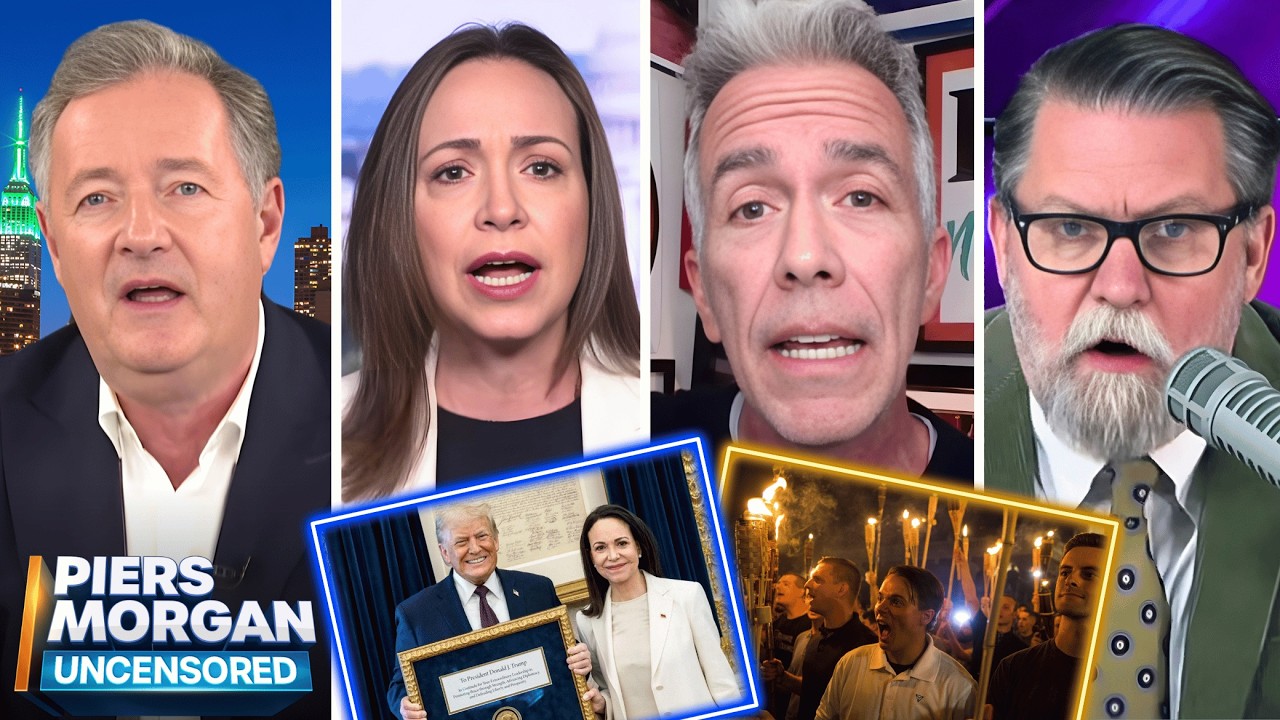
"Fighting Solves EVERYTHING!" Who's To Blame For Political Violence? + Maria Machado On Trump
"This episode dissects the escalating political violence in the US, with panelists fiercely debating the role of partisan rhetoric and media in radicalization, alongside an interview with Venezuelan opposition leader Maria Machado on US intervention and her country's future."

"CATASTROPHIC Failure!" Trump Dinner Assassination Attempt & Royal Visit | With Kari Lake
"Piers Morgan and Kari Lake dissect the catastrophic security failure during an assassination attempt on Donald Trump at the White House Correspondents Dinner, blaming media rhetoric while also discussing King Charles III's high-stakes US visit."