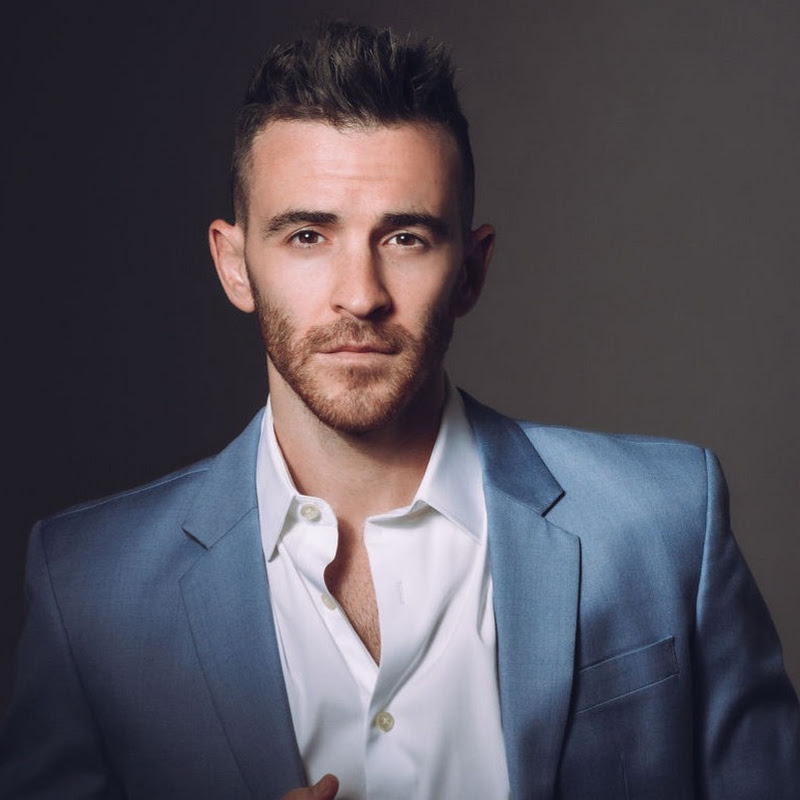
Trump’s US attorney HUMILIATED on national TV
YouTube · BbNbh-4Zamw
Quick Read
Summary
Takeaways
- ❖A Trump-appointed US Attorney was criticized for failing to provide evidence for widespread voter fraud, relying on political arguments instead of legal facts.
- ❖Chris Cuomo argues that 'election security' is largely a 'boogeyman issue' used for political gain, with Trump being the primary perpetrator of the very actions he accuses others of.
- ❖The bifurcated media ecosystem allows unsubstantiated claims of election fraud to persist among specific audiences, as critical information from court proceedings or investigations is not widely disseminated.
- ❖Democrats are caught between defending democratic institutions, which many voters distrust, and adopting aggressive 'fight back' tactics, which risk escalating political violence.
- ❖The current political climate is characterized by a 'binary battle to the bottom,' where both sides accuse the other of misconduct, and winning elections often relies on appealing to a small, highly engaged base rather than the broader populace.
Insights
1Federal Prosecutor's Political Posturing on Voter Fraud
Chris Cuomo criticizes a Trump-appointed US Attorney for making political arguments about election fraud on national television, rather than presenting legal evidence. The attorney cited a single case of an individual paying homeless people to register with false information but could not substantiate claims of widespread fraud or its impact on election results. Cuomo argues that a federal prosecutor should not 'assume a crime and go look for proof of it' and that the attorney's arguments were 'all political,' not legal.
The US Attorney stated, 'We do have big questions about fraud in California... We charged a case just last month... an individual who was caught on video paying homeless people... she has played guilty to that.' When pressed on widespread fraud, he admitted, 'we don't know because we haven't been able to look at all the evidence at scale.' Cuomo retorted, 'A federal investigator is not supposed to assume a crime and go look for proof of it. You're supposed to do the opposite.'
2Trump's 'Boogeyman' Narrative and Projection
Cuomo asserts that election security is largely a 'boogeyman issue' created by Trump, who is ironically the only one who has demonstrably 'done what he says is happening' regarding undermining elections. He points to instances where Trump's legal team made claims in public that they later retracted in court when their law licenses were on the line, demonstrating a pattern of projection where Trump accuses others of his own actions.
Cuomo states, 'this is largely a boogeyman issue... he's the only one who has done what he says is happening.' Brian Tyler Cohen adds, 'It's the perfect instance of projection, which he traffics in all the time.'
3Media Bifurcation and Information Silos
The hosts discuss how a bifurcated media ecosystem prevents critical information from reaching certain audiences. Despite court admissions and evidence from cases like Dominion Voting Systems revealing that Fox executives knew election fraud claims were 'bullshit,' these facts never penetrate the information bubbles of Fox, Newsmax, OAN, and other right-wing outlets, allowing the 'big lie' to persist.
Brian Tyler Cohen explains, 'his supporters and and Fox's viewers and Newsmax's viewers... never get that information. And so, you and I could know... that these things happened in court... we have all these text messages from these Fox executives who are basically coming out and saying, 'We know that these election claims... is bullshit.' That happened, but those people never gain access to that information because the veil is never lifted.'
4The Democratic Dilemma: Defend Institutions vs. Fight Back
The conversation highlights the strategic challenge for Democrats: whether to continue defending democratic institutions that many people distrust or to adopt a more aggressive, 'fight back' approach against a party perceived to be contemptuous of democracy. Cuomo warns that 'blowing on the fire' of political anger will lead to more violence, while Cohen argues that not fighting back with full force risks the loss of democracy itself.
Cuomo states, 'I just don't know that it gets us to a better place. And I know that makes me seem weak and kumbaya.' Cohen counters, 'when contending with a party that has shown so much utter disdain and contempt for democracy itself... we have a duty, an obligation to fight back as hard as we can. And if the... consequence of that is that the temperature's raised, so be it.'
Key Concepts
The Boogeyman Issue
A political tactic where a perceived threat (e.g., widespread voter fraud) is exaggerated or fabricated to instill fear and mobilize a political base, often distracting from other issues or justifying actions.
Political Projection
Attributing one's own undesirable actions, motives, or characteristics to another person or group, often seen when a political actor accuses opponents of the very misdeeds they themselves are committing.
Bifurcated Media Ecosystem
A media landscape divided into distinct, often opposing, information silos where different audiences consume vastly different narratives, leading to a lack of shared facts and reinforcing existing biases.
Lessons
- Critically evaluate claims of widespread election fraud, especially when presented by government officials, by demanding specific, verifiable evidence rather than political rhetoric.
- Be aware of how media ecosystems can create information silos; actively seek out diverse news sources to challenge your own biases and gain a more complete understanding of events.
- Recognize the strategic implications of political rhetoric that undermines trust in institutions, as it can be a pretext for actions that further erode democratic processes.
Notable Moments
Chris Cuomo's strong rebuke of the US Attorney's 'political' arguments on voter fraud.
This moment underscores the perceived blurring of lines between legal and political roles within the Trump administration, highlighting concerns about the politicization of justice.
The hosts' discussion on the bifurcated media landscape and its impact on public perception of election integrity.
It explains how a lack of shared factual understanding, due to media echo chambers, allows misinformation to persist and polarize the electorate.
Cuomo's warning about escalating political violence due to increased 'temperature' vs. Cohen's argument for aggressive 'fighting back' to preserve democracy.
This exchange encapsulates a central, unresolved dilemma for political actors and citizens in a highly polarized society: how to respond to perceived threats to democracy without exacerbating division and conflict.
Quotes
"A federal investigator is not supposed to assume a crime and go look for proof of it. You're supposed to do the opposite."
"He's creating a boogeyman, and the irony is he's the only one who has done what he says is happening."
"In that vacuum of trust is where autocrats thrive, which is why he's doing it."
"We have a duty, an obligation to fight back as hard as we can. And if the... consequence of that is that the temperature's raised, so be it."
"I think that if the goal is to capture the many... But in an election contest context, it's all about the few."
Q&A
Recent Questions
Related Episodes

A major shift is happening right now
"Donald Trump is losing his grip on the Republican party and movement, evidenced by internal dissent and a broader political landscape grappling with a collapse of accountability and truth."
HANTAVIRUS PANDEMIC PANIC, Human To Human Spread Feared | Timcast IRL
"Tim Pool and his guests dismiss the Hantavirus panic as media desperation, pivot to discussing escalating political polarization, the rise of technocracy, and the weaponization of social issues."

"CATASTROPHIC Failure!" Trump Dinner Assassination Attempt & Royal Visit | With Kari Lake
"Piers Morgan and Kari Lake dissect the catastrophic security failure during an assassination attempt on Donald Trump at the White House Correspondents Dinner, blaming media rhetoric while also discussing King Charles III's high-stakes US visit."
Press Corp Humiliated as Press Sec Makes Them Regret Ignoring Swalwell’s Open Secret
"This episode exposes the alleged hypocrisy and corruption within Washington D.C., focusing on the Eric Swalwell scandal, Democratic Party tactics, and the media's role in shaping narratives."