
Is Trump's Iran War Legal? (w/ Ryan Goodman) | Bulwark on Sunday
YouTube · BfW6B66E3Qk
Quick Read
Summary
Takeaways
- ❖The nomination of Jay Clayton for Director of National Intelligence is problematic due to his lack of national security experience and perceived political auditioning.
- ❖Section 702 of the Foreign Intelligence Surveillance Act is a vital national security tool, but its incidental collection of US citizen data raises significant civil liberties concerns.
- ❖Todd Blanchet's conduct as Deputy and Acting Attorney General has 'disqualified' him, reflecting a broader corruption of the Justice Department.
- ❖The US military's extrajudicial killing of a Venezuelan gang leader, Nina Guerrero, is legally indefensible and sets a dangerous precedent for the use of lethal force.
- ❖The Supreme Court's potential affirmation of the 'unitary executive theory' could dismantle civil service protections, allowing the President to fire any executive official at will.
Insights
1DNI Nomination Raises Concerns About Politicization of Intelligence
The nomination of Jay Clayton as Director of National Intelligence (DNI) is deeply troubling. Clayton lacks the extensive national security experience required for the role, having primarily served as US Attorney for the Southern District of New York. His recent public statements, including validating fake election fraud claims and endorsing a controversial 'slush fund,' suggest he is 'auditioning' for the President rather than being a neutral truth-teller. This raises fears that he would politicize intelligence, similar to how Russia's intelligence apparatus became loyalist 'lapdogs' for Putin, leading to strategic failures.
Goodman notes Clayton's lack of 'vast national security experience' and his 'pontificating on the California election' and validating 'fraud claims' on TV, suggesting he's 'auditioning for the president.' He also endorsed a 'slush fund' which was 'full level corruption.'
2Section 702: Vital Intelligence Tool with Civil Liberties Trade-offs
Section 702 of the Foreign Intelligence Surveillance Act is a critical post-9/11 intelligence tool, considered vital for US national security. It provides approximately 70% of the information for the Presidential Daily Brief and is essential for understanding and countering threats like terrorism. However, while designed to target foreign nationals outside the US, it incidentally collects communications involving US citizens. This 'incidental collection' creates a civil liberties concern regarding access to US citizens' data without a search warrant, leading to ongoing debate about reauthorization and additional protections.
Goodman states 'if 702 were to go away... lives would be lost' and '70% of the information that comes to the presidential daily brief it comes from 702.' He acknowledges the 'civil libertarian issue' of 'incidentally collect[ing] a bunch of information' from US nationals.
3Attorney General Nominee Todd Blanchet Deemed 'Corrupt' and Disqualified
Todd Blanchet's conduct as Deputy and Acting Attorney General has been 'horrible' and 'corrupt,' effectively disqualifying him for the Attorney General position. His actions, including the firing of career Justice Department attorneys for ideological reasons and justifying controversial decisions like the 'slush fund,' represent a severe undermining of the Justice Department's independence and rule of law. His confirmation would further politicize the department, making it an instrument of presidential will rather than an impartial enforcer of justice.
Goodman states Blanchet 'carried out his position... in a horrible manner' and 'disqualified himself for the job' through 'corrupt' actions, including 'firings of the Justice Department career attorneys for purely ideological reasons.'
4US Military's Extrajudicial Killing in Venezuela Sets Dangerous Precedent
The US military's killing of Nina Guerrero, head of the Tren de Aragua gang in Venezuela, is an 'extrajudicial killing' and 'murder' under US law. Despite Guerrero being indicted in the US, the action bypasses legal processes like trial and imprisonment. The administration's justification—that the gang is an 'army'—is a dangerous legal stretch, as it could be used to justify lethal force against alleged criminals domestically. This action also creates hypocrisy, as the US government simultaneously argues in court that the gang acts at the direction of the Venezuelan government to justify deportations under the Alien Enemies Act, while publicly cooperating with that same government.
Goodman calls the killing 'absolutely remarkable' and 'murder,' noting Guerrero was 'indicted in the United States for crimes' but 'not capital offenses.' He highlights the president's justification of the gang as an 'army' and the 'hypocrisy' with the Alien Enemies Act, where the US government argues the gang is acting 'at the direction of the Venezuelan government' while simultaneously cooperating with Venezuela.
5Unitary Executive Theory Threatens Civil Service and Checks and Balances
The Supreme Court's potential affirmation of a maximalist 'unitary executive theory' could allow the President to fire any executive official at will, dismantling 150 years of civil service protections. This would transform the government into a 'spoil system' where political loyalty dictates employment, undermining the independence and expertise of federal agencies. Such a ruling would also severely limit Congress's ability to legislate protections for the administrative state, creating a profound imbalance of power in favor of the executive branch.
Goodman explains the theory allows the president 'to remove people from... independent agencies' and 'completely control anybody who's an executive official.' He agrees it could 'destroy all our civil service and the Pendleton Act and 150 years of trying to insulate to some degree some parts of the executive branch from pure political... and personal control.'
Bottom Line
The administration's justification for killing a Venezuelan gang leader by labeling the gang an 'army' creates a dangerous legal precedent that could be applied domestically, blurring the lines between military action and law enforcement within the US.
This redefinition of a 'gang' as an 'army' could be leveraged to authorize lethal force by the executive against alleged criminals inside the United States, circumventing due process and constitutional protections, especially if the 'unitary executive theory' is broadly affirmed.
Legal scholars and civil liberties advocates must proactively challenge this expansive interpretation of executive power and 'army' designation to prevent its domestic application and protect constitutional rights.
The Supreme Court's decision on the 'unitary executive theory' will not only impact high-level appointees but could fundamentally dismantle the entire civil service, turning federal employment into a 'spoil system' based on political loyalty.
This would lead to a dramatic loss of institutional knowledge, expertise, and non-partisanship within the administrative state, severely impairing government function and making agencies vulnerable to political manipulation and corruption, regardless of which party is in power.
Policymakers and legal experts should develop 'reinvention blueprints' for restructuring government and civil service protections that can withstand maximalist unitary executive interpretations, preparing for a potential post-ruling legislative and administrative response.
Key Concepts
Unitary Executive Theory
The idea that the President possesses all executive power, allowing them to control and direct the entire executive branch, including the ability to remove any executive official without cause. This theory, if maximally applied by the Supreme Court, could dismantle civil service protections and consolidate immense power in the presidency, transforming the structure of government.
Standing (Legal)
The requirement that a party bringing a lawsuit must have suffered a direct and particularized injury to have the right to sue. Without a party having 'standing,' a legal wrong, no matter how egregious, cannot be challenged in court, as exemplified by the Kennedy Center name change case.
Lessons
- Scrutinize the qualifications and past actions of high-level government nominees beyond initial partisan reactions, particularly for roles requiring independence and expertise like DNI and AG.
- Advocate for robust civil liberties protections within intelligence programs like Section 702, pushing for search warrant requirements for accessing US citizen data incidentally collected.
- Monitor Supreme Court decisions related to executive power and the administrative state, as these rulings could fundamentally reshape the balance of power and the integrity of federal institutions.
Notable Moments
The Kennedy Center name removal case highlighted the importance of 'standing' in legal challenges, with Representative Beatty's persistent efforts being crucial to bringing the case against the Trump Justice Department.
This demonstrates that even seemingly symbolic legal battles require dedicated individuals with the specific legal standing to challenge executive actions, underscoring the fragility of the rule of law without active enforcement.
The DNI's presence in Atlanta during an FBI search warrant related to the 2020 election, investigating 'crackpot conspiracy theories,' illustrates the politicization of intelligence agencies.
This incident exemplifies the misuse of national intelligence resources for domestic political purposes, raising concerns about the weaponization of intelligence to interfere with elections and suppress dissent.
Quotes
"The Office of Director of National Intelligence is a very important position and Donald J. Trump recognizes that. It can be weaponized."
"If 702 were to go away as a program, lives would be lost."
"The United States just killed somebody, murdered. That's the word I was going to say, but the word is murder."
"The idea that you're going to have a massive administrative state and have no protections... that's kind of crazy."
Q&A
Recent Questions
Related Episodes

Trump DOJ REACHES NEW LOW Trying to SAVE Trump
"Professor Aziz Huck dissects the foundational principles of the rule of law, revealing how modern political partisanship and the Justice Department's 'weaponization fund' challenge core constitutional mechanisms and legal predictability."

Trump Dirt REVEALED: Iran, Zohran, Pardons, Deportations
"Journalists Maggie Haberman and Jonathan Swan reveal how Donald Trump operates in his second term, detailing his inner circle, policy priorities, and the surprising checks on his executive power."
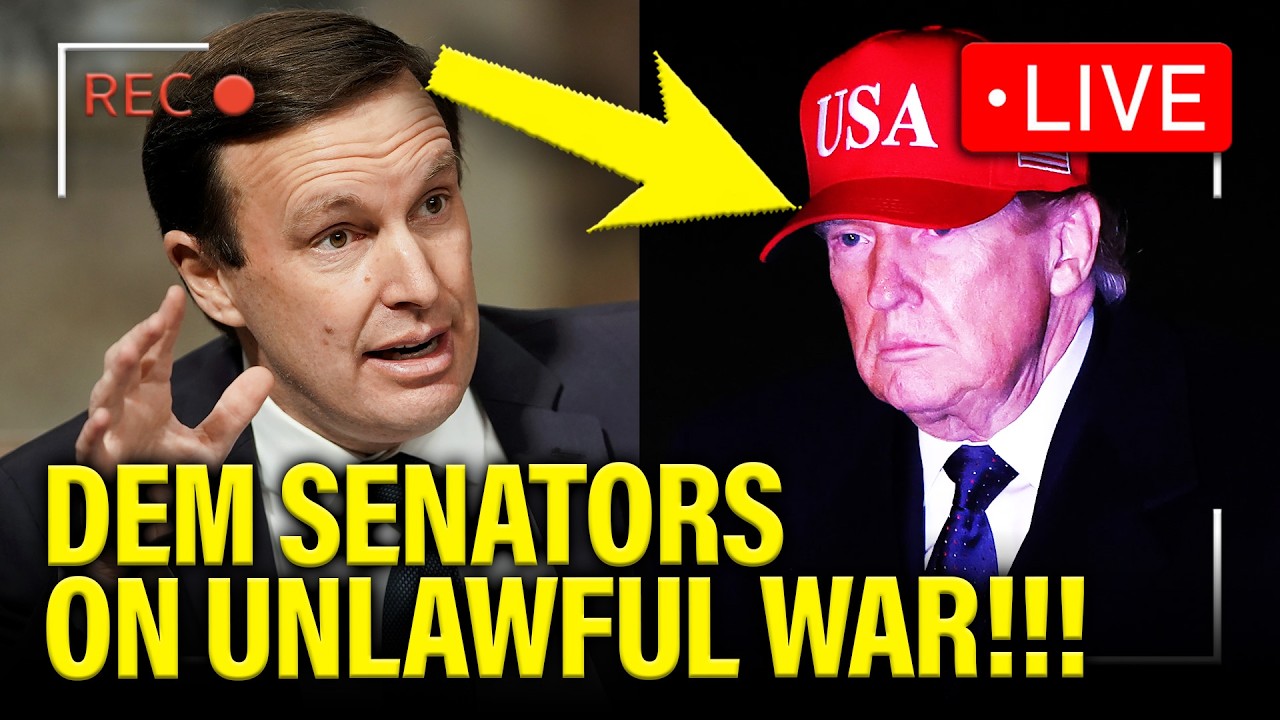
LIVE: DEM SENATORS ADDRESS UNLAWFUL WAR!!
"Democratic Senators, joined by VoteVets, forcefully condemn the administration's 'unlawful war' in Iran, citing constitutional overreach, devastating human and economic costs, and a deliberate lack of transparency and congressional oversight."

SHOCK Ruling on Trump Deportation PLOT + DEBUNKED Election WARRANT?!? | It's Complicated
"The Fifth Circuit Court's controversial ruling redefines 'seeking admission' for non-citizens, potentially allowing indefinite detention for millions, while a federal search warrant for 2020 election ballots is criticized as a 'test run' for future election interference."