The Easy Part of the Iran War Is Over | The Bulwark Podcast
YouTube · BfZ1EdErDZA
Quick Read
Summary
Takeaways
- ❖The US is engaged in a global war against Iran, spanning from the Caspian to the Indian Ocean, without congressional or public consent.
- ❖Trump's administration is criticized for appointing "bozos" to critical national security roles like DHS and FBI, leaving the homeland vulnerable to terrorism.
- ❖Allies, including Denmark, were reportedly preparing for a potential US military invasion of Greenland, a NATO territory.
- ❖The war is imposing significant economic burdens, especially on Asian allies, due to disruptions in oil flow from the Persian Gulf.
- ❖While military operations against Iran show tactical success, there is no political strategy for post-conflict resolution or managing economic fallout.
- ❖The concept of "energy independence" is dismissed, as global oil prices mean US consumers still face rising costs from international conflicts.
- ❖Israel's existential security concerns are a key driver of its actions, independent of US domestic political considerations.
Insights
1Trump's Mismanagement of Power
David Frum argues that Donald Trump's inability to distinguish between the "substance of power and the image of power" leads him to prioritize superficial displays (like minting coins with his image) over effective governance, potentially saving America from more serious authoritarian consolidation by diverting his focus.
The Treasury Department moving forward with minting three coins featuring Trump, including two 24K gold commemorative coins.
2DHS Incompetence Amidst War
The Trump administration has appointed unqualified individuals to lead critical national security agencies like the Department of Homeland Security (DHS) and the FBI, severely compromising the nation's ability to defend against terrorism during an active war with Iran.
Cash Patel, a DHS director, admitted he was "taking at your word" when asked by a Congressman about experts on Iran counter-intelligence who were fired. These experts were reportedly fired due to their involvement in the Trump classified documents case, which included Iran war plans.
3Allies Preparing for US Invasion of NATO Territory
Denmark reportedly developed plans to defend Greenland, a Danish territory, against a potential US invasion under the Trump administration, including sending soldiers to die to shame the US into stopping.
Confirmed reports from Danish news agencies with good sourcing and on-the-record quotes detailing Denmark's plan to send soldiers to Greenland to die and blow up airfields to deter a US invasion.
4Economic Burden on Asian Allies from Iran War
The US-Iran conflict disproportionately burdens Asian allies, who are highly dependent on oil from the Persian Gulf, creating risks of outright supply shortages and straining diplomatic relationships.
80% of oil from the Persian Gulf goes to Asia, creating "real risks of outright shortage" for countries like South Korea and Japan if tankers are disrupted.
5US Motivation for Iran Strike
The US struck Iran not due to an imminent threat, but because Israeli military successes against Iranian air defenses created a "moment of safety" to act with devastating effect and low cost, preventing Iran from becoming a nuclear North Korea.
Frum states, "Iran in March of... February of 2026 was not an imminent threat to the United States. That's not why the United States struck." He adds that "Israeli action had made Iran so vulnerable that for the first time since 1979, the long simmering US Iran war... the United States could strike with devastating effect and at very low cost."
6Israel's Existential Security Dilemma
Israel's decisions on war and peace are driven by existential threats, leading them to prioritize their own security over international popularity or external perceptions, a strategy rooted in historical experiences of international condemnation without support.
Frum cites historical examples like the UN condemning Israel for kidnapping Adolf Eichmann in 1960 and nearly condemning the Entebbe rescue in 1976, concluding, "if we relying on popularity to protect the Jewish people, thin read, we're never that popular."
Bottom Line
Canada is re-evaluating its geopolitical alignment, considering the US as one of three global "superpowers" alongside China and India, and seeking "optionality" rather than exclusive reliance on the US.
This signals a fundamental shift in how even close allies perceive US reliability and global leadership, potentially leading to a more multipolar world where traditional alliances are less absolute.
The US needs to proactively engage allies with language of sympathy and shared interests, demonstrating reliability and strategic foresight to prevent further erosion of its influence, especially in critical regions like Asia.
The Trump administration's "Mission Accomplished" declaration regarding the Iranian nuclear program last summer was a false claim, leading to the current escalation of the war nine months later.
This misrepresentation created a false sense of security and public disengagement, making the current war even harder to justify and manage politically, as the public was told the problem was already solved.
Future administrations must prioritize transparency and realistic assessments of national security challenges to build public trust and support for necessary, long-term strategic engagements.
Key Concepts
Substance vs. Image of Power
David Frum posits that Donald Trump consistently prioritizes the symbolic display of power (e.g., commemorative coins) over its actual substance, which undermines effective governance and authoritarian consolidation.
Worst-Case Scenario Planning Failure
The Bush administration's failure to plan for post-invasion chaos in Iraq is being repeated by the Trump administration regarding Iran, refusing to consider predictable negative outcomes like the closure of the Strait of Hormuz.
Lessons
- For Democratic Strategists: Frame the DHS funding debate by "getting to the right" of the Trump administration on national security. Accuse Trump of leaving the homeland "naked" to Iranian terror attacks by prioritizing immigration enforcement over counterterrorism competence, thus forcing Republicans to fund DHS with competent leadership.
- For Policymakers: Demand comprehensive post-conflict planning for any military engagement, learning from the Iraq War's failures. This includes budgeting for stabilization forces, economic reconstruction, and political transition structures in target countries.
- For Citizens/Voters: Critically evaluate political leaders' claims of "mission accomplished" or quick fixes in foreign policy. Understand that complex international conflicts require sustained, competent leadership and public engagement, not just military action.
Countering National Security Incompetence: A Democratic Playbook
Acknowledge Reality: Recognize that a war is ongoing and cannot simply be "stopped" without severe consequences.
Expose Incompetence: Highlight the Trump administration's appointment of unqualified personnel to critical national security roles (DHS, FBI) and their lack of focus on real threats.
Shift Narrative to Security: Frame the debate around national security, arguing that Trump's priorities (e.g., deporting roofers) leave the country vulnerable to terrorism from state sponsors like Iran.
Demand Competent Funding: Advocate for funding agencies like DHS, but with strict conditions for competent, experienced counterterrorism professionals and a "terrorism first" mandate, rather than an immigration-focused agenda.
Build Bipartisan Pressure: Seek to work with "enough Republican senators" and House members to pressure the President to appoint responsible national security leadership and articulate achievable aims, potentially even finding a respected figure to front the strategy if the President lacks trust.
Notable Moments
David Frum recounts Denmark's plan to send soldiers to Greenland to die and blow up airfields to deter a potential US invasion.
This reveals the extreme level of distrust and alarm among US allies regarding the Trump administration's unpredictable foreign policy, even to the point of preparing for military conflict with a NATO partner.
The host and guest discuss the shift of an MMA fight, originally planned for the 4th of July, to Donald Trump's birthday, to be aired on CBS.
This moment is framed as a symbolic representation of the "decline and fall of the American Empire," where national celebrations are replaced by personal glorification and trivial spectacle, marking a stark contrast with historical commemorations of American independence.
Quotes
"What saved America was that Donald Trump could never tell the difference between the substance of power and the image of power."
"How unserious about terrorism are you? If you put these this team of bozos in charge of defending the homeland against terror attack."
"The Iran war is on. The Iran war is a fact. And Mr. President, I I think you have to get to his right on national security. Say, 'Mr. President, you started a war of your own valition against the world's leading state sponsored terrorism. And you are leaving the homeland naked uh to Iranian terror attack and Iranian terror cells because you want to send a lot of guys who do roofing uh to prison or to take dungeon to deport them.'"
"There's no such thing as energy independence. There's one global price of energy."
"If we relying on popularity to protect the Jewish people, thin read, we're never that popular."
Q&A
Recent Questions
Related Episodes

Iran Deal Skepticism. Whoopi Vs Vance. Potomac Park Invasion. Racist Hurls Slurs At Black Boy.
"This episode dissects multiple instances of alleged anti-Black policies and racial injustice, from the Trump administration's legal challenges to reparations and the Iran deal, to police brutality and the erasure of Black history."
BREAKING: Protests ERUPT In Iran Over IRGC Surrendering To Trump - Infighting Clashes In Tehran
"Iran is experiencing severe internal infighting and protests as hardline IRGC elements clash with government figures over a perceived 'surrender' to the US, while mainstream Western media misrepresents the situation."
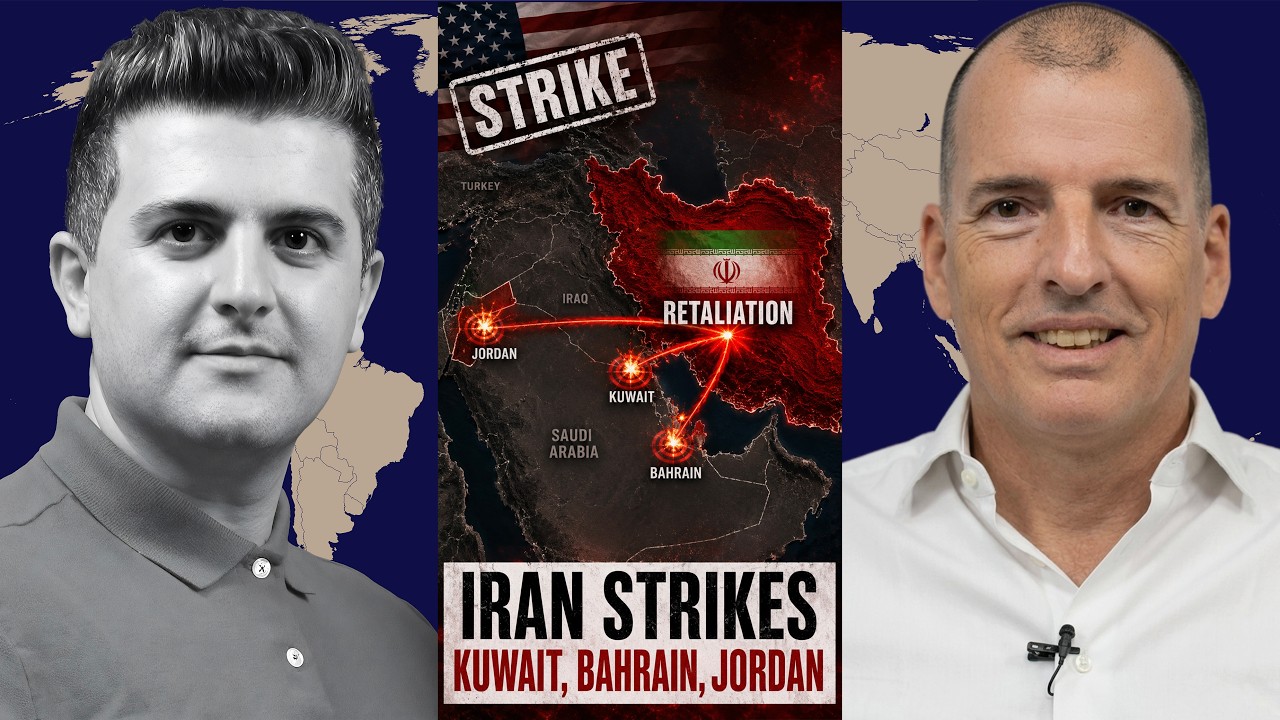
Alex Krainer: US STRIKES Iran – Iran RETALIATES Against Kuwait, Bahrain & Jordan!
"Amidst escalating US-Iran conflict and Iranian retaliation against regional US allies, this episode argues that US foreign policy is deeply controlled by an 'Anglo-Zionist conspiracy' led by the Rothschild banking dynasty, prioritizing Israeli interests over American ones."

Larry Johnson: Iran Missiles Rain Down on Northern Israel – Massive Strikes!
"Geopolitical analyst Larry Johnson details how Israel's recent strike on an 'empty building' in Beirut triggered direct Iranian missile retaliation, escalating regional tensions and jeopardizing a US-Iran peace deal brokered by Pakistan."