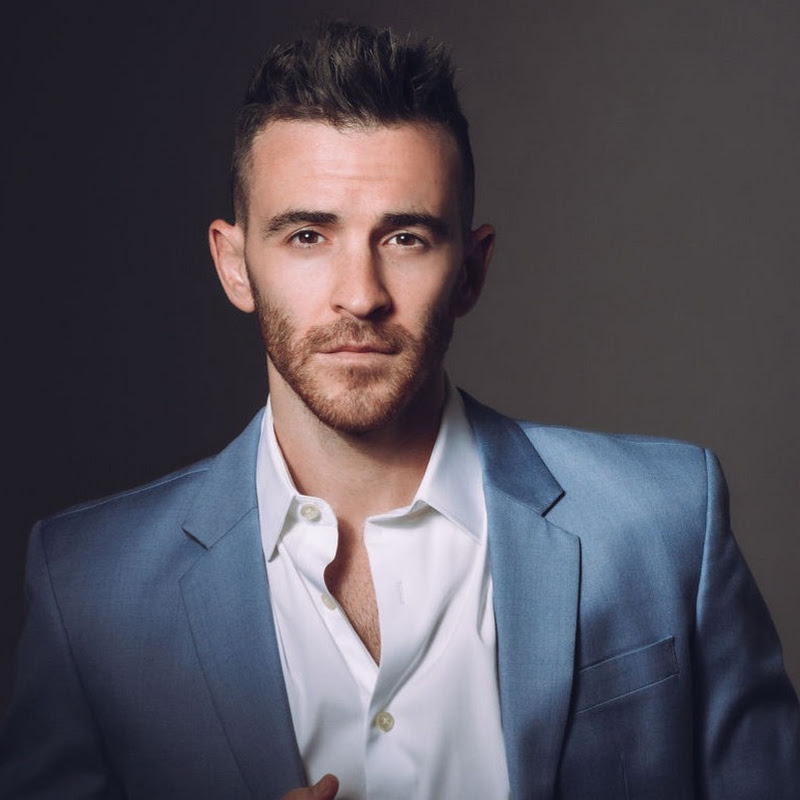
Trump tries to DELETE his CONFESSION... it was TOO LATE
YouTube · Bz3S4kTlsJ8
Quick Read
Summary
Takeaways
- ❖A deleted White House clip shows Donald Trump arguing federal government should not fund daycare or healthcare, only military protection.
- ❖Host Brian Tyler Cohen accuses Trump of hypocrisy, citing cuts to social programs and new wars despite campaign promises.
- ❖NYC Mayor Zoran Maldani reports significant progress on universal child care, faster buses, and a rent freeze in New York City.
- ❖Maldani advocates for wealth taxes, dismissing 'capital flight' threats with data showing an increase in millionaires after previous tax hikes.
- ❖Law professor Leah Litman anticipates the Supreme Court will reject Trump's challenge to birthright citizenship but criticizes the court for hearing the 'elementary' case.
- ❖Litman suggests the Supreme Court uses 'gimme' cases like birthright citizenship to enhance its public credibility ahead of more controversial rulings.
Insights
1Trump's Stance on Federal vs. State Responsibilities for Social Programs
Donald Trump explicitly stated in a deleted White House clip that the United States federal government 'can't take care of daycare,' Medicaid, or Medicare. He argued these responsibilities should fall to individual states, which 'should pay for it, too' by raising their taxes, allowing the federal government to lower its taxes. Trump asserted the federal government's sole priority should be 'military protection,' dismissing social programs as 'little scams.'
Trump's direct quote from a deleted White House social media clip: 'Don't send any money for daycare because the United States can't take care of daycare. That has to be up to a state.' and 'We have to take care of one thing. Military protection.'
2Alleged Hypocrisy in Trump's Policy Actions vs. Campaign Promises
The host argues that Donald Trump campaigned on addressing rising costs and avoiding new wars, even admitting he 'campaigned on that' regarding groceries. However, upon taking office, his administration allegedly gutted Medicaid for 17 million Americans, cut ACA subsidies for 24 million, reduced food assistance, enabled trade wars spiking costs, and greenlit a war requiring an additional $200 billion, directly contradicting his 'no more wars' pledge.
Host's commentary citing Trump's campaign statements on 'groceries' () and 'no more wars' (), contrasted with alleged actions like gutting Medicaid (), ACA subsidies (), food assistance (), and seeking $200 billion for a war ().
3NYC Mayor Maldani's Progress on Key Campaign Promises
New York City Mayor Zoran Maldani reported significant progress within his first 100 days. His administration secured $1.2 billion in state funding to implement universal child care for two-year-olds, starting with 2,000 kids this fall and expanding to 12,000 next year. They also made policy decisions to speed up bus routes for 130,000 New Yorkers daily and are advocating for a rent freeze, with the Rent Guidelines Board making a final determination this summer.
Maldani's update on universal child care (), bus route improvements (), and the rent freeze (), including specific numbers and timelines.
4Addressing Wealth Tax Criticisms and Capital Flight Concerns
Mayor Maldani advocates for a 2% citywide income tax on individuals earning over $1 million and a broader wealth tax, arguing it's necessary to combat income inequality in a city where one in four New Yorkers live in poverty. He directly refutes 'capital flight' threats by citing past instances where tax increases in 2021 led to $4 billion in additional revenue and an increase in millionaires in the city, rather than their departure.
Maldani's proposal for a 2% income tax () and wealth tax (), and his counter-argument referencing 2021 tax increases: 'We raised about $4 billion dollars in additional revenue that year. And what we found is that now we have more millionaires than we did back at that point.'
5Supreme Court's Strategy in Hearing the Birthright Citizenship Case
Law professor Leah Litman contends that the Supreme Court's decision to hear the birthright citizenship case (Trump v. Barbara), despite its clear constitutional basis (14th Amendment), serves to 'buy themselves more credibility and more favorable publicity.' She argues that a unanimous or near-unanimous rejection of Trump's 'unhinged, deranged theory' makes the court appear independent and credible, providing 'cover for the many horrible decisions they are going to release toward the end of this term.'
Litman's statement: 'they are buying themselves more credibility and more favorable publicity when they draw this out because everyone is now talking about the oral argument... they're just buying themselves more opportunities for favorable publicity.'
Bottom Line
The Supreme Court may strategically select 'gimme' cases with clear constitutional outcomes to project an image of independence and credibility, thereby deflecting criticism from more politically charged and controversial rulings.
This suggests that public perception of the Supreme Court's impartiality might be manipulated through case selection, potentially undermining trust in the judiciary's true motivations and the fairness of its most impactful decisions.
Advocacy groups and legal analysts could proactively identify and expose such strategic case selections, educating the public on the court's potential public relations tactics to foster more informed scrutiny of judicial actions.
The threat of 'capital flight' by high-net-worth individuals in response to wealth or high-income taxes may be overstated, as evidenced by New York City's experience where millionaire populations increased after tax hikes.
This challenges a common argument against progressive taxation, suggesting that fears of economic exodus might be used as a political tool to prevent policies aimed at reducing income inequality, rather than reflecting actual economic behavior.
Policymakers in other high-income blue cities and states could use New York's data as a precedent to pursue progressive tax reforms, potentially unlocking significant revenue for public services without the anticipated negative economic consequences.
Key Concepts
Sewer Socialism / Pothole Practice
A governing philosophy, championed by Bernie Sanders and adopted by NYC Mayor Zoran Maldani, that emphasizes delivering expansive political visions by effectively addressing the most granular, day-to-day problems in people's lives (e.g., filling potholes, improving public transit). The idea is that fixing tangible, immediate issues builds public trust and demonstrates government's capacity to deliver on larger promises, thereby restoring faith in governance.
Lessons
- Scrutinize political rhetoric: Pay close attention to how politicians' campaign promises align with or diverge from their actual policy decisions, especially concerning social welfare programs versus military spending.
- Engage with local governance: Support and advocate for local and state-level policies that directly impact daily life, such as affordable child care, public transportation improvements, and rent stabilization, as these can deliver tangible benefits.
- Demand judicial accountability: Understand the dynamics of Supreme Court decisions and advocate for reforms like court expansion or ethics rules to ensure judicial impartiality and prevent the court from being perceived as a political instrument.
Notable Moments
The host plays a deleted White House social media clip of Donald Trump stating the federal government should not fund daycare, Medicaid, or Medicare, but rather focus solely on military protection.
This moment serves as the central 'confession' the episode title refers to, directly illustrating Trump's policy stance on social programs versus military spending, which the host then uses to highlight alleged hypocrisy.
NYC Mayor Zoran Maldani explains his 'sewer socialism' approach, emphasizing that delivering an expansive political vision requires fixing granular, day-to-day problems like potholes.
This articulates a practical philosophy of governance that connects large-scale policy goals with tangible improvements in citizens' daily lives, aiming to rebuild trust in government by demonstrating effectiveness at all levels.
Law professor Leah Litman suggests the Supreme Court heard the 'juvenile' birthright citizenship case to gain 'favorable publicity' and appear credible before releasing more controversial decisions.
This moment offers a critical, behind-the-scenes interpretation of the Supreme Court's strategic behavior, raising questions about the court's motivations and its perceived independence from political influence.
Quotes
"Don't send any money for daycare because the United States can't take care of daycare. That has to be up to a state."
"No daycare, no health care, just wars. That is the only priority of the federal government."
"We have to spend less money on things that impact regular Americans so that we can dump every single dollar into war."
"If you can't fill a pothole, how are you going to deliver universal child care? These are two parts of the same kind of connected set of politics."
"I think it's clear that the court is going to rule correctly that the executive order purporting to deny people birthright citizenship is unconstitutional. I don't think it's clear that the ruling is going to be unanimous. And that itself is a travesty."
"They are buying themselves more credibility and more favorable publicity when they draw this out because everyone is now talking about the oral argument."
Q&A
Recent Questions
Related Episodes
SHOCK BREAKING: SHOCKED TRUMP STORMS OUT OF SUPREME COURT IN RAGE!
"This episode dissects Donald Trump's contentious Supreme Court appearance regarding birthright citizenship, the growing disillusionment of right-wing figures like Alex Jones with Trump, and the political fallout from Kristi Noem's husband's alleged cross-dressing scandal."

HOT TOPICS | WARNING: Donald Trump's Iran War Chaos Has Hit the Point of No Return!
"Don Lemon delivers a scathing critique of Donald Trump's recent actions, framing them as desperate, unconstitutional attempts to consolidate power, undermine democracy, and distract from economic and foreign policy failures, all while questioning his mental stability."

Mamdani CELEBRATES NYC Rent Freeze, This Will DESTROY The City | Timcast IRL
"New York City's rent freeze, celebrated by Mandami, is framed as a socialist 'land grab' that will devastate the city's housing market and economy, while a FIFA Pride Match in Seattle sparks outrage from conservative nations."
Major SCOTUS "Birthright Citizenship" Case, and Charlie Kirk Murder Trial Bullet Questions
"Megyn Kelly and legal experts dissect the Supreme Court's oral arguments on birthright citizenship and break down new, potentially exculpatory evidence in the Charlie Kirk murder trial, including an 'inconclusive' bullet match and complex DNA findings."