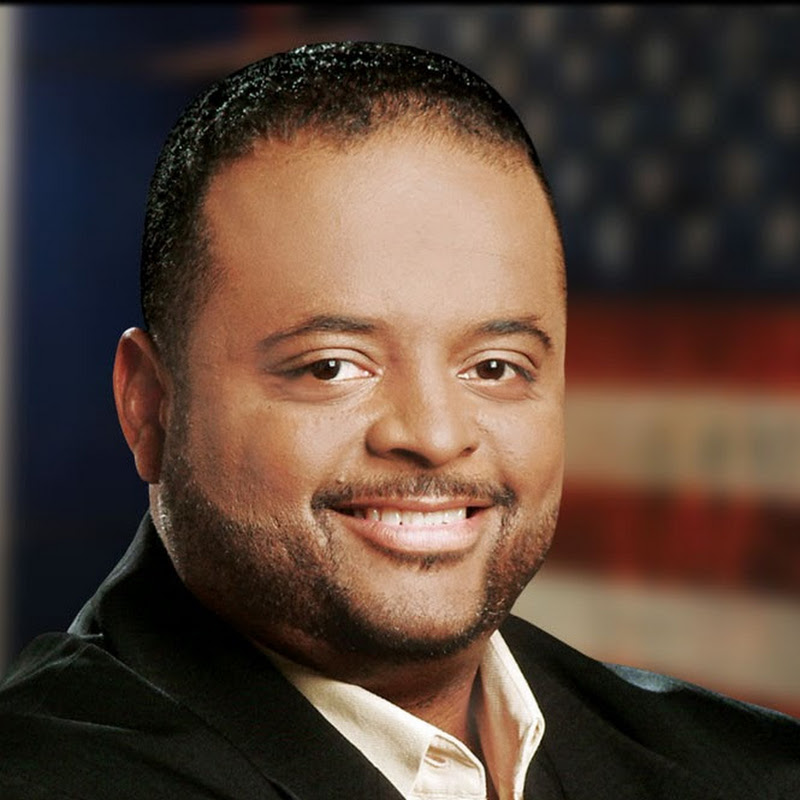
Fisk Data Center REVOLT. HBCU Prez Responds To Student & Alumni BACKLASH
YouTube · C0_skKlkC1c
Quick Read
Summary
Takeaways
- ❖Fisk University's proposed $400 million innovation center, including a data center, is part of a larger $1 billion campus master plan.
- ❖The initiative faced backlash from students, alumni, and state representatives due to concerns about environmental pollution, water, and energy strain.
- ❖Fisk President Dr. Aia Clark clarifies the project is a 'micro-scale' data center, significantly smaller and less resource-intensive than 'hyperscale' facilities.
- ❖The university has conducted over two years of research into environmental impact and plans to use advanced engineering to mitigate noise and emissions.
- ❖Models from other universities like Vanderbilt, which reduce greenhouse gas emissions and generate their own energy, are being studied.
- ❖The local power company committed up to 30 megawatts of power without impacting existing utility bills or power drops.
- ❖The data center aims to provide students with an edge in emerging AI technologies, aligning with Fisk's strong STEM focus and liberal arts curriculum.
- ❖Fisk is committed to community engagement, stating that conversations with stakeholders have been ongoing for over two years and will continue.
- ❖The project will not result in increased tuition costs for students, and potential partners will be required to offer student opportunities like internships and mentoring.
- ❖The innovation center is one of several projects in the master plan, including a new student center, residence hall modernizations, and an expansion of the John Lewis Center for Social Justice.
Insights
1Fisk's 'Quantum Leap' Initiative and Community Backlash
Fisk University announced a $400 million innovation center, including a data center, as part of a $1 billion campus growth plan. This initiative, dubbed 'Quantum Leap,' aims to give students an advantage in emerging AI technologies. However, it immediately faced significant controversy and protests from students, alumni, and State Representative Justin Jones, who raised concerns about potential pollution, strain on local water and energy resources, and noise.
The announcement by Fisk University that we're going to be uh launching a data center on its campus led to significant controversy, discussion among students, alumni, and folks there in Nashville. [...] But critics believe the potential pollution and strain on local water and energy resources are not worth the investment.
2Distinguishing Micro-scale from Hyperscale Data Centers
Dr. Aia Clark, Fisk's President, clarified that the proposed facility is a 'micro-scale' data center, fundamentally different from the large 'hyperscale' facilities often associated with widespread protests. The micro-scale design requires less square footage, energy, and water, allowing for better environmental management and control through advanced technology.
So first of all, all data centers are not alike, right? [...] No, that is not what we're looking at doing here at Fisk University. Uh the concept that we are looking at uh is more of a micro scale. Um therefore it is requiring less square footage, it's requiring less energy. Um it's requiring less water.
3Mitigation Strategies and University Models
Don Harden, CEO of The Don Harden Group, outlined Fisk's plans to mitigate environmental concerns by studying models from other universities like Vanderbilt, which has partnered with solar panel farms to reduce greenhouse gas emissions. Fisk plans to use robust power to minimize reliance on generators, utilize backup batteries, and strategically place chillers and cooling towers on the roof to direct sound upwards, aiming to stay below city noise limits.
So there's a university of Texas at Austin, they they've they've had [...] Vanderbilt actually has partnered with uh an organization that does solar panel farms. So, we like that model [...] we have to engineer how the chillers are are used, how they're placed. [...] We can use backup batteries instead and place them inside. And also, we're looking at ideas like putting the chillers and the cooling towers on the roof so they will emit sound up.
4Educational Imperative and Workforce Preparation
Dr. Clark emphasized that the innovation center is crucial for preparing Fisk students, 30% of whom graduate in computer science, for the digital age. She highlighted that Fisk's liberal arts training, combined with STEM, cultivates cognitive skills essential for future leaders in technology, ensuring students can integrate learning into machine learning and develop useful products.
We are educating students who are born in the digital age. Um, we have got to have campus resources that allow us to continue to be competitive in that space because here at Fisk University right now, 30% of our students that graduate annually are graduating in computer science. [...] What is really critically important about when we talk about the skills that we're going to need for this high techch fastpac moving workforce of the future isn't the technical skills. is the cognitive skills that are gained with a liberal arts training.
5Broader Campus Master Plan and Funding
The data center is just one component of Fisk's comprehensive $1 billion campus master plan, which includes essential infrastructure upgrades such as a new student center, modernization of residence halls, and an expansion of the John Lewis Center for Social Justice. The university is exploring various funding models for each project and is not selling land for the data center, instead developing undeveloped space it already owns.
Fisk University announced his campus master plan. This is our strategy and our vision that we have for the school to make sure we can be here another 160 day 160 years. [...] We need a new student center. Um, we must modernize several of our existing residence halls. [...] The only thing I know is this. We are not selling our land to do this. We're looking at land that this university owns and has owned and we're looking at building out and developing some space that's undeveloped on our campus right now.
Bottom Line
The public's generalized fear of 'data centers' often stems from a lack of understanding regarding the diverse scales and environmental controls available. Universities pioneering smaller, integrated data centers have an opportunity to redefine public perception.
This misunderstanding creates unnecessary friction for beneficial projects. Institutions must proactively educate communities on the specific nature and mitigated impacts of their projects, rather than allowing broad negative stereotypes to dominate the narrative.
Universities can become leaders in developing and showcasing environmentally responsible, micro-scale data center models, setting new industry standards and fostering community trust through transparency and demonstrable mitigation efforts.
For HBCUs, investing in advanced technological infrastructure like data centers is not just about academic enhancement but a strategic move for institutional survival and competitiveness in a rapidly evolving higher education landscape.
Without such investments, HBCUs risk falling behind, impacting their ability to attract students, secure research funding, and prepare graduates for future job markets. This underscores the high stakes involved in these development projects.
HBCUs that successfully implement and integrate these technologies can position themselves as critical hubs for diverse talent in STEM and AI, attracting partnerships and funding that further strengthen their long-term viability and impact.
Opportunities
University-led Micro-scale Data Center Co-location Services
Develop a business model where the university's micro-scale data center offers co-location services (renting space for servers and other computing hardware) to external companies, network IT providers, and research institutions. This generates income for the university while providing valuable real-world operational experience for students.
Key Concepts
Hyperscale vs. Microscale Data Centers
This model differentiates between massive, football-field-sized data centers (hyperscale) that often draw significant public criticism for their environmental impact and resource consumption, and smaller, more integrated facilities (microscale) designed to operate with less square footage, energy, and water. Fisk University emphasizes its project falls into the microscale category to address environmental concerns.
Lessons
- When proposing large-scale infrastructure projects, proactively differentiate the project's specific scale and environmental impact from common negative stereotypes (e.g., micro-scale vs. hyperscale data centers).
- Engage in continuous, transparent dialogue with all stakeholders (students, alumni, local residents, elected officials) for at least two years prior to public announcement, and maintain open communication channels throughout the project lifecycle.
- Integrate robust environmental mitigation strategies from the initial design phase, including plans for energy efficiency, noise reduction, and water conservation, and clearly communicate these measures to the public.
Quotes
"So first of all, all data centers are not alike, right? [...] No, that is not what we're looking at doing here at Fisk University. Uh the concept that we are looking at uh is more of a micro scale."
"We have to engineer our way out of this to a to a good solution. We have to engineer how the chillers are are used, how they're placed."
"We at Fisk must figure out how to go from surviving to thriving and how do we stay competitive in this competitive higher ed marketplace for another 160 years."
Q&A
Recent Questions
Related Episodes
Tim Almost Strokes Out Hearing That Big Tech STILL Likes Trump (Jason Calacanis) | Bulwark Podcast
"Silicon Valley's elite, driven by pragmatic business interests like low taxes and M&A, continue to support Donald Trump despite his erratic behavior, viewing tariffs as inconsequential and access to power as paramount."
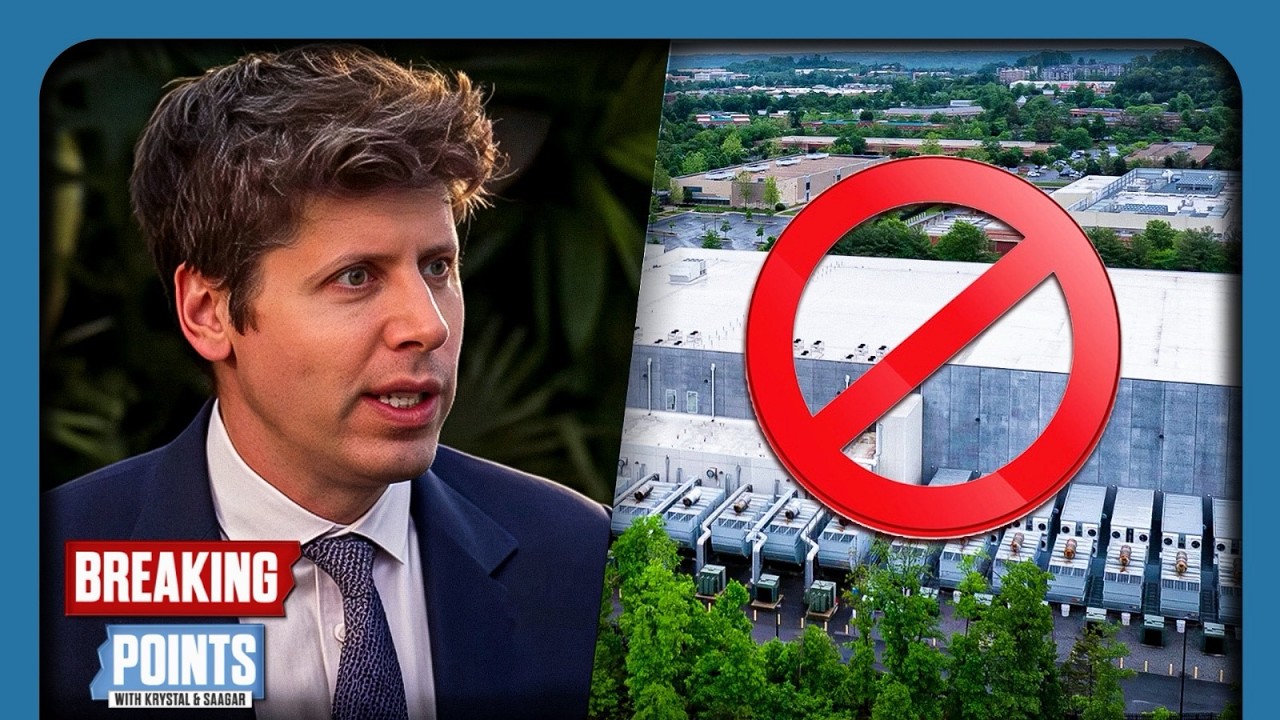
Big Tech FREAKS After Activists KILL Data Center
"A New Jersey grassroots activist successfully halted a 27,000 sq ft data center project, sparking a viral celebration and highlighting growing local resistance to Big Tech's infrastructure demands."

Fisk Data Center Revolt. TX Mandates Bible Reading. Disaster Bias Rule Ends. Dem Socialist Takeover?
"This episode dissects the controversies surrounding Fisk University's data center, the Trump administration's dismantling of anti-discrimination disaster aid rules impacting Haitian immigrants, and the rise of Democratic Socialists in local elections, all framed through a lens of racial and political commentary."

Billionaire's WARNING: I'm SELLING. The Crash Is Already Here!
"Jeremy Grantham, a legendary investor who managed $165 billion, warns that the biggest investment bubble in history is about to burst, advising against US stocks and highlighting a looming fertility crisis driven by environmental toxins."