
🚨 BREAKING: Ayatollahs Flee To Canada - IRGC Move Into Tunnels In Iran
YouTube · C8_kPCicBKs
Quick Read
Summary
Takeaways
- ❖US forces 'obliterated' military targets on Iran's Kaj Island, which handles 90% of the country's oil exports, aiming to paralyze the regime's finances.
- ❖Ayatollahs are reportedly fleeing Iran to Canada and the UK, using indirect routes through Turkey and UAE, exploiting immigration loopholes that ban the IRGC but not other Islamic Republic officials.
- ❖IRGC Basij units have moved their checkpoints into tunnels in Tehran to evade continuous Israeli drone attacks, after finding under-bridge locations unsafe.
- ❖The Iranian Space Research Center in Tehran was destroyed in an attack, linked to ballistic missile programs and secret IRGC operations.
- ❖Mossad is collaborating with Iranian citizens who are providing intelligence on IRGC members' locations, aiding targeted strikes.
- ❖Ordinary Iranians express hope and gratitude for the ongoing attacks, viewing them as 'karma' and a necessary step to remove the Islamic Republic, even if it means enduring bombings.
Insights
1Kaj Island Attack Targets Iran's Economic Lifeline
President Trump confirmed a US military attack on Kaj Island, a critical hub for 90% of Iran's oil exports. The host emphasizes that while oil infrastructure was spared for 'decency,' the obliteration of military targets on the island effectively paralyzes Iran's ability to export oil, cutting off a primary source of revenue for the Islamic regime.
President Trump's statement confirming the attack on Kaj Island and the host's analysis of its impact on Iran's oil exports.
2Ayatollahs Flee to Canada and UK via Immigration Loopholes
Video evidence shows Ayatollahs arriving in Toronto from Abu Dhabi, having traveled through Turkey or UAE. The host explains that Canada has banned the IRGC but not the broader 'Islamic Republic,' creating a loophole that allows non-card-carrying Ayatollahs to enter. The UK has not even designated the IRGC as a terrorist organization, making it an easier destination.
Host's description of video evidence of Ayatollahs arriving in Toronto and explanation of Canadian and UK immigration policies.
3IRGC Basij Units Retreat to Tunnels to Evade Drone Strikes
Due to continuous Israeli drone attacks targeting checkpoints on the streets of Tehran and other cities, IRGC Basij forces have moved their checkpoints from under bridges into tunnels. This highlights the effectiveness of the drone operations and the regime's struggle to maintain public control points.
Host's report and video evidence showing IRGC checkpoints in Tehran tunnels.
4Iranian Public Welcomes Attacks, Desires Regime's Fall
Guest Sana Ibrahim, an Iranian expatriate, and audio messages from inside Iran confirm that many ordinary citizens view the military strikes as 'karma' and a desired path to freedom. They express fear of the regime's retaliation if the attacks cease prematurely and are willing to tolerate bombings until the Islamic Republic is destroyed.
Sana Ibrahim's personal account and interpretation of events, and an audio message from Iran expressing hope and determination.
5Iranian Space Research Center Destroyed in Tehran
The Iranian Space Research Center building in Tehran was destroyed in an attack. The US government had previously sanctioned this organization due to its links to ballistic missiles and undisclosed IRGC operations.
Host's report of the attack on the Iranian Space Research Center and its links to ballistic missiles.
Bottom Line
Canada's policy of banning the IRGC but not the broader 'Islamic Republic' creates a significant loophole, allowing high-ranking Ayatollahs and clerics to seek refuge in the country, potentially bringing illicit wealth and influence.
This policy distinction enables key figures of the Iranian regime, who are not 'card-carrying' IRGC members but are integral to the Islamic Republic's political and cultural control, to escape accountability and establish themselves in Western nations.
Advocacy groups could pressure Western governments, particularly Canada and the UK, to broaden their designations to include all entities and individuals associated with the Islamic Republic, not just the IRGC, to prevent the influx of regime figures and their assets.
Mossad is actively collaborating with Iranian citizens to gather intelligence on IRGC members, including their residential locations and activities, facilitating targeted strikes.
This direct collaboration indicates a deep level of internal dissent and a willingness among Iranians to actively participate in the dismantling of the regime, providing a crucial intelligence advantage to external forces.
This model of leveraging local civilian intelligence could be replicated in other authoritarian contexts, creating channels for oppressed populations to contribute to efforts against their regimes, provided robust security and anonymity measures are in place.
The Iranian public's sentiment is largely in favor of the ongoing military conflict, with many expressing fear when bombings pause, preferring continued strikes until the regime is overthrown.
This contradicts common Western liberal narratives that often assume civilian populations universally oppose military intervention. It highlights the extreme desperation and suffering under the Islamic Republic, where external force is seen as the only viable path to liberation.
Policymakers and media outlets should engage more deeply with the perspectives of populations living under oppressive regimes, recognizing that their desire for freedom may sometimes align with military action, challenging conventional humanitarian frameworks.
Lessons
- Monitor the global oil market for potential volatility as the attack on Iran's Kaj Island could significantly disrupt its oil exports, impacting global supply and prices.
- Advocate for more comprehensive sanctions and immigration policies in Western countries (like Canada and the UK) to close loopholes that allow non-IRGC members of the Iranian regime to seek refuge.
- Support organizations and initiatives that provide secure channels for citizens in oppressive regimes to share intelligence, as demonstrated by Mossad's collaboration with Iranians against the IRGC.
- Stay informed about the nuanced perspectives of populations in conflict zones, recognizing that some may welcome military intervention as a means to achieve liberation from oppressive regimes.
- For those with connections in Iran, reiterate safety guidance: avoid government/IRGC locations, stay indoors during attacks, and prioritize personal safety over documenting events.
Notable Moments
The host and guest discuss the 'insanity' of Western liberal perspectives on the Iran conflict, contrasting them with the lived experiences of Iranians who welcome the attacks.
This moment highlights a significant ideological divide and a lack of understanding in some Western circles regarding the realities and desires of oppressed populations, particularly concerning military intervention.
The host shows a video of an Iranian man laughing after an airstrike hits an IRGC base near him, expressing confidence in the precision of US/Israeli attacks.
This illustrates the deep-seated animosity many Iranians hold towards the IRGC and their hope for the regime's downfall, even amidst direct military conflict.
Quotes
"The same people who were chasing our people down the streets are now running away and they are scared for their lives and the streets are not safe for them anymore. The same people who were shooting our children are now getting exploded to pieces. This feels like a good revenge. The first time I feel like Iranian people are seeing karma in real time."
"We want it to go on and we are ready to tolerate all of these bombings until they are destroyed. They are because and this is just the sentiment of so many people. I haven't still had a conversation with anyone in Iran who says, 'Oh, this should be stopped.' Not even a single one."
"90% of Iran's oil export goes from there. You paralyze that. You stop that. You don't even have to hit the oil infrastructure to essentially destroy the Islamic regime's ability to export oil because the military bases being taken out completely destroys the management of the oil infrastructure."
"The Ayatollahs are fleeing to the very places, governments, and way of life that they claim to hate and have vowed to get rid of. Yeah, but there's money, there's safety, there is life, there is Western capitalism. You know, at the end of the day, we're all a bit of hypocrites."
Q&A
Recent Questions
Related Episodes

BREAKING: Iran Threatens To END Talks; U.S. Vows Retaliation; Hezbollah Collapsing? | TBN Israel
"Iran is leveraging Hezbollah and the Strait of Hormuz to manipulate US negotiations, while Israel asserts its right to dismantle Hezbollah's eroding but still dangerous infrastructure in Lebanon, independent of international talks."
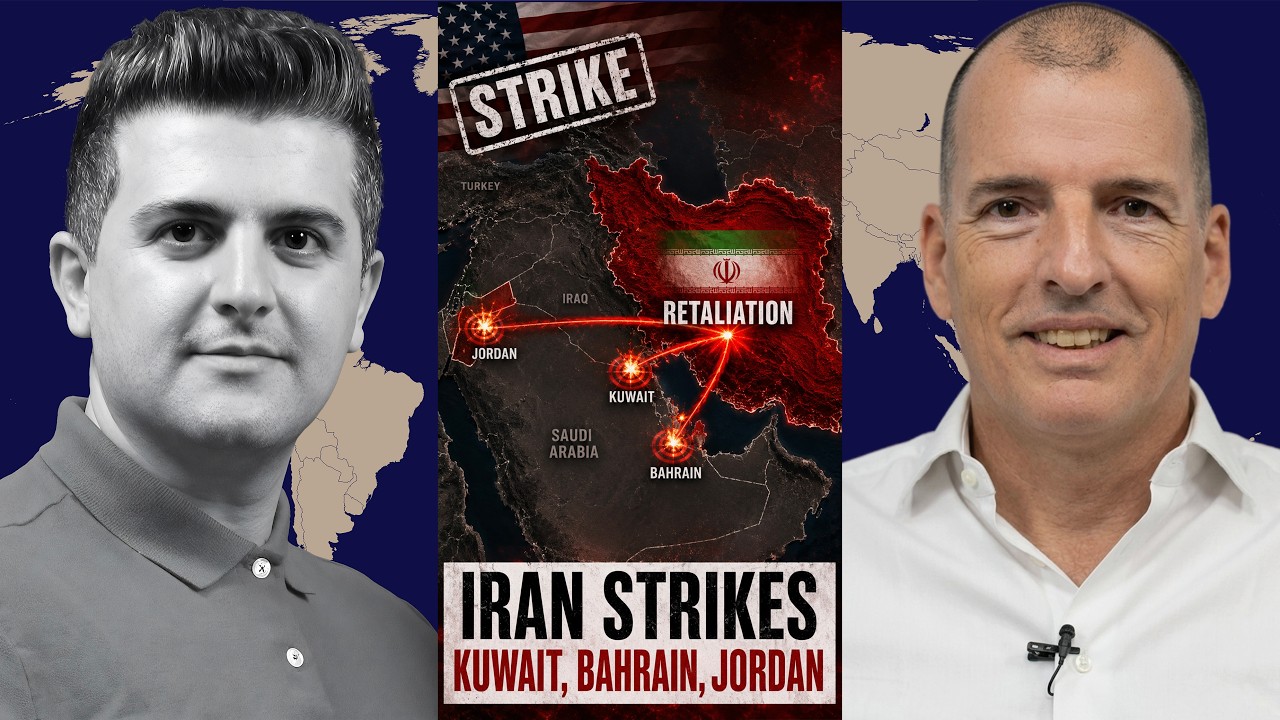
Alex Krainer: US STRIKES Iran – Iran RETALIATES Against Kuwait, Bahrain & Jordan!
"Amidst escalating US-Iran conflict and Iranian retaliation against regional US allies, this episode argues that US foreign policy is deeply controlled by an 'Anglo-Zionist conspiracy' led by the Rothschild banking dynasty, prioritizing Israeli interests over American ones."

Iran Update: Israel’s Newest Bombing Campaign, the Oncoming War With China and How to Avoid It
"Colonel Wilerson reveals how the US and Israel are actively bombing China's strategic infrastructure in Iran, escalating a covert economic war that Beijing intends to win without direct military conflict by dismantling the dollar's global dominance."

Patrick Henningsen: Hezbollah JUST Fired Back at Israel - Iran Vows to “Crush” All Attacks
"Patrick Henningsen argues that the US and Israel initiated an illegal war against Iran, driven by Trump's incompetence and Israeli influence, leading to an inevitable escalation with severe global economic repercussions."